





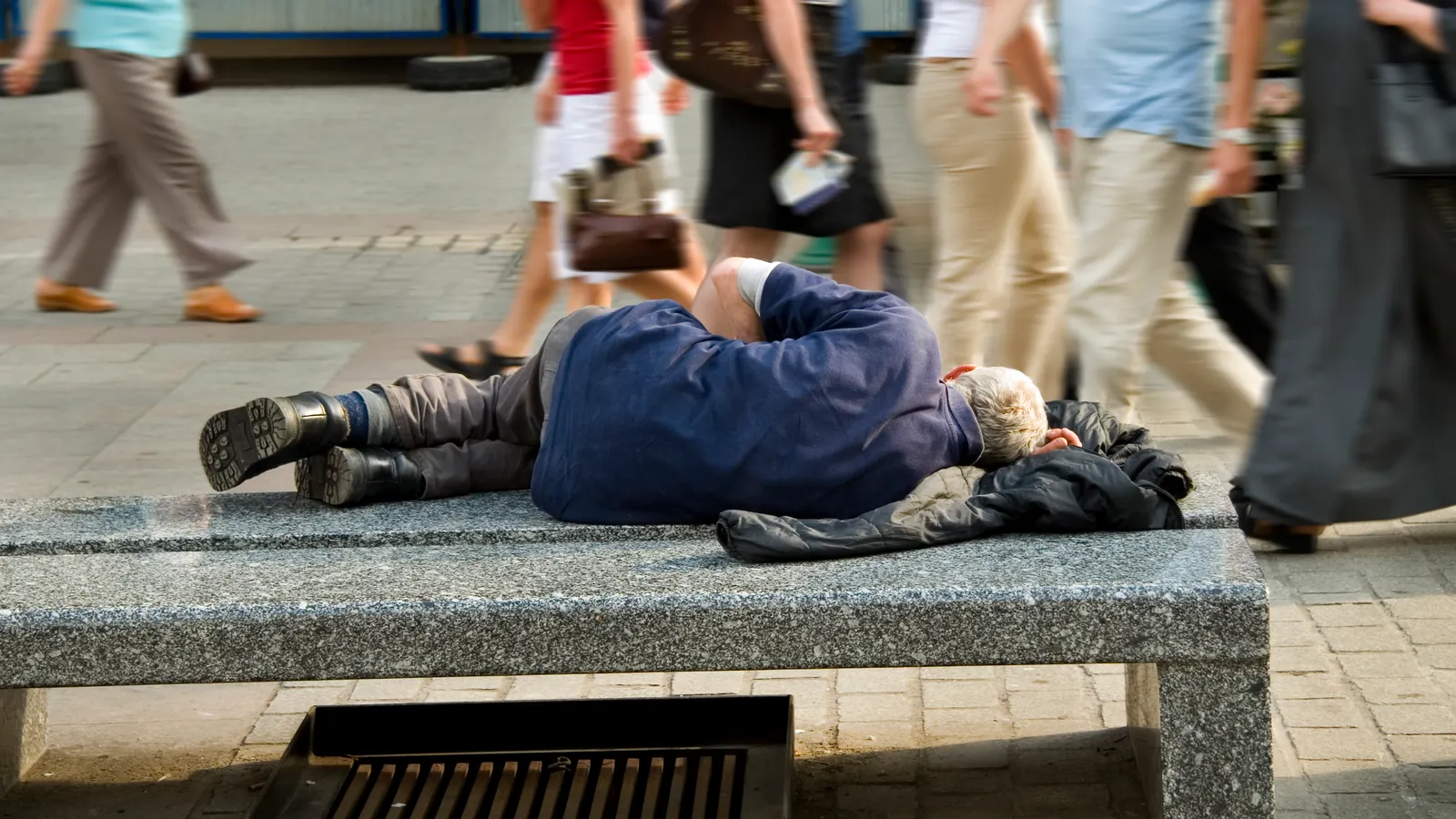
As U.S. cities and counties grapple with record-breaking homelessness, a demographic shift is creating an unprecedented emergency. Beyond the visible crisis on city streets, a quieter, more vulnerable population is falling through the cracks: the elderly. With the U.S. Census Bureau projecting that by 2034, older adults will outnumber children for the first time in American history, urban planners and policymakers are facing a "perfect storm" of economic instability, systemic housing failures, and a rapidly aging population that is increasingly unable to afford the cost of living.
The Intersection of Aging and Housing Insecurity
The data is unequivocal: the fastest-growing demographic of people experiencing homelessness in the United States consists of those aged 65 and older. According to the Harvard Joint Center for Housing Studies (JCHS), this trend is not merely a byproduct of the broader housing crisis but a distinct, compounding issue fueled by decades of social policy decisions and changing family structures.
As the oldest baby boomers turn 80 this year, they are encountering a housing market that was never designed for them. Jennifer Molinsky, director of the Housing an Aging Society Program at JCHS, describes the current environment as a convergence of stressors. "We are talking about it at a time when the older population is growing so much, and we have had a lot of cuts to the social safety net, and we are about to see more cuts to Medicaid," Molinsky warned during a recent panel discussion. "The consequences I worry about are that there will be more housing instability and homelessness."
Chronology of a Demographic Shift
To understand how the U.S. arrived at this juncture, one must look at the evolution of housing policy over the last four decades.
- 1980s–1990s: The era of "aging in place" became a popular concept, yet it was rarely backed by the necessary infrastructure. Municipalities focused on suburban expansion and single-family zoning, failing to anticipate the long-term needs of a sedentary, aging workforce.
- 2008 Financial Crisis: The Great Recession decimated the retirement savings of millions of Americans, forcing many older adults to dip into home equity or delay retirement indefinitely.
- 2010s–2020: The rise of "invisible homelessness." While the public focus remained on the visible homeless population, a rising number of seniors began "doubling up"—moving into the homes of friends or family members due to economic hardship. This group, while technically homeless under many definitions, is frequently excluded from the U.S. Department of Housing and Urban Development’s (HUD) official point-in-time counts.
- 2024–Present: The post-pandemic inflationary environment has pushed many seniors on fixed incomes to the brink. With rising rents and stagnant Social Security adjustments, the "perfect storm" has arrived.
Supporting Data and the "Invisible" Crisis
The severity of the situation is often masked by how homelessness is measured. HUD’s point-in-time counts rely on physical headcounts in shelters and on the streets. However, this methodology fails to capture the thousands of seniors living in overcrowded apartments, couch-surfing, or residing in vehicles.
Experts point to several critical data points that underscore the fragility of this generation:
- The Retirement Savings Gap: A significant portion of the elderly population lacks sufficient savings to cover emergency housing costs or rising medical expenses.
- Long-term Waitlists: In many major U.S. cities, waitlists for public housing and Section 8 vouchers are measured in years, not months. For an 80-year-old, a five-year waitlist is effectively a permanent denial of service.
- The "Doubling Up" Phenomenon: Molinsky notes that for many seniors, a relatively small infusion of cash could prevent the transition from a precarious living situation to total homelessness. However, because these individuals are not currently on the street, they are often deprioritized by municipal aid programs.
Official Responses and Municipal Strategies
Mayors and city councils across the country are beginning to realize that the status quo is unsustainable. Beaverton, Oregon, Mayor Lacey Beaty has become a prominent voice in this movement, emphasizing that cities must fundamentally redesign their approach to housing.
"Leaders before me hadn’t thought about aging in place gracefully," Beaty stated. "We had not designed any housing for people to downsize from their four-bedroom home where they’d raised their kids."
Policy Solutions for a Graying Population
Beaty advocates for a shift in zoning laws that encourages the development of "missing middle" housing. This includes:
- Cottage Clusters: Small, high-density, one-story home communities that foster social connection and reduce isolation.
- Co-ops: Shared housing arrangements that can reduce costs while providing communal support.
- Accessory Dwelling Units (ADUs): Incentivizing the construction of smaller units on existing properties, which allows seniors to downsize without leaving their neighborhoods.
By diversifying housing options, cities can achieve a dual benefit: seniors are provided with manageable, accessible living spaces, and the larger, family-sized homes they vacate become available for younger generations, easing the overall housing supply crunch.
The Cultural Barrier to Assistance
Beyond bricks and mortar, there is a significant psychological hurdle. Many older Americans grew up in a culture that prizes self-reliance and views seeking government assistance as a sign of personal failure.
Niki Wilkerson, a social justice advocate and coordinator at Summit Church, emphasizes that the approach to these individuals must be as compassionate as it is pragmatic. "They are taught to weather the storm," Beaty added, noting that for many seniors, the shame associated with poverty prevents them from accessing even the limited resources that do exist.
Wilkerson argues that outreach programs must be redesigned to prioritize dignity. If assistance is framed as a welfare handout, the most vulnerable may refuse it. If it is framed as a community benefit or a necessary support for those who have contributed decades of labor, the receptivity often changes. "If you don’t ask the question, you won’t know," Wilkerson said. "And a lot of the time, people feel they’re taking advantage when maybe the situation they’re facing is simply overwhelming."
Implications: A Murky Future
The outlook for the next decade remains uncertain, particularly regarding federal funding. As the federal government shifts its strategy toward homelessness, local municipalities are left wondering how to fill the gaps.
The Caretaker Shortage
Perhaps the most alarming implication of the aging crisis is the "caretaker cliff." With birth rates in the U.S. declining, the ratio of working-age adults to seniors is shrinking. Mayor Beaty pointedly asked: "Who is getting ready to take care of all these people? We have some serious planning ahead of us."
The traditional model—where adult children provide in-home care for aging parents—is becoming increasingly difficult to maintain in a high-cost economy where both parents must work. As more seniors live alone, the need for professional, state-subsidized home health care will grow. If that infrastructure is not built, the burden will inevitably fall back onto the public shelter system.
Long-term Financial Planning
Molinsky warns that current solutions, such as temporary vouchers, are insufficient for a population whose needs will only increase with time. "It’s going to be long-term, and I think we need to wrap our heads around that," she said.
The implication for cities is clear: homelessness among the elderly is not a temporary spike; it is a structural reality of an aging society. Municipalities that fail to integrate senior-specific housing, health care support, and dignified outreach into their long-term urban plans will likely see their homelessness crises expand exponentially by the 2030s.
Conclusion: Bridging the Generational Gap
The challenge of aging homelessness is a mirror reflecting the deeper flaws in the American social contract. It is a problem that requires more than just beds and shelters; it requires a radical rethinking of how communities accommodate the entire lifecycle of their residents.
From zoning reform that allows for accessible, smaller homes to social programs that destigmatize help-seeking, the path forward is complex. Yet, as the demographic clock ticks toward 2034, the window for proactive planning is closing. The "silver crisis" is no longer on the horizon—it is here, and how cities choose to address it will define the stability and humanity of American urban life for decades to come.
