



New York City’s transit landscape is poised for a transformation not seen in nearly a century. As the Metropolitan Transportation Authority (MTA) advances plans for the Interborough Express (IBX), the city is set to receive its first new end-to-end rapid transit line built entirely within the five boroughs since 1937. By utilizing light rail technology—a mode frequently deployed in cities like Seattle, Denver, and Dallas but previously absent from the MTA’s portfolio—the project promises to bridge the gap between Brooklyn and Queens, effectively bypassing the traditional, Manhattan-centric transit model that has defined the city for generations.
Main Facts: A New Backbone for Outer-Borough Transit
The Interborough Express is designed to be a 14-mile transit artery connecting Bay Ridge, Brooklyn, to Jackson Heights, Queens. Unlike the city’s traditional heavy rail subway system, the IBX will operate as a light rail line. According to the New York State 2025 scoping document, the MTA selected light rail as the preferred mode because it "represents a cost-effective and constructible project mode," offering the ability to navigate existing urban corridors with higher frequency and smaller station footprints than traditional heavy rail.
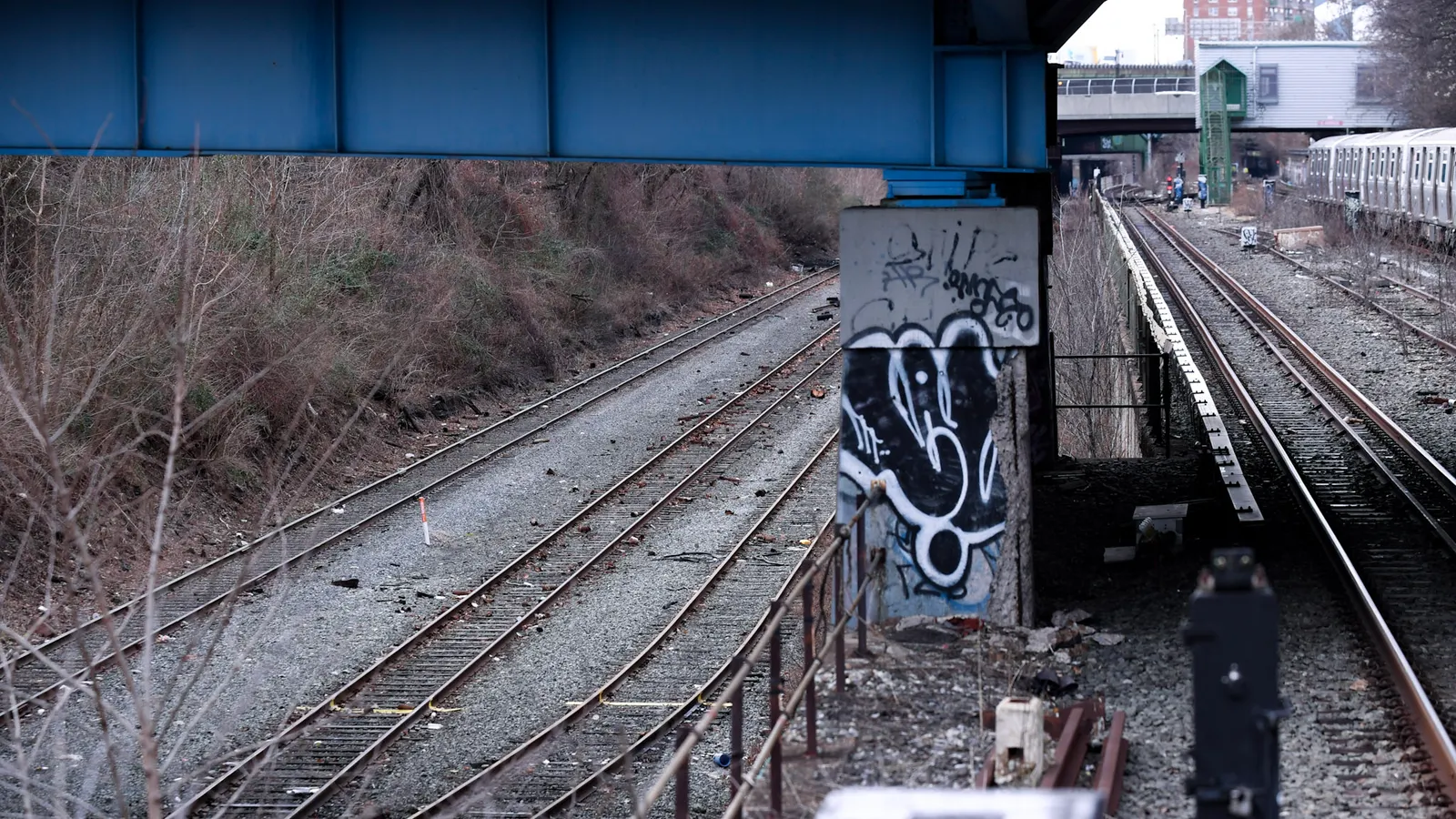
The infrastructure plan involves laying new tracks alongside an existing, active 14-mile freight rail corridor—the Bay Ridge Branch. By sharing the right-of-way, the MTA aims to minimize the need for massive property acquisitions and disruptive tunneling, which have historically ballooned the budgets of projects like the Second Avenue Subway. The MTA currently projects that once operational, the line will serve approximately 160,000 daily riders, providing a vital north-south connection that currently requires circuitous travel through Manhattan.
Chronology: From Concept to Construction
The journey of the IBX from a visionary concept to an active infrastructure project has been a multi-year effort rooted in the recognition of shifting commuting patterns.
- The Conceptual Phase (Pre-2022): Transit advocates had long proposed utilizing the dormant or underutilized freight rail rights-of-way that snake through the residential and industrial hearts of Brooklyn and Queens. The idea gained political traction as congestion in Manhattan reached peak levels and outer-borough population density continued to rise.
- The Governor’s Mandate (2022): Governor Kathy Hochul formally embraced the project, directing the MTA to conduct the necessary environmental and engineering feasibility studies to determine if the route could support passenger service.
- The Scoping and Planning Phase (2023–2024): The MTA engaged in extensive public outreach and technical scoping. Engineers evaluated the integration of light rail with existing freight operations to ensure that the transit line would not compromise the delivery of goods via the Bay Ridge Branch.
- Funding and Capital Planning (2025): The project reached a critical milestone with the inclusion of $2.75 billion in the MTA’s 2025-2029 Capital Plan. This was bolstered by an additional $45 million in New York’s fiscal year 2026 state budget, signaling a shift from planning to procurement and design.
- The Path Forward (2026 and Beyond): With the formal scoping document finalized, the project is entering the design-build phase. The MTA is currently evaluating federal grant opportunities, with Governor Hochul emphasizing that the state remains committed to filling any potential funding gaps should federal assistance fall short.
Supporting Data: Infrastructure and Accessibility
The IBX is not merely a transit line; it is an accessibility initiative. A cornerstone of the current proposal is total compliance with the Americans with Disabilities Act (ADA). Every new station built along the 14-mile route will be fully accessible from day one, setting a standard for future MTA expansions.
Furthermore, the MTA has committed to a strategic integration plan. The transit authority is prioritizing accessibility upgrades at four existing subway stations where the IBX will interface with the current network. This "hub-and-spoke" approach is designed to ensure that riders transferring from the IBX to the subway system do not encounter broken elevators or inaccessible platforms.
Project Metrics:
- Route Length: 14 miles.
- Projected Daily Ridership: 160,000.
- Funding Committed (Capital Plan): $2.75 billion.
- Ancillary Funding (FY 2026 Budget): $45 million.
- System Type: Light Rail Transit (LRT).
The fiscal model for the IBX is a hybrid of state capital commitment and anticipated federal support. Governor Hochul has stated clearly that the state is prepared to step in if federal funding is delayed or insufficient, highlighting the high political and economic priority placed on the project by the executive branch.
Official Responses and Stakeholder Perspectives
The project has garnered significant support from elected officials who represent the transit-starved corridors of Brooklyn and Queens. Assembly Member Claire Valdez, in a recent statement, remarked, "I’m thrilled that the long-awaited IBX is not only moving forward, but that existing stations are being prioritized for accessibility upgrades."
The MTA’s leadership has framed the IBX as a vital evolution of the city’s transit philosophy. MTA Chair Janno Lieber has consistently noted that the transit authority must move toward "design-build" efficiencies to keep the project on its current timeline. By focusing on constructibility and leveraging existing freight corridors, the MTA hopes to avoid the "megaproject" pitfalls that have plagued other infrastructure works in the tri-state area.
However, the project is not without its critics. Some local community groups have expressed concerns regarding noise levels and the potential impact of light rail operations on residential neighborhoods adjacent to the freight line. In response, the MTA has included comprehensive noise mitigation and urban design plans in its scoping documents, aiming to integrate the light rail infrastructure into the streetscape rather than imposing it upon the landscape.
Implications: A Shift in the Transit Paradigm
The implications of the IBX extend far beyond the convenience of a faster commute. For nearly a century, New York City’s transit system has functioned like a wheel, with all lines radiating from the hub of Manhattan. If a resident in Bay Ridge wanted to get to Jackson Heights, they were effectively forced to travel into Manhattan, transfer, and travel back out, resulting in travel times that could exceed 90 minutes.
The IBX acts as a rim to that wheel. By providing a direct north-south connection, the MTA is acknowledging that New York is no longer a city where everyone works in Midtown. The IBX acknowledges the reality of a "polycentric" city, where jobs, commerce, and housing are spread across the boroughs.
Economic Development
The construction of the IBX is expected to spur economic development along its 14-mile corridor. Transit-oriented development (TOD) is a primary goal for planners who envision new housing units and commercial spaces springing up around the new stations. This shift could potentially lower the cost of living by increasing the supply of housing in areas that were previously considered "transit-isolated."
Environmental Impact
By moving 160,000 riders out of private vehicles and onto an electric light rail system, the IBX will contribute significantly to New York City’s climate goals. The reduction in vehicle miles traveled (VMT) will help lower carbon emissions and ease the persistent congestion on the Brooklyn-Queens Expressway (BQE), which has long served as the default, albeit inefficient, corridor for inter-borough travel.
Future Expansion
Success with the IBX could serve as a template for other rail-to-transit conversions. Across the city, there are other underutilized freight corridors and former rights-of-way that could, if the IBX proves successful, be converted into light rail or Bus Rapid Transit (BRT) lines. The IBX is essentially a proof-of-concept for the 21st-century MTA.
Conclusion: A New Era for New York
The Interborough Express represents a rare moment of alignment in New York politics: a project that enjoys broad executive support, clear funding pathways, and a strong mandate from the communities it will serve. By choosing light rail, the MTA is demonstrating a pragmatic approach to infrastructure that favors speed and efficiency over the prestige of heavy rail tunnels.
As New York City moves toward 2026 and the subsequent years of construction, the eyes of the transit world will be on the IBX. If successful, it will be the most significant addition to the city’s transit map in nearly 90 years—a testament to the idea that even the most established cities can evolve to meet the needs of their modern residents. The IBX is more than just a new train line; it is the bridge between the New York of the past and a more connected, accessible, and sustainable future.
