




The National Highway Traffic Safety Administration (NHTSA) has significantly escalated its investigation into General Motors (GM) over persistent braking failures linked to its electronic "eBoost" brake-by-wire system. The federal safety regulator’s Office of Defects Investigation (ODI) announced that it has upgraded its ongoing probe to an "Engineering Analysis." This represents the agency’s highest tier of investigation and is frequently the final regulatory step before a manufacturer is legally compelled to issue a massive safety recall.
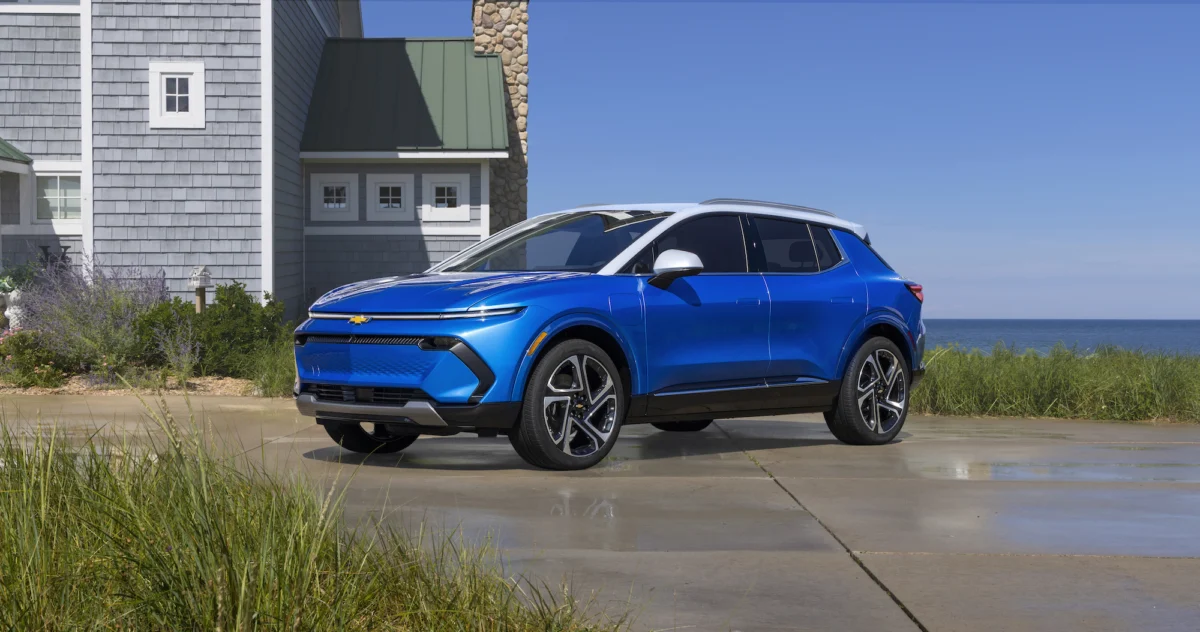
The scope of the investigation is vast, potentially affecting more than 1 million vehicles. While the issue initially drew scrutiny on GM’s flagship electric vehicles (EVs)—including models co-developed with Honda Motor Company—the safety probe has now expanded to include several high-volume, internal combustion engine (ICE) models. According to federal documents, the agency is tracking hundreds of consumer complaints, more than 20 crashes or fires, and at least six injuries linked directly to sudden losses of braking assistance.
Chronology of the Investigation
The regulatory timeline highlights a widening disconnect between GM’s internal diagnoses and the real-world experiences reported by drivers on American highways.
[April 2024]
NHTSA opens preliminary evaluation after complaints from 2023 Cadillac Lyriq owners regarding "Brake System Failure" warnings.
       │
       ▼
[Mid-2024]
GM conducts internal investigations, attributing early issues to physical spindle fractures in the eBoost actuator.
       │
       ▼
[Late 2024]
NHTSA continues to receive reports of sudden brake assist loss while in motion, contradicting GM's stationary failure theory.
       │
       ▼
[Present]
NHTSA upgrades probe to "Engineering Analysis," expanding the scope to over 1 million vehicles across EV and ICE lineups.
The Initial Inquiry (April 2024)
The federal investigation officially began in April 2024, following a cluster of alarming complaints from owners of the 2023 Cadillac Lyriq. Drivers reported that upon starting their luxury electric SUVs, or immediately after coming to a complete stop, the vehicle’s digital dashboard would flash a terrifying notification: "Brake System Failure." In these early stages, the physical pedal reportedly became extremely stiff, requiring immense physical force to slow or stop the vehicle.
GM’s Internal Assessments
In response to the preliminary evaluation, GM launched its own internal investigations. According to documents released by the ODI, the automaker concluded that the errors were primarily caused by structural fractures within the electronic spindle of the eBoost brake-by-wire actuator. GM maintained that these failures typically occurred at startup or during low-speed, stationary moments, allowing the vehicle’s onboard diagnostics to warn the driver before they merged into active traffic.
The Discrepancy and Escalation
The narrative shifted as the ODI continued to monitor incoming consumer complaints throughout 2024. The federal agency noted a steady influx of incident reports that were entirely inconsistent with GM’s description of a simple stationary spindle failure.
Instead of receiving a warning at startup, drivers reported experiencing an immediate, unheralded loss of braking assistance while actively traveling at speed. Because these failures occurred while drivers were actively attempting to slow down in traffic, the risk profile of the defect escalated dramatically. Recognizing that an unexpected increase in braking distance poses an imminent threat of high-speed collisions, the NHTSA upgraded the probe to an Engineering Analysis to thoroughly evaluate the eBoost system’s software and hardware architecture.
Understanding the Technology: The ‘eBoost’ Brake-by-Wire System
To understand the severity of the probe, it is necessary to examine how modern automotive braking has evolved.
For decades, passenger vehicles relied on a direct mechanical and hydraulic connection between the brake pedal and the wheels. When a driver pressed the pedal, a physical rod pushed piston fluid through lines to squeeze the brake calipers, assisted by a vacuum booster run off the engine’s manifold.
Traditional Hydraulic Braking:
[Brake Pedal] ──(Mechanical Link)──> [Vacuum Booster] ──> [Hydraulic Lines] ──> [Brake Calipers]

eBoost Brake-by-Wire Braking:
[Brake Pedal] ──(Sensor/Wire)──> [Electronic Control Unit] ──(Electric Motor)──> [Hydraulic Calipers]
                                            │
                                            └─> [Regenerative Braking (EVs)]
GM’s "eBoost" system, introduced in 2019, represents a fundamental shift toward "brake-by-wire" technology.
- How it works: The physical connection between the driver’s foot and the hydraulic system is largely replaced by electronic sensors. When the driver presses the pedal, a sensor measures the travel and force, sending a digital signal to an Electronic Control Unit (ECU). An electric motor and actuator then generate the hydraulic pressure required to stop the vehicle.
- Why automakers use it: Brake-by-wire systems are crucial for modern electric and hybrid vehicles. They allow seamless blending between friction braking (calipers on discs) and regenerative braking (using the electric motor to slow the car while recovering energy). Furthermore, they reduce vehicle weight, improve packaging efficiency under the hood, and allow engineers to electronically tune the "pedal feel" depending on the chosen drive mode (e.g., Sport, Tour, or Eco).
- The point of failure: If the electronic actuator, sensor array, or control software experiences an interruption or structural failure, the system loses its electronic "assist." While hydraulic backup systems are engineered into the vehicles to prevent a complete loss of stopping power, pressing a unassisted brake pedal requires massive physical exertion from the driver, resulting in significantly extended stopping distances.
Supporting Data and Affected Vehicles
The escalation of the investigation is driven by the sheer volume of vehicles utilizing the eBoost platform. GM integrated this technology across its global modular platforms, meaning the potential recall pool spans multiple vehicle segments, propulsion types, and even corporate brands.
The Affected Lineup
The NHTSA investigation covers a diverse range of vehicles manufactured by General Motors, as well as joint-venture models built for Honda:
| Propulsion Type | Brand | Model(s) Affected |
|---|---|---|
| Electric Vehicles (EVs) | Cadillac | Lyriq (2023–2025) |
| Chevrolet | Blazer EV, Equinox EV | |
| Honda / Acura | Honda Prologue, Acura ZDX | |
| Internal Combustion (ICE) | Chevrolet | Colorado |
| GMC | Canyon | |
| Buick | Enclave, Envision |
Additionally, the technology was integrated into the Cruise Origin, the purpose-built, steering-wheel-free autonomous robotaxi that GM officially abandoned in mid-2024.
Real-World Incident Reports
The regulatory database contains harrowing accounts from drivers who experienced sudden brake failures in real-world driving conditions.
- The 2025 Cadillac Lyriq Storefront Crash: In one detailed report submitted to the NHTSA, the driver of a 2025 Cadillac Lyriq described attempting to pull into a marked parking space in front of a retail store. As they pressed the brake pedal, the system failed completely. The vehicle jumped the concrete curb, crashed through the glass storefront, and came to a stop deep inside the building amid shattered structure and furniture.
- The 2024 Chevrolet Blazer EV Near-Miss: Another driver, operating a 2024 Chevrolet Blazer EV, reported approaching a busy intersection when the brakes suddenly lost all power assist. To avoid a catastrophic, T-bone collision with cross-traffic, the driver was forced to make a split-second decision to deliberately steer the heavy electric SUV directly into a concrete curb to force the vehicle to a halt.
Official Responses and Corporate Stance
In response to the escalation of the federal probe, General Motors issued a public statement defending its safety record while pledging continued cooperation with the Department of Transportation.
"The safety of our customers is the highest priority for the entire GM team," the automaker stated. "We take these reports seriously and have conducted a thorough investigation, determining the alleged condition does not present an unreasonable risk to motor vehicle safety. We will continue to cooperate with NHTSA as its investigation proceeds."
The automaker’s assertion that the issue "does not present an unreasonable risk" stems from the presence of the mechanical-hydraulic backup built into the eBoost architecture. Under GM’s safety philosophy, even if the electronic assist fails, a driver can still bring the vehicle to a stop by pressing down hard enough on the pedal to engage the manual backup master cylinder.
However, the NHTSA’s Office of Defects Investigation appears skeptical of this defense. The agency’s upgrade to an Engineering Analysis indicates that the regulatory body believes the sheer physical effort required to actuate the unassisted brakes—especially for elderly or smaller drivers—creates an unacceptable variance in stopping distance that could easily lead to severe injuries or fatalities in emergency situations.
Implications for the Automotive Industry
The escalation of this probe has profound financial, technological, and reputational implications for General Motors and the broader automotive industry.
       ┌────────────────────────────────────────────────────────┐
       │   NHTSA Engineering Analysis (Current Stage)           │
       └───────────────────────────┬────────────────────────────┘
                                   │
                    Does defect pose safety risk?
                                   │
                  ┌────────────────┴────────────────┐
                  ▼                                 ▼
               [ YES ]                           [ NO ]
                  │                                 │
  ┌───────────────┴───────────────┐        ┌────────┴────────┐
  │ Forced Recall of 1M+ Vehicles │        │ Probe Closed    │
  │ • Software updates            │        │ No Action       │
  │ • Hardware actuator swaps     │        └─────────────────┘
  │ • Substantial financial cost  │
  └───────────────────────────────┘
Financial and Operational Toll of a Recall
If the Engineering Analysis concludes with a formal recall demand, the financial impact on GM will be substantial. Replacing or repairing brake-by-wire actuators across more than 1 million vehicles requires significant dealership labor and replacement parts.
For GM’s EV program, which has already battled battery fires, software freezes, and assembly bottlenecks, another high-profile safety recall could further damage consumer confidence in its Ultium-based electric lineup.
The Honda Partnership Complication
The investigation also complicates GM’s relationship with Honda. The Honda Prologue and Acura ZDX are built on GM’s Ultium platform and utilize the eBoost braking assembly.
Honda, which relies on GM’s manufacturing footprint for these early-generation EVs, now finds its own brand reputation tied to the outcome of a federal safety investigation centered on GM-designed components.
The "Drive-by-Wire" Safety Debate
More broadly, this investigation highlights the growing regulatory and public scrutiny facing "drive-by-wire" technologies. As automakers strip away physical linkages in favor of steering-by-wire, braking-by-wire, and software-defined control systems, safety advocates warn of a new class of digital failure modes.
Unlike traditional mechanical wear-and-tear, which usually manifests gradually through squeaks, vibrations, or slow leaks, electronic failures can occur instantaneously and without warning.
The NHTSA’s final determination in the GM eBoost Engineering Analysis will likely set a critical regulatory precedent for how fail-safes must be engineered into the next generation of software-defined vehicles. Until then, over a million drivers remain on the road with braking systems under intense federal scrutiny.
