

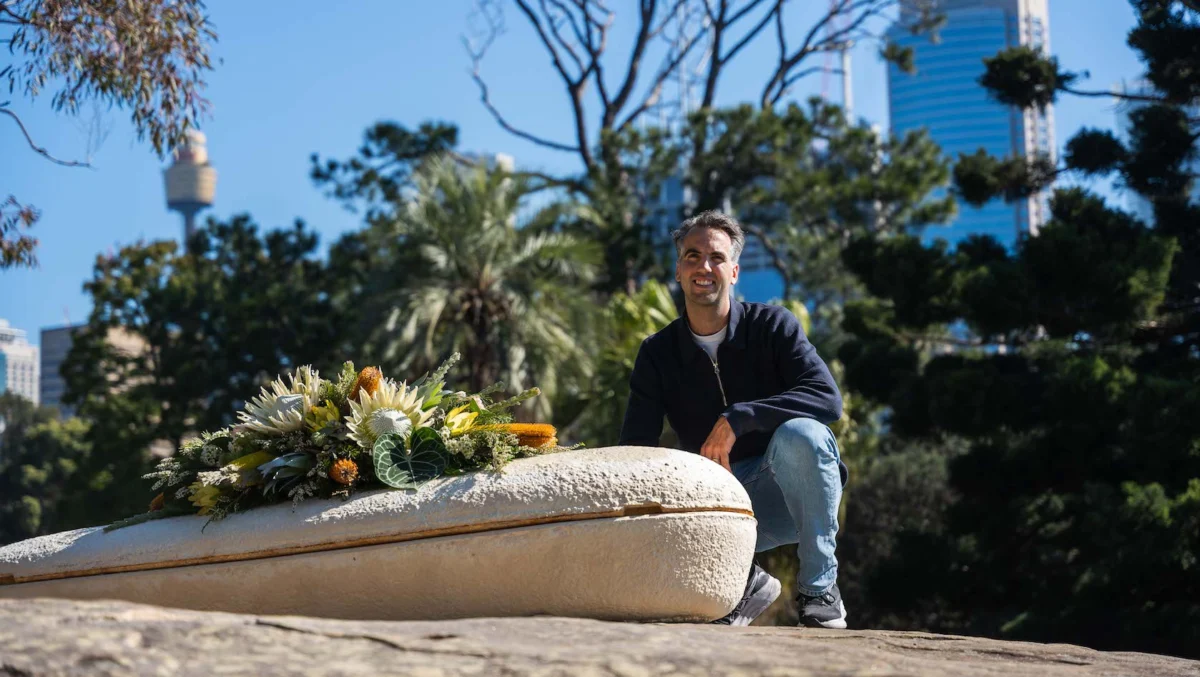
In a quiet, poignant ceremony that has sparked a national conversation about death, sustainability, and the legacy we leave behind, a 70-year-old Sydney woman named Carolyn became the first person in Australia to be interred in a "living" coffin. Crafted not from traditional polished timber or metal, but from the intricate, root-like structures of fungi known as mycelium, the coffin represents a radical shift in how society approaches the end of life.
For the grieving family, this choice was not merely a logistical decision; it was a final, intentional act of environmental stewardship. As the coffin settles into the earth, it will not linger as a synthetic pollutant or a lacquered barrier to the soil. Instead, it will decompose, becoming a source of nourishment for the ecosystem. This milestone marks the arrival of the "green funeral" movement in Australia, challenging a centuries-old industry to rethink its impact on the planet.
The Genesis of the Living Cocoon
Innovation in the Lab
The coffin, branded as the "Loop Living Cocoon," is the brainchild of Dutch startup Loop Biotech. Founded by Bob Hendrikx, the company has pioneered the use of mycelium—the vegetative part of a fungus—to create biodegradable materials.
Unlike traditional casket manufacturing, which relies on deforestation for timber or heavy industry for metal and plastic linings, the production of a mycelium coffin is a process of biological cultivation. Hendrikx and his team utilize agricultural waste and hemp fibers, which are then inoculated with fungal spores. In a controlled laboratory environment, the mycelium acts as a natural "glue," binding the organic fibers into a sturdy, lightweight, and completely compostable structure.
The entire growth process takes a mere seven days. Once the coffin is placed in the ground, the cycle of life continues; under the right conditions, the material is fully absorbed by the surrounding soil within approximately 45 days, effectively turning a funeral into a biological contribution to the earth.
A Chronology of a Quiet Milestone
The journey to this historic burial began long before the interment took place on that Friday in Sydney.
- Conceptualization (The Netherlands): Bob Hendrikx spends years researching the properties of mycelium, realizing its potential as a sustainable alternative to plastic and wood.
- Market Entry (Europe): The Loop Living Cocoon gains traction in the Netherlands and parts of Europe, where "green burials" are becoming increasingly popular due to land scarcity and ecological awareness.
- The Australian Inquiry: Carolyn’s family, seeking a funeral that mirrored her lifelong devotion to nature, began researching sustainable burial practices. They discovered Loop Biotech and initiated a complex logistics process to bring the technology to Australia.
- Regulatory Alignment: Coordinating with local funeral directors and cemetery authorities, the family ensured that the mycelium structure met health and safety standards for interment.
- The Interment: On the designated Friday, the service was held. The simplicity of the coffin, described as having an earthy, organic texture, stood in stark contrast to the high-gloss finishes of conventional caskets.
- The Legacy: As the ground closes over, the biological countdown begins, signaling the start of the coffin’s transformation into humus.
The Ecological Toll of Traditional Burials
To understand the significance of Carolyn’s choice, one must look at the environmental footprint of the modern funeral industry.
The Cost of Tradition
For decades, the funeral industry has operated on a model that prizes preservation over decomposition. Traditional caskets are often constructed from rare hardwoods or metal, lined with synthetic fabrics, and treated with chemical preservatives and varnishes. These materials are designed to last, which is precisely the problem.
- Embalming Chemicals: The use of formaldehyde—a known carcinogen—during embalming processes poses risks to funeral workers and can leach into groundwater over time.
- Resource Depletion: Millions of board-feet of timber are harvested annually for caskets, much of which is buried in the ground within days of assembly.
- Landfill Impacts: Even in cremation, the process is energy-intensive, requiring high-heat fossil fuel combustion. When bodies are buried in non-biodegradable caskets, they effectively "seal off" the body from the natural decay process, preventing the carbon and nutrients within from returning to the ecosystem.
According to industry data, a single traditional burial can involve the use of enough concrete to build a small driveway and enough metal to build a small car. By opting for mycelium, families like Carolyn’s are opting for a "carbon-neutral" end of life, prioritizing the health of the planet over the aesthetics of permanence.
Official Responses and Industry Shifts
The introduction of the mycelium coffin has elicited a mix of curiosity, caution, and excitement from Australian funeral directors and regulatory bodies.
"The industry is at an inflection point," says a spokesperson for a leading Australian funeral association. "For years, we have provided what the market asked for: heavy, ornate, and durable. But the demographic shift is clear. Younger generations are asking, ‘What happens to the earth after I’m gone?’"
While some traditional operators remain skeptical of the durability of organic materials, others are embracing the shift. Funeral homes in Melbourne and Sydney have reported an uptick in inquiries regarding "natural burials"—a practice where the body is buried in a simple shroud or biodegradable container in designated green cemeteries that prohibit the use of headstones and chemical embalming.
Bob Hendrikx, reflecting on the Australian debut, stated: "We don’t just want to provide a product; we want to change the philosophy of death. We are not just burying a person; we are planting a life. We are essentially giving the body back to the earth so that new life can flourish."
Implications: A New Era of "Green" End-of-Life Planning
The success of this first mycelium burial in Australia is expected to trigger a broader trend toward ecological legacy planning.
The Rise of Conscious Dying
The "Death Positive" movement, which advocates for more transparent, natural, and less fear-based conversations around mortality, is finding an ally in biotechnology. Mycelium coffins are just the beginning. Other innovations include:
- Aquamation (Alkaline Hydrolysis): A water-based process that uses pressure and heat to return remains to bone fragments.
- Human Composting (Terramation): A process that turns human remains into nutrient-rich soil over several weeks.
- Reef Memorials: Using cremated remains to build artificial reefs that support marine life.
Challenges Ahead
Despite the enthusiasm, significant hurdles remain. Legal regulations surrounding cemeteries vary by state and council. Many cemeteries have strict bylaws requiring caskets to be made of "durable" materials to prevent ground subsidence. Convincing cemetery managers that a mycelium coffin can support the weight of the soil without collapsing requires ongoing testing and data sharing.
Furthermore, there is the psychological barrier. Society has been conditioned to associate "expensive and sturdy" with "respectful." Shifting the cultural perception of a "respectful funeral" to one that is "earth-centered" will require time, education, and more brave families like Carolyn’s to lead the way.
A Final Contribution
For Donald, Carolyn’s husband, the choice was simple. "It feels very true to who she was that even after her death, she can still do something for others while giving something back to nature," he remarked.
Carolyn’s burial was more than a funeral; it was an act of transition. By choosing to return to the earth in a container designed to nurture the soil, she has left behind a roadmap for others. As the mycelium network expands within the dark, quiet earth of her final resting place, it performs the ultimate service: it turns the end of one life into the beginning of another, reminding us that death, when approached with intention, is not a finality, but a transformation.
In the coming years, as sustainability becomes the lens through which we view everything from our transportation to our diet, it is only logical that we would apply that same scrutiny to our exit. The mushroom coffin is a symbol of a future where humans finally reconcile their existence with the natural cycles that sustain us, ensuring that our final act is one of restoration rather than consumption.
