





By [Author/Agency], September 1, 2026
As Germany enters a pivotal September, the nation finds itself at a political and environmental crossroads. With three critical state elections looming, the administration of Chancellor Friedrich Merz is facing a profound crisis of confidence. Despite an electorate that remains largely committed to the long-term goals of the Energiewende (energy transition), deep-seated anxiety regarding the economic burden of climate policy has created a fertile ground for political volatility, threatening to derail the country’s ambitious decarbonization trajectory.
The Main Facts: A Government in Retreat
The political landscape in Germany has shifted dramatically over the past year. Chancellor Friedrich Merz, who assumed office with promises of pragmatic governance and economic renewal, is now presiding over an administration that faces unprecedented public hostility.
According to polling data released in late August 2026, a staggering 85 percent of respondents expressed disapproval of the Chancellor’s performance. This figure is not merely a reflection of dissatisfaction with specific policies, but a broader indictment of a government perceived as ineffective, out of touch, and unable to manage the complexities of a nation in transition.
The immediate friction point is the intersection of climate action and cost-of-living concerns. While German voters overwhelmingly support the principle of climate protection, the perception that the costs of the green transition are being unfairly distributed—falling disproportionately on the working and middle classes—has triggered a populist surge. The far-right Alternative für Deutschland (AfD) has capitalized on this resentment, framing climate policy as an elitist project that threatens German industrial competitiveness and household stability.
Chronology of a Mounting Crisis
To understand the current political climate, one must trace the developments of the past eighteen months:
- Early 2026: The Merz administration attempts to fast-track new building efficiency standards. The rollout is met with fierce public backlash, as critics argue the financial burden for retrofitting homes is too high during a period of sluggish economic growth.
- May 2026: Protests emerge in industrial hubs as energy prices remain significantly higher than those of international competitors, leading to warnings from manufacturing sectors about "deindustrialization."
- July 2026: Germany experiences one of its most extreme heatwaves on record. Scientists link the event to climate change, briefly shifting public discourse back to the necessity of immediate climate action.
- August 2026: The "Schloss Neuhardenberg" government retreat takes place. Chancellor Merz attempts to pivot the administration toward a more unified message, but the move is overshadowed by plummeting approval ratings.
- September 1, 2026: With three state elections weeks away, the political temperature hits a boiling point. The AfD continues to poll at record highs in affected regions, putting traditional centrist parties on the defensive.
Supporting Data: The Paradox of Public Sentiment
The current political crisis is defined by a distinct "climate paradox." Data consistently shows that over 70 percent of the German public considers climate change a top-three priority. However, when asked about the implementation of the energy transition, the consensus fractures.
The Cost Distribution Gap
A recent survey by the Institute for Economic Research indicates that while 65 percent of voters believe in the necessity of the Energiewende, 60 percent believe that the costs are being distributed "unfairly" or "very unfairly." This perception is driven by:
- Energy Prices: Despite subsidies, electricity costs for small-to-medium enterprises (SMEs) remain 30 percent higher than the European average.
- Housing Costs: The transition in the heating sector has led to significant rent increases in urban areas as landlords pass on the costs of heat pump installations and insulation.
- Industrial Anxiety: Fear of job losses in the automotive and chemical sectors—the backbone of the German economy—has created a pervasive sense of insecurity.
The Rise of the AfD
The AfD’s strategy has been to synthesize these economic anxieties into a cohesive anti-establishment narrative. By characterizing the climate transition as an "ideological experiment," the party has successfully peeled away voters from both the Christian Democrats (CDU) and the Social Democrats (SPD), particularly in eastern states where the economic transition has been historically more difficult.
Official Responses and Political Maneuvering
Chancellor Merz has attempted to navigate these waters by tempering the pace of certain regulations while maintaining the overarching legal targets for carbon neutrality.
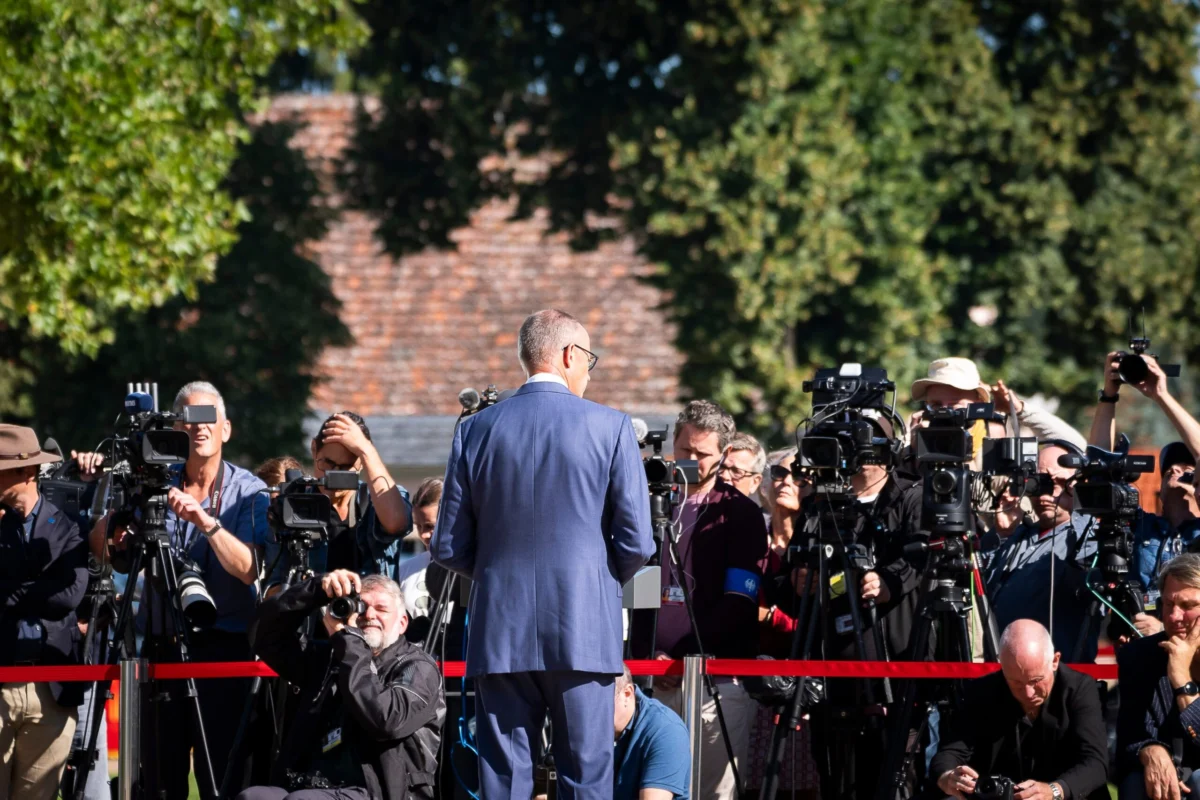
"We remain committed to our climate goals," the Chancellor stated during a press conference following the August cabinet retreat. "However, the energy transition must be socially balanced. We cannot afford to lose the support of the people who make this country run."
Opposition leaders, however, have been scathing. The Greens have accused the Chancellor of "capitulation" to populists, arguing that delaying climate action will only result in higher costs later due to climate-related disasters. Conversely, the AfD has used the Chancellor’s recent softening of tone as proof that their pressure is working, fueling further rallies and aggressive campaign rhetoric.
Within the government coalition, there is mounting tension. Smaller partners are reportedly considering "red lines" regarding climate policy, fearing that if the government moves too far to the right to capture lost voters, it will lose the support of the younger, climate-conscious demographic that remains vital to their electoral base.
Implications: What is at Stake?
The implications of the upcoming September elections extend far beyond the borders of the individual states involved.
1. The Stability of the Federal Government
If the governing parties suffer significant losses in the three state elections, the pressure on the Chancellor to resign or call a snap federal election will become immense. A defeat could paralyze the legislative agenda for the remainder of the term, effectively freezing progress on critical climate and infrastructure projects.
2. International Climate Credibility
Germany has long positioned itself as a global leader in the fight against climate change. A retreat from its internal climate targets would send a signal to the European Union and the G7 that even the most committed nations may falter when faced with domestic political backlash. This could lead to a domino effect, undermining the European Green Deal.
3. Industrial Competitiveness
The central question for the German economy is whether it can transition to a green model without shedding its industrial base. If the political instability leads to a reversal of energy policies, Germany risks locking itself into outdated infrastructure while competitors in Asia and North America accelerate their own green transitions.
4. The Future of the "German Model"
Ultimately, the current crisis is a stress test for the German democratic model. Can a consensus-based, parliamentary system successfully manage a radical economic transformation while maintaining social cohesion? If the political center continues to crumble under the weight of populist pressure, the outcome of these September elections may mark the end of an era of German stability, signaling a long-term shift toward a more fractured, polarized, and unpredictable political future.
As voters head to the polls, they are doing so in an atmosphere of deep uncertainty. The heat of the summer has reminded them of the environmental threat, but the cold reality of the economic situation is dictating their political choices. Whether Chancellor Merz can navigate this divide remains the most pressing question in European politics today.
