





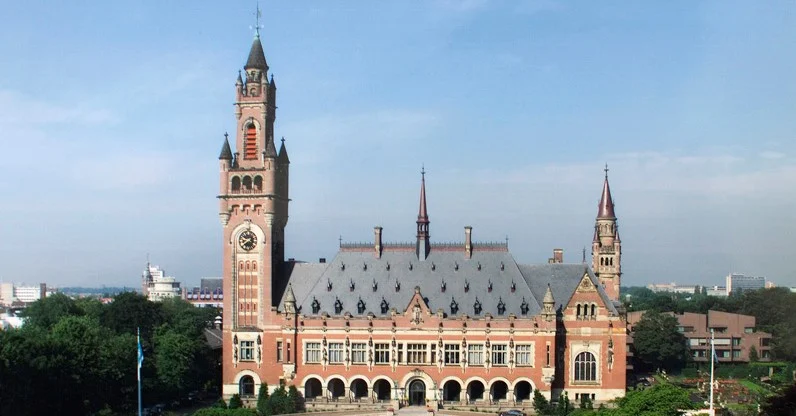
THE HAGUE — In a pivotal moment for international law and global diplomacy, the International Court of Justice (ICJ) became the stage for a dramatic legal confrontation this week as Germany moved to dismiss a landmark case brought against it by Nicaragua. The case, which centers on the legality of Berlin’s arms exports to Israel during the ongoing conflict in Gaza, has placed Germany’s post-war identity and its commitments to international humanitarian law under intense judicial scrutiny.
The Core of the Dispute: A Clash of Legal Principles
On Monday, the German government formally challenged the ICJ’s authority to hear the case, arguing that the court lacks jurisdiction. Representing Germany, Julia Monar, a senior legal adviser to the German Foreign Ministry, delivered a robust defense. Her arguments were threefold, aiming to dismantle the procedural foundation of Nicaragua’s application.
First, Monar asserted that the ICJ requires the existence of a formal "dispute" between the two states before it can exercise its judicial powers. She contended that because Germany was never given the opportunity to engage in bilateral discussions or address Nicaragua’s grievances prior to the institution of proceedings, no justiciable dispute currently exists.
Second, Germany invoked a temporal defense, arguing that many of the claims raised by Nicaragua refer to situations that predate Germany’s voluntary submission to the court’s jurisdiction. Under this reasoning, these matters are shielded from litigation.
Finally, Monar warned of a dangerous legal precedent. She argued that should the court proceed, it would be forced to effectively rule on the legality of the military actions of a third-party country—Israel—which is not a party to these specific proceedings. This, she suggested, would overstep the court’s mandate and undermine the principle of state sovereignty.
Chronology: From Gaza to The Hague
The path to this legal showdown began in the shadow of the October 7, 2023, attacks and the subsequent military campaign in Gaza. As the humanitarian crisis in the enclave deepened, Nicaragua—a nation with a long-standing history of ideological alignment with the Palestinian cause—sought to hold Berlin accountable.
- October 2023: Following the outbreak of hostilities, then-Chancellor Olaf Scholz reaffirmed Germany’s "unwavering support" for Israel, framing the security of the Jewish state as Germany’s Staatsräson (reason of state), a concept deeply rooted in the nation’s historical reckoning with the Holocaust.
- Early 2024: Nicaragua filed its application with the ICJ, alleging that by providing military equipment to Israel, Germany was in violation of the 1948 Genocide Convention, the Geneva Conventions, and other fundamental norms of international law.
- September 2024: The ICJ convened hearings to address Germany’s preliminary objections, marking the first time a major Western power has been forced to defend its arms export policies in such a high-profile international venue.
- September 8, 2024: Nicaragua is scheduled to present its first round of oral arguments, where it is expected to elaborate on its claim that Germany is not only failing to prevent genocide but is effectively contributing to its commission by supplying the tools of war.
Supporting Data: Arms, History, and Geopolitical Alliances
The legal battle is underpinned by stark geopolitical realities. Germany remains the second-largest supplier of arms to Israel, trailing only the United States. For Berlin, this relationship is not merely transactional; it is deeply symbolic.
The German Perspective
German leadership has consistently maintained that its support for Israel is a "perpetual task." Chancellor Olaf Scholz, during his tenure, emphasized that there is "only one place" for Germany to stand—firmly beside Israel. This position is supported by a robust domestic legal regime that German officials argue is fully compliant with international standards, ensuring that arms exports are subjected to rigorous human rights vetting.
The Nicaraguan Perspective
Conversely, Nicaragua has framed its intervention as a moral and legal imperative. Managua’s history with Palestine dates back decades; it was the first Central American nation to establish diplomatic relations with the Palestinian people. Nicaraguan officials have frequently cited their "shared history of colonization" as the catalyst for their unwavering solidarity. For Nicaragua, the ICJ case is an extension of its long-standing foreign policy of opposing what it terms Western imperialist violence in the Global South.
Official Responses and Diplomatic Tensions
The atmosphere at The Hague has been tense. Julia Monar’s statement on behalf of Germany was pointed in its rejection of the accusations. She emphasized that "Germany’s domestic legal regime does not leave any leeway for Germany’s obligations under international law," essentially arguing that the German government already possesses the internal mechanisms necessary to ensure its actions are lawful.
However, Nicaragua’s legal team remains undeterred. Their filing alleges that Germany’s actions constitute a direct failure to fulfill the obligation to prevent genocide—a peremptory norm (jus cogens) from which no state can derogate. They argue that the sheer volume of military aid sent to Israel during a period of high-intensity conflict makes Germany an accomplice to the suffering in Gaza.
The Broader Implications: A New Precedent for Global Governance
The outcome of this case holds profound implications for the future of international jurisprudence.
The Question of Third-Party Liability
The most significant impact concerns the "third-party" dilemma raised by Monar. If the ICJ rules that it has the jurisdiction to judge a donor country’s complicity in the military actions of its ally, it could fundamentally change the landscape of international arms trade. States might become significantly more cautious in providing military aid if they fear that such actions could lead to international litigation involving their own legal liability for the recipient’s conduct.
The Erosion of Sovereignty vs. Humanitarian Law
The case also pits two competing visions of international law against one another. One is the traditionalist view, which protects the autonomy of states to manage their foreign policy and security alliances. The other is a more progressive interpretation, championed by countries like Nicaragua, which posits that the international community has an overarching, non-negotiable duty to prevent mass atrocities, regardless of diplomatic or historical ties between states.
The Role of the ICJ
Finally, the case tests the legitimacy of the ICJ itself. In an era of increasing polarization, the court is being asked to weigh in on one of the most sensitive and divisive issues in modern history. A ruling against Germany would be a historic blow to a G7 nation’s foreign policy, while a dismissal on jurisdictional grounds could lead critics to argue that the court is failing to provide a remedy for victims of alleged international crimes.
As the oral arguments proceed, the international community watches with bated breath. The case of Nicaragua v. Germany is not merely a dispute between two sovereign states; it is a profound interrogation of how the modern world balances the ghosts of the past, the obligations of the present, and the rules-based order of the future. Whether the court chooses to open the door to a full trial or close it on jurisdictional technicalities, the proceedings have already established a new baseline for the global discourse on state responsibility and the ethics of arms transfers in the 21st century.
