





Executive Summary: The Findings of Operation Iron Wall
A landmark report released by the United Nations Human Rights Office (OHCHR) has leveled grave allegations against Israeli security forces, concluding that a series of military incursions in the occupied West Bank between December 2024 and January 2026 resulted in the forced displacement of over 33,000 Palestinians. The report, which provides a harrowing account of the impact of "Operation Iron Wall," details how the systematic destruction of housing and essential infrastructure in the Jenin, Nur Shams, and Tulkarm refugee camps has rendered these areas virtually uninhabitable, potentially constituting the international crime of forcible transfer and raising alarm over possible ethnic cleansing.
The OHCHR’s investigation highlights a pattern of conduct that extends beyond standard counter-terrorism operations. According to the document, Israeli forces engaged in the deliberate cutting of utilities—including water and electricity—and conducted door-to-door operations that compelled residents to flee under duress. By July 2026, the UN Relief and Works Agency for Palestine Refugees (UNRWA) reported that 33,362 displaced individuals remained unable to return to their homes, many of which have been reduced to rubble.
Chronology of the Crisis: From December 2024 to July 2026
The timeline of events outlined in the UN report depicts a rapid degradation of living conditions for Palestinian refugees in the northern West Bank.
- December 2024: Israeli security forces initiated the early phases of "Operation Iron Wall." Initial reports indicated localized raids targeting armed factions, but the scale of the operation began to expand significantly by the end of the month.
- January–February 2025: The height of the displacement crisis. During these two months, the majority of the 33,000 residents were forced out of the Jenin, Nur Shams, and Tulkarm camps. OHCHR investigators documented the use of heavy machinery to destroy roads, power grids, and sanitation facilities, effectively severing the camps’ ability to function as civilian habitats.
- October 2025: By this date, the extent of the physical destruction was fully realized. Data indicates that 52 percent of structures in the Jenin camp were either destroyed or rendered uninhabitable. In Nur Shams, the figure stood at 48 percent, and in Tulkarm, 36 percent.
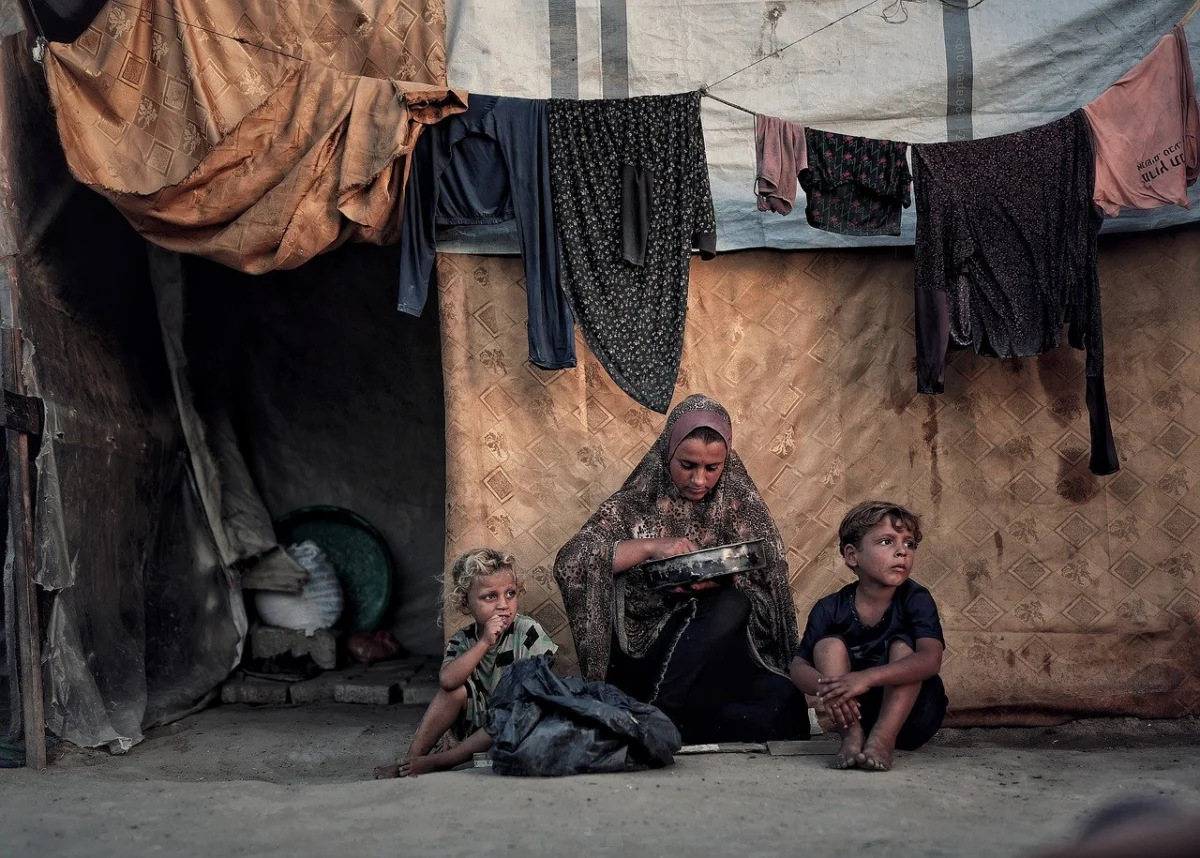
- July 2026: UNRWA confirmed that the displacement was not temporary. Despite the cessation of the most intense combat operations, over 33,000 individuals remained displaced, living in makeshift conditions, unable to return to the ruins of their former homes.
Supporting Data and Human Impact
The quantitative data provided in the OHCHR report paints a grim picture of the human cost of the operation. Beyond the mass displacement, the physical destruction of the camps has effectively erased the social and economic fabric of these communities.
The Human Toll
The report meticulously documented the deaths of 102 Palestinians during the period under review. Of this figure, 21 were minors. These deaths occurred amidst the chaotic forced evacuations, where residents reported being ordered from their homes at gunpoint. The restriction of humanitarian access meant that medical services were often unreachable for those injured during the incursions.
Infrastructure Devastation
The systematic nature of the destruction suggests that the military operations were designed to prevent return. By targeting essential services—cutting water pipes, smashing electrical transformers, and obstructing waste management—the operation ensured that the camps could not sustain a civilian population even after the immediate threat of combat subsided. Human Rights Watch corroborated these findings in a separate November 2025 report, titled "All My Dreams Have Been Erased," which detailed the total evacuation of the three camps.
Official Responses and International Stance
The response to the report has been sharply divided, reflecting the ongoing geopolitical tensions surrounding the status of the occupied territories.
The UN Human Rights Office
UN High Commissioner for Human Rights Volker Türk was unequivocal in his assessment of the operation. He suggested that the tactics employed under "Operation Iron Wall" were not merely collateral damage of military necessity, but rather a calculated strategy to facilitate the expansion of Israeli settlements. Türk called upon the Israeli government to immediately cease all forced displacement and to honor its obligations under international humanitarian law.
Israel’s Perspective
The Israeli government and military (IDF) have maintained that Operation Iron Wall was a necessary and legitimate counter-terrorism measure. Israel argues that the refugee camps had become hubs for militant groups and that the presence of weapon caches necessitated extensive operations to secure the northern West Bank. Israeli authorities maintain that they acted to protect their citizens from threats emanating from these camps and that the destruction of infrastructure was an unintended, albeit necessary, result of high-intensity urban combat.
Implications Under International Law
The OHCHR report serves as a formal legal challenge to Israel’s operational practices, invoking several pillars of international law that are central to the protection of civilians in occupied territories.
Article 49 of the Fourth Geneva Convention
The report explicitly references Article 49, which strictly prohibits the individual or mass forcible transfer of protected persons from occupied territory. The only exceptions permitted under this statute are for evacuations required by the security of the population or imperative military reasons—exceptions the UN report argues were not met in this case. The systematic nature of the displacements is presented as evidence that the military necessity threshold was not satisfied.
The Rome Statute and Crimes Against Humanity
The report notes that the "large-scale, long-term and systematic" nature of the displacement carries the hallmarks of a crime against humanity. Under the Rome Statute of the International Criminal Court, the forcible transfer of a population, when carried out as part of a widespread or systematic attack against a civilian population, falls under the court’s jurisdiction. The UN’s characterization of these actions as potential "ethnic cleansing" underscores the severity of the legal implications.
The ICJ Advisory Opinion
The legal landscape is further complicated by the 2024 International Court of Justice (ICJ) advisory opinion, which declared Israel’s continued presence in the occupied Palestinian territories to be unlawful. The ICJ urged Israel to bring its occupation to an end as rapidly as possible. The recent findings by the OHCHR add a new dimension to this advisory opinion, suggesting that not only is the occupation itself under scrutiny, but the specific conduct of military forces within that occupation may be in direct violation of the foundational principles of international humanitarian law.
Conclusion: The Path Forward
The findings of the UN report present a profound challenge to the international community. As thousands of Palestinians remain displaced from the ruins of their camps, the question of their right to return becomes a focal point of the ongoing conflict.
The characterization of the situation as potential "ethnic cleansing" shifts the discourse from a debate over military security to a debate over fundamental human rights and the legality of the occupation itself. With the international legal community increasingly focused on the applicability of the Rome Statute to these events, the pressure on the Israeli government to account for the actions taken during Operation Iron Wall is expected to mount. Whether through international arbitration, potential ICC investigations, or diplomatic pressure, the case of the 33,000 displaced Palestinians will likely serve as a pivotal point in the future of the Israel-Palestine conflict. The international community now faces the task of determining how to hold accountable those responsible for the systematic erasure of these communities, while simultaneously addressing the urgent humanitarian needs of those who have lost everything.
