



BERLIN – In a move intended to align with international climate obligations and signal a new era of industrial transformation, the German government has officially unveiled its comprehensive roadmap for a transition away from oil, coal, and natural gas. With this publication, Germany becomes the third nation globally, following the policy leads of France and the Netherlands, to formalize a national strategy for a post-fossil fuel economy by 2045.
However, as the dust settles on the official announcement, the document has sparked a fierce debate. While European neighbors and international climate monitors view the roadmap as a significant diplomatic signal, domestic stakeholders remain deeply skeptical. The government has clarified that the 2045 target does not constitute a total, legally binding phase-out of all fossil molecules, but rather a commitment to move away from them "as far as possible."
This linguistic nuance—the difference between a "phase-out" and an "optimal reduction"—has become the focal point of a widening rift between the federal coalition and the civil society groups that monitor Germany’s climate progress.
The Core Facts: Defining the 2045 Ambition
The roadmap outlines the structural transformation of the German economy, aiming to decouple industrial output from the carbon-intensive energy sources that have defined the nation’s economic miracle for the last century.
Key Pillars of the Strategy:
- Decarbonization of Heating: Shifting the residential and commercial building sectors away from gas-fired boilers toward heat pumps and district heating networks.
- Industrial Electrification: Providing a framework for steel, chemical, and cement industries to transition to green hydrogen and direct electrification.
- The "Residual" Dilemma: The government’s admission that "as far as possible" implies a continued reliance on fossil fuels for specific, hard-to-abate sectors where technological alternatives may not be economically or physically viable by 2045.
- International Alignment: By joining France and the Netherlands in this commitment, Germany seeks to exert pressure on other G7 nations to standardize their own pathways toward net-zero.
The roadmap functions less as a rigid legislative mandate and more as a strategic orientation document, designed to provide long-term "investment security" for private firms looking to decarbonize their supply chains.
A Chronology of the Transition
To understand why this roadmap is arriving now, one must look back at the trajectory of German energy policy over the last two decades.
- 2000s – 2010s: The Energiewende Era: Germany pioneered the Energiewende (energy transition), focusing primarily on the power sector. The massive rollout of wind and solar capacity was intended to be the backbone of a carbon-free economy.
- 2021: The Coalition Agreement: The current government, formed by the SPD, the Greens, and the FDP, entered office with the most ambitious climate mandate in German history.
- 2023 – 2024: Economic and Policy Friction: The government faced severe headwinds, including the energy crisis triggered by the loss of cheap Russian gas and internal disputes regarding the Heizungsgesetz (Heating Law), which led to a temporary collapse in public support for climate policies.
- September 2026: The Roadmap Unveiling: Following months of internal negotiations, the government publishes its 2045 roadmap, attempting to harmonize its climate goals with the realities of industrial preservation.
Supporting Data: The Reality Gap
The government’s optimism faces a sobering statistical landscape. Despite significant growth in renewable energy capacity, Germany’s transition has been uneven.
The EV Uptake Struggle
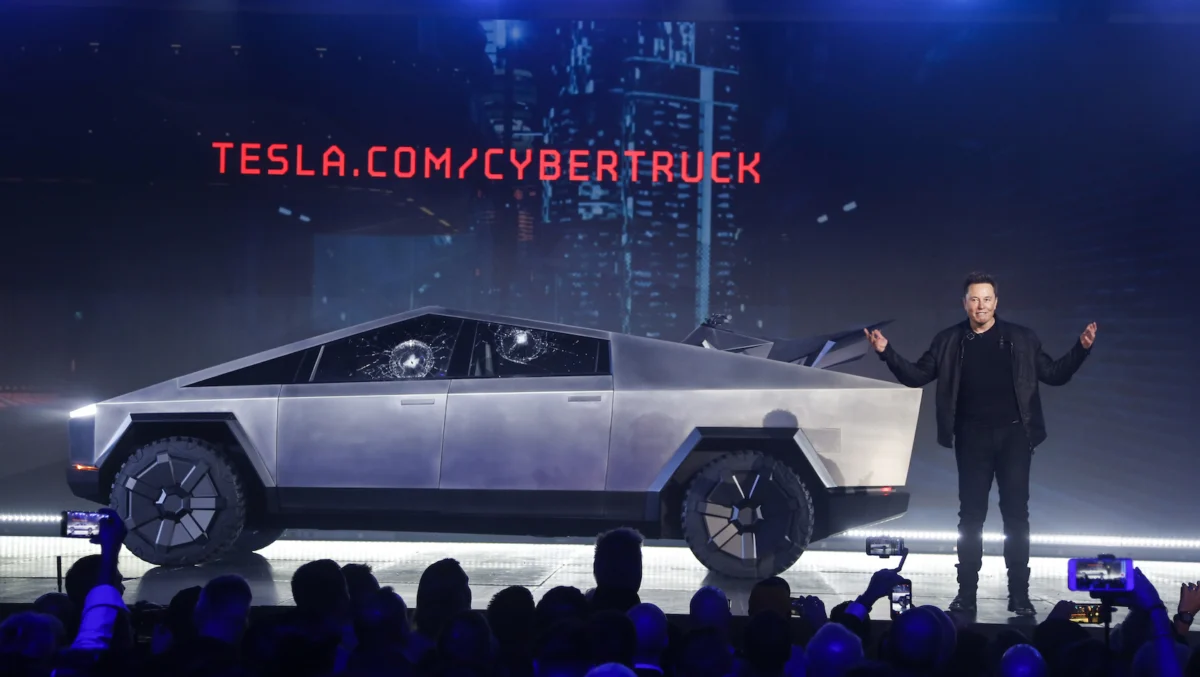
As evidenced by recent snapshots of the German automotive market, the transition to electric vehicles (EVs) has lagged behind initial government projections. While the administration previously set aggressive targets for millions of EVs on the road by 2025, current data suggests that the transition is stalling due to high costs, charging infrastructure bottlenecks, and consumer hesitation.
The Energy Mix
While the share of renewables in the power grid has reached record highs, the industrial sector remains tethered to fossil gas. Furthermore, the government’s recent decision to subsidize new natural gas power plants—intended as "peaker" plants to support the grid during periods of low wind and solar—has created a paradox. These plants are built with "hydrogen readiness" in mind, but critics point out that the infrastructure is currently reliant on methane, effectively locking in fossil fuel consumption for the next two decades.
Official Responses: Government vs. Critics
The Government Position
The Federal Ministry for Economic Affairs and Climate Action maintains that the roadmap is a pragmatic acknowledgment of reality. A spokesperson stated that the goal is to create a "climate-neutral industrial base" without causing "deindustrialization." They argue that by maintaining some flexibility, Germany can ensure that its energy-intensive companies—the backbone of the national economy—remain competitive globally during the transition period.
Civil Society and Environmental Groups
Non-governmental organizations (NGOs) have been far less forgiving. Representatives from groups like Germanwatch and BUND argue that the government is essentially "hedging its bets" on climate change.
"The roadmap provides a clear signal to the world, but it sends a confusing signal to the German public," said one climate policy analyst. "By using phrases like ‘as far as possible,’ the government is creating a loophole large enough to drive a coal truck through. We see subsidies for gas plants and a fractured approach to renewables reform that suggests the government is still prioritizing incumbent industrial interests over the urgent necessity of a complete fossil fuel phase-out."
Implications: What This Means for Germany and the World
The publication of this roadmap carries profound implications, both domestically and internationally.
Domestic Economic Implications
The primary risk for Germany is "transition fatigue." If the public perceives that the government is failing to meet its targets, or that those targets are being diluted to protect special interests, political polarization is likely to increase. Economically, the focus on hydrogen is a high-stakes gamble. If the infrastructure fails to scale as expected, Germany could face a future of higher energy costs, potentially driving manufacturers to relocate to markets with more stable energy prices.
International Diplomatic Implications
On the global stage, Germany’s pivot is a test case. If Europe’s largest economy cannot navigate the transition away from fossil fuels while maintaining industrial prosperity, other developing nations may view their own decarbonization goals as impossible. Conversely, if Germany successfully uses this roadmap to streamline permitting processes and incentivize green tech, it could become the blueprint for other advanced economies.
The "Residual Fossil" Debate
The most significant long-term question is how the 2045 roadmap will be updated. In the coming years, advancements in Carbon Capture and Storage (CCS) and synthetic fuels will likely play a role in determining how much of that "residual" fossil fuel usage is actually necessary. The government’s current stance effectively kicks the can down the road, waiting for technological breakthroughs to solve the problems that policy has yet to address.
Conclusion: A Delicate Balancing Act
Germany’s 2045 roadmap is a document of profound compromise. It represents a government caught between the existential threat of climate change and the immediate, material necessity of keeping its factories running.
By declaring an intent to move away from fossil fuels while simultaneously authorizing new gas-based infrastructure, Berlin is attempting to walk a tightrope. Whether this approach provides the necessary stability for a green industrial revolution or merely delays the inevitable challenges of a fossil-free future remains to be seen. For now, the German government has provided the map, but the route remains subject to intense, and likely volatile, domestic negotiation.
As the international community watches, Germany’s success or failure will not be measured by the language in this document, but by the tangible changes in the German energy mix over the next five, ten, and fifteen years. The "as far as possible" clause will undoubtedly be the benchmark against which future generations judge the efficacy of the 2026 climate strategy.
