






The Australian innovation ecosystem converged in Sydney on September 10 for the annual Startup Daily Best in Tech Awards, a gala event that serves as the definitive barometer for the nation’s burgeoning technology sector. As the curtains fell on the 2026 ceremony, two companies emerged as the undisputed titans of the evening: Sydney-based environmental monitoring pioneer SiteHive and Melbourne-founded healthtech powerhouse Heidi.
In a competitive landscape characterized by rapid digital transformation and sustainability-focused engineering, these two organizations demonstrated that whether through the lens of IoT-driven environmental stewardship or AI-powered clinical efficiency, Australian technology is not just participating in the global market—it is setting the standard.
The Vanguard of Industry: A Night of Recognition
The Startup Daily Best in Tech Awards are designed to highlight the resilience, vision, and commercial viability of startups and scaleups that are punching above their weight. With 15 categories spanning the breadth of the tech industry, the event recognizes founders, investors, and teams who have transformed abstract ideas into essential infrastructure.
Startup of the Year: SiteHive
The "Startup of the Year" accolade, proudly sponsored by AWS Startups, is perhaps the most coveted prize of the evening. It identifies an early-stage company (fewer than 100 employees) that has displayed exceptional growth, robust commercial traction, and a disruptive approach to its specific vertical.
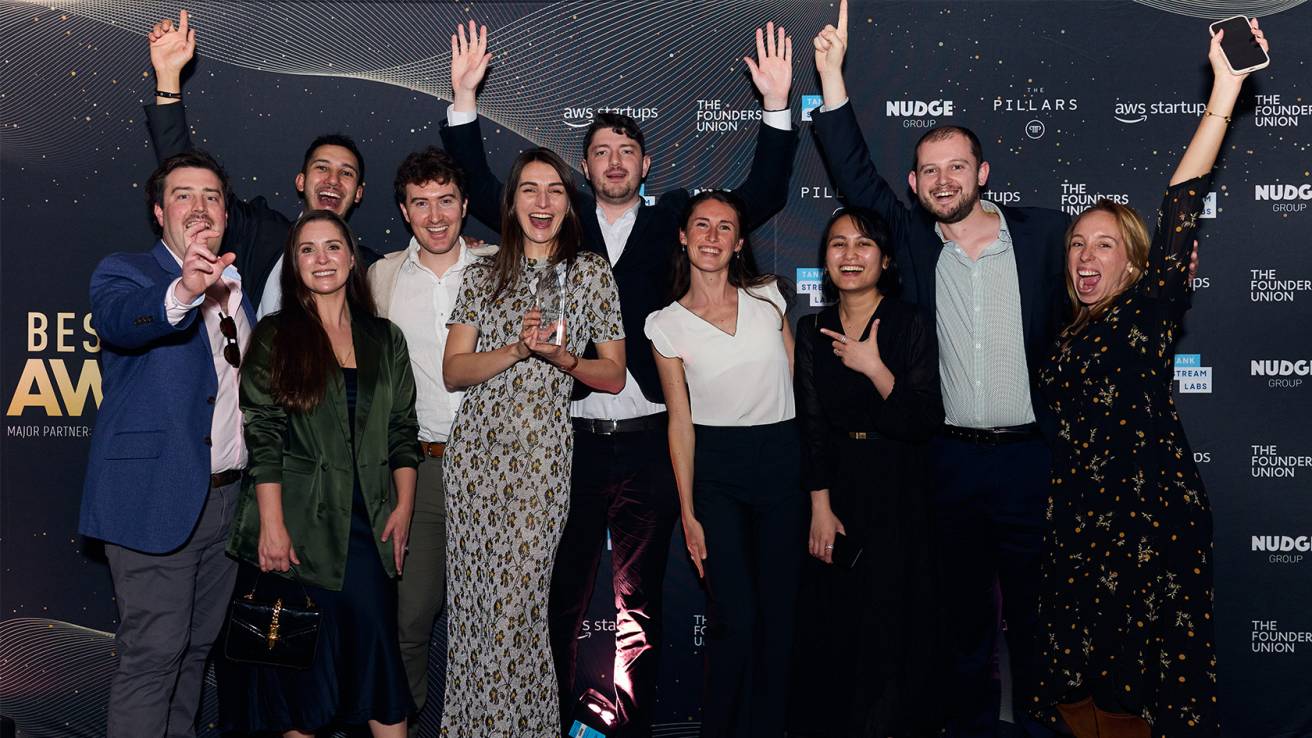
SiteHive secured this honor after a grueling selection process, rising above a high-caliber shortlist that included sustainable textile innovator Xefco, quantum sensing specialist Nomad Atomics, and telehealth platform Doccy. For the 35-person team at SiteHive, the award is a validation of six years spent refining the intersection of IoT hardware and environmental compliance.
Scaleup of the Year: Heidi
If SiteHive represents the promise of the next generation, Heidi embodies the explosive potential of successful scaling. Awarded "Scaleup of the Year"—also sponsored by AWS Startups—Heidi was recognized for its transition from a disruptive newcomer to a global enterprise utility. The category specifically honors unlisted entities that have moved beyond Series B funding, demonstrating systemic excellence in revenue, market penetration, and organizational scaling.
Chronology: From Concept to Global Impact
The success of these two organizations did not happen overnight; both companies represent the culmination of years of iterative development, strategic pivoting, and a relentless commitment to problem-solving.
The SiteHive Trajectory
- 2020-2022: The formative years. SiteHive began as an answer to the inefficiency of manual, analog environmental monitoring on construction sites. The team focused on developing durable, internet-connected sensors capable of measuring noise, dust, vibration, and weather data.
- 2023-2024: Market Validation. The platform gained traction within the heavy infrastructure sector, proving its worth on high-stakes projects like the Sydney Metro and Western Sydney Airport.
- 2025-2026: The AI Inflection Point. SiteHive integrated AI-powered analytics to move beyond simple data logging, enabling predictive maintenance and real-time site compliance. This period marked their expansion into New Zealand, signaling the start of their international footprint.
The Heidi Ascent
- 2024: Launch. Heidi entered the market with a clear mission: to alleviate the administrative burden on clinicians through AI-powered medical transcription.
- 2025: Rapid Expansion. Within 12 months, the platform evolved from a single-product clinical scribe into an enterprise-wide health solution, hitting an impressive $50 million in Annual Recurring Revenue (ARR).
- 2026: Global Dominance. Heidi scaled its operations to 190 countries, processing 2.8 million clinical notes weekly in over 110 languages, effectively becoming the world’s most widely used AI medical scribe.
Supporting Data and Technical Prowess
Behind the trophies lies a foundation of sophisticated data and engineering.

For SiteHive, the core value proposition is "environmental visibility." In the construction industry, noise and dust complaints often result in costly project shutdowns. By deploying over 1,200 devices, SiteHive has created a "mesh" of data points that allows project managers to act before a regulatory threshold is breached. As head of engineering Robert Weiss noted, the company’s focus has shifted to the cadence of innovation. By leveraging AI in their development pipeline, they have slashed the time-to-market for new hardware features, ensuring that the technology is not only advanced but also accessible and reliable for field operators.
Heidi’s data profile is equally staggering. With a team that has ballooned to 500 employees, the company’s success is rooted in the move from "capturing" to "acting." Dr. Simon Kos, Heidi’s chief medical officer, emphasizes that the platform is no longer just a documentation tool; it is a clinical decision-support system. By automating the transition from consultation to administrative follow-up—such as automated referrals and post-visit summaries—Heidi is actively reclaiming hours of physician time every single day.
Official Responses: The Philosophy of Growth
The leadership teams at both companies view these awards as milestones in a much larger journey.
"We’re revolutionising environmental monitoring," said Laurene Michon, Head of Product at SiteHive. "We now have 1,200+ devices around Australia and New Zealand, and 35 people working really hard to produce this piece of hardware and those new features." Her sentiment highlights the "boots-on-the-ground" nature of their success—this is not just software in the cloud; it is hardware in the dirt, the dust, and the heat of construction sites.
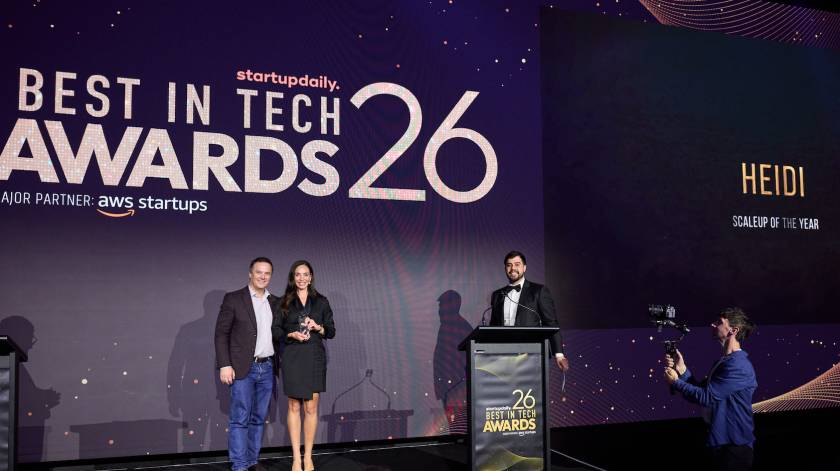
For Heidi, the "AI Gamechanger" award served as a dual recognition. Dr. Simon Kos articulated the company’s evolution: "We moved out of primary care and into the enterprise. Then we went from single product to multi-product. We’re looking to go beyond just capturing and guiding care into the whole acting of care." This shift toward "active care" represents a maturation of the AI-in-healthcare space, moving away from "pilot projects" and into standard-of-care utility.
Implications for the ANZ Startup Ecosystem
The double victory of SiteHive and Heidi at the 2026 Best in Tech Awards sends several clear signals to the broader Australian and New Zealand (ANZ) tech ecosystem:
- Vertical AI is the New Normal: Both companies prove that the most successful startups are not those that simply apply AI to general tasks, but those that embed AI into specific, high-friction industry workflows (construction compliance and medical administration).
- Hardware-Software Integration: SiteHive’s success challenges the notion that the "best" startups are purely digital. By combining robust IoT hardware with sophisticated cloud software, they have built a moat that is difficult for software-only competitors to cross.
- Global Ambition from Day One: Heidi’s rapid expansion into 190 countries serves as a roadmap for ANZ founders. It demonstrates that geography is no longer a barrier for Australian tech companies if the product-market fit is universal and the scaling strategy is enterprise-focused.
- The Rise of "Acting" AI: The industry is moving past the era of chatbots and simple summaries. As Heidi has shown, the next wave of value creation lies in AI systems that trigger downstream actions, reducing human cognitive load and operational friction.
Conclusion
The 2026 Startup Daily Best in Tech Awards were more than a celebration of corporate achievement; they were a showcase of how Australian ingenuity is tackling some of the world’s most persistent challenges. Whether it is SiteHive acting as the "eyes and ears" of construction sites to protect our natural environments, or Heidi providing the "brain" for global clinical workflows, these companies are defining what it means to be a modern tech leader.
As they continue to scale, their impact will likely be measured not just in ARR or headcount, but in the efficiency of our infrastructure and the quality of our healthcare—proof that when innovation meets execution, the results are transformative.
