



In a landmark legislative push aimed at reshaping the digital landscape, the Albanese government has officially unveiled its "digital duty of care" framework. The proposed reforms seek to impose stringent minimum standards on social media platforms, with a specific focus on the opaque algorithms that dictate user experiences. While the government frames the initiative as a victory for individual autonomy—giving users the power to opt out of curated feeds—the proposal has ignited a fierce political firestorm, with critics warning of unprecedented government overreach and the potential for state-sanctioned censorship.
The Core Proposal: Redefining User Autonomy
At the heart of the legislation is a move to de-platform the "black box" nature of social media engagement. Under the proposed laws, social media giants would be legally required to provide users with a "neutral choice" regarding their content feeds. By decoupling user experience from engagement-driven algorithms, the government argues it is returning agency to the citizen.
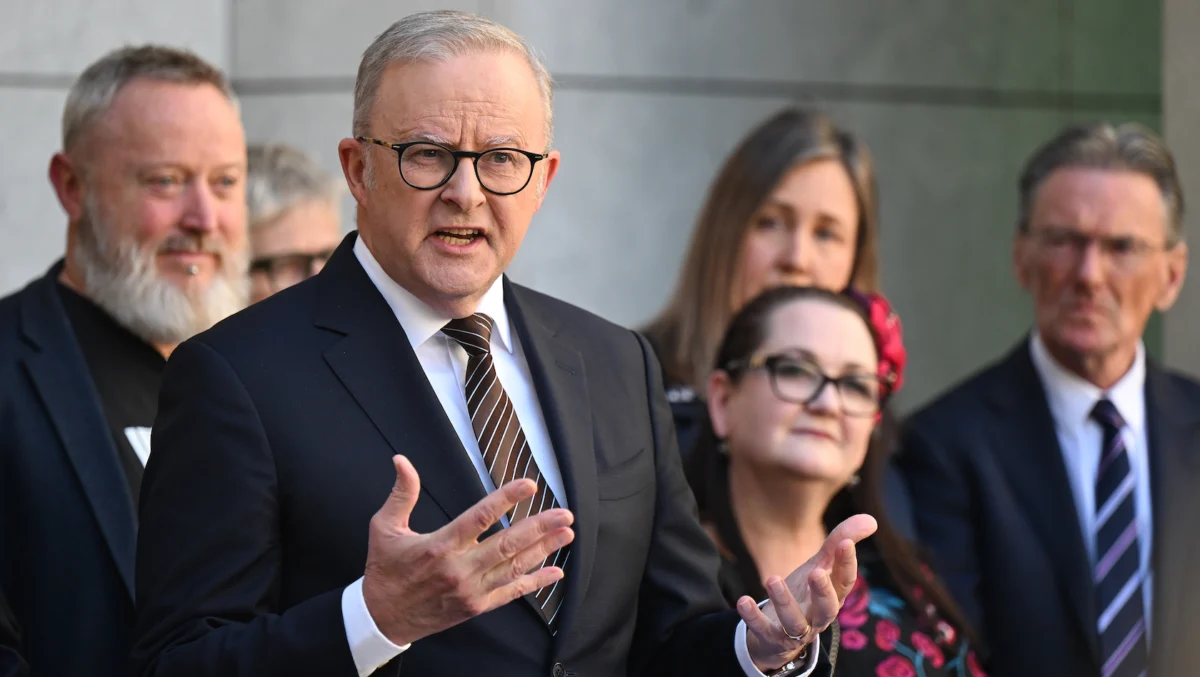
Prime Minister Anthony Albanese has been vocal in his defense, characterizing the move not as a restriction on speech, but as an expansion of consumer rights. "Giving people the option to get rid of algorithmic social media feeds is not an attempt at political censorship," the Prime Minister stated during a press conference in Canberra. "It is about ensuring that technology serves the user, rather than the user being a mere product of an engagement-maximization engine."
A Chronology of the Regulatory Push
The road to these reforms has been paved by years of increasing public anxiety regarding digital safety, mental health, and the polarization of public discourse.
- 2023–2024 (The Research Phase): Following a series of inquiries into the impact of social media on youth mental health, the Australian government began signaling a shift from a "self-regulation" model to a "duty of care" framework.
- Early 2025 (Stakeholder Consultations): The Department of Infrastructure, Transport, Regional Development, Communications and the Arts held closed-door consultations with major tech platforms, including Meta, X (formerly Twitter), and TikTok, to discuss "safety by design."
- Mid-2026 (The Draft Bill): The government released the formal draft of the digital duty of care laws. The draft introduced the controversial power for the Communications Minister to provide guidance—or, as critics argue, directives—on what constitutes "harmful content."
- September 2026 (The Public Confrontation): Following the announcement, the Opposition and crossbench parties, including One Nation, launched a coordinated campaign against the bill, citing the broad powers granted to the executive branch as a "slippery slope" toward government-controlled information environments.
Supporting Data: The Algorithmic Dilemma
The government’s rationale for the bill rests on a growing body of evidence suggesting that algorithmic curation contributes to radicalization, misinformation, and deteriorating mental health.
Internal documents leaked from major platforms over the past three years have consistently shown that "high-arousal" content—often characterized by outrage or extreme viewpoints—is prioritized by recommendation engines to maximize "time-on-platform." A 2025 government-commissioned report suggested that over 65% of Australian social media users feel "overwhelmed" by the content served to them, with a significant majority expressing a desire for chronological or non-curated feed options.
However, industry experts point out that the implementation of "neutral" algorithms is technically fraught. "There is no such thing as a truly neutral algorithm," notes Dr. Elena Vance, a specialist in digital ethics at the Australian National University. "Even a chronological feed is a design choice. The government’s challenge is that by mandating a ‘neutral’ option, they are effectively legislating the removal of a company’s primary product differentiator, which is their curation engine."
The Political Divide: Official Responses
The political fallout has been swift and polarized.
The Government’s Position
Labor ministers argue that the current system is fundamentally broken. Communications Minister Michelle Rowland has emphasized that the "duty of care" is a legal obligation to protect users from systemic risks. "If a platform’s business model inherently incentivizes the amplification of harmful content, the platform must be held accountable," she said. The government contends that the "neutral choice" is a middle-ground solution, avoiding the heavy-handedness of an outright ban on specific content while still providing a "safety valve" for users who want to opt out of the toxic feedback loops.
The Opposition’s Critique
The Opposition has characterized the legislation as a "Ministerial power grab." The primary concern centers on the provision that allows the Communications Minister to define what is "harmful." Shadow Minister for Communications, David Coleman, warned that such power is subjective and could be easily abused by future governments to silence political dissent.
"This isn’t about protecting children or users," Coleman stated. "It’s about giving the government of the day the power to pressure platforms into suppressing views they find inconvenient under the guise of ‘harm reduction.’ It is a direct assault on the digital public square."
One Nation, meanwhile, has taken a more populist stance, framing the bill as an attempt to "censor the truth." They argue that the government’s definition of "harm" will inevitably overlap with "misinformation," which they argue is a label used to marginalize dissenting opinions.
Implications for the Digital Economy
The implications of this legislation are profound, both for the tech industry and for the future of democratic debate in Australia.
For Tech Platforms
If passed, the legislation will force a massive re-engineering of the recommendation algorithms currently used by the world’s largest tech companies. These companies will likely face significant compliance costs. Furthermore, the threat of heavy fines for failing to adhere to the "duty of care" standard may lead to "over-censorship"—a phenomenon where platforms proactively remove ambiguous content to avoid legal liability.
For the Australian Public
For the average user, the reform promises a more controlled digital environment. However, the trade-off is a potentially less vibrant, more sanitized internet. The "neutral" feed may offer a reprieve from inflammatory content, but critics argue it may also limit access to alternative news sources and minority viewpoints that rely on algorithmic discovery to reach an audience.
For Democracy
The most significant long-term implication is the precedent this sets for the relationship between the state and digital platforms. By codifying a "duty of care," Australia is moving closer to the European Union’s Digital Services Act (DSA) model. However, the specific inclusion of ministerial discretion marks a distinctively Australian shift toward executive oversight.
If the legislation survives the coming parliamentary battles, it will transform Australia into a global laboratory for digital regulation. Whether this results in a safer digital environment or a more stifled one remains to be seen. As the debate moves toward a vote, the central question remains: who should decide what we see online—the machines, the companies that own them, or the government that governs us?
The government insists it is the users who will have the final say. But as the opposition prepares to fight the bill in the Senate, the "neutral choice" looks increasingly like the most partisan decision in the history of Australian digital policy.
