




In an automotive landscape currently defined by consumer hesitation and shifting economic priorities, Kia has emerged as a clear bellwether for the modern buyer’s psyche. While luxury segments grapple with cooling demand and premium price tags face stiff resistance, the South Korean automaker has officially signaled that the appetite for new vehicles remains robust—provided the value proposition is surgically precise.
In August 2026, Kia announced a historic milestone, recording 83,798 units sold. This achievement is not merely a single-month victory; it places the brand on a trajectory to secure its fourth consecutive year of record-breaking annual sales. By prioritizing accessibility and electrification, Kia has successfully navigated the turbulent waters of high interest rates and volatile gas prices, proving that the secret to market dominance in 2026 lies in the balance between affordability and fuel-efficient technology.
The Strategy: Why Kia is Winning the "Value War"
The overarching narrative of the current automotive market is one of "price fatigue." For years, buyers have been squeezed by ballooning MSRPs and aggressive dealer markups. Kia’s recent success is a direct response to this environment. By maintaining a portfolio where seven distinct models start under the $30,000 threshold, the brand has effectively insulated itself from the "luxury-or-bust" trap that has ensnared several competitors.
The Hybrid Revolution
Beyond aggressive pricing, Kia’s pivot to hybrid powertrains has proven to be a masterstroke. In August alone, the company saw its cumulative hybrid sales surge by a staggering 99% compared to the same period in 2025. This isn’t a niche shift; it is a fundamental change in consumer behavior. The Sportage Hybrid, for instance, saw a 40% year-over-year increase, while the Sorento and Carnival hybrids posted gains of 22% and 15%, respectively.
This data suggests that while the transition to full Battery Electric Vehicles (BEVs) is facing a "plateau" in terms of mass adoption due to infrastructure concerns and cost, consumers are voting with their wallets for the bridge technology of hybrids. They want the fuel efficiency of electrification without the range anxiety or the price premium associated with full-EV platforms.
A Chronological Shift in Market Dynamics
The path to this record-breaking August did not happen in a vacuum. Over the past 24 months, Kia has systematically recalibrated its lineup to reflect the "K-shaped" recovery of the automotive industry.
- 2024 – The Stabilization Phase: As the post-pandemic supply chain issues resolved, Kia began aggressively expanding its hybrid offerings, recognizing that the long-term outlook for fuel prices would remain uncertain.
- Early 2025 – The Sedan Renaissance: While much of the industry pivoted entirely to SUVs, Kia doubled down on its sedan portfolio, the K4 and K5. This period saw the realization that sedans—when designed with modern styling and competitive technology—still command a loyal demographic.
- Mid-2026 – The EV Realignment: With the expiration of certain federal tax incentives in late 2025, full EV sales across the industry saw a predictable dip. Kia responded by segmenting its EV strategy, focusing on the high-end luxury of the EV9 and the entry-level accessibility of the upcoming EV3.
- August 2026 – The Record Break: The culmination of these strategies resulted in the record-setting sales figures released this month, validating the company’s multi-pronged approach.
Data Analysis: The Model-by-Model Breakdown
A granular look at the August 2026 sales figures reveals where the brand’s strength truly lies. While the Sportage continues to reign supreme as the volume leader with 18,723 units moved in August, the performance of the sedan segment is the real surprise.
The Sedan Comeback
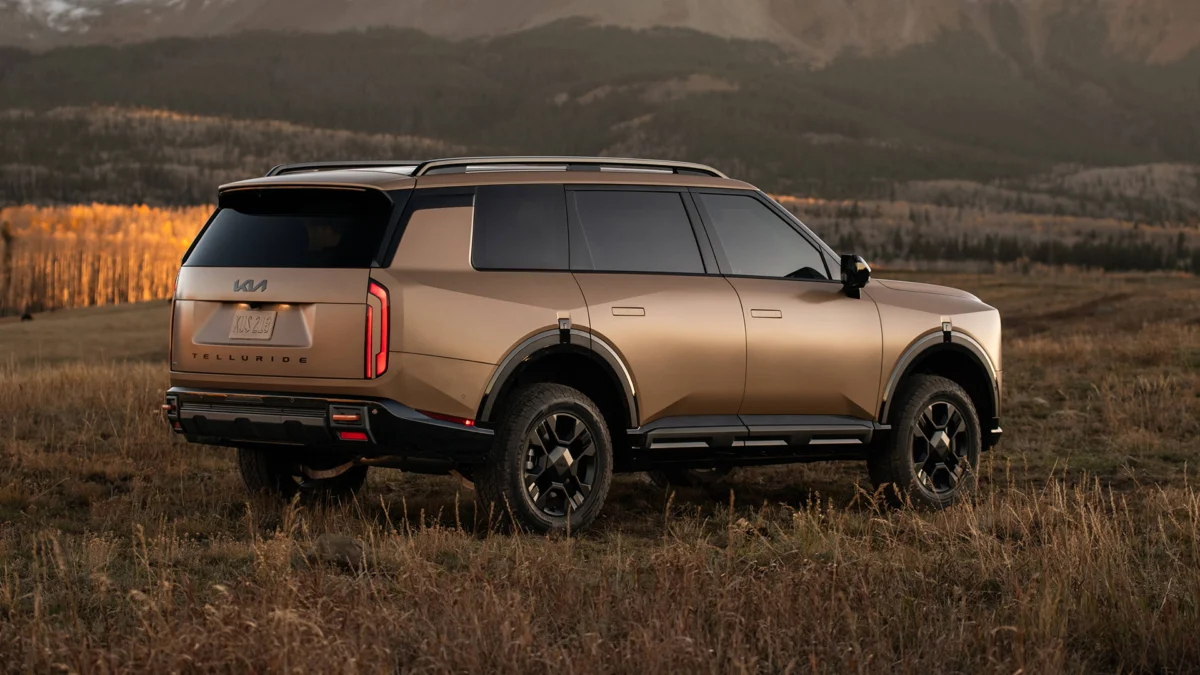
The K4 and K5 combined for over 20,000 units in August. When viewed against the Seltos and Sorento, it becomes clear that Kia has successfully prevented its sedan lineup from becoming obsolete. The K4, in particular, is currently outperforming the Telluride—a vehicle widely credited with transforming Kia’s brand perception over the last five years.
The EV Landscape
Kia’s EV performance requires a nuanced lens. The year-over-year decline in EV6 sales—falling from 1,796 to 712 units—reflects a market "correction" following the pre-tax-credit rush of 2025. However, the EV9 remains a steady performer with 10,474 units sold year-to-date. The arrival of the sub-$30,000 EV3 is the next chapter in this narrative, promising to capture the budget-conscious EV buyer that the EV6, currently caught in a "no-man’s land" of pricing and segment identity, has failed to retain.
| Model | Aug 2026 Sales | Aug 2025 Sales | 2026 YTD | 2025 YTD |
|---|---|---|---|---|
| EV9 | 1,789 | 2,679 | 10,474 | 9,354 |
| K4 | 12,881 | 12,091 | 98,554 | 98,814 |
| Sportage | 18,723 | 18,023 | 129,713 | 119,587 |
| Telluride | 12,693 | 12,177 | 98,111 | 84,090 |
| Carnival | 7,389 | 6,522 | 54,736 | 45,602 |
Official Perspectives and Market Implications
While Kia has refrained from issuing an exhaustive press release regarding every internal metric, the industry consensus is clear. Analysts at the major firms are pointing to Kia’s ability to remain "agile."
"Kia is doing what the legacy giants have struggled to do: they are listening to the market in real-time," notes one industry analyst. "When customers asked for hybrid versions of their sedans, they signaled that they were listening. When the market screamed for lower EV entry points, they fast-tracked the EV3. The record is a byproduct of being the most responsive manufacturer in the room."
The "Hybrid Gap"
There is, however, an undercurrent of pressure from the consumer base. Enthusiasts and potential buyers have been vocal on platforms like Reddit and industry forums regarding the absence of hybrid powertrains in the K4 and K5 models. Should Kia choose to integrate hybrid technology into these high-volume sedans, the company could unlock a new ceiling for market share, potentially challenging the dominance of long-standing leaders like the Honda Accord or Toyota Camry.
Future Implications: What to Watch for in Q4
As we move into the final quarter of 2026, several indicators will determine if Kia can maintain this momentum.
- The EV3 Rollout: As the sub-$30,000 EV3 hits showrooms, it will test the theory that a "cheapo" EV can drive volume in a market wary of high-tech maintenance costs.
- Market Comparison: While Kia currently trails Hyundai, Honda, and Toyota, its ability to consistently outsell brands like Mazda and Subaru indicates a shift in brand loyalty. Kia is no longer seen as a "value alternative" but as a primary contender for the average family’s garage.
- The "No-Man’s Land" EV6: If Kia does not reposition the EV6, it risks further declines. The model currently occupies a precarious middle ground between the flagship EV9 and the entry-level EV3.
In conclusion, Kia’s record-breaking month is a testament to the fact that the automotive market is not dead; it is simply evolving. By focusing on the intersection of affordability, hybrid reliability, and strategic sedan positioning, Kia has created a blueprint that other manufacturers will undoubtedly be forced to study. The brand is not just selling cars; it is selling a solution to the economic anxieties of the mid-2020s, and for now, that solution is resonating with a record-breaking number of Americans.
