



For electric vehicle (EV) owners, the transition to public charging infrastructure is often fraught with anxiety. While the industry is making strides in reliability and accessibility, the decentralized nature of charging networks has created a "Wild West" scenario. Nowhere is this more apparent than in the confusing, often predatory pricing models found at select car dealership charging stations.
A recent incident in Macomb Township, Michigan, serves as a cautionary tale for the growing EV community. Stanley Kpenkann, a motorist driving a rented Chevrolet Bolt, discovered that a seemingly standard public charging stop could result in a bill exceeding $400—a staggering 31 times higher than the standard market rate.
The Anatomy of an Overcharge
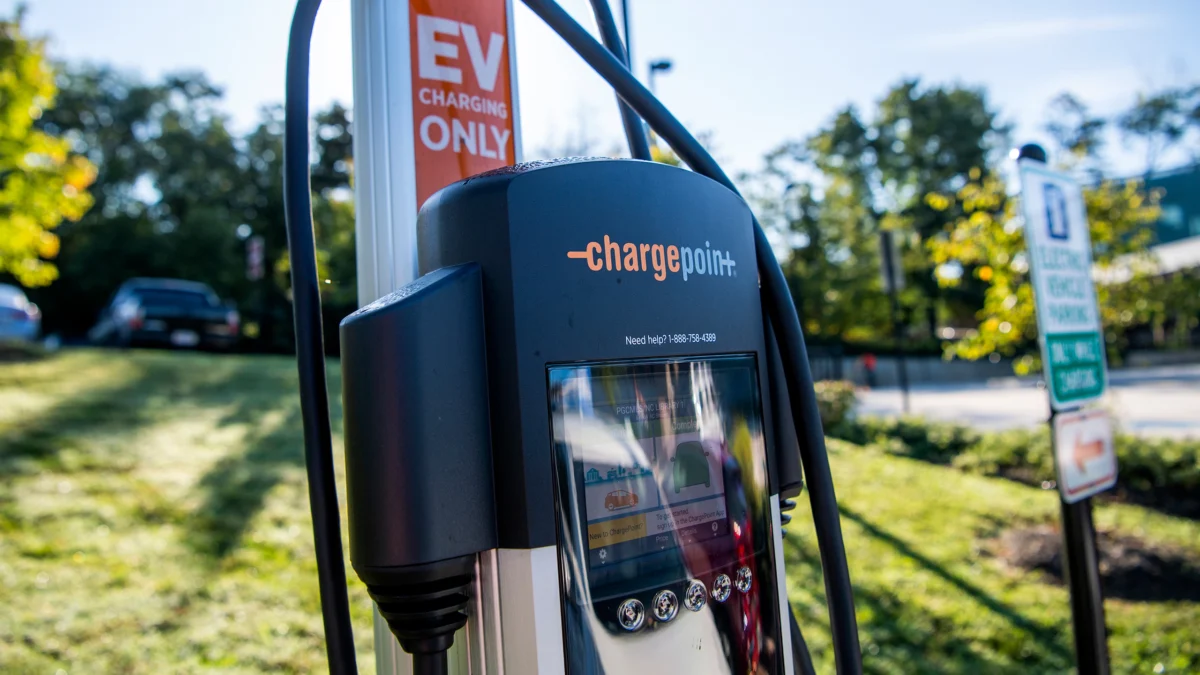
The ordeal began when Kpenkann found himself in a familiar predicament: an EV with dwindling range and an unfamiliar route. With only an estimated 20 minutes of driving range remaining on his Bolt, he turned to the EVgo mobile application to locate the nearest reliable charger. The app directed him to a Hyundai dealership on Hall Road, where a ChargePoint-branded station appeared as an available public resource.
Without the benefit of a clear, prominent price disclosure, Kpenkann initiated a 44-minute charging session. It was only after the transaction was complete that the reality of the cost materialized. The dealership had set an astronomical rate: $5 per kilowatt-hour (kWh) and an additional $5 per minute. By the time the Bolt was topped off, the final invoice totaled a jaw-dropping $418.
Chronology of a Charging Catastrophe
To understand how such an extreme discrepancy occurred, one must look at the timeline of events that led to the financial shock:
- The Search: Kpenkann, operating in an unfamiliar area, relies on the EVgo app to navigate his range limitations. The app identifies the Hall Road Hyundai dealership as a valid location.
- The Connection: Utilizing a roaming agreement between EVgo and ChargePoint, Kpenkann plugs in. He reports that the pricing was displayed on the charger’s physical screen, but it was not adequately highlighted within the mobile interface that guided his decision.
- The Charging Session: The vehicle draws power for 44 minutes. During this time, the meter runs at a dual-rate structure—$5/kWh and $5/minute—designed to extract maximum revenue rather than provide a service.
- The Realization: Upon receiving the notification of the charge, Kpenkann realizes the magnitude of the error.
- The Dispute: Kpenkann contacts EVgo, seeking a correction for what he assumes is a technical error.
- The "Goodwill" Resolution: After significant friction and administrative back-and-forth, EVgo eventually offers a $405 "goodwill refund." Kpenkann is left responsible for the remaining $13.27—the rate he would have paid under his standard subscription plan.
Supporting Data: The Cost of Charging
To put Kpenkann’s bill in perspective, it is necessary to examine the current state of the market. According to data from Qmerit, the national average for Level 3 DC fast-charging typically hovers around $0.53 per kilowatt-hour.
In this specific instance, the $5/kWh rate represents an electricity cost nearly 10 times the national average. When the additional $5 per-minute fee is factored into the 44-minute session, the total cost spirals into the hundreds of dollars. For context, the Chevrolet Bolt features a 65-kWh battery. If the car were charged from near-empty to full at standard public rates, a driver would expect to pay between $20 and $35. Paying $418 for the same service isn’t just a premium; it is an economic anomaly that highlights a lack of consumer protection in the charging sector.
The Dealership’s Perspective
When questioned by local news outlet WXYZ regarding the pricing structure, representatives for the Hyundai dealership maintained that the charger was never intended for general public use. The dealer claimed the station was reserved exclusively for its own customers and dealership-owned inventory.
The exorbitant pricing, according to the dealer, serves as a "deterrent" to prevent non-customers from occupying the space. While businesses are certainly within their rights to manage private property, the decision to list a deterrent-priced charger on a public-facing application like EVgo creates a "trap" for unsuspecting drivers. If a station is effectively private, listing it on a public network—without a prominent, flashing warning about the non-standard pricing—is a failure of both network management and dealership transparency.
Implications for the EV Industry
This incident shines a harsh light on several systemic issues that threaten the widespread adoption and trust of electric vehicles.
1. The Fragmentation of Pricing Models
The roaming agreements that allow users to access multiple networks, such as the one between EVgo and ChargePoint, are intended to provide convenience. However, they also create "pricing opacity." When a user taps into a network through a third-party app, they may not be receiving real-time, transparent updates regarding the specific station’s fee structure. The industry requires a standardized, "pump-style" pricing display that is mandated by law and enforced by consumer protection agencies, much like gasoline prices are required to be displayed clearly on signage.
2. The Responsibility of Charging Networks
Networks like EVgo and ChargePoint have a duty of care to their subscribers. By allowing a dealership to list a "deterrent-priced" charger as a public utility, the network indirectly facilitates these predatory charges. There is a strong argument that if a station’s pricing deviates by more than a certain percentage from the national average, the network should be required to flag the station as "High-Cost" or "Non-Standard" within their navigation interfaces.
3. Consumer Advocacy and Education
The "goodwill refund" provided to Kpenkann is a tacit admission that the billing was unreasonable, yet it remains an inconsistent solution. Relying on the benevolence of a charging network after the fact is not a sustainable policy. Drivers must be educated on the risks of dealership charging. Until universal, clear signage and digital transparency are required, drivers should treat dealership chargers with extreme caution, verifying the price on the station’s physical display before initiating a session.
4. Regulatory Oversight
As the number of EVs on the road grows, so too does the need for regulatory oversight of the charging sector. State legislatures and the FTC may need to intervene to prevent "dynamic pricing" from spiraling into price gouging. Laws could be enacted to require that any station connected to a public network must adhere to a "Reasonable Pricing" cap, or at the very least, a mandatory "Price Confirmation" screen that requires the user to acknowledge an above-average rate before the charge begins.
Conclusion: A Lesson in Caution
The $418 charge serves as a sobering reminder that the transition to electric mobility is still in its infancy regarding consumer safeguards. While public chargers are becoming more common, they are not all created equal. For now, the burden of "due diligence" remains heavily on the driver.
When you are on the road and forced to rely on a dealership charger, take a moment to pause. Check the display, read the fine print, and consider if an alternative, even if it adds minutes to your trip, might save you a catastrophic invoice. The EV revolution is built on the promise of efficiency and lower costs; incidents like the one in Macomb Township prove that we have a long way to go before that promise is truly fulfilled for every driver.
