





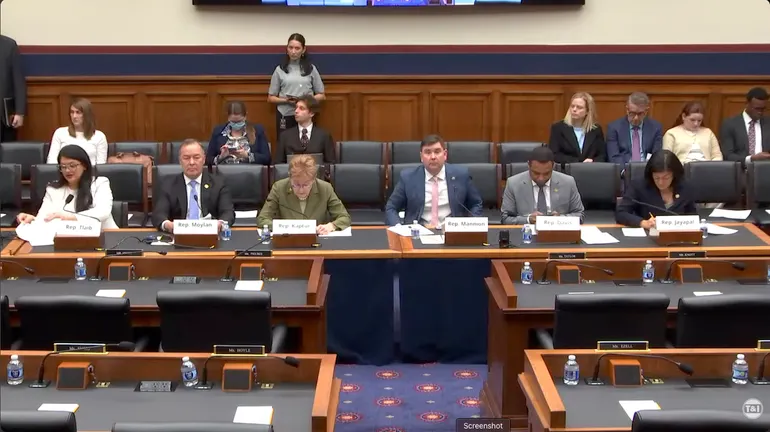
As the sweltering heat of August descends upon Washington, D.C., a different kind of pressure is mounting inside the halls of Congress. With the House of Representatives poised to enter its summer recess and the Senate scheduled for a month-long departure in mid-August, policymakers are facing a narrowing window of opportunity to address looming expirations in federal transportation and infrastructure policy.
For county leaders, transportation advocates, and industry analysts, the current legislative environment is defined by uncertainty. As the 2024 election cycle accelerates, the possibility of a permanent, long-term reauthorization of key transportation programs is fading, replaced by the grim reality of a short-term patch.
Main Facts: The Impending Legislative Cliff
At the heart of the current debate is the expiration of key provisions within federal transportation law. Legislative experts and lobbyists are increasingly focused on the mechanics of a stopgap measure, as the time required to negotiate, draft, and pass a comprehensive long-term bill has effectively evaporated.
The consensus among stakeholders is that Congress will likely opt for a "kicking the can" strategy—a short-term extension ranging from three months to one year. This approach is designed to prevent a catastrophic lapse in funding or policy authority while insulating lawmakers from the political fallout of a shutdown or program expiration during the final, frantic months of a general election campaign.
"We’re just running out of time before we get closer and closer to the election," noted one policy expert involved in the negotiations, highlighting the difficulty of maintaining legislative focus when political survival is the primary objective of every member on Capitol Hill.
Chronology: A Race Against the Calendar
The legislative calendar acts as the primary driver of this urgency. The timeline for the current session is structured as follows:
- Late July: The House of Representatives prepares for its summer recess. This period typically marks the last significant opportunity for committee-level action on complex transportation bills before members return to their home districts to campaign.
- August 8 – September 13: The Senate is scheduled to be in recess. During this period, the halls of the Capitol will be largely empty, effectively freezing major legislative movement.
- September 14 – Election Day: Congress returns for a brief window. However, this period is historically dominated by political theater and attempts to pass "must-pass" budget measures, leaving little oxygen for substantive policy reform.
- Post-Election (Lame Duck): Following the November elections, the "lame duck" session begins. This period represents the final opportunity for outgoing or defeated members to push through unfinished business, though it is notoriously volatile and prone to legislative gridlock.
- The 119th Congress: Looking beyond the current cycle, analysts like Marc Scribner of the Reason Foundation project that any current extension will likely bridge the gap into the 119th Congress, potentially setting the stage for a longer-term resolution in early 2025.
Supporting Data and Stakeholder Perspectives
The urgency of this moment is not merely anecdotal; it is grounded in the logistical realities of how federal funds flow to local jurisdictions. County governments rely heavily on the predictability of federal programs to plan long-term infrastructure projects, from bridge repairs to transit expansion.
The Role of County Advocacy
The National Association of Counties (NACo) has emerged as a central voice in this debate. Eryn Hurley, NACo’s Chief Government Affairs Officer, has been vocal about the need for local officials to engage their representatives during the upcoming recess.
"What we’re telling county leaders and our membership is, don’t stop advocating," Hurley stated during a recent industry webinar. She emphasized that the current recess is not a time for silence, but a strategic opportunity. By engaging senators and representatives in their home districts, county leaders can exert influence on the "starting text" of future legislation.
According to Hurley, the danger of waiting is that once a bill is "locked in" by committee leadership, the ability for local stakeholders to shape the policy—or protect specific interests—diminishes significantly.
The Analyst Perspective
Marc Scribner, a senior transportation policy analyst at the Reason Foundation, provides a sober assessment of the situation. Scribner views the legislative path as a series of cascading delays. He posits that even if a short-term extension is secured to bridge the gap until the end of the 119th Congress, the true resolution of transportation policy will likely be held hostage by the results of the midterm elections.
If the legislative majority changes, the entire framework for transportation spending could be rewritten, potentially pushing off substantive reform well into the next administration.
Official Responses: The "Lame Duck" Dilemma
The debate over whether to pass a robust extension now or wait for a post-election session is a point of contention among D.C. insiders.
"There’s an incentive for the current House majority to push hard here because of the election uncertainty," Hurley explained. A clean extension would provide a "win" for incumbents, allowing them to return to their districts having secured the stability of vital local programs.
However, the "lame duck" alternative is fraught with peril. Critics of waiting argue that the end-of-year window is perpetually "crowded." Between the must-pass appropriations bills required to keep the government funded and the inevitable political fallout of the election results, the legislative bandwidth available for complex transportation policy is often non-existent.
"The case against the lame duck is that it’s a crowded window," Hurley noted, echoing a sentiment shared by many lobbyists who fear that transportation will be traded away or sidelined in favor of other, more politically charged priorities.
Implications: What This Means for Infrastructure
The implications of a short-term extension are multifaceted, affecting everything from local tax revenue to long-term economic development.
- Project Uncertainty: When federal policy is extended in 90-day or six-month increments, local governments are often unable to commit to multi-year contracts. This increases the cost of projects, as contractors must bake in higher risk premiums when bidding on work that lacks a guaranteed federal funding stream.
- Resource Misallocation: A short-term patch often precludes the structural reforms needed to modernize infrastructure, such as updating funding mechanisms for electric vehicle infrastructure or addressing the long-term solvency of the Highway Trust Fund.
- The Policy Vacuum: If Congress fails to act before the September deadline, the uncertainty could paralyze local planning departments, leading to a stalling of critical infrastructure improvements across the country.
A Call to Action
As the legislative session enters its twilight, the message from Washington is clear: the window for proactive policy shaping is closing. For county leaders and stakeholders, the next several weeks represent a critical period of engagement.
"There is a real window where county input can actually help shape whatever the starting text may pan out to be," Hurley emphasized. This underscores a vital reality of the democratic process—even when the legislative outlook is grim, the opportunity for local input remains a powerful tool.
As the political class pivots toward the campaign trail, the infrastructure that binds the nation together remains in a state of suspended animation. Whether Congress opts for a brief extension or a more substantial bridge, the path forward will be defined by the ability of local leaders to keep the pressure on Washington—even as the lights in the Capitol begin to dim for the summer.
In the final analysis, the legislative calendar is not merely a set of dates; it is a signal of political intent. By failing to provide long-term certainty, Congress risks hampering the very infrastructure projects that drive economic growth. As stakeholders brace for the coming months, the focus remains fixed on the simple, urgent goal: preventing a policy lapse that would leave the nation’s transportation networks in the slow lane.
