



Main Facts: The $250 Million Funding Round and Strategic Pivot
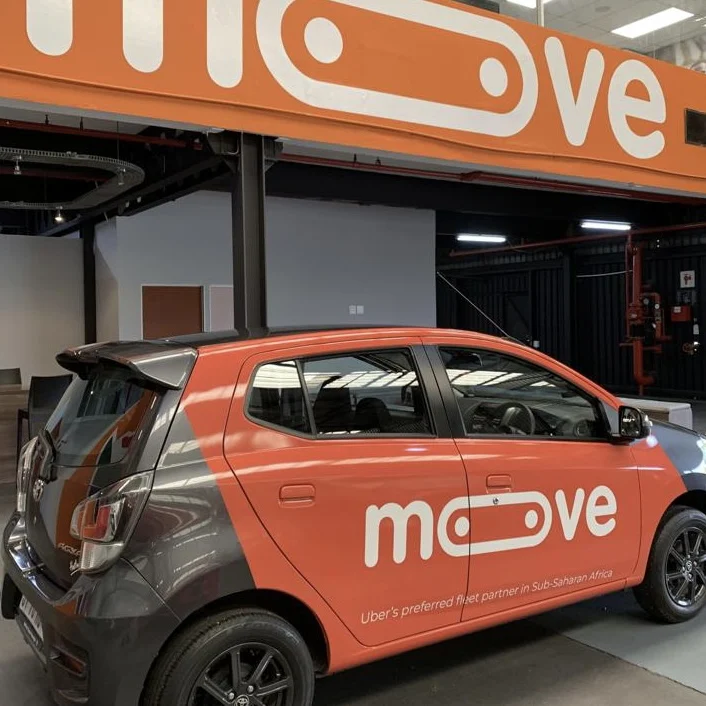
In a major development for the global mobility and financial technology sectors, Moove, the vehicle financing platform that scaled rapidly across Africa and emerging markets, has raised $250 million in a Series C funding round. The fresh capital injection propels the company’s valuation to a commanding $2.1 billion. This funding round represents a pivotal moment for Moove as it transitions from a human-driven ride-hailing fleet operator and credit provider into a primary orchestrator of autonomous vehicle (AV) fleets.
The Series C round was led by Mubadala Investment Company, the Abu Dhabi-based sovereign investor, which has increasingly focused on disruptive mobility technologies. Joining Mubadala as co-leads are Woven Capital—the investment arm of Toyota Motor Corporation’s Woven by Toyota—and Ion Pacific.
The round also attracted a diverse group of tier-one institutional investors, sovereign wealth managers, and strategic tech giants, including:
- BlueCrest Capital Management
- Sona Asset Management
- Raptor Group
- BlackRock
- MUFG (Mitsubishi UFJ Financial Group)
- Franklin Templeton
- Uber Technologies, Inc.
- Left Lane Capital
- Silverbacks Holdings
- Square Associates
- The Latest Ventures
- Endeavor Catalyst
- The Ontario Power Generation Pension Plan
Moove’s core business model has historically focused on solving the "credit gap" for gig-economy drivers by offering revenue-based vehicle financing. However, this new capital will be heavily directed toward scaling Moove’s newly established autonomous vehicle fleet management division. The company aims to position itself as the physical backbone of the self-driving revolution, bridging the gap between autonomous software developers, vehicle manufacturers, and consumer-facing ride-hailing marketplaces.
Chronology: From Lagos to Dubai and the Road to Autonomy
2020: Foundation and the African Mobility Thesis
Moove was founded in 2020 in Lagos, Nigeria, by serial entrepreneurs Ladi Delano and Jide Odunsi. The company was built to address a systemic issue in African mobility: the lack of access to vehicle financing for ride-hailing and delivery drivers. Traditional banks in emerging markets rarely extended credit to gig workers, leaving millions of potential drivers without the means to earn a living. Moove introduced an alternative credit-scoring technology, embedding itself into ride-hailing platforms like Uber to deduct vehicle payments directly from drivers’ weekly earnings.
2021–2022: Global Expansion and Headquarters Relocation
Following rapid success in Nigeria, Moove expanded across sub-Saharan Africa, establishing operations in South Africa, Kenya, and Ghana. Recognizing the global nature of the gig-economy financing deficit, the company quickly scaled beyond the African continent, launching in markets across Europe, the Middle East, and Asia-Pacific, including India and the United Kingdom. To better coordinate this sprawling international footprint and tap into global capital corridors, Moove relocated its corporate headquarters to Dubai, United Arab Emirates. By the end of 2022, the company managed a fleet of tens of thousands of vehicles, establishing itself as Uber’s largest fleet partner in the Europe, Middle East, and Africa (EMEA) region.
Early 2023: The Autonomous Pivot
In early 2023, Moove’s leadership team initiated an extensive strategic review of the autonomous vehicle industry. They identified a critical structural bottleneck: while AV developers were mastering self-driving software, and ride-hailing networks possessed the consumer demand, neither party wanted to take the asset-heavy risk of buying, maintaining, cleaning, and managing massive fleets of robotaxis. Moove realized that its operational expertise in managing human-driven fleets could seamlessly translate into managing autonomous fleets.
Late 2023: The Waymo Partnership
Following months of negotiations, Moove secured a landmark partnership with Waymo, the autonomous driving technology subsidiary of Alphabet Inc. Moove was integrated as a fleet operator for Waymo’s self-driving vehicles, initially deploying operations in major US testing grounds, including Phoenix, Miami, and Las Vegas, with plans to expand to London.
2024: Series C and the "Nest" Infrastructure Initiative
With the closing of the $250 million Series C round, Moove is accelerating its transition. The company is currently deploying capital to scale its AV fleet management operations, build out proprietary automated robotic depots, and prepare for full profitability in its traditional human-driven mobility business by the end of the year.
Supporting Data: Operational Scale and Financial Metrics
To understand the scale of Moove’s ambitions, it is necessary to examine the operational metrics that underpin its $2.1 billion valuation:
Current Fleet and Workforce
- Active Fleet Size: Moove currently owns and operates a fleet of over 42,000 human-driven vehicles.
- Geographic Footprint: The company’s operations span 14 countries across Africa, the Middle East, Europe, and Asia.
- Global Workforce: Moove employs 3,300 people worldwide.
- New Hiring Targets: The company plans to use a portion of the Series C proceeds to hire approximately 350 specialized personnel, focusing heavily on robotics engineers, fleet logistics specialists, and software developers to support its AV division.
Financial Health and AV Fleet Capitalization
According to co-CEO Ladi Delano, Moove’s traditional human-driven mobility and vehicle financing business is on track to achieve full profitability in 2024. This operational self-sufficiency allows the company to dedicate its venture capital toward high-margin, high-growth AV initiatives.
Traditional Mobility Business (Financing & Ride-Hailing)
  │── Status: Nearing full profitability (Target: End of 2024)
  └── Footprint: 42,000 vehicles across 14 countries
       │
       ▼
AV Fleet Management Business (New Initiative)
  ├── Funding: $250M Series C equity (Scaling & R&D)
  ├── Asset Acquisition: Debt financing (Robotaxi purchases)
  └── Infrastructure: 15 automated "Nests" (Depots) in development
Rather than using expensive equity capital from the Series C round to purchase high-cost robotaxis, Moove plans to utilize asset-backed debt financing. This strategy allows the company to scale its robotaxi fleet to "hundreds of thousands of vehicles" without heavily diluting its equity holders.
The "Nests" Infrastructure Project
A significant portion of the Series C capital is designated for the development of "nests"—highly automated, proprietary depots designed specifically for autonomous vehicles.
- Development Pipeline: Moove has approximately 15 of these depots in various stages of planning and construction globally.
- Operational Capability: These nests are engineered to operate 24/7 with zero human intervention (commonly referred to as "lights-out" facilities).
- Robotic Integration: The depots will utilize advanced robotics to automate high-frequency maintenance tasks, including robotic EV charging, automated mechanical servicing, interior cleaning, and sensor calibration.
Official Responses and Executive Perspectives
Ladi Delano on the "Own the Metal" Thesis
Ladi Delano, co-founder and co-CEO of Moove, explained the strategic insight that drove the company’s pivot into the autonomous space. He highlighted the reluctance of major tech and automotive players to take on the operational headaches of fleet ownership:
"In early 2023, we looked at the AV landscape and saw four main players: the AV software developers, the vehicle manufacturers (OEMs), the consumer marketplaces like Uber, and the end consumer. When we looked closely, we realized that none of these players actually want to ‘own the metal.’
In this upcoming autonomous world, who is going to own the vehicle? Who operates it? Who orchestrates it? Who handles the servicing, the routine maintenance, the lost property, and the daily cleaning? It became clear to us that our experience managing massive human-driven fleets and structuring vehicle finance was the ultimate training ground for this. We decided to create a product where we own, operate, and orchestrate autonomous vehicles, and we went out to find the best partners in the world to do it with."
Partnering with Waymo and Future Fleet Ownership
Delano expressed pride in Moove’s early-stage alliance with Alphabet’s Waymo, which has validated Moove’s operational model in key metropolitan areas:
"In 2023, we started talking to every single AV company you could imagine. As luck and preparation would have it, we managed to partner with Waymo first. We are currently acting as the fleet operator for Waymo in Phoenix, Miami, and Las Vegas, with London on the horizon. While we don’t own these Waymo vehicles today, our ultimate goal is to purchase them using structured debt financing. Our long-term vision is to own hundreds of thousands of robotaxis globally."
Delano also confirmed that Moove has already acquired and taken ownership of robotaxis from another major autonomous vehicle developer, though he declined to disclose the partner’s identity due to non-disclosure agreements.
Strategic Implications: Transforming the Mobility-as-a-Service (MaaS) Landscape
Moove’s successful funding round and its pivot toward autonomous fleet orchestration carry profound implications for the global transportation, logistics, and gig-economy sectors.
1. Solving the AV Scaling Bottleneck
For years, autonomous vehicle developers like Waymo, Zoox, and Cruise have faced a scaling dilemma. Developing self-driving software is highly capital-intensive, but scaling the physical fleet of vehicles is even more expensive and logistically complex. By acting as the "fleet operator and owner," Moove solves this bottleneck. AV developers can remain "asset-light," focusing entirely on software and sensor suite development, while Moove absorbs the real estate, maintenance, and asset-management risks.
2. The Evolution of the Gig Economy and Driver Displacement
Moove’s transition from financing human gig-workers to managing robotaxis highlights the shifting dynamics of the ride-hailing workforce. While Moove continues to finance 42,000 human drivers, its heavy investment in autonomous infrastructure suggests a long-term transition. Moove’s dual-track approach allows it to capture cash flows from human-driven rides today, while building the physical infrastructure (the "nests") that will eventually replace those drivers with autonomous fleets tomorrow.
3. Uber’s Defensive Investment Strategy
Uber’s participation in Moove’s Series C round is highly strategic. Having divested its own self-driving division (ATG) in 2020, Uber relies on third-party partnerships to supply autonomous vehicles to its network. By investing in Moove, Uber ensures that a trusted, highly capable fleet manager is ready to purchase and operate robotaxis at scale, which can then be deployed onto the Uber platform. This allows Uber to maintain its asset-light marketplace model while securing access to a massive pool of autonomous vehicles.
4. The Rise of "Nests" as Urban Infrastructure
Moove’s plan to build "lights-out" automated depots could redefine urban logistics real estate. As cities transition to electric and autonomous vehicles, the demand for specialized, high-capacity charging and maintenance hubs will skyrocket. Moove’s "nests" represent some of the first dedicated infrastructure designed to handle the continuous, high-utilization demands of autonomous fleets. If successful, these depots will become highly valuable infrastructure assets, akin to telecom towers or data centers, anchoring Moove’s valuation far beyond that of a traditional tech startup.
