



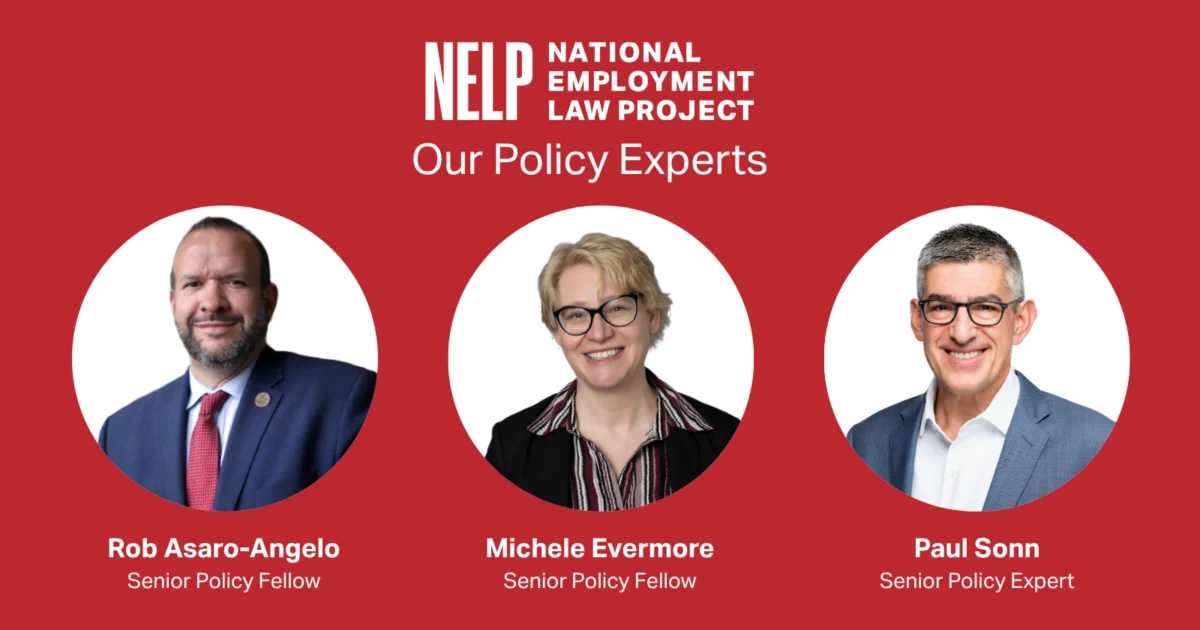
WASHINGTON, D.C. — July 30, 2026 — The National Employment Law Project (NELP), a cornerstone of the American labor advocacy landscape, announced today a significant expansion of its leadership ranks. The organization has appointed three nationally recognized policy experts—Rob Asaro-Angelo, Michele Evermore, and Paul Sonn—to senior roles.
These appointments represent a deliberate sharpening of NELP’s strategic mission. As the U.S. labor market grapples with the dual pressures of rapid technological disruption—specifically the rise of artificial intelligence—and a shifting legislative landscape, these experts are tasked with designing the next generation of solutions to ensure worker protections evolve alongside the economy.
The Strategic Shift: A New Era for Worker Advocacy
For over five decades, NELP has served as a primary architect of labor rights in the United States. However, the 2026 organizational pivot signals a move toward a more integrated approach, combining deep academic research with high-impact legislative advocacy.
Rebecca Dixon, President and CEO of NELP, framed the appointments as a critical move in the organization’s long-term trajectory. "We are thrilled to have such extraordinary leaders as Rob, Michele, and Paul taking on these significant new roles for NELP," Dixon said. "Among the nation’s most renowned worker advocates, each is an accomplished architect of both visionary policies and winning campaigns. Together, they will be the nucleus of a team that advances transformative policies for workers across the country."
The organization’s focus will now be centered on three pillars: strengthening enforcement mechanisms, modernizing the social safety net, and ensuring that wage growth keeps pace with the cost of living.
The New Leadership: Profiles in Policy Innovation
Rob Asaro-Angelo: Championing Worker-First Protections
As the newly appointed Senior Policy Fellow for Worker-First Protections, Rob Asaro-Angelo brings a wealth of executive experience to NELP. His mandate is to bolster state enforcement systems—a critical front in the battle against wage theft and labor standards violations.
Asaro-Angelo’s tenure as Commissioner of the New Jersey Department of Labor and Workforce Development (2018–2026) serves as a blueprint for his new role. Under his guidance, New Jersey became a laboratory for progressive labor policy, implementing a $15 minimum wage, pioneering earned sick leave, and enacting landmark protections for temporary and domestic workers. His expertise in maximizing state agency efficacy will be pivotal as NELP works to ensure that labor laws on the books are actually felt in the workplaces of the most vulnerable.
Michele Evermore: Modernizing the Social Safety Net
Michele Evermore’s return to NELP marks a reunion between the organization and one of the nation’s foremost experts on Unemployment Insurance (UI). As Senior Policy Fellow for Economic Security and Worker Transitions, Evermore will focus on the urgent need to modernize social insurance for a 21st-century economy.
Evermore’s career is defined by her agility in crisis. During the COVID-19 pandemic, her work at NELP was instrumental in expanding unemployment assistance for millions of workers. Her subsequent service at the U.S. Department of Labor, where she helped establish the Office of Unemployment Insurance Modernization, provides her with a unique "inside-out" perspective on federal policy. Her research will focus on creating a more resilient safety net capable of supporting workers during the complex, AI-driven job transitions that are currently redefining the American workforce.
Paul Sonn: Architect of the Living Wage
Paul Sonn, long a fixture of the labor movement, transitions into the role of Senior Policy Expert for Wages and Affordability. Sonn’s legacy is woven into the fabric of the modern "Fight for $15" and the proliferation of city-level living wage ordinances across the country.
In his new capacity, Sonn will tackle the stagnation of real wages. His work will involve developing innovative state and local policy frameworks that tie wage growth to cost-of-living metrics. Additionally, Sonn is spearheading NELP’s efforts to establish "just cause" job protections, ensuring that workers are not terminated without due process—an increasingly vital protection as automated systems begin to influence management and firing decisions in the workplace.
Chronology: A Half-Century of Advocacy
To understand the weight of these appointments, one must look at the historical context of NELP’s work.
- 1969: NELP is founded, emerging during a period of intense civil rights and labor activism.
- 1970s–1990s: The organization establishes its footprint in impact litigation, challenging discriminatory hiring practices and securing back pay for marginalized workers.
- 2010s: NELP gains national prominence as a lead strategist for the Fight for $15, shifting the national discourse from "minimum wage" to "living wage."
- 2020–2022: In the wake of the pandemic, NELP plays a central role in shaping federal response programs, ensuring that gig workers and independent contractors were included in emergency unemployment benefits.
- 2026: The organization undergoes a strategic reorganization, prioritizing AI-readiness and the modernization of labor enforcement, culminating in the appointment of Asaro-Angelo, Evermore, and Sonn.
Supporting Data: The Need for Modernization
The urgency of this leadership expansion is underscored by the current state of the U.S. labor market. According to recent internal and external labor analysis, the landscape is shifting in ways that existing laws struggle to address:
- Wage Stagnation: Despite productivity gains, real wages for the bottom quartile of earners have failed to keep pace with housing and healthcare inflation over the last decade.
- Enforcement Gaps: State labor departments remain under-resourced, with wage theft estimated to cost workers billions of dollars annually—a figure that dwarfs the value of all other property crimes combined.
- Technological Displacement: As AI begins to automate routine tasks, the "job transition" period for workers is lengthening. Traditional unemployment insurance, designed for a manufacturing-era economy, is often ill-equipped to support workers undergoing mid-career retraining.
NELP’s research indicates that workers in the "gig" and "platform" sectors are particularly vulnerable, lacking the basic legal scaffolding that protects traditional W-2 employees. By concentrating on these three strategic areas, NELP aims to bridge the gap between 20th-century labor protections and 21st-century economic realities.
Implications for the Future of Work
The appointment of these three leaders suggests that NELP is preparing for a period of aggressive state-level advocacy. By focusing on "state and local policy approaches," the organization acknowledges that federal gridlock often makes the state house the most viable arena for progressive labor reform.
Impact on AI in the Workplace
One of the most significant implications of this move is the focus on "guardrails for tech and AI." As corporate reliance on algorithmic management grows, there is a burgeoning need for laws that govern how technology is used to monitor, evaluate, and terminate employees. Paul Sonn’s focus on "just cause" protections is a direct response to this trend. If successful, these policies could prevent the use of AI as a tool for arbitrary or biased workplace management.
Strengthening Enforcement
Rob Asaro-Angelo’s appointment indicates that NELP is not merely interested in passing new laws but in ensuring their enforcement. By developing "practical innovations" for state agencies, NELP hopes to create a more robust compliance infrastructure. This could mean the implementation of real-time data reporting for wage transparency or the development of new inter-agency task forces to combat labor standard violations.
Redefining Social Insurance
Michele Evermore’s work will likely push the envelope on what "social insurance" means. As the labor market becomes more fluid, the concept of "job security" is being replaced by "career security." Evermore’s efforts to modernize UI are expected to advocate for a more portable benefit system that follows the worker rather than the employer, a necessary evolution in an economy where long-term tenure at a single firm is becoming the exception rather than the rule.
Conclusion: A Mission Renewed
For over 50 years, the National Employment Law Project has been a vital voice for the American worker. By bringing together the executive experience of Asaro-Angelo, the technical expertise of Evermore, and the strategic foresight of Sonn, NELP is signaling that it is not content to simply defend past victories.
As the economy shifts toward automation and digital platforms, the fundamental contract between worker and employer is being rewritten. NELP’s message is clear: that rewrite must be conducted with the input and the rights of workers at the forefront. With these three appointments, the organization has solidified its position as the premier intellectual and advocacy hub for those fighting to ensure that the future of work is not just efficient, but equitable.
For those tracking the trajectory of labor rights in the United States, the next few years promise to be a period of intense policy experimentation. With a renewed leadership team, NELP is poised to lead that charge, turning abstract policy goals into tangible, life-changing realities for the American workforce.
For more information on NELP’s ongoing projects and mission, visit www.nelp.org.
