





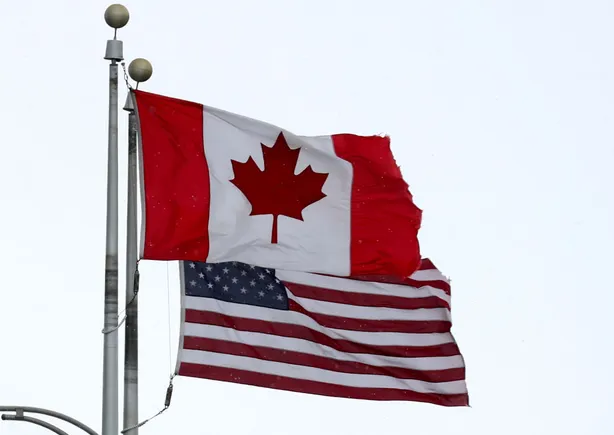
The intricate, decades-old trade relationship between the United States and Canada, once the bedrock of North American economic stability, is currently undergoing a period of profound destabilization. Following the collapse of month-long negotiations, the imposition of 50% reciprocal tariffs has sent shockwaves through the continent’s supply chains. As both nations double down on protectionist measures, industries ranging from agriculture and automotive manufacturing to consumer packaged goods (CPG) are bracing for a prolonged period of increased costs, logistical bottlenecks, and diminished market predictability.
For shippers, retailers, and the average consumer, the "new normal" is defined by volatility. Trade groups across the board are warning that the failure to reach a diplomatic solution is not merely a political grievance; it is a structural disruption that threatens to inflate prices and stifle cross-border commerce for the foreseeable future.
The Chronology of a Breakdown: From Negotiation to Retaliation
The current crisis traces its origins to July, when U.S. President Donald Trump announced a sweeping plan to impose 50% tariffs on $20 billion worth of Canadian imports. The announcement was positioned as a lever to force concessions in bilateral trade talks. However, the strategy backfired, leading to a month of gridlocked negotiations that ultimately failed to produce a deal last week.
With the expiration of diplomatic windows and the failure to secure a compromise, the 50% tariffs took effect, hitting a diverse array of Canadian goods. The response from Ottawa was immediate and calculated. Canada, leveraging its position as the largest trading partner for many U.S. states, installed retaliatory tariffs of up to 50% on a wide spectrum of American imports. The targeted goods include critical industrial inputs such as steel, agricultural equipment, and appliances, as well as dairy products.
Even as the ink was drying on these initial tariffs, the rhetoric continued to escalate. The U.S. administration has signaled that additional duties may be forthcoming, specifically targeting automobiles, trucks, and automotive components—a move that threatens to dismantle the highly integrated North American automotive assembly ecosystem.
Mapping the Economic Impact: Sectors Under Pressure
The trade dispute is not a localized issue; it is a systemic shock to the North American supply chain. Industry analysts have identified several high-impact sectors where the damage will be most acute.
1. Agriculture and Forestry
The agricultural sector is uniquely vulnerable due to the "just-in-time" nature of food supply chains. According to Peter Friedmann, Executive Director of the Agriculture Transportation Coalition (AgTC), the integration of the two nations’ markets makes the trade war a self-inflicted wound for both sides.
"U.S. and Canadian ag and forest products trade is linked; it is severely impacted by the expanding trade war between our countries," Friedmann noted. He highlighted that cargo flows are not restricted to one nation’s borders but move fluidly through both U.S. and Canadian ports to reach global markets. The tariffs act as a "transport impediment," adding layers of administrative expense and physical delay that undermine the efficiency of these supply chains.
2. Retail and Apparel
The American Apparel and Footwear Association (AAFA) has expressed deep frustration, noting that the tariffs ignore the specific frameworks of the United States-Mexico-Canada Agreement (USMCA).
"Canada is a critical source of tailored and wool apparel, ski jackets, and other outerwear, waterproof footwear, and hosiery," said Steve Lamar, President and CEO of the AAFA. He emphasized that the tariffs are disrupting established supply lines that were designed to strengthen North American competitiveness. By treating these imports as adversarial, the current policy shift is effectively taxing the very businesses that provide affordable goods to American consumers.
3. Consumer Packaged Goods (CPG)
The CPG industry is facing a dual-threat: higher input costs for manufacturers and higher retail prices for families. Tom Madrecki, SVP of Supply Chain Resiliency at the Consumer Brands Association, highlighted the specific plight of the tin mill steel market.
"Tin mill steel must be sourced from Canada and other countries due to a lack of sufficient U.S. production," Madrecki explained. "Without a deal, the 50% tariffs remain in effect, directly contributing to higher canned food prices." Furthermore, retaliatory actions by Canada on U.S. manufactured goods—such as toilet paper and personal care items—mean that Canadian consumers will face an immediate, tangible increase in the cost of living.
Official Industry Responses: A Call for Stability
The consensus among major trade associations is a urgent call to return to the negotiating table. The prevailing sentiment is that economic policy should be rooted in predictability, not volatility.
Jonathan Gold, Vice President of Supply Chain and Customs Policy at the National Retail Federation (NRF), underscored the economic reality of the situation. "It is well established that the economy works best when trade policy is predictable and stable," Gold stated. "Canada is a valuable trade partner, and higher tariffs will result in higher costs for business owners and higher prices for goods and services paid by U.S. consumers."
The industry voices collectively argue that while the political intent behind the tariffs may be to protect domestic interests, the reality is a form of "collateral damage." Workers in both countries, who have spent decades building interdependent businesses, are now caught in the crosshairs of a geopolitical strategy that offers little benefit to the private sector.
Implications: A Long Road to Resolution
As the trade war enters this new, more intense phase, several long-term implications are emerging for the North American market:
- Supply Chain Diversification: Companies are likely to begin re-evaluating their sourcing strategies. If the U.S.-Canada border remains a point of high friction, businesses may look to shift production or procurement to third-party countries, potentially weakening the North American trade bloc permanently.
- Inflationary Pressure: With tariffs of 50% across major categories, cost-push inflation is inevitable. Shippers are already passing on the costs of administrative delays and duties, which will ultimately materialize as higher shelf prices at supermarkets and retail outlets.
- Operational Stagnation: The lack of progress on critical industrial materials, such as the aforementioned tin mill steel, suggests that manufacturers may face supply shortages. When raw materials cannot be sourced domestically and are too expensive to import, production lines slow down, leading to lower output and potential labor volatility.
- The "Candid" Outlook: Perhaps the most sobering assessment comes from the Consumer Brands Association, which noted that they "don’t anticipate swift progress." This acknowledgment suggests that the current trade environment is not a temporary squall, but a structural shift that will require businesses to adjust their financial forecasting and supply chain mapping for several quarters, if not years.
Conclusion: The Human Cost of Trade Policy
While the debate is often framed in terms of "billions of dollars" and "percentage points," the true cost of this trade war is being felt by the workforce and the families who rely on stable, affordable access to essential goods. The breakdown of the U.S.-Canada trade relationship represents a departure from the collaborative spirit that defined North American commerce for generations.
As negotiations remain stalled, the pressure on policymakers to find a face-saving resolution will only mount. However, until a breakthrough occurs, the logistics industry, retailers, and manufacturers must navigate an environment characterized by uncertainty. For now, the "cross-border" efficiency that once defined the North American supply chain has been replaced by a fragmented, costly, and contentious landscape that leaves no one truly protected from the consequences of this trade war.
