





August 28, 2026
For years, the rapid expansion of private surveillance networks across the United States occurred largely in the shadows, fueled by promises of frictionless crime prevention and neighborhood safety. However, new data suggests that public patience with ubiquitous monitoring has reached a critical tipping point.
A comprehensive new survey has revealed that a majority of Americans now oppose the deployment of automatic license plate readers (ALPRs) in their local communities. This marks a dramatic reversal in public opinion, signaling a growing unease with the unchecked growth of private-public surveillance partnerships.
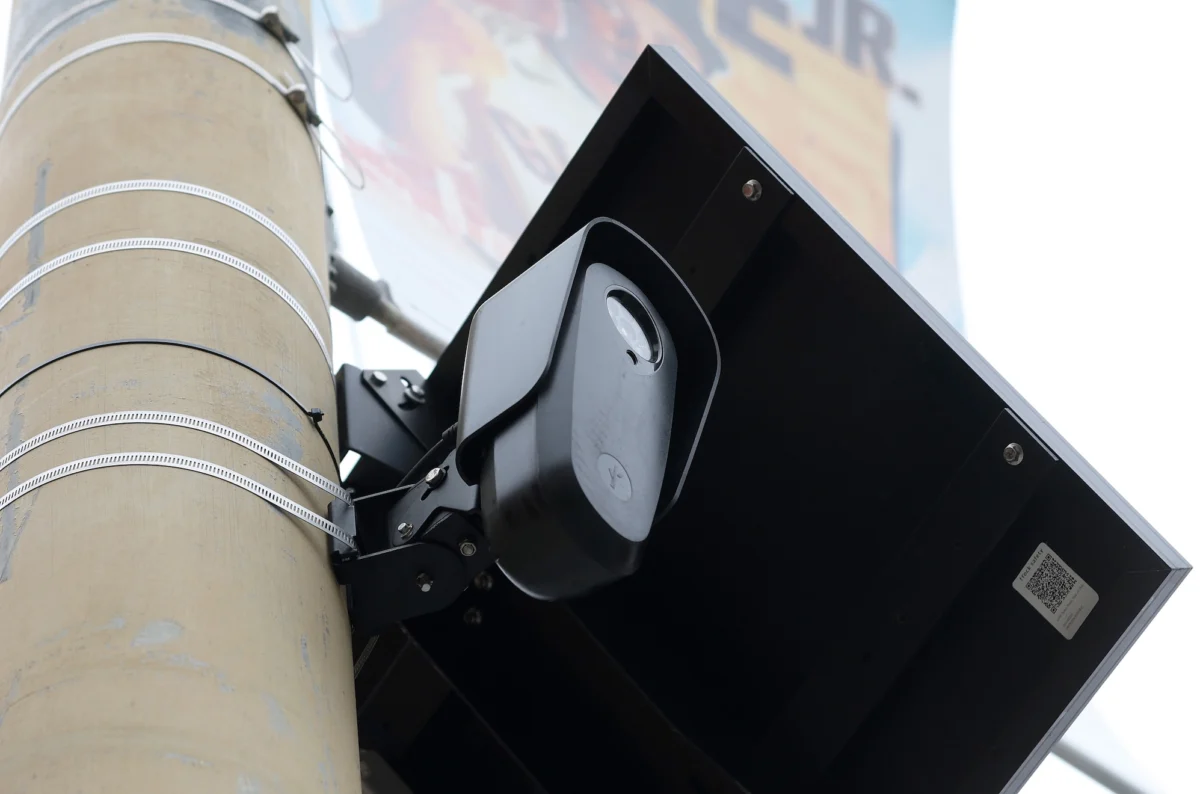
At the center of this shifting tide is Flock Safety, an Atlanta-based technology giant that has quietly built one of the most pervasive tracking networks in American history. As communities grapple with the realities of constant vehicular tracking, the debate over the balance between public safety and personal privacy has entered a volatile new chapter.
1. Main Facts: The Turning Tide of Public Opinion
The shifting landscape of public sentiment was laid bare in a landmark YouGov survey of 20,000 U.S. adults, shared exclusively with The Washington Post in August 2026. The findings represent a stunning rebuke of the surveillance industry’s core value proposition:
- A Clear Reversal: According to the survey, 46% of respondents expressed outright opposition to the presence of Flock Safety’s surveillance cameras in their communities, compared to only 38% who supported them. This represents a complete inversion of data from 2025, when a comfortable majority of surveyed Americans still favored the technology.
- The Illusion of Safety: Crucially, the survey revealed that the presence of these high-tech cameras no longer correlates with peace of mind. A majority of respondents stated that the installation of license plate readers in their neighborhoods would not make them feel any safer.
- Unprecedented Scale: Flock Safety operates a staggering network of more than 120,000 active license plate readers across the United States. These devices do not merely read license plates; they log vehicular fingerprints—including vehicle make, model, color, and unique identifying features like roof racks or bumper stickers—creating a searchable, historical map of citizens’ daily movements.
- Contract Cancellations: The survey comes on the heels of a bruising year for Flock, during which dozens of municipal governments, local police departments, and neighborhood associations either rejected proposed camera contracts or terminated existing agreements due to mounting civil liberties concerns.
2. Chronology: From Rapid Expansion to Public Backlash
To understand how public sentiment soured so rapidly, it is necessary to trace the trajectory of Flock Safety’s rise and the subsequent friction points that have emerged over the last several years.
[2017–2022: Rapid Market Entry]
Flock Safety expands by marketing low-cost ALPRs directly to HOAs, private businesses, and small-town police departments, creating a crowd-sourced national surveillance mesh.

[2023–2025: Unprecedented Scaling]
The network swells to over 120,000 cameras. Civil liberties groups warn of a "national database of movement" built without federal oversight or public debate.

[July 2026: The LAPD Contract Expires]
Following reports of systemic data misuse and unauthorized searches, the Los Angeles Police Department allows its contract with Flock to expire, citing severe civil liberties risks.

[Mid-August 2026: Vandalism and "Compromise"]
Flock cameras face a wave of physical vandalism nationwide. CEO Garrett Langley publicly appeals for a "compromise" between privacy advocates and law enforcement.

[Late August 2026: The YouGov Watershed]
A massive survey of 20,000 Americans confirms that public opposition to Flock's surveillance network has officially surpassed public support.
The Era of Unchecked Growth (2017–2025)
Founded in 2017, Flock Safety differentiated itself from legacy defense contractors by offering affordable, solar-powered, wireless ALPR cameras. Instead of selling exclusively to major metropolitan police departments, Flock targeted Homeowners Associations (HOAs), business improvement districts, and suburban municipal governments.
By allowing private citizens and local police to share data seamlessly through its proprietary "Talons" network, Flock created a decentralized, crowd-sourced dragnet. By 2025, the company’s footprint had expanded to cover thousands of American cities, capturing billions of data points every month.
The Turning Point: July 2026
The momentum began to stall in July 2026, when the Los Angeles Police Department (LAPD)—one of the most prominent law enforcement agencies in the world—made the high-profile decision to let its contract with Flock Safety expire.
The LAPD’s departure was not a budgetary decision; rather, officials cited "serious concerns over civil liberties, data retention policies, and systemic privacy vulnerabilities." The loss of such a high-profile client sent shockwaves through the law enforcement technology sector and emboldened smaller municipalities to re-examine their own relationships with the company.
The Summer of Backlash (August 2026)
By August 2026, public frustration spilled over from city council meetings into the streets. Reports of physical vandalism targeting Flock cameras spiked across several states, with citizens disabling the solar-powered units or painting over their lenses.
In response to the growing hostility, Flock CEO Garrett Langley took to the media in mid-August, calling for a "compromise" between national security and individual privacy—a move critics viewed as a damage-control campaign aimed at halting a wave of contract cancellations.
3. Supporting Data: Analyzing the Public’s Skepticism
The YouGov survey’s findings represent a deeper, systemic shift in how Americans view private tech companies acting as intermediaries for state surveillance.

| Survey Question / Metric | 2025 Survey Response | August 2026 Survey Response | Net Change |
|---|---|---|---|
| Oppose Local ALPR Surveillance | ~32% | 46% | +14% |
| Support Local ALPR Surveillance | ~55% | 38% | -17% |
| Undecided / Neutral | ~13% | 16% | +3% |
| Believe ALPRs Increase Personal Safety | Majority Yes | Majority No | Significant Decline |
Key Takeaways from the Data
- The Loss of the Silent Majority: For years, surveillance proponents argued that while vocal privacy advocates opposed tracking, the "silent majority" of average citizens welcomed cameras if they promised to deter crime. The 2026 data thoroughly dismantles this argument, showing that opposition now outweighs support by an 8-point margin.
- The "Safety Dividend" Has Expired: The core marketing pitch of ALPR systems is that they deter property crime and auto theft. However, as these cameras have become ubiquitous, citizens have realized that their presence does not inherently make neighborhoods safer, particularly when police response times remain unchanged or when the cameras are primarily used for revenue-generating traffic enforcement rather than solving violent crimes.
- Fear of Abuse Outweighs Fear of Crime: The shift in numbers reflects a growing public awareness of how surveillance data can be misused. High-profile investigative reports detailing police officers using ALPR networks to stalk romantic partners, track political dissidents, or monitor vehicles crossing state lines for reproductive healthcare have transformed abstract privacy concerns into tangible anxieties for the average voter.
4. Official Responses: A Battle of Safeguards and Public Relations
The fallout from the YouGov survey has triggered a fierce public relations battle between Flock Safety, its law enforcement partners, and civil liberties advocates.
Flock Safety’s Defense
When pressed for comment regarding the survey’s devastating findings, Flock Safety maintained a defensive posture, asserting that its technology still enjoys broad utility across the country. However, the company’s tone has notably shifted from triumphalism to concession.
A spokesperson for Flock acknowledged to TechCrunch that "support isn’t unconditional," representing a rare admission that the company is facing an uphill battle to retain public trust.
In an effort to stem the tide of criticism, Flock has heavily promoted its recently introduced "safeguards." These features allegedly include:
- More robust auditing tools to track which officers are searching the database.
- Shorter default data retention periods (typically 30 days unless flagged for an active investigation).
- Stricter access controls to prevent unauthorized searches of specific license plates without an associated police case number.
The Civil Liberties Perspective
These concessions have done little to appease civil rights organizations. The American Civil Liberties Union (ACLU) released a scathing assessment of Flock’s updated policy framework, dismissing the new safeguards as superficial public relations maneuvers that fail to address the core threat of the technology.
"Despite these highly publicized updates, Flock’s creepy cameras remain a major, unchecked threat to civil liberties," the ACLU stated. "A slightly more secure dragnet is still a dragnet. The fundamental issue is that a private, for-profit corporation has built a massive, centralized database tracking the daily movements of millions of innocent Americans. No amount of auditing software can make a mass surveillance apparatus compatible with a free society."
Privacy advocates point out that Flock’s business model relies on the aggregation of data. As long as the company continues to connect private HOA cameras with law enforcement networks, it creates a loophole where private entities can bypass constitutional protections against warrantless searches.
5. Implications: The Future of the Surveillance Economy
The public backlash against Flock Safety is not an isolated incident; it represents a critical juncture for the broader "surveillance capitalism" economy and modern law enforcement practices.
1. The Legal and Regulatory Void
For years, ALPR technology has operated in a regulatory Wild West. Unlike wiretapping or physical searches, which require judicial warrants under the Fourth Amendment, vehicular tracking has historically enjoyed fewer protections due to the legal precedent that people have "no expectation of privacy" on public roads.
However, the scale of Flock’s network—which allows law enforcement to reconstruct a driver’s historical route over months or years—challenges this legal doctrine. The shift in public opinion is likely to accelerate legislative efforts at both the state and federal levels to pass strict biometric and vehicular privacy laws, potentially mandating warrants for any historical ALPR database searches.
2. The Chilling Effect on Public-Private Partnerships
Flock’s troubles could serve as a cautionary tale for other tech companies seeking to monetize public surveillance. From facial recognition firms like Clearview AI to drone-as-a-first-responder programs, tech startups are finding that the public is no longer willing to accept invasive monitoring in exchange for vague promises of security. Municipalities may become increasingly hesitant to sign multi-year, multi-million-dollar contracts with surveillance firms if doing so triggers intense political blowback from their constituents.
3. A Return to Traditional Policing?
As communities reject Flock cameras and force police departments to let contracts expire, law enforcement agencies will be forced to re-evaluate their reliance on automated policing. While ALPR advocates argue that the technology acts as a "force multiplier" for understaffed departments, critics argue that it has alienated the public and fostered an atmosphere of constant suspicion.
The erosion of public trust in Flock Safety demonstrates that surveillance technology cannot be forced upon communities indefinitely without consent. As the gap between those who profit from surveillance and those who are subjected to it continues to widen, the American public has sent a clear message: safety cannot be bought at the expense of basic liberty.
