





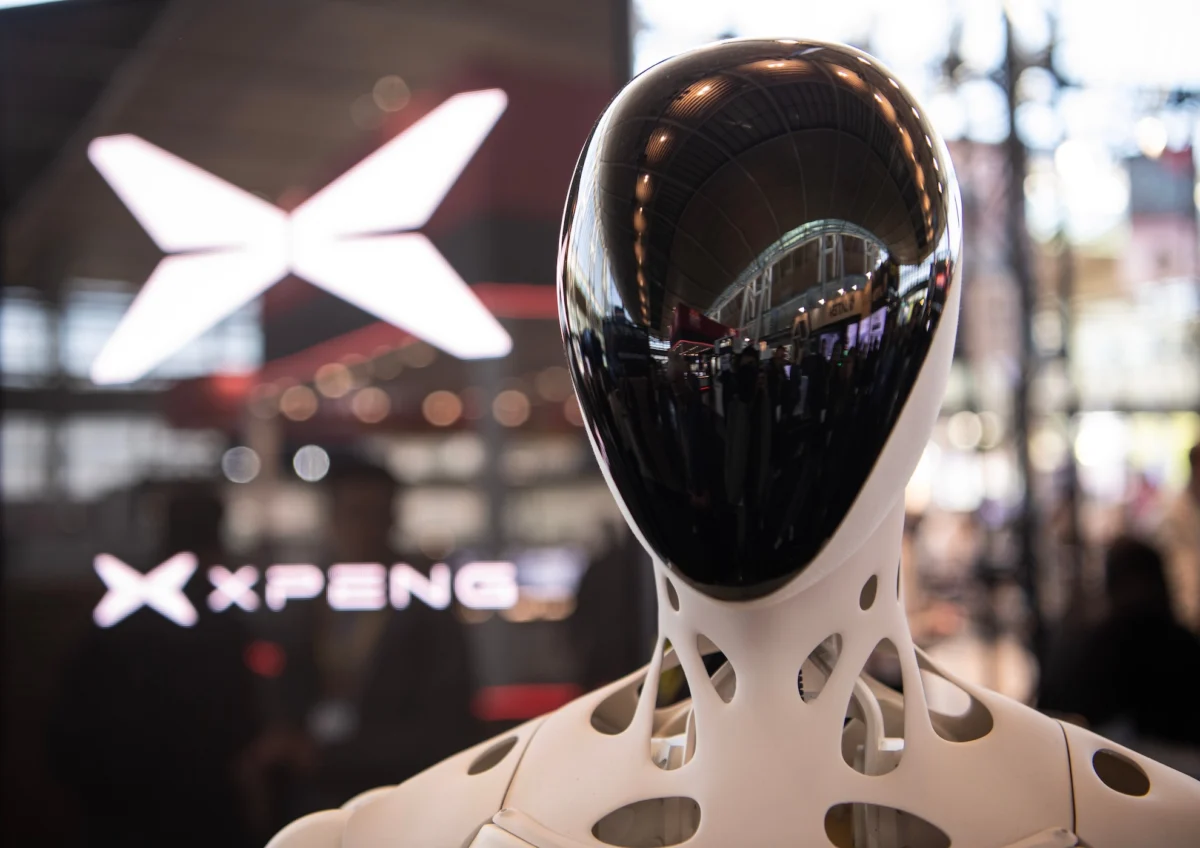
The global race for technological supremacy has found its next major battleground: humanoid robotics. For years, the public viewed humanoid robots through the lens of viral videos—whether it was Boston Dynamics’ Atlas performing complex gymnastics or Tesla CEO Elon Musk presenting early prototypes of the Optimus robot. Today, however, that speculative hype is rapidly hardening into a multi-billion-dollar industrial reality.
Behind this shift is a profound convergence of two forces: the maturity of "embodied AI" (the integration of artificial intelligence into physical machinery) and the economic pressures squeezing the global automotive sector. Faced with razor-thin margins in the electric vehicle (EV) market, automakers—particularly in China—are pivoting. They are leveraging their massive manufacturing supply chains, advanced battery technologies, and electric motor expertise to build the next generation of autonomous, bipedal workers.
Main Facts: The New Players and Massive Capital Injections
The transition of humanoid robots from laboratory novelties to commercial factory assets is accelerating, driven by massive capital rounds and corporate restructuring.
+-----------------------------------------------------------------------------+
|                         THE EMBODIED AI BOOM AT A GLANCE                    |
+-----------------------------------------------------------------------------+
|  • Xpeng Robotics: Raised $900M+ at a $6.3B+ valuation; developing "Iron"   |
|  • Chery (AiMOGA): Preparing for an overseas IPO targeted for 2026          |
|  • BYD: Unveiled "Xiao Di" humanoid robot for industrial deployment          |
|  • Mobileye: Acquired Mentee Robotics for $900M                             |
|  • Hyundai / Boston Dynamics: Deploying Atlas at Georgia factory by 2028    |
+-----------------------------------------------------------------------------+
At the forefront of this movement is Xpeng, the Chinese EV manufacturer known for aggressively tracking Tesla’s technological roadmap. Xpeng’s robotics unit recently closed a historic funding round, raising more than $900 million at a post-money valuation exceeding $6.3 billion. Led by IDG Capital, with participation from Gaorong Ventures, Tencent, and Alibaba, the round stands as the largest single-round private financing ever recorded in China’s embodied AI sector.
Signaling intense internal confidence, Xpeng founder He Xiaopeng and co-president Brian Gu personally invested approximately $100 million of their own capital into the round. The unit’s primary commercial bet is "Iron," a humanoid robot featuring a highly realistic human shape designed specifically for commercial deployment on factory floors and in retail logistics.
Xpeng is far from alone in this pursuit. The landscape of Chinese automotive giants entering the robotics space has expanded rapidly:
- Chery Automobile: Its robotics affiliate, AiMOGA, has begun preparing for an initial public offering (IPO), targeting overseas markets as early as 2026.
- BYD: The world’s largest electric vehicle manufacturer recently unveiled "Xiao Di," a humanoid robot designed to assist in industrial manufacturing.
- State-backed and Private Challengers: Changan, GAC, Li Auto, SAIC, and Seres have all established active humanoid robotics programs.
Concurrently, Western automakers and tier-one suppliers are executing their own plays. Mobileye, the autonomous driving technology pioneer, acquired humanoid robotics startup Mentee Robotics for $900 million. Meanwhile, Rivian has spun out "Mind Robotics" to explore physical automation, and Hyundai continues to integrate its majority-owned subsidiary, Boston Dynamics, directly into its automotive production lines.
Chronology: From Hard-Coded Hydraulics to AI-Driven Autonomy
To understand the current surge in humanoid robotics, it is necessary to trace the technological shift that made this moment possible.
       [Pre-2020: The Hydraulic Era]
                     │
                     ▼
       [2021-2023: The Tesla & LLM Catalyst]
                     │
                     ▼
       [2024-2025: Massive Capital Infusion]
                     │
                     ▼
       [2026-2028: Targeted Commercial Deployment]
Phase 1: The Hydraulic and Hard-Coded Era (Pre-2020)
For decades, humanoid robots were defined by hydraulic actuation and rigid, deterministic programming. Boston Dynamics’ early Atlas prototypes demonstrated remarkable physical capabilities, but these movements required highly specific, hard-coded trajectories. If the environment changed by a fraction of an inch, the robot would fail. High manufacturing costs and extreme maintenance requirements kept these machines confined to research labs.
Phase 2: The Tesla Catalyst and the LLM Revolution (2021–2023)
In 2021, Elon Musk announced Tesla’s Optimus program, arguing that an automaker—possessing advanced electric motors, battery packs, and self-driving computer vision systems—was uniquely positioned to build a humanoid robot.
Simultaneously, the artificial intelligence landscape experienced a paradigm shift. Researchers realized that the transformer architectures powering Large Language Models (LLMs) could be applied to physical systems. Rather than programming a robot to perform a specific task step-by-step, engineers could feed multimodal AI models vast amounts of video data. Through imitation and reinforcement learning, robots began learning how to interact with their environments dynamically.
Phase 3: The Capital Rush and Industrial Validation (2024–2025)
As generative AI proved it could bridge the gap between digital reasoning and physical execution, venture capital and corporate balance sheets flooded the sector. Xpeng secured its historic $900 million round, Mobileye absorbed Mentee Robotics, and startups like Figure, Agility Robotics, and Apptronik secured major partnerships with automotive OEMs to test robots in active warehouse environments.
Phase 4: Targeted Commercialization (2026–2028)
The industry is now entering a phase of structured deployment. Hyundai has announced plans to introduce Boston Dynamics’ next-generation electric Atlas robot to its newly constructed Georgia facility, with a target of full integration into parts-sequencing and logistics roles by 2028. Chery’s AiMOGA is targeting its public market debut in 2026, marking the transition of these units from capital-intensive R&D cost centers to standalone commercial entities.
Supporting Data: The Economics Driving the Shift
The pivot to robotics is not merely an engineering challenge; it is a calculated response to shifting macroeconomic realities in the automotive industry.
+-------------------------------------------------------------------+
|               AUTOMOTIVE MARGINS VS. ROBOTICS VALUATIONS          |
+-------------------------------------------------------------------+
|  • Chinese EV Industry Profit Margins: ~3% to 5% (due to price wars) |
|  • Xpeng Robotics Valuation Post-Series: $6.3 Billion             |
|  • Mentee Robotics Acquisition Value: $900 Million                |
|  • Target Humanoid Unit Cost (Scale): ~$20,000 to $30,000         |
+-------------------------------------------------------------------+
The domestic Chinese automotive market has been locked in a brutal price war, driving profit margins for entry-level and mid-tier EVs down to single digits—often between 3% and 5%. By contrast, the robotics sector represents a high-margin frontier. Humanoid robots, once mass-produced, are projected to yield significant software-as-a-service (SaaS) revenues through continuous AI updates, alongside high-margin hardware sales.
Furthermore, automakers already possess the manufacturing infrastructure required to scale robotics. The bill of materials (BOM) for a humanoid robot heavily overlaps with that of a modern EV:
- High-density lithium-ion battery packs
- Precision electric actuators and brushless DC motors
- Advanced sensor suites (LiDAR, cameras, ultrasonic sensors)
- High-performance onboard compute platforms
By utilizing these existing supply chains, automakers can manufacture humanoid hardware at a fraction of the cost of traditional aerospace or specialized robotics firms. The ultimate goal for many of these players is to drive the unit cost of a humanoid robot down to approximately $20,000 to $30,000—roughly equivalent to the cost of a compact car—making them highly competitive with human labor in high-cost manufacturing regions.
Industry Perspectives and Expert Analysis
The strategic alignment between car manufacturing and robotics is drawing intense scrutiny from industry analysts. Michael Dunne, CEO of the San Diego- and Singapore-based advisory firm Dunne Insights, points out that Xpeng’s aggressive entry is a direct page from Tesla’s playbook.
"Xpeng is the Chinese automaker that most closely watches and follows Tesla’s initiatives," Dunne observed. "It’s the most focused on autonomy, and it’s the first to commit in a big way to humanoid robots. Founder He Xiaopeng is a tech billionaire known for his agility and quick adjustments. He sees razor-thin profit in cars on the near horizon. Robots look much more promising."
However, Dunne also highlights a critical bottleneck in the strategy. While Chinese automakers have unmatched physical manufacturing capabilities, software remains the ultimate differentiator.
"They have all the hardware to get the job done," Dunne said. "The question is if they can catch Tesla on the AI side of the equation."
To close this software gap, Western and Eastern players are taking distinctly different approaches:
The Collaborative AI Model
Hyundai and Boston Dynamics have partnered directly with Google’s AI research division, DeepMind. By pairing Boston Dynamics’ world-class physical mechanics with Google’s advanced visual-language-action (VLA) models, they aim to create a robot that can not only move with precision but also understand natural-language commands and adapt to novel factory-floor scenarios without retraining.
The Specialized Form-Factor Model
Not everyone agrees that a strictly humanoid shape is the optimal path forward. Rivian’s spinout, Mind Robotics, led by CEO RJ Scaringe, is reportedly taking a more pragmatic approach. Scaringe has publicly suggested that the industry’s obsession with the human form factor may be misplaced for many industrial tasks, opting instead to design robots optimized purely for mechanical efficiency and factory integration, regardless of whether they look human.
Implications for Global Manufacturing and Geopolitics
The rise of automaker-backed humanoid robotics carries profound implications that extend far beyond the walls of automotive factories.
+-----------------------------------------------------------------------------+
|                            GEOPOLITICAL DYNAMICS                            |
+-----------------------------------------------------------------------------+
|  UNITED STATES & ALLIES                     CHINA                           |
|  • Strong lead in foundational AI models     • Dominant manufacturing ecosystem|
|  • High-performance software architectures  • Rapid prototyping & low costs |
|  • Examples: Boston Dynamics, Figure, Tesla  • Examples: Xpeng, BYD, Chery   |
+-----------------------------------------------------------------------------+
Redefining the Factory Floor
The initial deployment of humanoid robots will target tasks characterized by the "three Ds": Dull, Dirty, and Dangerous. Hyundai’s plan to use Boston Dynamics’ Atlas for parts sequencing in its Georgia Metaplant is a prime example. In modern automotive assembly, moving heavy, awkwardly shaped components from delivery crates to assembly line racks is a leading cause of repetitive strain injuries among human workers. Humanoid robots, designed to operate in spaces built for humans, can step into these roles without requiring factories to undergo expensive, ground-up redesigns.
A New Axis of Geopolitical Competition
The race for humanoid robotics is rapidly becoming a key front in the technological competition between the United States and China. The U.S. holds a clear lead in foundational AI models, software architecture, and advanced semiconductor design. However, China possesses a dominant manufacturing ecosystem, allowing Chinese firms to prototype, iterate, and scale physical hardware at speeds that Western competitors struggle to match.
If Chinese automakers successfully pair their manufacturing speed with sophisticated, locally developed AI models, they could establish a dominant position in the global industrial robotics market, mirroring their rapid rise in the EV sector.
Labor Dynamics and Economic Realignment
As these machines transition from pilot programs to scaled deployments over the next decade, they will inevitably spark intense debates over labor displacement. While automakers argue that robots will fill critical labor shortages in aging societies—particularly in countries like Japan, South Korea, and China—labor unions and economists warn of potential disruptions to blue-collar employment.
Ultimately, the automakers that successfully navigate these software, hardware, and social hurdles will do more than just survive the EV margin squeeze; they will position themselves as the foundational infrastructure providers for the next era of industrial civilization.
