



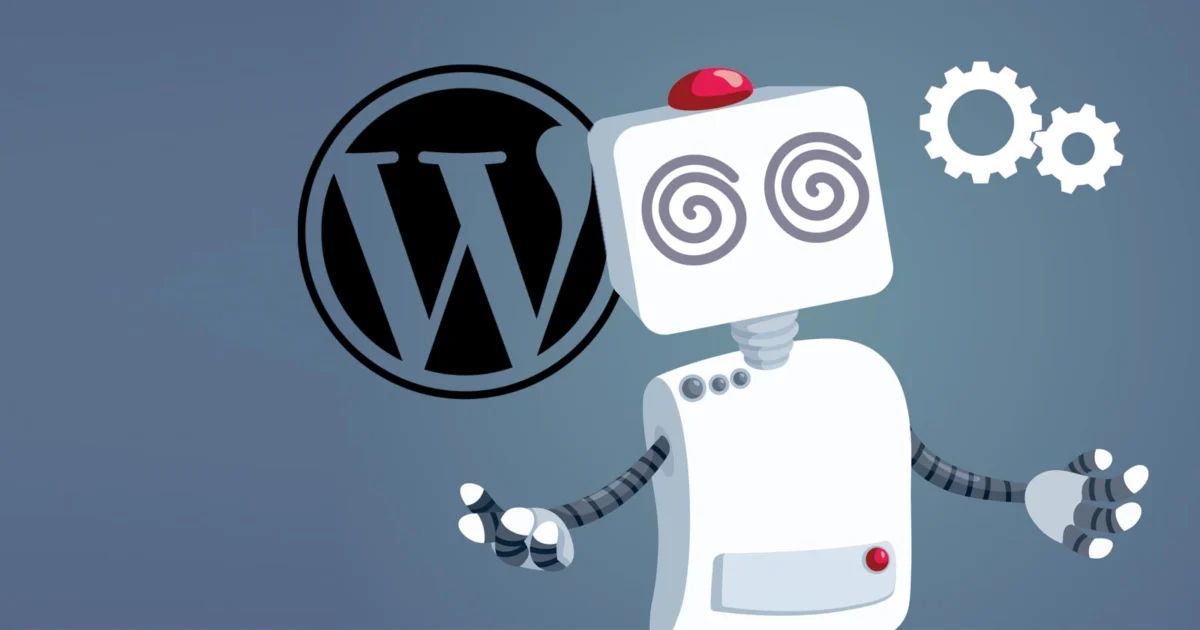
The WordPress ecosystem, a cornerstone of the modern web, relies heavily on plugins to extend functionality. Among these, Rank Math has long been a market leader in SEO tooling. However, the plugin developer recently found itself at the center of a firestorm involving user trust, automated credential generation, and the delicate balance between AI-driven convenience and platform security.
Following a significant user outcry regarding the silent creation of site credentials, Rank Math has officially paused its newly introduced "Support Agent" feature. The company has acknowledged that its communication regarding the feature’s scope—and the permissions it required—fell short of industry standards. As the company moves to redesign the user experience, the incident serves as a critical case study for developers navigating the integration of agentic AI within sensitive content management systems.
The Core Controversy: What Went Wrong?
At the heart of the issue is the way Rank Math’s Support Agent was designed to interact with WordPress installations. The plugin, which boasts millions of active installs, introduced an AI-powered assistant intended to streamline the support process.
The intended functionality was relatively straightforward: by analyzing the user’s specific website configuration, the AI could offer contextually relevant, personalized troubleshooting advice. To achieve this, the plugin was programmed to generate "Application Passwords"—a standard WordPress feature—that allowed the AI to read site data.
The controversy erupted when users discovered that the plugin was initiating the creation of these credentials without explicit, plain-language consent. In the eyes of many security-conscious administrators, the secret generation of access credentials—even for "read-only" purposes—is a major security red flag. Without a clear notification process, users were unaware that their site’s authentication protocols were being modified by an automated agent.
A Chronology of the Incident
The timeline of this incident reflects the rapid pace at which modern software features are deployed, often outstripping the development of clear user-consent workflows.
- Phase 1: The Deployment. Rank Math rolled out the Support Agent as part of a broader vision for "Agentic AI." The goal was to move beyond static help documentation to a dynamic system capable of performing tasks on the user’s behalf.
- Phase 2: Discovery. Savvy WordPress administrators and security researchers began identifying the creation of new application passwords within their user profiles. Upon tracing the source, it was revealed that the Rank Math plugin was the entity behind the credential generation.
- Phase 3: The Community Backlash. Within hours, the discovery spread across social media platforms, Reddit, and WordPress support forums. Users expressed concerns about "black-box" behavior, potential vulnerabilities, and the broader implications of giving an AI plugin write/read access to site configurations.
- Phase 4: The Immediate Response. Recognizing the severity of the reputational damage and the validity of user concerns, Rank Math moved quickly to disable the feature. They confirmed that the Support Agent would be taken offline until a more transparent permission model could be built.
The Strategic Vision: Why "Agentic AI"?
To understand why this happened, one must understand the shift occurring in the software industry. Rank Math positioned this support tool as the "first step" in a larger plan to deploy AI agents that can interact directly with a user’s WordPress site.
In the software industry, "Agentic AI" refers to systems that do not just provide information, but take autonomous actions to solve problems. For an SEO plugin, this could eventually mean features like:
- Automated Redirect Management: AI identifying broken links and creating redirects automatically.
- Dynamic Schema Optimization: The agent analyzing content and applying schema markup based on real-time search trends.
- Site Health Remediation: AI agents fixing minor configuration errors that currently require manual intervention from a human developer.
While these features promise to save users countless hours, they also require a high level of trust. The Support Agent was intended to be the testing ground for these capabilities. By operating in a read-only capacity, the agent was meant to demonstrate how AI could provide value without compromising site integrity. However, the technical implementation failed to bridge the gap between "technical necessity" and "user transparency."
Official Responses and Accountability
Rank Math’s leadership chose to lean into transparency rather than denial. In a public statement, the company admitted that the feedback received from the user community was "fair."
The Acknowledgment
"When an AI agent is being given permission to create an application password, you should be told clearly and directly what is happening and what you’re allowing," the company stated in a blog post addressing the community. By taking full responsibility for the lack of clarity, Rank Math attempted to de-escalate the situation and regain user confidence.
The Security Defense
Despite the uproar, Rank Math emphasized that the generated credentials were never insecure. They outlined several security pillars that were in place during the feature’s operation:
- Restricted Scopes: The application passwords were intended to be limited to read-only access.
- Encryption: Communication between the plugin and the Rank Math servers followed standard secure transmission protocols.
- Authentication: The system leveraged WordPress’s native application password architecture, which is built to be secure and revocable by the administrator at any time.
- Logging: All actions taken by the agent were intended to be logged, providing an audit trail for users.
While these features provided technical safety, the company admitted that they were insufficient because the human element of the equation—informed consent—was missing.
The Broader Implications for the WordPress Ecosystem
This incident is not an isolated event; it represents a growing tension in the WordPress ecosystem as plugin developers race to integrate generative AI.
1. The Transparency Gap
As plugins become more complex, the distance between what a plugin does and what a user thinks it does is widening. Developers must prioritize "Explainable AI" (XAI). Users need to know not just what an AI is doing, but why it needs specific permissions and what the potential risks are.
2. The Permission Model
WordPress developers must now reconsider how they request access to a site’s internal APIs. Relying on background processes that the user doesn’t see is no longer acceptable in an era where cybersecurity is a top priority for site owners. Future integrations will likely require an explicit "opt-in" screen, where users are presented with a plain-language summary of exactly what the plugin will be doing.
3. The Future of AI Agents
The industry is moving toward a future where AI agents manage our websites. However, for this to be successful, developers must build "Trust-by-Design." This means providing granular controls where users can toggle individual AI capabilities on or off, rather than a monolithic "enable AI" button.
What’s Next: The Path to Reinstatement
Rank Math has confirmed that the Support Agent will return. However, it will look significantly different. The company has promised to rebuild the access-request flow from the ground up.
Key changes expected in the next iteration include:
- Explicit Consent Screens: Before any credential is created, a modal window will appear explaining exactly what is being created, why, and how the user can revoke that access.
- Plain Language Documentation: The technical jargon surrounding "Application Passwords" and "API Scopes" will be replaced with clear, benefit-oriented language that any site owner can understand.
- Granular Auditing: Users will likely be given a more visible dashboard to monitor exactly what the AI agent has done on their site, ensuring that the "black box" of AI activity is replaced by a "glass box" of total transparency.
Conclusion
The Rank Math Support Agent incident serves as a vital reminder to the software development community: innovation without trust is unsustainable. While the technical goals behind the feature were undoubtedly aimed at providing a better user experience, the lack of transparency eroded the very foundation of that user relationship.
As Rank Math works to reintroduce the feature, the eyes of the WordPress community will be watching closely. This episode will likely become a benchmark for how developers should handle AI integration in the future—prioritizing the user’s agency and security above the convenience of automated workflows. For site owners, the lesson is equally important: always remain vigilant about the permissions granted to third-party plugins, and do not hesitate to hold developers accountable when those permissions are not clearly defined.
The return of the Support Agent will be a litmus test for Rank Math’s commitment to its users. If they can successfully implement a transparent, user-first approach to AI, they may turn this controversy into a blueprint for the ethical integration of AI in the WordPress ecosystem.
