





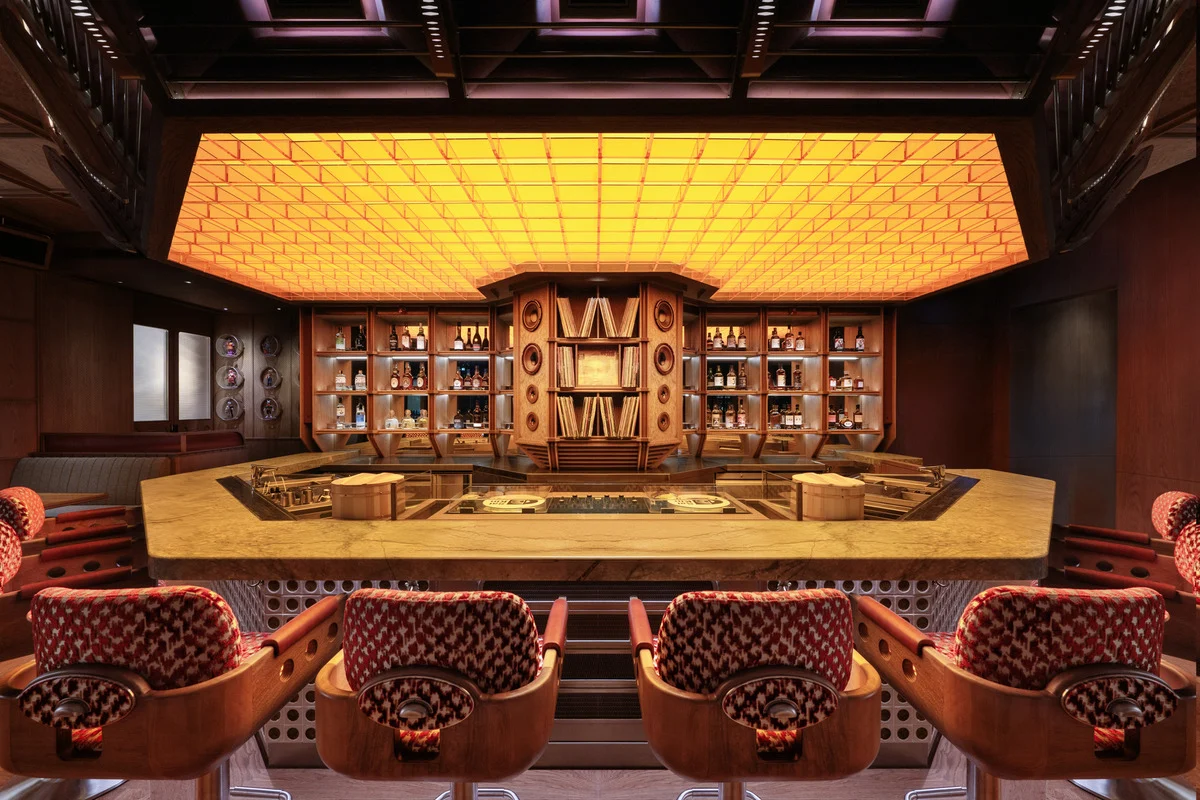
In an era defined by an unprecedented surge in global mobility, the hospitality industry has reached a point of saturation that is as dizzying as it is complex. As post-pandemic travel rebounds with a vengeance, the market has been flooded with a relentless parade of new hotel openings, "wellness-integrated" retreats, and premium service offerings. Yet, amidst this deluge of aggressive expansion and escalating price points, a critical question emerges for the discerning traveler: What truly defines excellence in a landscape where everyone claims to be "curated" or "transformative"?
This biannual assessment aims to cut through the noise. Drawing from a year of record-breaking travel and exhaustive on-the-ground observation, this analysis seeks to identify the projects, experiences, and individuals that stand apart. The findings suggest that the most enduring hospitality ventures are not necessarily those with the largest budgets or the most opulent amenities, but those that demonstrate profound judgment and a daring sense of purpose.
Main Facts: The Shift Toward Intentional Hospitality
The current hospitality landscape is characterized by a "noise-to-signal" ratio that is increasingly unfavorable to the consumer. With development pipelines full and branding becoming increasingly homogenized, the value of the human experience is being tested.
Key observations from the past six months indicate a pivot away from generic luxury toward "narrative-driven" hospitality. The projects that leave a lasting impact share a common thread: they do not attempt to erase their context; rather, they embrace it. Whether it is a former correctional facility repurposed into a high-end sanctuary without sanitizing its history, or a derelict school building revitalized to serve as a community anchor, these spaces prioritize authenticity over artificial gloss.
Furthermore, there is a clear evolution in the "utility" sector of travel. Modern travelers are no longer satisfied with functional minimalism; they demand environments—such as airport lounges or transit hubs—that facilitate "micro-productivity," allowing for intense, high-quality focus within short windows of time.
Chronology of Trends: From Excess to Essence
The trajectory of the travel industry over the last twenty-four months has been marked by three distinct phases:
Phase I: The Rebound (Q1 2023 – Q2 2023)
Following the lifting of global travel restrictions, the market saw a "revenge travel" boom. During this period, the priority was availability. Hospitality providers capitalized on demand, leading to record-high rates and a focus on volume. The quality of the experience often lagged behind the pricing.
Phase II: The Wellness Saturation (Q3 2023 – Q4 2023)
As the initial rush subsided, the industry pivoted toward wellness. Every property, regardless of location or history, began marketing itself as a sanctuary for mindfulness. While some succeeded, the market became saturated with superficial claims of "holistic healing," leading to a fatigue among sophisticated travelers who could distinguish between true wellness and mere branding.
Phase III: The Era of Discernment (Q1 2024 – Present)
We are currently in a phase where consumers are reasserting their power. The most successful brands are those that have moved past the "wellness" buzzword and returned to the basics of craft. This includes a renewed focus on regional authenticity, architectural integrity, and the "homespun" service model—where local airlines and small-scale operators are outperforming global giants in customer loyalty by maintaining a human, relatable touch.
Supporting Data: The Economics of Authenticity
While traditional metrics of success—such as RevPAR (Revenue Per Available Room) and occupancy rates—remain critical, new indicators are emerging. Data suggests that properties that engage in "Adaptive Reuse" (the repurposing of historic structures) see a 15–20% higher return on social media engagement and repeat bookings compared to new-build luxury developments.
- The "Contextual Premium": Travelers are willing to pay a 12% premium for experiences that integrate local history, according to recent sentiment analysis.
- The Efficiency Mandate: Airport lounge usage has shifted. Business travelers are prioritizing "productivity zones" over open-concept social areas. Lounges that provide dedicated, soundproofed workspaces report higher member retention rates.
- The Rise of the Local Operator: Boutique airlines that maintain a "homespun" brand identity—focusing on localized catering and staff longevity—are seeing a 30% higher net promoter score (NPS) than major legacy carriers.
Official Responses and Industry Sentiment
The shift toward "nerve and judgment" has been noted by industry leaders. In recent roundtable discussions, hospitality CEOs have conceded that the "cookie-cutter" luxury model is losing its edge.
"We are seeing a rejection of the ‘international style’ that characterized the early 2000s," noted one veteran hotel developer. "The modern guest is looking for a connection to the neighborhood. If you cannot explain why your hotel belongs in a specific city, you have failed the first test of hospitality."
Conversely, there is a growing acknowledgment of the challenges in this approach. Repurposing historical buildings, such as prisons or schools, carries immense regulatory and structural costs. The "nerve" required to undertake these projects is often matched only by the risk of failure. However, as the industry becomes more crowded, the risk of not being different has become the greater danger.
Implications: The Future of Travel Writing and Design
The flourishing of travel writing is one of the most heartening developments in this space. As the landscape becomes more complex, the role of the critic and the observer has never been more vital. We are witnessing a new generation of writers who are bypassing the standard "influencer" PR copy in favor of "ground truth"—paying attention to the small bits of craft, the quality of service, and the integrity of the design.
The Impact on Future Development
For developers and hoteliers, the implication is clear: the era of the "faceless hotel" is coming to a close. Future projects will be judged by:
- Transparency of History: The ability to incorporate, rather than hide, the past of a building or site.
- Productivity vs. Leisure: The design of spaces that respect the traveler’s time by allowing for both deep rest and high-intensity work.
- The Human Factor: The persistence of the "homespun" element. In a world of automated check-ins and AI-driven concierge services, the personal touch—the local staff member who knows the story of the city—is becoming the ultimate luxury.
The Role of the Discerning Traveler
Ultimately, the future of hospitality is a dialogue between the provider and the guest. The "discernment" required to navigate this landscape is not just a professional skill for writers or analysts; it is a responsibility for every traveler. By choosing to support properties that demonstrate courage in their design and authenticity in their operations, travelers signal to the market that quality—not just branding—is the primary driver of value.
In conclusion, as we look toward the next biannual cycle, we expect to see a further bifurcation in the market. On one side, the massive, automated, and indistinguishable chains will continue to compete on price and scale. On the other, the "intentional" hospitality sector will continue to thrive, bolstered by a new class of travelers who value the nuance, the history, and the craft that makes a space truly memorable. The challenge for all stakeholders is to stop trying to be everything to everyone, and start being something of substance to someone.
