





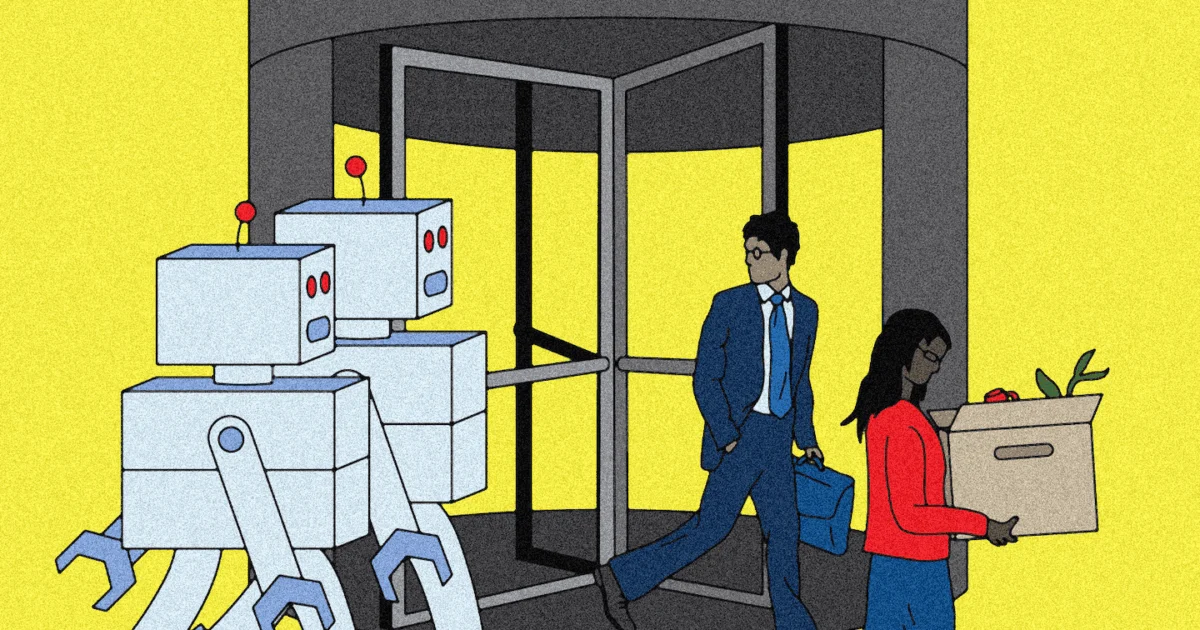
As the rapid proliferation of artificial intelligence fundamentally alters the landscape of the American labor market, a growing chorus of policy experts is sounding the alarm: the nation’s unemployment insurance (UI) system, designed for the industrial economy of the 1930s, is dangerously ill-equipped for the algorithmic age.
Rebecca Dixon, CEO of the National Employment Law Project (NELP), has emerged as a leading voice in this discourse, arguing that current benefits are woefully inadequate. With white-collar professions—previously thought to be insulated from automation—now facing unprecedented disruption from generative AI, the structural gaps in the UI system threaten to exacerbate economic inequality on a national scale.
The Main Facts: A System in Disarray
The fundamental issue, according to labor advocates, is that the U.S. unemployment system operates as a patchwork of state-level policies that vary wildly in both eligibility and generosity.
Currently, the disparity in support is stark. A worker laid off in Mississippi, for instance, may find their standard of living effectively slashed, with maximum weekly benefits capped at a meager $235. Conversely, a worker in Massachusetts—a state with a more robust social safety net—could receive up to $1,105 per week.
However, even the higher tiers of support are failing to address the "hidden" workforce. Dixon and other experts argue that the current system systematically excludes those most vulnerable to the shifting tides of the AI economy: part-time workers, gig economy contractors, and, increasingly, recent college graduates who find their entry-level roles automated before they even reach the labor market.
A Chronology of Institutional Failure
To understand why the system is currently struggling, one must look at the historical trajectory of unemployment insurance in the United States.
- 1935: The Social Security Act. The foundation of the current UI system was built during the Great Depression. It was designed to support full-time industrial and manufacturing workers—predominantly men in "steady" 9-to-5 roles.
- 1980s–2000s: The Rise of the Gig Economy. As the U.S. transitioned toward a service-based economy, the UI system failed to evolve. The rise of independent contracting and part-time employment left millions without a safety net during downturns.
- 2020: The Pandemic Stress Test. COVID-19 forced a temporary, emergency expansion of benefits (such as the CARES Act), which provided much-needed relief to self-employed individuals and part-time workers. When these measures expired, the structural cracks were exposed once more.
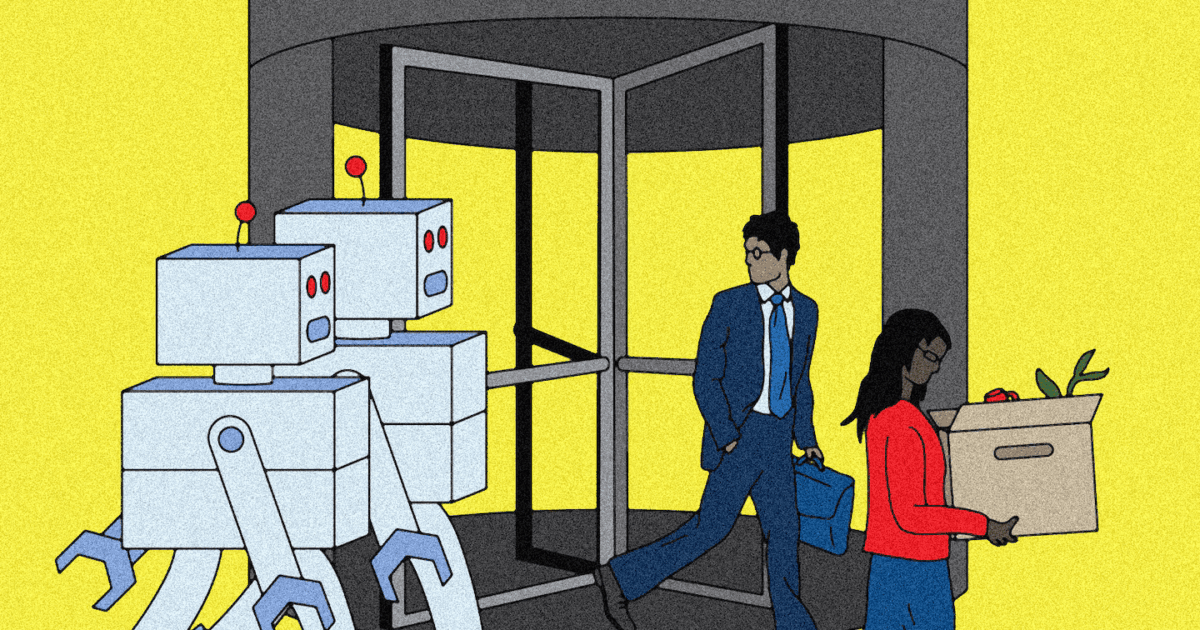
- 2024–2026: The AI Disruption. The widespread adoption of Large Language Models (LLMs) and automated analytical tools has hit white-collar sectors—coding, legal research, paralegal work, and middle-management—with unexpected force. The current system, which relies on traditional W-2 employment definitions, is now failing to catch a new demographic of "technologically unemployed" professionals.
Supporting Data: The Widening Gap
The economic data paints a concerning picture of the discrepancy between current benefits and the cost of living.
When adjusted for inflation, the purchasing power of unemployment benefits has trended downward in many states over the last two decades. While the median weekly wage has risen, the "wage replacement rate"—the percentage of previous income covered by unemployment insurance—has stagnated or declined.
For the modern white-collar worker, a $235-to-$500 weekly benefit represents a collapse in financial security. When factoring in high-cost-of-living urban centers where AI-heavy industries are concentrated, these payments often fail to cover even 20% of a displaced professional’s monthly mortgage or rent.
Furthermore, NELP’s research indicates that the "administrative burden"—the complexity of navigating state websites and meeting archaic filing requirements—acts as a further deterrent, effectively suppressing the number of people who successfully claim the benefits they are owed.

Official Responses and Policy Proposals
In response to these systemic failures, the National Employment Law Project has been aggressively advocating for a fundamental modernization of the Social Security Act’s UI provisions.
"We need a national standard," says a spokesperson for the organization. The proposal centers on three pillars:
- Universal Eligibility: Expanding the definition of "covered worker" to include part-time staff and long-term gig workers who contribute to the economy but currently fall through the cracks.
- Floor Benefits: Establishing a federal minimum for weekly payments that is tied to the local cost of living, ensuring that no worker is left in abject poverty while transitioning between roles.
- Modernized Transition Support: Integrating unemployment benefits with aggressive retraining programs. As AI replaces specific tasks, workers shouldn’t just be "held over" with cash; they should be provided with subsidized pathways to upskilling in AI-adjacent fields.
Opponents of these changes—often representing fiscal conservative think tanks—argue that expanding benefits could lead to a "disincentive to work." However, labor economists counter that in an era of rapid technological displacement, the "frictional unemployment" caused by AI requires workers to have the financial breathing room to retrain, rather than being forced into low-wage, dead-end service jobs simply to survive.
The Broader Implications: What’s at Stake?
The failure to reform the unemployment safety net carries profound implications for the social contract in the United States.
1. The Erosion of the Middle Class
If white-collar workers—the traditional bedrock of the middle class—are left to drift after AI-related layoffs, we risk a "hollowing out" of the economy. Without a safety net, these individuals will burn through their savings, leading to a massive decline in consumer spending, which in turn could trigger a broader economic recession.

2. Political Polarization
Economic anxiety is a primary driver of political instability. When a large segment of the educated workforce finds that their years of schooling and experience are rendered obsolete by an algorithm—and that the state provides zero support during the transition—distrust in institutions is likely to skyrocket.
3. The "Two-Tiered" Labor Market
There is a looming risk of creating a permanent two-tiered society: a small elite who own or manage the AI systems, and a massive, precarious workforce that fluctuates between gig work and unemployment, never achieving long-term financial security.
Conclusion: A Call to Action
The crisis of the AI-driven labor market is not merely a technological challenge; it is a moral one. The current structure, which pits states against one another in a race to the bottom regarding benefit generosity, is unsustainable.
As NELP continues to advocate for policy shifts—such as their recent efforts to hire experts to tackle these very issues—the message remains clear: the social safety net must be as agile as the technology that is disrupting it. Whether the U.S. government will rise to this challenge or continue to rely on a depression-era framework will define the economic stability of the next generation.
The path forward requires more than just incremental changes. It requires a complete reimagining of what we owe to workers in an era where the very nature of "work" is being rewritten by code. As Rebecca Dixon has underscored, the time to build that floor is now, before the next wave of AI integration renders the current system entirely obsolete.
