





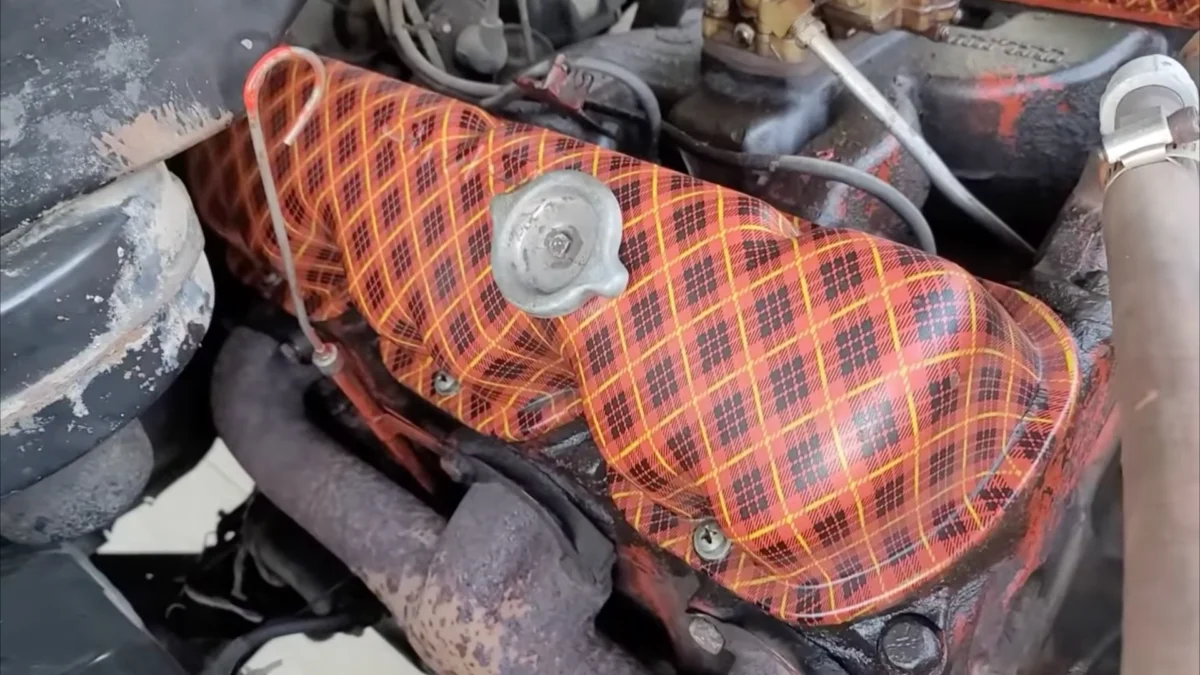
In the vast, often sterile landscape of automotive engineering, engine bays are typically defined by a monochromatic palette of cast iron, aluminum, and black plastic. When manufacturers deviate from the norm, it is usually to highlight performance—think of the iconic Ford "Blue" or the aggressive red cam covers on a Ferrari. However, buried in the corporate annals of 1963, General Motors’ truck division, GMC, executed one of the most inexplicable and charming aesthetic choices in industrial history: the plaid valve cover.
For those who have encountered this anomaly, it often feels like a glitch in the automotive matrix. Found exclusively on the 305-cubic-inch V6 engines of 1963 half-ton GMC pickups, these tartan-patterned covers represent a collision between rigorous engineering, accidental marketing, and 1960s corporate whimsy.
Main Facts: The Tartan Under the Hood
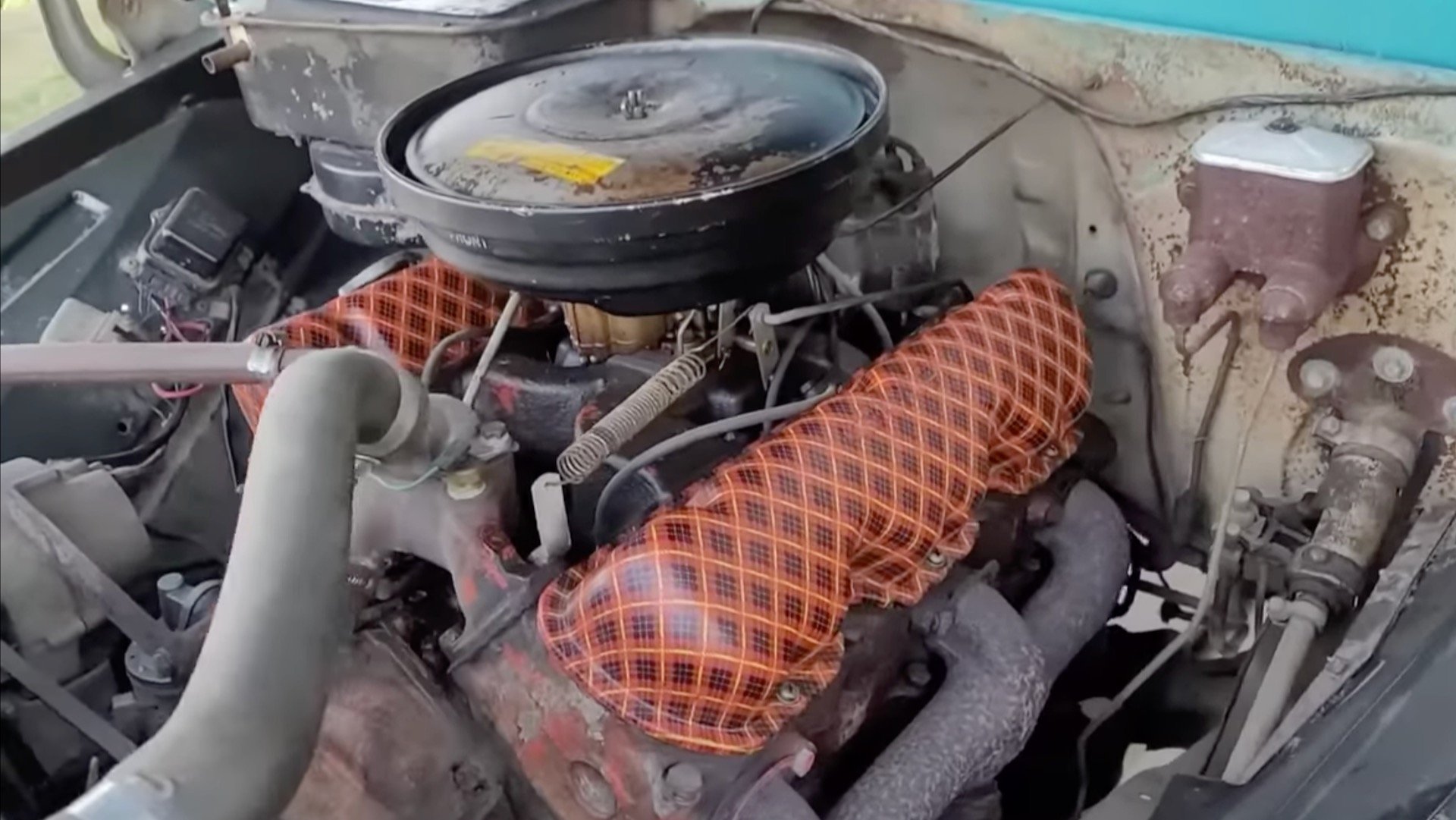
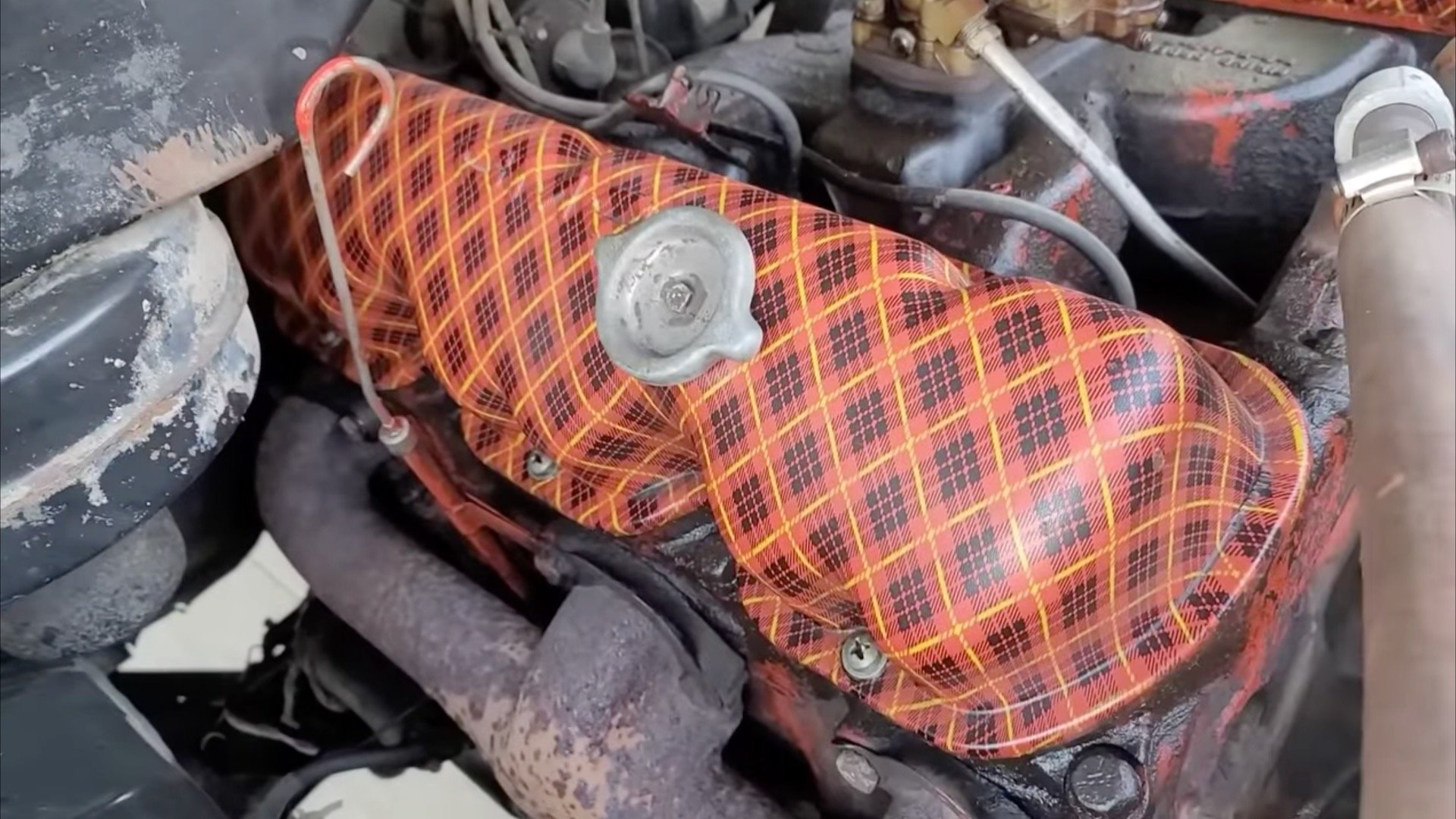
The 1963 GMC plaid valve cover is exactly what it sounds like—a rocker arm cover adorned with a decorative, adhesive tartan pattern. While customizers today frequently paint or powder-coat their engine components to stand out at car shows, the GMC plaid was a factory-applied feature.
The application was not a sophisticated paint process or a high-heat enamel decal. According to historical accounts and enthusiasts, it was essentially a specialized contact paper—the same material used for decorative shelf lining—applied directly to the exterior of the valve covers. These engines, specifically the 305-cubic-inch V6 powerplants that were the pride of GMC’s truck lineup at the time, featured these bold, patterned covers for a single model year before disappearing from the assembly line forever.
Chronological Evolution: From Engineering Lab to Showroom
To understand how a piece of shelf liner ended up in an engine bay, one must look at the climate of the early 1960s at GMC.
1960: The Dawn of the V6
The story begins with the introduction of a new generation of GMC trucks. This platform was significant because it marked the first time GM utilized a dedicated, purpose-built truck chassis for its light-duty pickups, rather than sharing components directly with passenger car lines. The star of this platform was the GMC V6 engine, a rugged, high-torque powerplant that GMC marketed as a "high-torque, low-RPM" workhorse.
1961–1962: The Fuel Economy Crisis
Despite the V6’s durability, it faced a significant hurdle: fuel efficiency. In the early 60s, as gasoline prices began to shift and consumer demand for more economical work trucks grew, GMC engineers were under immense pressure to improve the fuel economy of their big-block V6. The engineering team spent months testing various carburetor configurations, camshaft profiles, and intake manifold adjustments.
1963: The Plaid Accidental Debut
The "plaid" designation was born out of this testing phase. Engineers needed a way to distinguish the prototype engines—those running the updated, more efficient fuel management setups—from the standard production engines on the testing floor. As the legend goes, an engineer grabbed a roll of decorative tartan adhesive paper that was lying around the lab and applied it to the valve covers of the "improved" engines for easy identification.
When marketing executives toured the facility, they were struck by the distinct look. Rather than viewing it as a temporary lab tag, they saw a marketing opportunity. Playing into the cultural trope of the "thrifty Scotsman," the company opted to roll the design out to production trucks, signaling to the consumer that these vehicles were built with efficiency in mind.
Supporting Data: The 305 V6 Workhorse
The engine beneath the plaid covers was, by all accounts, a marvel of mid-century engineering. The 305-cubic-inch V6 was part of a family of engines (including the 351, 401, and 478) that were designed for extreme longevity.
- Bore and Stroke: The 305 featured a 4.25-inch bore and 3.58-inch stroke.
- Torque Profile: These engines were "torque monsters," designed to deliver peak power at low RPMs, making them ideal for heavy hauling and towing.
- Structural Integrity: Unlike many competitors, the GMC V6 engines featured a deep-skirt block design, which provided significantly more rigidity and reduced vibration—a necessity for the heavy-duty use cases these trucks were intended for.
The use of the tartan pattern was restricted to the light-duty 1/2-ton series for 1963. Because the process of applying the adhesive paper was manual and costly, and because the novelty quickly wore off as the next model year approached, it was never expanded to the heavier-duty trucks or carried forward into 1964.
Official Responses and Engineering Culture
While General Motors has never released an official "Plaid Valve Cover" white paper, the oral history preserved by the 6066 GMC Club provides the most credible account. The club, dedicated to the 1960–1966 generation of GMC trucks, has interviewed former employees who recall the chaotic, hands-on nature of the design department during that era.
The lack of a formal "official" reason for the plaid is telling of the era’s corporate structure. Decisions were often made in the hallways or during informal product meetings. The plaid covers reflect a time when the gap between the assembly line floor and the marketing boardroom was much smaller, allowing for "happy accidents" to make it into the hands of the public.
Implications: The Legacy of a Design Quirk
The legacy of the 1963 plaid valve cover is two-fold: it serves as a testament to the experimental spirit of the 1960s, and it has created a vibrant sub-culture of restoration enthusiasts.
The Restoration Market
Today, finding an original, pristine 1963 GMC with its factory plaid intact is akin to finding a needle in a haystack. The heat of the engine bay, combined with decades of oil seepage and oxidation, generally destroyed the adhesive paper long ago. However, the interest in these trucks remains high. Companies like PVA Supply have stepped in to fill the void, manufacturing high-quality reproductions of the "Scotch Tartan" pattern, allowing modern restorers to bring the kitschy, colorful aesthetic back to these vintage powerplants.
The Evolution of Modern Engine Aesthetics
In the modern era, the "plaid" idea has been relegated to the realm of "Easter eggs"—hidden, quirky design details that manufacturers include to delight enthusiasts. While we don’t see patterned engine blocks on modern Sierras or Canyons, we do see complex engine covers, illuminated badges, and bespoke trim pieces.
The modern move toward massive, plastic engine shrouds has essentially killed the idea of decorative engine parts. Today’s engines are designed to be hidden, keeping the maintenance and complexity of modern fuel injection and turbocharging out of sight. The 1963 GMC plaid covers are a reminder of a time when the engine was the centerpiece of the vehicle—a mechanical heart that was meant to be seen, even if the decoration was a bit unconventional.
Conclusion
The 1963 GMC plaid valve cover stands as one of the most delightful oddities in automotive history. It is a story of how a utilitarian, fuel-efficiency-focused testing process morphed into a piece of folk art for the American pickup truck. It reminds us that even within the monolithic structure of a company like General Motors, there was room for the absurd.
For the collector, the plaid cover is more than just a piece of patterned paper; it is a conversation starter and a symbol of a time when manufacturers were willing to take risks—no matter how strange they might seem to the rest of the world. As we look at the increasingly digitized and streamlined trucks of the 2027 model year, we can look back at the 1963 GMC with a smile, grateful that someone in the engineering department decided that, if you’re going to build a better engine, you might as well dress it up for the occasion.
