






The global automotive industry, long defined by a complex web of borderless manufacturing and just-in-time logistics, is currently undergoing a radical, state-mandated transformation. As the U.S. government accelerates its efforts to decouple the American automotive market from Chinese technology and capital, the ripple effects are beginning to reshape everything from the showroom floor to the specialized electronics assembly lines of the American Midwest.
With federal legislation aiming to purge Chinese-linked software and hardware from vehicles sold in the U.S. by 2030, automakers are finding themselves in a race against time. This shift is not merely a matter of logistics; it is a fundamental restructuring of the modern vehicle, which is increasingly defined by the very connected software and hardware the government is now seeking to restrict.
The Legislative Landscape: A Tightening Noose
The U.S. government’s stance on Chinese automotive influence has hardened significantly over the past 24 months. Driven by national security concerns regarding data privacy, cybersecurity, and the potential for remote vehicle manipulation, federal lawmakers are moving to insulate the U.S. market from Chinese influence.
The legislative pressure is two-pronged:
- Investment and Ownership: A Senate committee recently approved a landmark bill designed to block manufacturers with more than 15% Chinese ownership from benefiting from U.S. tax incentives or market access.
- Hardware and Software Bans: Beyond ownership, federal mandates are targeting the "connected" nature of modern cars. A pending rule will effectively ban Chinese-made software in connected vehicles starting in 2025, with a broader hardware ban—covering components related to communication and location tracking—slated to take full effect by 2030.
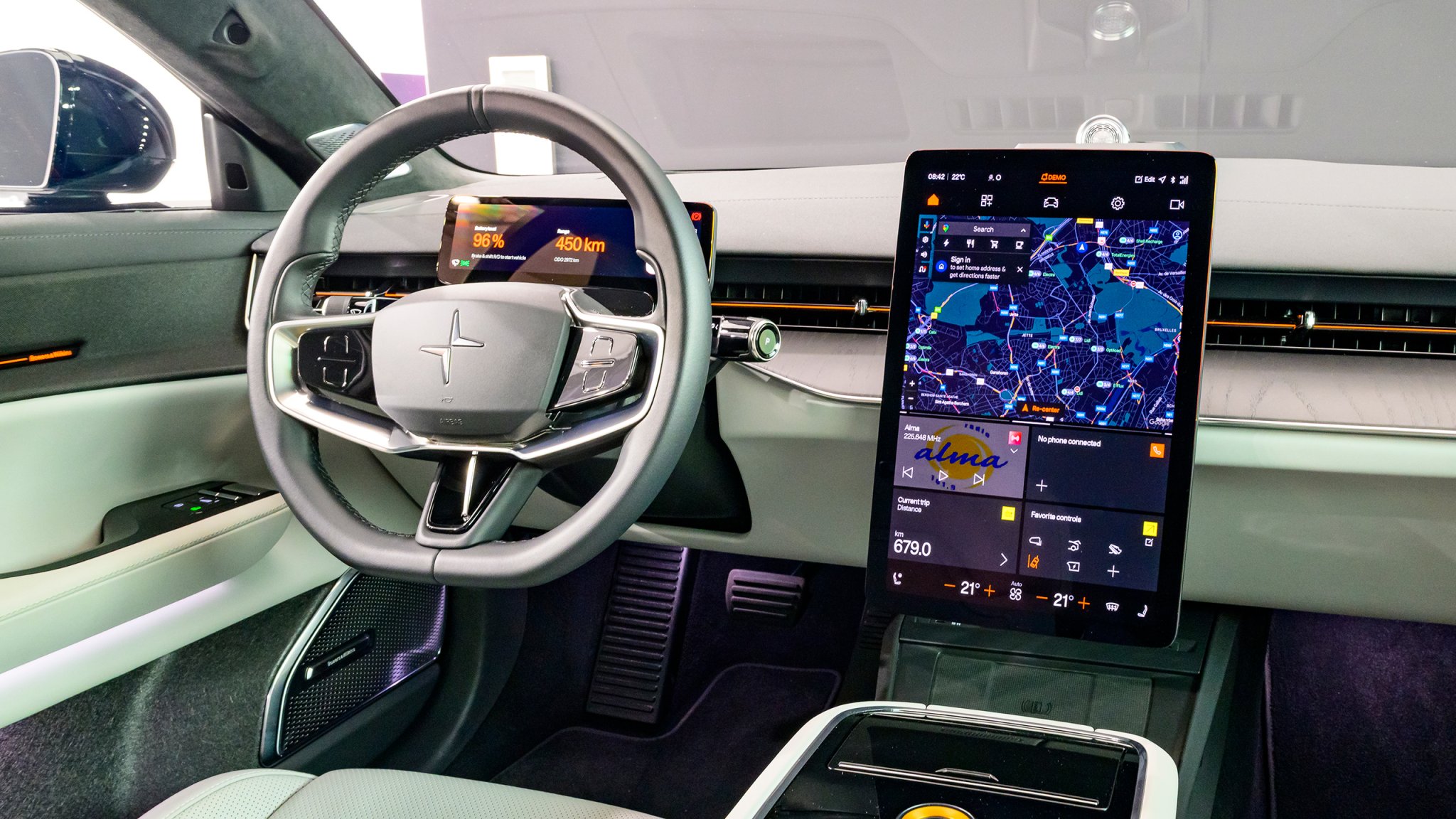
This pressure is already claiming casualties. Polestar, the high-end electric vehicle manufacturer, recently announced it would cease sales of new cars in the U.S. market, a direct consequence of the regulatory environment surrounding Chinese-linked software. Meanwhile, industry giants like Volvo have had to scramble for federal waivers to maintain their U.S. operations, highlighting the precarious nature of the current transition.
Chronology of the Shift
The transition away from Chinese automotive dependencies has not happened overnight, but the pace has quickened since mid-2025.
- Mid-2025: Initial concerns regarding "connected car" vulnerabilities surface in congressional hearings, focusing on telematics, GPS, and autonomous driving sensors.
- Late 2025: The Department of Commerce begins drafting strict rules on the provenance of vehicle electronics, signaling that "Made in China" will soon be a liability for automakers seeking to sell in the U.S.
- Early 2026: Automakers begin auditing their supply chains. The first warnings of "price shocks" emerge as manufacturers realize the cost disparity between Chinese components and domestic or allied-nation alternatives.
- June 2026: Ford begins production at its Michigan battery plant, utilizing technology licensed from China’s CATL. This project becomes a flashpoint for the debate over whether licensing is a sufficient "separation" from Chinese influence.
- July 2026: A Senate committee advances the "Chinese Car Ban" bill. Concurrently, news surfaces that Ford has pivoted its strategy for the Lincoln Nautilus, moving production to the U.S. to comply with evolving expectations.
The Economic Reality: The "China Premium"
As companies like Eagle Wireless, an automotive electronics startup based in Ohio, look to scale up to meet the expected surge in demand, they face a significant hurdle: cost.
For years, the global automotive industry has relied on the sheer scale and efficiency of the Chinese manufacturing ecosystem. Replacing these components with domestic alternatives is not just a technological challenge—it is an economic one. According to industry data, modules sourced from non-Chinese entities currently cost between 5% and 15% more than their Chinese counterparts.
"My jaw dropped when I looked at the price increase," one former Detroit auto executive remarked to Reuters when comparing invoices for Advanced Driver Assistance Systems (ADAS). When multiplied across the millions of parts required for a single vehicle, these price hikes threaten to push the cost of ownership even higher. With the average transaction price for a new vehicle in the U.S. hovering near $50,000 as of May 2026, the industry is bracing for a scenario where affordability becomes a secondary concern to compliance.
Supply Chain Complexities: The Licensing Dilemma
The push to "de-sinicize" the supply chain is fraught with nuance. The core of the problem is that many "non-Chinese" parts are still built on Chinese intellectual property.
Take the case of electric vehicle batteries. While a plant in Michigan might be physically located on U.S. soil, the battery management software and the chemical processing technology may be licensed from Chinese conglomerates like CATL. Policymakers are currently wrestling with the question: Does a U.S.-made part containing Chinese-licensed technology meet the spirit of the law?
This uncertainty creates a "wait and see" approach that discourages long-term capital investment. Automakers are hesitant to build massive, specialized domestic facilities if the definition of "compliant" might shift again in 18 months.
Official Responses and Corporate Strategy
The industry’s reaction to these mandates is as varied as the automakers themselves.
The Nimble Players: Companies like Rivian have positioned themselves as more resilient to these changes. By maintaining a more agile software architecture and a diverse supplier base, they believe they can pivot away from prohibited hardware without the same level of operational disruption that legacy automakers face.
The Legacy Giants: Ford’s situation represents the struggle of the traditional automaker. The company’s attempt to continue importing the Lincoln Nautilus from China was met with sharp rebuke from lawmakers. The subsequent pivot—moving production to the U.S.—demonstrates the power of the legislative stick. Republican Senator Bernie Moreno of Ohio has been a key driver of this accountability, forcing automakers to choose between Chinese efficiency and access to the American consumer.
The Government Stance: Lawmakers argue that the risk of a "Trojan Horse" in the form of a connected car—capable of mapping sensitive U.S. infrastructure or potentially being disabled by a foreign power—outweighs the short-term economic pain of higher vehicle prices. For them, the decoupling is not a trade policy; it is an issue of national defense.
Implications: A More Expensive, Less Connected Future
What does this mean for the average American consumer?
- Rising Costs: Expect the "China Premium" to be passed directly to the consumer. As the industry moves away from lower-cost Chinese electronics, the baseline price for entry-level vehicles will likely increase.
- Technological Fragmentation: We may see the emergence of a bifurcated global market. Vehicles sold in the U.S. may feature different, potentially less advanced, infotainment and sensor suites compared to those sold in Europe or Asia, simply because the latter markets do not have the same restrictions on Chinese hardware.
- The Rise of Domestic Startups: The long-term upside is a potential renaissance in U.S. automotive electronics manufacturing. If firms like Eagle Wireless can successfully reach cost parity through scale, the U.S. could reclaim a significant portion of the automotive supply chain that it ceded to overseas competitors over the last three decades.
Conclusion
The attempt to purge Chinese technology from the American automotive sector is one of the most ambitious industrial policy experiments in modern history. It acknowledges that in the 21st century, a car is not just a collection of steel and rubber, but a rolling data center.
However, the transition remains perilous. As we approach the 2030 deadline for the full hardware ban, the industry is entering a period of profound uncertainty. While the goal of securing the supply chain is clear, the path to achieving it without crippling the affordability of the American automobile remains obscured by economic, legal, and technological complexities. The coming years will reveal whether this forced decoupling creates a more secure, domestic-driven automotive future, or if it leaves the American consumer with fewer choices and higher bills.
