





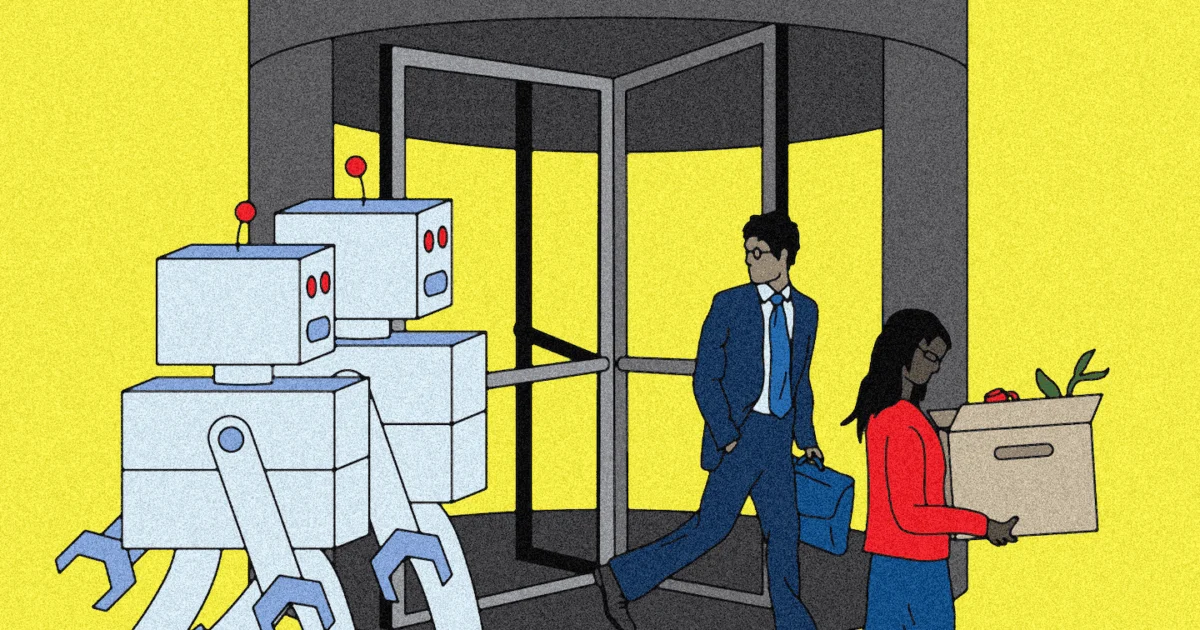
As the artificial intelligence revolution accelerates, transforming everything from software engineering to creative writing, the structural foundations of the American social safety net are beginning to crack. For decades, the unemployment insurance (UI) system was designed to buffer workers against cyclical economic downturns. However, as AI-driven displacement threatens to displace white-collar professionals and disrupt long-term career trajectories, labor advocates are warning that the current system is not just outdated—it is fundamentally insufficient.
Rebecca Dixon, CEO of the National Employment Law Project (NELP), has emerged as a leading voice in this critique. She argues that the existing framework of unemployment benefits is far too "stingy" to support the modern workforce, particularly as the threat of technological unemployment moves from blue-collar factory floors to high-end corporate offices.
Main Facts: A System Stretched to the Breaking Point
The core issue lies in the massive disparity in state-level benefit structures and the restrictive eligibility requirements that exclude millions of vulnerable workers. In the United States, unemployment insurance is a state-run program with federal oversight, leading to a "postcode lottery" of coverage.
As of late 2026, the maximum weekly payments vary wildly. An unemployed worker in Mississippi can expect a maximum of $235 per week, a figure that barely covers subsistence in an era of high inflation. Conversely, Massachusetts offers up to $1,105 per week. This disparity reflects not just cost-of-living differences, but a philosophical divide on the role of the state in protecting its citizens during periods of job transition.
Dixon’s assessment is that these figures are disconnected from the reality of the 21st-century labor market. As AI tools automate tasks previously held by mid-level managers, paralegals, and computer programmers, the "safety net" is failing to catch those who have invested years in specialized education only to find their skills suddenly commoditized or rendered obsolete.
Chronology of the AI Labor Crisis
The current anxiety surrounding AI and labor did not emerge overnight. To understand the urgency behind NELP’s calls for reform, one must look at the rapid progression of the current cycle:
- 2023–2024 (The Generative Inflection): Following the public release of advanced Large Language Models, corporations began internal audits to identify roles that could be streamlined. While initially framed as "productivity enhancement," the reality of headcount reduction began to surface in quarterly earnings reports.
- Early 2025 (The White-Collar Shift): Unlike previous automation waves that targeted manual labor, this surge began affecting white-collar sectors. The tech industry, media, and legal services saw a distinct cooling of hiring for entry-level roles, as AI tools began handling the "grunt work" previously assigned to juniors.
- Mid-2025 (The Graduate Gap): Recent college graduates, particularly those in computer science and humanities, found themselves in a "hiring desert." Without the entry-level rungs of the career ladder—which were being automated—these workers became the first "lost generation" of the AI era.
- 2026 (The Policy Reckoning): By mid-2026, the cumulative effect of these trends reached a tipping point. Advocacy groups like NELP began formalizing demands for federal intervention, arguing that states lack the fiscal capacity and political will to handle a structural shift of this magnitude.
Supporting Data: Who Is Left Behind?
The exclusionary nature of the current unemployment system is a primary concern for labor economists. As the nature of work shifts toward the "gig economy," fractional employment, and project-based contracts, the legal definitions of an "eligible employee" have become increasingly obsolete.
Dixon’s proposal for reform centers on three specific demographics that the system currently ignores:
- Part-Time Workers: Millions of Americans working part-time hours often fail to meet the minimum earnings thresholds required to qualify for state benefits. In a post-AI landscape where full-time roles may become increasingly scarce, these workers are left entirely exposed.
- Recent Graduates: Under current laws, many graduates entering the workforce have not yet built up enough "base period" earnings to qualify for benefits if they are laid off or unable to secure a job within their field of study.
- Independent Contractors: With the rise of AI-facilitated freelancing, a growing percentage of the workforce is classified as 1099 contractors. These individuals are almost universally ineligible for state unemployment insurance, leaving them without a safety net during market corrections.
The data suggests that if AI-related job losses accelerate, the number of individuals falling into these "coverage gaps" will expand from the hundreds of thousands into the millions.
Official Responses and the Political Divide
The response from the federal government and state legislatures has been, to date, fragmented. While some lawmakers have expressed interest in "portable benefits" that follow the worker rather than the employer, deep political divisions remain.
Conservative legislators often argue that increasing benefits could disincentivize re-entry into the workforce. They advocate for private-sector-led reskilling programs rather than government-funded cash assistance. On the other hand, groups like NELP and other labor-aligned organizations argue that reskilling is a long-term solution that does not address the immediate, acute need for income support.
Recent leadership changes at organizations like NELP indicate that the policy debate is shifting toward "Good Governance through Labor Enforcement." As these experts argue, the solution isn’t just about cutting checks; it is about creating a regulatory environment where employers are held accountable for the transition of their workforce during periods of massive technological upheaval.
Implications: A New Social Contract?
The implications of failing to reform the unemployment system are profound. If a large segment of the population—particularly the educated middle class—finds itself without income support during an AI-driven transition, the potential for social and economic instability increases significantly.
1. The Erosion of the Middle Class
If white-collar professionals, who have traditionally enjoyed high levels of job security, begin to experience the volatility of the gig economy, the psychological and economic impact on American society will be seismic. The "stability premium" that has long characterized professional careers is evaporating.
2. The Necessity of Portable Benefits
The consensus among reformers is that we must move toward a system where benefits are tied to the individual. This "portable benefit" model would allow workers to carry their insurance, retirement contributions, and training credits from job to job, regardless of their employment status or the size of the company they work for.
3. Strengthening the Safety Net
Dixon’s vision for the future includes a federal floor for unemployment benefits. By standardizing the minimum weekly payment and expanding eligibility to include the "gig" and "part-time" sectors, the U.S. could build a robust buffer that prevents technological progress from becoming a source of systemic poverty.
Conclusion: The Time for Reform is Now
As we move into the latter half of 2026, the question is no longer if AI will change the labor market, but how we will manage the transition. The warnings issued by Rebecca Dixon and the National Employment Law Project serve as a stark reminder that technology does not exist in a vacuum. It interacts with existing laws, social norms, and economic structures.
If the U.S. continues to rely on a 20th-century safety net for a 21st-century economy, the cost will be paid by the millions of workers whose roles are being redefined by algorithms. Reforming unemployment insurance is not merely a technical fix—it is a moral imperative to ensure that the AI revolution benefits the many, rather than just the few. As the policy conversation evolves, the focus must shift from merely managing unemployment to actively empowering workers to navigate a future that is, for many, already here.
