




By Max Garland | Supply Chain Dive
Published September 3, 2026
The era of "frictionless" cross-border e-commerce is rapidly drawing to a close. For years, Temu—the global marketplace owned by PDD Holdings—has flourished by leveraging the de minimis loophole, a trade provision that allowed low-value shipments to bypass duties and rigorous customs inspections. However, with the European Union joining the United States in a concerted regulatory crackdown on low-cost imports, the structural foundation of Temu’s business model is undergoing a forced, high-stakes transformation.
As regulatory walls rise, PDD Holdings is pivoting from a reliance on point-to-point, parcel-by-parcel shipping toward a more traditional, warehouse-heavy logistics model. This strategic shift represents a fundamental attempt to preserve the platform’s competitive edge in a landscape that no longer treats low-value international shipments as "duty-free" exceptions.
The Main Facts: A Model Under Pressure
The core of Temu’s historical success was its ability to ship products directly from Chinese factories to doorsteps in Western markets without the friction of traditional supply chain costs. By bypassing large-scale import duties, Temu could maintain prices that domestic retailers struggled to match.
However, the regulatory tide has shifted. Both U.S. and EU authorities have moved to eliminate duty-free exemptions, arguing that the volume of these shipments has overwhelmed customs systems and created an uneven playing field for domestic businesses. PDD Holdings now faces a dual challenge: higher landed costs that threaten their thin margins and the operational complexity of building an international fulfillment infrastructure from scratch.
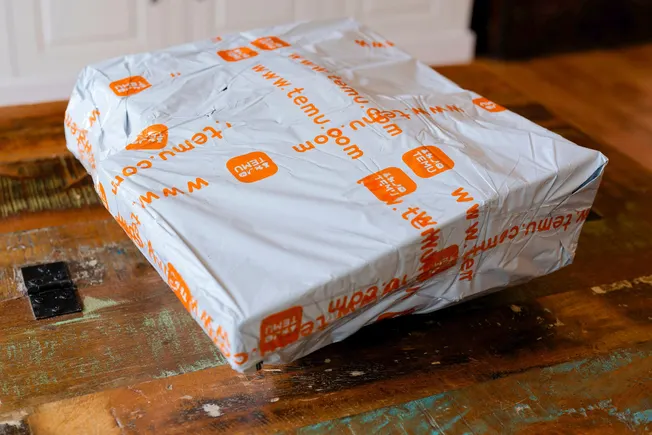
To mitigate these risks, PDD is aggressively investing in local warehousing and domestic fulfillment networks, effectively transitioning from an "export-only" platform to a localized logistics player.
Chronology: The Regulatory Siege
The transformation of PDD Holdings’ logistics strategy can be traced through a series of escalating policy decisions that have systematically dismantled the de minimis advantages:
- May 2025: The United States initiates the crackdown, ending duty-free treatment for low-value imports originating from China. This move forces Temu to reconsider its reliance on direct-to-consumer shipping for its largest market.
- Late 2025: The U.S. expands the scope of its policy, eliminating duty-free exceptions for all low-value shipments regardless of origin, effectively closing the loophole entirely.
- Early 2026: PDD Holdings signals a strategic pivot in its Q1 earnings call, with leadership acknowledging that the "old way" of doing business is no longer viable.
- Mid-2026: The European Union formally implements its own end to the duty-free threshold for small packages, aligning its trade policy with the U.S. and creating a unified, global regulatory barrier for Temu.
- September 2026: PDD Holdings accelerates capital expenditure into local warehouse leasing and supply chain automation, aiming to shift fulfillment closer to the end consumer.
Supporting Data: The Cost of Compliance
The financial implications of these changes are significant. According to PDD Holdings’ April 2026 annual report, the end of duty-free status creates a cascade of economic pressures:
- Increased Landed Costs: The imposition of customs duties and VAT on every transaction directly increases the cost of goods sold (COGS).
- Operational Delays: Increased regulatory scrutiny at ports of entry means that shipments previously cleared automatically now face manual inspection, leading to longer lead times and higher storage fees.
- Merchant Churn: Smaller merchants, who were the backbone of the initial growth phase, are struggling to absorb these costs. PDD’s data suggests that unless these merchants transition to local warehousing, their participation rates are likely to decline.
- Pricing Elasticity: PDD executives have signaled that consumers should expect higher prices, as the company can no longer fully subsidize the cost of logistics.
Official Responses: Navigating the "New Normal"
The leadership at PDD Holdings has adopted a pragmatic, if cautious, tone regarding these headwinds. Co-Chairman and Co-CEO Jiazhen Zhao has been the primary architect of the company’s public-facing response, emphasizing that the investment in infrastructure is not merely a defensive measure, but a long-term evolution of the platform.
"Our current supply chain investments have two complementary priorities," Zhao stated during the most recent investor briefing. "First is ensuring a strong supply of quality products, and second is building the infrastructure to deliver them efficiently."

Zhao’s remarks highlight a shift away from the "point-to-point" shipping method—where a package is sent from a factory in China to a buyer in Europe or the U.S. independently—in favor of a consolidated approach. "Our current method… is resulting in higher fulfillment costs and leaving some consumer demand unsatisfied," Zhao admitted. By moving toward local warehouses, PDD hopes to regain control over the "last mile" and improve delivery reliability, even if it sacrifices the extreme agility of the previous model.
Implications: The Future of E-Commerce Logistics
The forced evolution of Temu’s supply chain has broader implications for the global retail sector.
1. The Death of "Micro-Logistics"
For years, the e-commerce sector relied on the idea that global shipping could be as cheap as local shipping. The regulatory changes in the U.S. and EU suggest that governments are no longer willing to allow the "postal exception" or "de minimis" rules to be used as a primary business strategy. Companies will now be required to invest in local inventory, which requires higher capital commitments and deeper market penetration.
2. The Rise of Regional Hubs
PDD Holdings is not the only company forced to rethink its model. Any business relying on high-volume, low-value cross-border trade must now establish regional distribution hubs. This is not just a regulatory compliance exercise; it is a competitive necessity. As delivery times for direct-from-China shipments increase, only those companies that hold inventory within the target market will be able to compete on the "two-day delivery" standard that Amazon and other incumbents have established.
3. Supply Chain Fragility vs. Efficiency
While PDD’s pivot to local warehouses aims to improve delivery efficiency, it introduces a new set of risks. By holding inventory in multiple global locations, the company increases its exposure to local tax laws, labor market fluctuations, and real estate costs. The "lean" model of the past is being replaced by a "robust" model, which is naturally more expensive to maintain.

4. The Impact on the Merchant Ecosystem
The most vulnerable players in this scenario are the smaller merchants who have powered Temu’s growth. These merchants lack the capital to participate in international warehouse programs. As the barrier to entry rises, Temu may be forced to consolidate its vendor base, favoring larger, more sophisticated suppliers who can navigate the complexities of international trade. This could lead to a less diverse, albeit more stable, product catalog on the platform.
5. Final Outlook: A Maturing Market
The regulatory crackdown is, in many ways, a sign that the cross-border e-commerce market is "growing up." No longer a fringe experiment in global shipping, Temu is being forced to adopt the same operational standards as traditional retailers. Whether the company can maintain its "low-cost" identity while absorbing the massive costs of global warehousing remains the central question for investors and analysts alike.
As the calendar turns toward the end of 2026, the focus will remain on PDD’s ability to execute this infrastructure transition without alienating the price-sensitive consumers who built the brand. The age of frictionless imports may be over, but the age of the global, warehouse-integrated marketplace has officially begun.
