





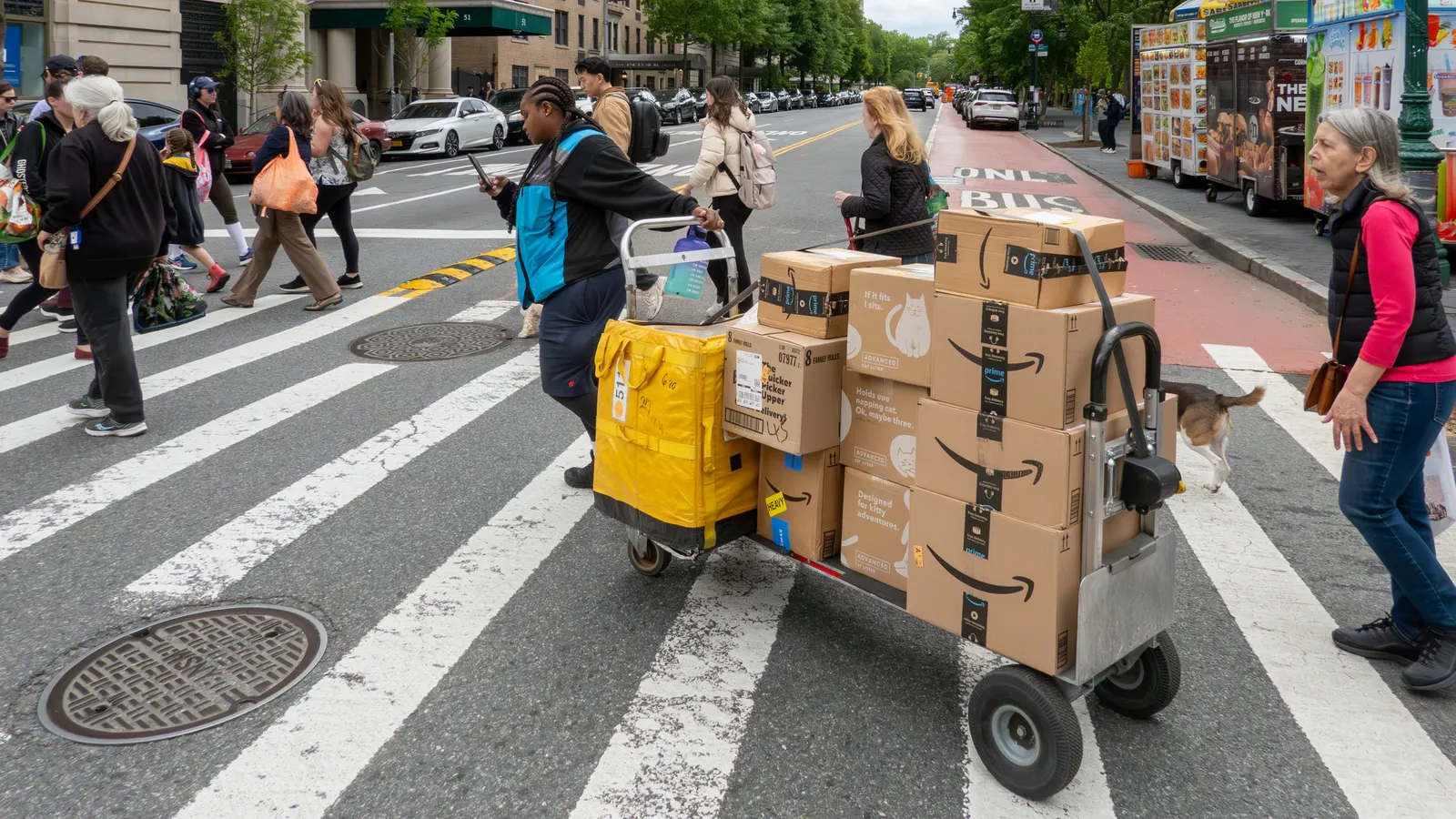
As the logistics industry prepares for the critical end-of-year shipping window, Amazon has solidified its position as a major contender in the parcel delivery market. On September 3, 2026, the company announced its holiday surcharge structure, marking a pivotal moment for Amazon Shipping as it operates its first full peak season as a logistics provider open to all businesses, rather than exclusively for Amazon marketplace merchants.
With delivery giants UPS, FedEx, and the U.S. Postal Service (USPS) all signaling higher costs, the 2026 holiday season is shaping up to be one of the most expensive on record for shippers. Amazon’s latest move reflects a balancing act: maintaining the infrastructure required for massive volume while aggressively courting market share from legacy carriers.
Main Facts: The 2026 Surcharge Landscape
Amazon’s peak season fee schedule is segmented into three distinct timeframes, with the highest financial impact hitting between late November and late December. The surcharges target four primary categories: standard per-package demand, additional handling, large package fees, and extra-heavy package surcharges.
Amazon Shipping 2026 Peak Surcharge Schedule
| Fee Category | Oct. 25 – Nov. 21 | Nov. 22 – Dec. 26 | Dec. 27 – Jan. 16, 2027 |
|---|---|---|---|
| Per-package demand | $0.50 | $0.75 | $0.50 |
| Additional handling | $8.75 | $11.90 | $8.75 |
| Large package | $96.25 | $117.50 | $96.25 |
| Extra heavy package | $530.00 | $590.00 | $530.00 |
Source: Amazon Shipping
These fees are designed to manage capacity and ensure service quality during the highest-volume periods of the year. By implementing a tiered approach, Amazon aims to incentivize shippers to spread out their distribution, although the core surcharges remain non-negotiable for any volume moving through their network during the designated peak windows.
Chronology of Market Escalation
The road to the 2026 peak season has been defined by a rapid expansion of Amazon’s logistical ambitions. The trajectory began earlier this year when Amazon moved to open its logistics network to any business, effectively transitioning from a closed-loop internal fulfillment arm to a public-facing competitor for UPS and FedEx.
- April 2026: Amazon introduced a new 3.5% fuel and logistics surcharge, signaling a shift toward higher operating costs passed down to merchants.
- Summer 2026: Throughout the mid-year months, Amazon Shipping aggressively targeted high-volume shippers, offering competitive base rates designed to lure customers away from legacy carriers.
- July 2026: The Q3 TD Cowen/AFS Freight Index reported that ground parcel costs were hitting record highs, driven largely by fuel surcharges across the industry.
- September 3, 2026: The official announcement of the 2026 holiday surcharge structure confirmed that Amazon would align its peak pricing with the broader market, ensuring profitability during the high-demand season.
- Upcoming (Oct. 15, 2026): Fulfillment by Amazon (FBA) and "Buy with Prime" services will begin applying their own elevated holiday charges, separate from the Amazon Shipping parcel delivery fees.
Supporting Data: A Competitive Comparison
The most notable aspect of Amazon’s 2026 strategy is its decision to omit volume-based surcharges for the second consecutive year. In contrast, industry titans UPS and FedEx continue to rely on complex, volume-dependent peak surcharges. These are calculated based on how much a customer’s current shipping activity deviates from a pre-established baseline, often penalizing businesses that see sudden, unpredictable surges in demand.
By avoiding this complexity, Amazon is attempting to simplify its value proposition for small-to-medium enterprises (SMEs) that may find the opaque pricing structures of traditional carriers intimidating. However, this does not mean Amazon is "cheap." While the lack of volume-based penalties is a selling point, the baseline per-package surcharges are set to be significantly higher than last year’s levels.
Industry analysts note that while FedEx and UPS are focused on protecting margins through these volume-based models, Amazon is prioritizing "network density." By attracting a wider array of customers, Amazon is utilizing its existing delivery routes more efficiently, which helps offset the massive overhead of their last-mile delivery fleet.
Official Responses and Strategic Rationale
Amazon has consistently stated that these surcharges are vital for maintaining service quality and network capacity. In its official communication, the company noted that the fees allow them to scale operations to meet the extraordinary demand of the holiday rush, which frequently sees volumes double or triple compared to the average work week.

"Our goal is to provide a reliable, high-speed delivery experience that businesses can depend on during their most important sales period," an Amazon spokesperson remarked during the announcement. "The adjustments in our peak surcharge structure ensure that we can continue to invest in our people, technology, and logistics fleet to accommodate the surge in parcel volume."
Critics, however, suggest that these fees are a double-edged sword. While they help maintain service levels, they also effectively pass the cost of systemic inflation and labor market pressures directly to the retailers—and, ultimately, to the consumer.
Implications for the Logistics Ecosystem
The 2026 peak season is poised to be a watershed moment for the global supply chain. Several long-term implications are already taking shape:
1. The Death of "Free" Shipping Expectations
With surcharges from every major carrier—including the USPS, which announced a 6% rate increase—the era of low-cost shipping for e-commerce retailers is effectively over. Businesses will be forced to either absorb these costs, shrinking their margins, or raise product prices, which may dampen holiday consumer sentiment.
2. A Shift in Carrier Loyalty
The emergence of Amazon Shipping as a viable alternative to legacy carriers is changing the "RFP" (Request for Proposal) process for many mid-sized retailers. Historically, businesses relied on a duopoly of UPS and FedEx. Today, the ability to split volume between these giants and the Amazon network provides a hedge against capacity constraints and service disruptions.

3. Increased Focus on "Early Shipping"
Amazon’s decision to apply fees across different timelines for various services (FBA vs. Amazon Shipping) creates a complex calendar for retailers. The advisory to "ship early" is no longer just a logistical recommendation; it is a financial necessity to avoid the peak surcharge tiers that escalate sharply on November 22.
4. Pressure on Smaller Carriers
Regional carriers and smaller courier services are finding themselves in a difficult position. While they are often more nimble, they struggle to match the massive infrastructure and the aggressive pricing tactics of Amazon. Many are expected to follow the industry trend of raising their own peak season surcharges to remain solvent as fuel and labor costs continue to climb.
Conclusion
As the logistics industry navigates the final quarter of 2026, the message is clear: efficiency is the new currency. Amazon Shipping’s entry into the broader market as a public competitor has forced a realignment of industry norms. While shippers are facing historically high costs, they are also benefiting from a more competitive market where volume-based incentives and network-wide capacity are being prioritized.
For the remainder of the year, retailers must conduct a rigorous audit of their shipping strategy. With Amazon’s peak surcharges now codified and the broader carrier market moving in tandem, the companies that succeed will be those that plan early, optimize their package sizes to avoid "large" and "extra heavy" surcharges, and leverage the increasingly diverse options in the modern logistics landscape.
