




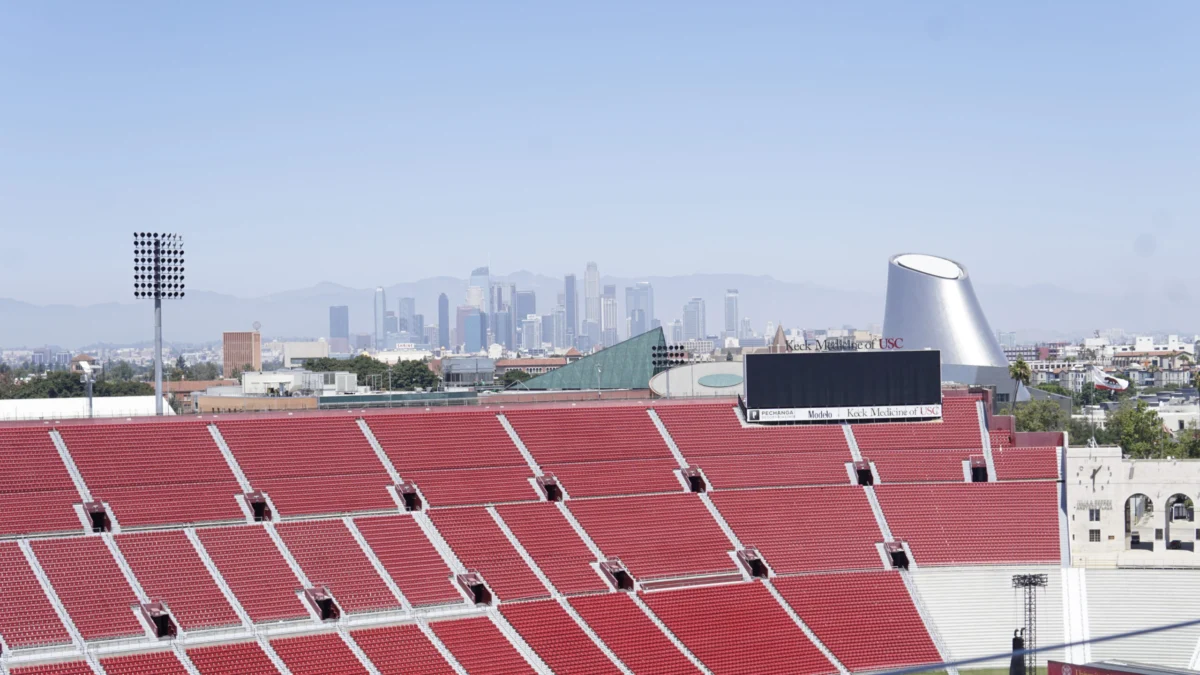
As the global community turns its gaze toward the 2028 Olympic Games in Los Angeles, the focus is shifting from record-breaking athletic performances to a more pressing, existential challenge: the climate crisis. With a projected global audience of over five billion people, the LA28 Games represent one of the largest communication platforms in human history. Yet, as the city prepares to host, it does so against the backdrop of a landscape scarred by devastating wildfires and an urban environment struggling to adapt to a warming planet.
On June 23, 2026, a high-level webinar—part of the prestigious London Climate Action Week—will convene experts to dissect whether the upcoming Games can serve as a blueprint for sustainable development or if they will fall victim to the very environmental pressures they seek to ignore.
Main Facts: A New Paradigm for the Olympic Movement
The LA28 organizing committee has made a bold, albeit contentious, promise: to deliver the most sustainable Olympic Games in history. Unlike previous iterations of the Games that necessitated massive, taxpayer-funded construction projects that often became "white elephants," LA28 has pledged to utilize only existing or temporary venues.
The strategy is twofold: to minimize the carbon footprint associated with new infrastructure and to leverage the Games as a catalyst for long-term urban policy reform. By focusing on mobility, the organizers aim to shift the city’s infamous car-centric culture toward more sustainable public transportation patterns. However, the intersection of disaster recovery—specifically from the wildfire events that have plagued Southern California—and the logistical demands of a global sporting event remains a point of significant scrutiny.
Chronology: The Road to 2028 and the Shadow of Climate Change
The timeline for Los Angeles’s transformation is tight, characterized by a series of climate-related benchmarks and logistical milestones:
- 2017: Los Angeles is officially awarded the 2028 Summer Games, emphasizing the use of existing infrastructure as a core pillar of the bid.
- 2020–2025: California experiences a series of record-breaking wildfire seasons, forcing urban planners to pivot from mere development to "resilience-focused" infrastructure.
- 2026 (June 23): The London Climate Action Week webinar serves as a critical juncture for stakeholders to debate the integration of climate policy into the Olympic planning framework.
- 2027: Anticipated completion of major transit-oriented development projects designed to facilitate the movement of millions of visitors without relying exclusively on personal vehicles.
- July 2028: The Opening Ceremony of the Games of the XXXIV Olympiad, serving as the ultimate stress test for the city’s climate-adapted systems.
Supporting Data: The Sustainability Gap
The scale of the challenge facing Los Angeles is quantifiable. Historically, the Olympics have been carbon-intensive events, with construction and international travel accounting for the bulk of the emissions.
- Public Transit: LA28’s "No New Permanent Venues" strategy is designed to minimize embodied carbon, but the operational emissions—specifically the transport of five billion spectators and participants—remain a massive variable.
- Urban Heat Islands: With temperatures in Los Angeles trending upward, the city is aggressively investing in "cool pavement" technology and urban canopy expansion to combat the urban heat island effect, which poses a significant threat to athlete and spectator safety.
- Wildfire Recovery: According to recent environmental assessments, wildfire recovery efforts in the surrounding regions are now integrated into the regional emergency management plans for the Games. The cost of these mitigations is projected to reach into the billions, as the city upgrades its grid and water infrastructure to withstand potential climate-induced stressors during the two-week event window.
Official Responses: Promises vs. Reality
The LA28 organizers have consistently framed their efforts as a departure from the "Games at any cost" model. In recent statements, representatives have emphasized that the sustainability pledge is not merely a marketing tactic but a functional requirement for hosting in a region so vulnerable to environmental instability.
"We are building a model for the future," an organizer noted in a recent briefing. "By using existing venues, we are not just saving money; we are demonstrating that a global city can adapt its infrastructure to be more resilient, not just for the duration of the Games, but for the decades that follow."
However, climate advocacy groups are less optimistic. Many argue that while the pledge to avoid new construction is commendable, it fails to address the "scope three" emissions—those generated by the influx of international tourists. Critics emphasize that the sheer demand on the city’s resources during the peak of the wildfire season could undermine the very resilience measures the city is attempting to implement.
Implications: A Model or a Warning?
The 2028 Games stand at a crossroads. There are three primary ways in which the outcome of these Games will impact the future of urban policy and sporting events:
1. The Blueprint for "Resilience-First" Urbanism
If Los Angeles succeeds in using the Olympics to accelerate the adoption of public transit and energy-efficient urban cooling, it could become the global gold standard for climate-resilient cities. This would provide a template for other metropolises facing similar environmental pressures, proving that hosting a mega-event can be a net-positive for local climate policy.
2. The Mobility Shift
The pressure to move millions of people across a sprawling, car-dependent city will force an unprecedented experiment in temporary and permanent transit solutions. If the city can successfully discourage personal car use during the Games, it could permanently alter the mobility habits of its residents, offering a long-term solution to traffic congestion and emission levels.
3. The Ethical Dilemma of Sporting in a Changing Climate
The most profound implication is philosophical. Can the global community continue to justify the massive logistical footprint of the Olympics in an era of climate emergency? If the 2028 Games prove that a mega-event can be successfully "decarbonized" or effectively mitigated, it may extend the life of the Olympic movement. Conversely, if the Games are disrupted by extreme weather or if the environmental costs prove too high, it may lead to a total reevaluation of whether such events should exist in their current form.
Conclusion: The Webinar as a Catalyst
The webinar on June 23, 2026, is not merely a lecture; it is a critical debate on the viability of our modern cultural institutions. As experts gather to discuss the intersection of athletic prowess and climate adaptation, they will be forced to confront uncomfortable truths about the limits of human intervention in a warming world.
As Los Angeles prepares to welcome the world, it does so with the knowledge that the eyes of the planet are not just on the podium, but on the streets, the power grids, and the recovery sites that define its struggle. Whether the 2028 Games are remembered as a triumphant display of human resilience or a final, costly spectacle in a cooling-less world remains to be seen. The decisions made between now and 2028 will serve as a definitive statement on the capacity of urban centers to evolve, adapt, and survive in the age of the climate crisis.
For those interested in the granular details of these environmental strategies, the upcoming webinar promises to peel back the layers of marketing to examine the rigorous, often gritty, reality of preparing for the world’s largest stage. As we move toward 2028, the goal is no longer just "faster, higher, stronger"—it is "cooler, cleaner, and more resilient."
Event Details:
- Date: 23 June 2026
- Time: 16.00-17.00 CEST / 15.00-16.00 BST
- Format: Webinar
- Context: London Climate Action Week
