



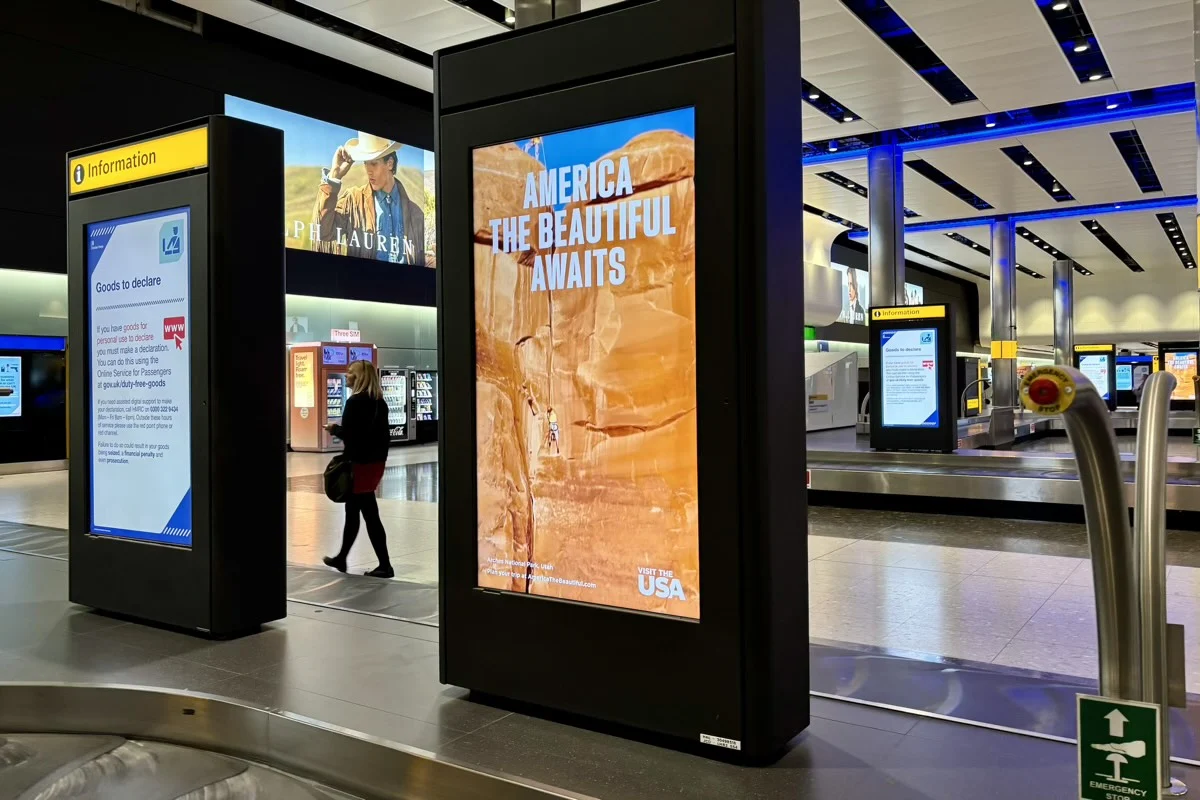
As the American travel industry navigates a post-pandemic landscape defined by shifting consumer behaviors and fierce international competition, the nation’s official destination marketing organization, Brand USA, is confronting a formidable financial reality. For the past two years, the agency has operated under the protective umbrella of a $250 million federal injection—a life raft that shielded it from the harsh winds of budget austerity. However, as that funding stream dries up, the organization finds itself bracing for the full impact of legislative funding reductions, sparking urgent questions about the future of U.S. tourism promotion on the global stage.
Main Facts: The End of the Pandemic Cushion
Brand USA, the public-private partnership tasked with promoting the United States as a premier travel destination, has been living in a state of fiscal grace since 2022. During the depths of the pandemic, the federal government provided a significant financial boost to keep the agency afloat. This one-time infusion allowed the organization to maintain near-normal operating budgets even as its primary revenue streams—which rely heavily on a combination of federal grants and private-sector contributions—faced significant volatility.
However, the reality of the fiscal cliff is now undeniable. With the exhaustion of the 2022 supplemental funding, Brand USA is set to face a landscape where federal funding cuts, enacted in the wake of the pandemic, will finally be felt in full force. While the organization remains operational, the transition marks a pivotal shift from a period of "emergency preservation" to a period of "strained sustainability."
A Chronology of Fiscal Volatility
To understand the current crisis, one must look at the timeline of the last five years of federal tourism policy:
- 2020–2021: The Global Freeze: The COVID-19 pandemic effectively halted international travel, causing a catastrophic decline in the Electronic System for Travel Authorization (ESTA) fees that traditionally fund a significant portion of Brand USA’s operations.
- 2022: The Lifeline: Recognizing the vital role of tourism in the national economic recovery, Congress authorized a $250 million injection into Brand USA. This capital allowed the agency to maintain marketing campaigns and global presence despite the lack of typical fee-based revenue.
- 2023–2024: The Gradual Taper: During this period, the agency managed a delicate balancing act. Despite an $80 million reduction in annual federal funding compared to previous cycles, the surplus from the 2022 injection allowed the agency to mask the shortfall, maintaining spending levels that mimicked pre-pandemic activity.
- 2025: The Current Reality: As fiscal year 2025 closes, the agency has been forced to draw down its reserves significantly to keep operations stable.
- 2026–2027: The Baseline Stabilization: Brand USA has projected spending of $158 million for fiscal 2026 and $165 million for fiscal 2027. These figures are intentionally aligned with pre-pandemic spending habits as reported in historical tax filings, representing a "new normal" that is heavily dependent on fiscal discipline.
- 2028: The Precipice: By September 2027, the agency anticipates its cash reserves will dwindle to approximately $51 million. Given that a large portion of this must be held in reserve for emergency liquidity, the organization will have little to no "cushion" to offset further declines in revenue.
Supporting Data: The Math of Marketing
The financial structure of Brand USA is inherently complex, relying on a matching system where federal dollars—capped at a specific annual limit—are triggered by private-sector contributions.
According to internal projections and public tax filings, the fiscal outlook is as follows:
| Fiscal Year | Projected Spending | Notes |
|---|---|---|
| 2026 | $158 Million | Focus on core markets and digital infrastructure. |
| 2027 | $165 Million | Targeted growth in emerging travel markets. |
| 2028 | TBD | Significant risk of underfunding without new revenue. |
The "drawdown" of reserves is the most concerning metric for financial analysts. With a planned expenditure of $114.1 million from current reserves, the agency is essentially cannibalizing its savings to keep the lights on. Once the cash reserve drops to the $51 million threshold, the organization loses its ability to react to sudden shocks—such as another global health crisis, economic recession, or geopolitical event that might necessitate a rapid, large-scale marketing pivot.
Official Responses and Strategic Positioning
In formal communications, leadership at Brand USA has maintained a stance of cautious optimism. The organization emphasizes that its mission—to increase international visitation and boost the U.S. economy—remains as vital as ever. By targeting $165 million for 2027, they aim to prove that they can remain effective even without the "supplemental" emergency cash.
"We are entering a phase of fiscal responsibility that prioritizes high-impact, high-ROI marketing," a spokesperson noted in a recent internal memo. The agency is focusing heavily on "precision marketing," utilizing big data to ensure that every dollar spent reaches travelers with the highest propensity to visit the United States. By moving away from broad, expensive broadcast campaigns and toward hyper-targeted digital and social media strategies, the agency believes it can maintain its market share despite a smaller budget.
However, industry observers are more skeptical. The U.S. Travel Association and various regional tourism boards have voiced concerns that "doing more with less" is a finite strategy. They argue that in the global tourism arena, the U.S. is competing against nations like France, Italy, and Japan—all of which have ramped up their marketing budgets significantly to capture the post-pandemic travel boom.
Implications for the Future of U.S. Tourism
The impending budget crunch for Brand USA has profound implications for the broader U.S. economy:
1. The Competitive Disadvantage
As other countries aggressively market their destinations, a static or shrinking budget for Brand USA could lead to a loss in global market share. If the U.S. ceases to be "top of mind" for potential travelers, the resulting decline in tax revenue from international visitors could far outweigh the savings achieved by cutting the marketing budget.
2. The Private-Sector Burden
Brand USA’s funding model requires a "match" from private-sector partners. If federal funding continues to shrink, the burden of funding the agency will shift more heavily toward hotels, airlines, and rental car companies. During lean economic times, these partners may be unable or unwilling to increase their contributions, creating a vicious cycle of underfunding.
3. The Need for Legislative Reform
The current situation is fueling a push for legislative reform. Industry lobbyists are calling for a permanent, non-reliant funding mechanism that doesn’t fluctuate based on short-term political whims or ESTA fee volatility. Without a structural change to how the agency is financed, Brand USA will remain in a state of perpetual "budget firefighting."
4. Impact on Regional Tourism
Brand USA is not just a national entity; it is a force-multiplier for state and city tourism boards. By co-branding campaigns, the agency allows smaller destinations to reach international audiences they could never afford to target alone. A reduction in Brand USA’s capacity will hit these smaller, secondary markets the hardest, potentially slowing the economic recovery in non-major metropolitan areas.
Conclusion: A Call for Strategic Clarity
The next 24 months will be the most critical in Brand USA’s history. As the agency navigates the path from 2026 to 2028, it must demonstrate not only its ability to survive on a tighter budget but also its continued value to the American economy.
The "cushion" provided by the 2022 federal injection was a temporary fix for a structural problem. As the nation moves into the 2028 fiscal cycle, the U.S. government and the private sector must decide if they are willing to treat international tourism marketing as a vital infrastructure investment or as a discretionary expense. The outcome of that decision will determine whether the United States remains a top-tier destination for the global traveler or if it begins to fade from the international spotlight.
For now, the strategy is clear: tighten the belt, focus on high-yield visitors, and pray for stability. But for an agency that relies on the dynamism of global movement, survival is not the same as success. The clock is ticking toward 2028, and the margin for error is shrinking by the day.
