
The landscape of urban mobility is undergoing a seismic shift. As major metropolitan areas grapple with congestion, emissions, and the rising cost of private vehicle ownership, the promise of the "Robotaxi"—an autonomous, on-demand ride-hailing service—has moved from the realm of science fiction to the center of corporate strategy. At the forefront of this evolution is Tesla, which has doubled down on its vision of a driverless future with the introduction of the Cybercab.
Main Facts: The Cybercab Vision
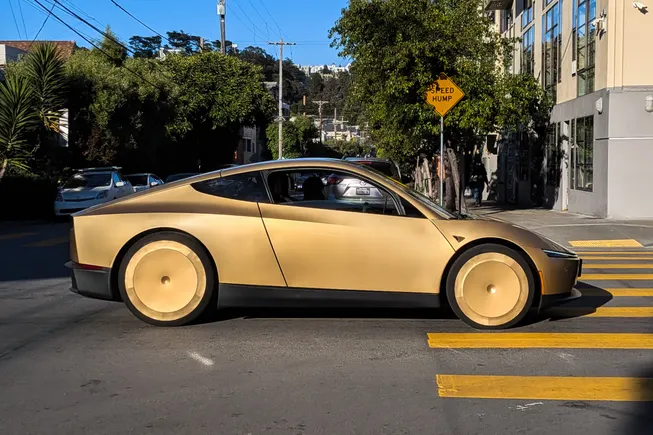
Tesla CEO Elon Musk officially unveiled the Cybercab on October 10, 2024, at a high-profile event in Burbank, California. The vehicle represents a radical departure from traditional automotive design. Eschewing pedals, a steering wheel, and even standard dashboard instrumentation, the Cybercab is built entirely around Tesla’s "Full Self-Driving" (FSD) software suite.
Unlike Tesla’s consumer-facing fleet—where the FSD system is classified as a Level 2 driver-assist feature requiring constant human supervision—the Cybercab is envisioned as a Level 5 autonomous platform. This distinction is critical: whereas current Tesla owners must remain attentive at all times, the Cybercab is designed to operate without human intervention. However, the path to full autonomy remains complex. Recent reports indicate that in testing environments across Austin, Chicago, and San Francisco, Tesla is employing remote monitoring capabilities. These systems allow human supervisors to intervene or take control of the vehicle when the AI encounters edge cases or unpredictable traffic patterns.
Chronology: A Timeline of Development and Deployment
The journey toward the Cybercab has been marked by ambitious projections and a series of strategic pivots.
- October 2024: Tesla debuts the Cybercab in Burbank, California, signaling a move toward purpose-built autonomous vehicles rather than retrofitting existing models with software.
- March 2026: Competition heats up as Amazon-backed Zoox expands its testing footprint, launching autonomous vehicle trials in Austin and Miami.
- Q2 2026: During Tesla’s Q2 2026 earnings call, Elon Musk addresses the regulatory risks associated with the rollout, emphasizing the existential threat posed by potential accidents.
- August 2026: Reports emerge regarding the staged rollout strategy. Tesla shifts its focus toward an initial phase of internal testing, where Cybercabs are restricted to Tesla employees before the service is expanded to the general public in cities like Austin.
- Late 2026 – Present: The industry enters a phase of "controlled scaling," where the focus shifts from hardware innovation to software reliability and regulatory compliance.
Supporting Data: The Competitive Landscape
The race to define the future of transit is not a solitary endeavor. Tesla finds itself competing against well-funded incumbents and aggressive newcomers.
The Zoox Model
Amazon’s Zoox has established a distinct niche in the robotaxi market. Utilizing box-like, bidirectional vehicles that lack traditional driver controls, Zoox has successfully implemented public ride services in Las Vegas and the San Francisco Bay Area. Their approach emphasizes "purpose-built" design, ensuring that safety features are integrated into the vehicle’s chassis rather than being bolted onto existing consumer sedans.
The Remote Oversight Factor
A critical component of modern autonomous testing—including that of Tesla—is the "human-in-the-loop" oversight system. While the marketing narrative emphasizes pure AI autonomy, the reality of current testing in Chicago, Austin, and San Francisco relies heavily on remote teleoperation. According to industry analysis from Electrek, these remote monitors serve as a safety net, enabling the company to navigate complex urban environments while the machine learning models continue to refine their decision-making processes.
Safety Metrics and Regulatory Scrutiny
The financial viability of these services hinges on safety statistics. Regulators are increasingly using "miles per intervention" as a benchmark. For Tesla, the challenge is to prove that its vision-based FSD system—which relies exclusively on cameras—can perform with equal or superior safety to systems that utilize LiDAR and radar, which are favored by competitors like Waymo and Zoox.
Official Responses: The Weight of Responsibility
Elon Musk’s rhetoric regarding the rollout of the Cybercab has evolved from the bold optimism of 2024 to a more measured, risk-conscious tone by mid-2026. During the Q2 2026 earnings call, Musk provided a candid assessment of the stakes involved.
"We do need to be cautious about causing any accidents or causing any harm to anyone," Musk stated. "If we injure even one person, it’ll be worldwide headline news, and regulators will immediately clamp down on our activities."
This acknowledgment highlights the "zero-tolerance" environment that exists for autonomous vehicle manufacturers. Unlike traditional automotive recalls, where mechanical failures are handled through repair programs, an autonomous vehicle accident involving a fatality could lead to the immediate revocation of testing permits and a permanent chilling effect on the company’s stock price and consumer confidence.
Implications for Urban Planning and the Future of Transit
The introduction of the Cybercab carries profound implications for city planners, urban infrastructure, and the socioeconomic fabric of modern society.
The Death of Parking?
If the robotaxi model achieves mass adoption, the necessity for vast swathes of urban land dedicated to parking could diminish. Proponents argue that a fleet of autonomous, continuously moving vehicles could reduce the need for parking structures, allowing cities to reclaim space for green parks, affordable housing, or expanded public transit.
Labor Market Disruptions
The transition to autonomous ride-hailing presents significant challenges for the gig economy. Companies like Uber and Lyft, which currently rely on a human workforce, are in a precarious position. If Tesla and Zoox successfully scale their autonomous fleets, the cost of a ride could plummet, rendering human-driven services less competitive. This transition will likely necessitate significant policy discussions regarding the future of work for millions of rideshare drivers.
Regulatory Challenges
The legal framework for autonomous vehicles remains a patchwork of state and municipal laws. In the United States, the lack of a comprehensive federal standard for autonomous vehicle operation means that companies like Tesla must navigate a labyrinth of local permits. The rollout in Austin serves as a primary case study; as the company integrates its robotaxi service, it is effectively co-creating the regulatory requirements for the next generation of transport.
The Technical Divide: Vision vs. LiDAR
The industry remains split on the fundamental architecture of autonomy. Tesla’s commitment to a camera-only "vision" approach is a point of contention. While it allows for lower production costs—potentially making the Cybercab more affordable to manufacture—critics argue that the lack of redundant sensing modalities (like LiDAR) creates an unacceptable risk profile. The next three years of data collection in varied weather and lighting conditions will likely be the final verdict on whether Tesla’s software-first approach is sufficient to achieve full Level 5 autonomy.
Conclusion: A High-Stakes Gamble
Tesla’s Cybercab is more than just a new vehicle; it is the physical embodiment of a bet that software, rather than hardware, is the ultimate arbiter of safety. By removing the driver, the company is attempting to unlock a new paradigm of efficiency and profit. However, as Musk’s own comments during the 2026 earnings call suggest, the company is walking a tightrope. One failure is not just a setback; it is a potential systemic collapse of the project.
As Tesla prepares to move its Cybercabs from internal employee testing to the public streets of Austin, the eyes of the world are watching. If they succeed, the Cybercab could redefine the 21st-century city. If they falter, the dream of a driverless future may face a decade of regulatory stagnation. The road to autonomy is rarely straight, and for Tesla, the journey is only just beginning.
