




For most e-commerce entrepreneurs, "inventory" is a relatively static asset. If a product doesn’t sell today, it waits patiently on a warehouse shelf for next week, next month, or even next year. However, for Bree and Josh Uebergang, founders of the burgeoning Australian eco-cleaning brand Filthy Clean, the traditional approach to inventory management proved to be a dangerous misconception.
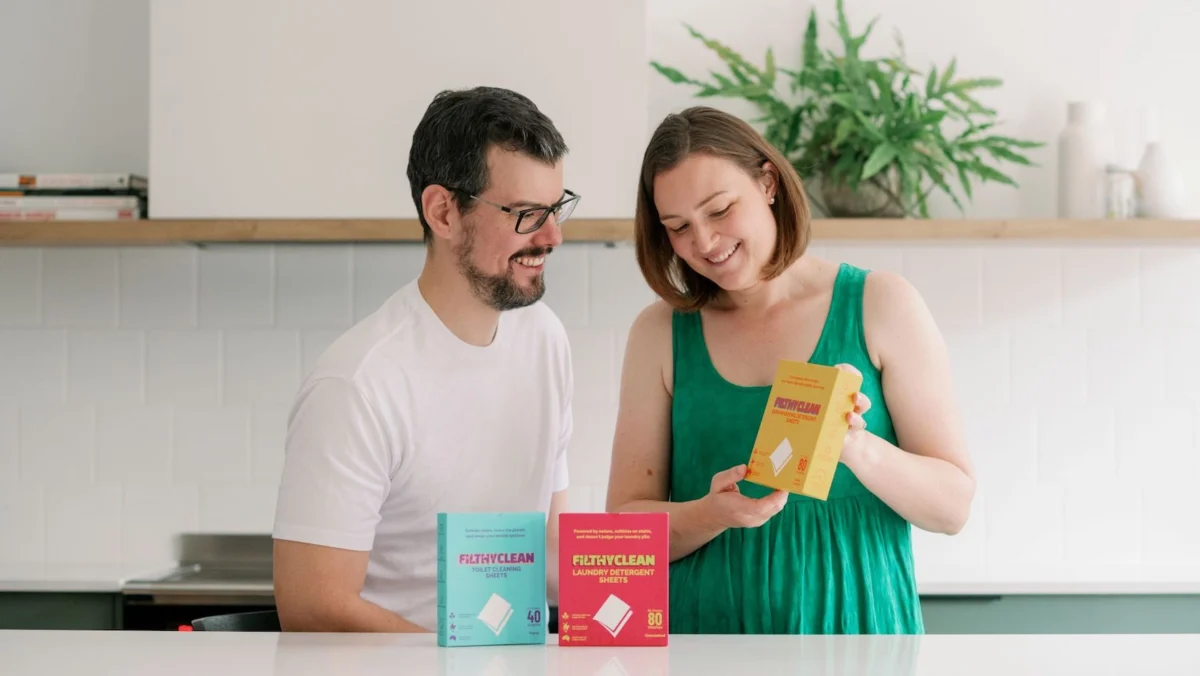
Two years ago, the husband-and-wife duo launched Filthy Clean with a mission to disrupt the bloated, plastic-heavy household detergent market. Their solution? Concentrated cleaning sheets—a lightweight, sustainable alternative designed to replace cumbersome two-litre plastic jugs with a product that fits neatly in a kitchen drawer. Yet, as the founders soon discovered, the transition from a "dry" warehouse commodity to a consumer-facing perishable good necessitated a complete overhaul of their business intelligence and operational strategy.
The Genesis of an Eco-Disruptor
The philosophy behind Filthy Clean was simple: eliminate the water and plastic from the laundry room equation. By manufacturing concentrated sheets, the company significantly reduced its carbon footprint in shipping and storage. The business model was lean by design—no staff, no external capital, and total bootstrap funding.
"Every dollar in the business is ours," Bree Uebergang notes. This level of personal skin-in-the-game meant that operational inefficiencies weren’t just a tax write-off; they were a direct hit to the founders’ personal finances.
Initially, the business model seemed straightforward. The product was manufactured overseas, transported via sea freight to minimize costs and emissions, and housed in a New South Wales facility. When an order came in, the product was dispatched. It was a classic "Direct-to-Consumer" (DTC) playbook, executed with precision. However, the Uebergangs quickly realized that their operational assumptions were masking a deeper, more complex reality regarding product lifecycle.
Chronology: The Evolution of a Startup Strategy
Phase 1: The Launch (Year 1)
The first twelve months were defined by rapid experimentation. The Uebergangs focused on brand awareness and establishing a foothold in the Australian market. Success was measured in top-line revenue and conversion rates. During this period, the shelf life of the product was viewed as a non-issue—the turnover was fast, and the stock was fresh.
Phase 2: The Warehouse Realization (Year 1.5)
As the business scaled, the Uebergangs began to hold larger volumes of stock to hedge against shipping delays. It was during this transition that they encountered the "operational detail" that would change their business: the realization that their eco-friendly formula had a definitive shelf life. Unlike synthetic detergents that can sit in a plastic bottle for years without degradation, natural-based ingredients—even in dry form—are susceptible to environmental factors like humidity and temperature.
Phase 3: The Pivot (Year 2)
Recognizing that their inventory could "expire" before it ever reached a customer’s washing machine, the founders shifted their focus from pure growth metrics to "Inventory Velocity" and "Freshness-to-Sale" ratios. They began to treat their warehouse not as a storage locker, but as a critical node in a time-sensitive supply chain.
Supporting Data: Why Metrics Must Shift
In the retail sector, inventory turnover ratio (ITR) is standard. But for businesses dealing with degradable consumer packaged goods (CPG), ITR is an incomplete metric. The Uebergangs had to adopt a more nuanced framework:
- Days Sales of Inventory (DSI): They had to shorten their DSI significantly. If a product sits in a humid warehouse for too long, the binding agents in the sheets can lose efficacy.
- Cost of Perishability (CoP): The founders began calculating the "hidden cost" of stock that, while not "rotten," no longer met the premium standard of quality they promised their customers.
- Shipping Lead-Time Sensitivity: By mapping the transit time from the overseas factory to the NSW warehouse against the product’s degradation curve, they were able to optimize their order quantities, reducing excess stock even at the risk of occasional stockouts.
These metrics revealed a stark truth: Growth at the cost of inventory bloat is not growth at all. It is, in fact, a hidden liability.
Official Perspective: The Founders’ Lesson
When asked about the turning point, the Uebergangs are candid about the "hard way" they learned their lessons.
"When your product has a shelf life, the metrics need to change," Bree says. "We initially treated our product like hardware—something that stays static. But when you are dealing with eco-cleaning formulas that rely on plant-based integrity, the warehouse environment is part of the product itself."
Their approach to the problem was not to change the formula to include synthetic preservatives, but to tighten the logistics. They moved away from bulk ordering to "just-in-time" replenishment, working closer with their freight partners to ensure that the time from factory floor to customer drawer was kept at an absolute minimum.
Implications: The Future of Eco-Conscious E-commerce
The experience of Filthy Clean serves as a masterclass for other bootstrapped startups. As more entrepreneurs move toward sustainable, plant-based, and non-toxic consumer goods, the "Shelf Life Trap" will become an increasingly common challenge.
The Sustainability Paradox
There is an inherent paradox in eco-friendly products: the more "natural" and biodegradable the product, the more sensitive it is to the environment. This necessitates a more sophisticated supply chain. Founders must balance the desire for large-scale production—which lowers per-unit costs—with the reality of product degradation.
The Role of Technology
The Uebergangs’ journey highlights the growing need for better inventory management software for small businesses. Standard e-commerce platforms often track "what" is in stock, but rarely "how long" it has been there. As businesses like Filthy Clean grow, they will likely drive demand for "Freshness-Tracking" plugins that alert founders when stock is approaching its optimal usage window.
The Shift to "Freshness" as a Selling Point
Rather than viewing shelf life as a hurdle, the Uebergangs have begun to pivot it into a marketing advantage. By educating consumers on why their products are fresh—highlighting the absence of harsh, long-lasting chemical stabilizers—they are building brand trust. They are effectively telling the customer: This product works better because it hasn’t been sitting in a shipping container for two years.
Conclusion: A More Sustainable Path Forward
The story of Filthy Clean is not just about cleaning sheets; it is about the maturity of a business model. By moving past the vanity metrics of early-stage growth and focusing on the operational realities of a perishable, high-quality product, the Uebergangs have positioned themselves for long-term sustainability.
For those looking to enter the eco-friendly consumer space, the message is clear: Logistics is not just an operational detail; it is the heartbeat of your business. If you are selling a product that is designed to be better for the planet, you must ensure that your supply chain is as intelligent and efficient as the formula you are selling.
The Uebergangs have proven that while the lessons learned "the hard way" are often the most expensive, they are also the most enduring. As they look toward the future, the founders of Filthy Clean are no longer just selling a product; they are managing a high-precision cycle of freshness, proving that in the world of eco-commerce, the most sustainable business is one that understands the value of time.
