





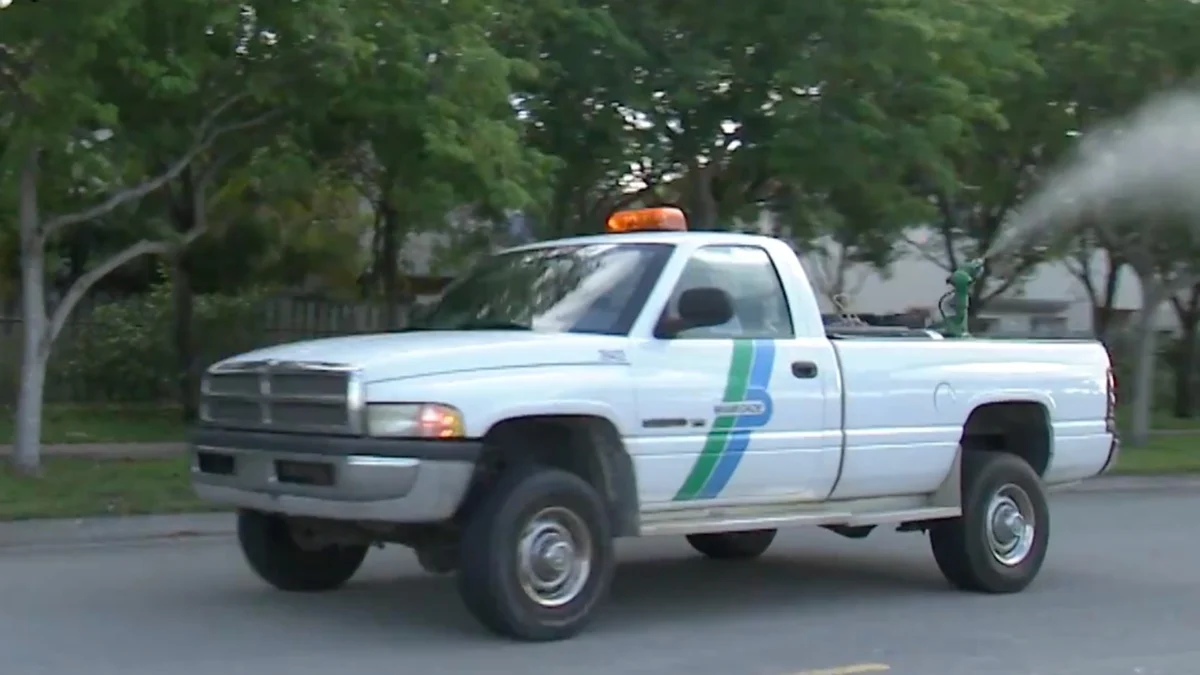
While the automotive world often obsesses over horsepower, towing capacity, and off-road articulation, there exists a specialized class of work vehicles that perform one of the most critical public health functions in the United States. These are not the lifted, winch-equipped rigs seen on social media, nor are they the heavy-duty haulers moving mountains of dirt. They are the unassuming, often invisible workhorses of local government: the mosquito fogging trucks.
Equipped with high-tech dispersal units and tasked with protecting public health, these vehicles patrol the quiet, dark streets of American towns every night. Their mission is a precise, calculated effort to curb the population of one of the world’s most dangerous creatures.
The Mechanics of Public Health: The Main Facts
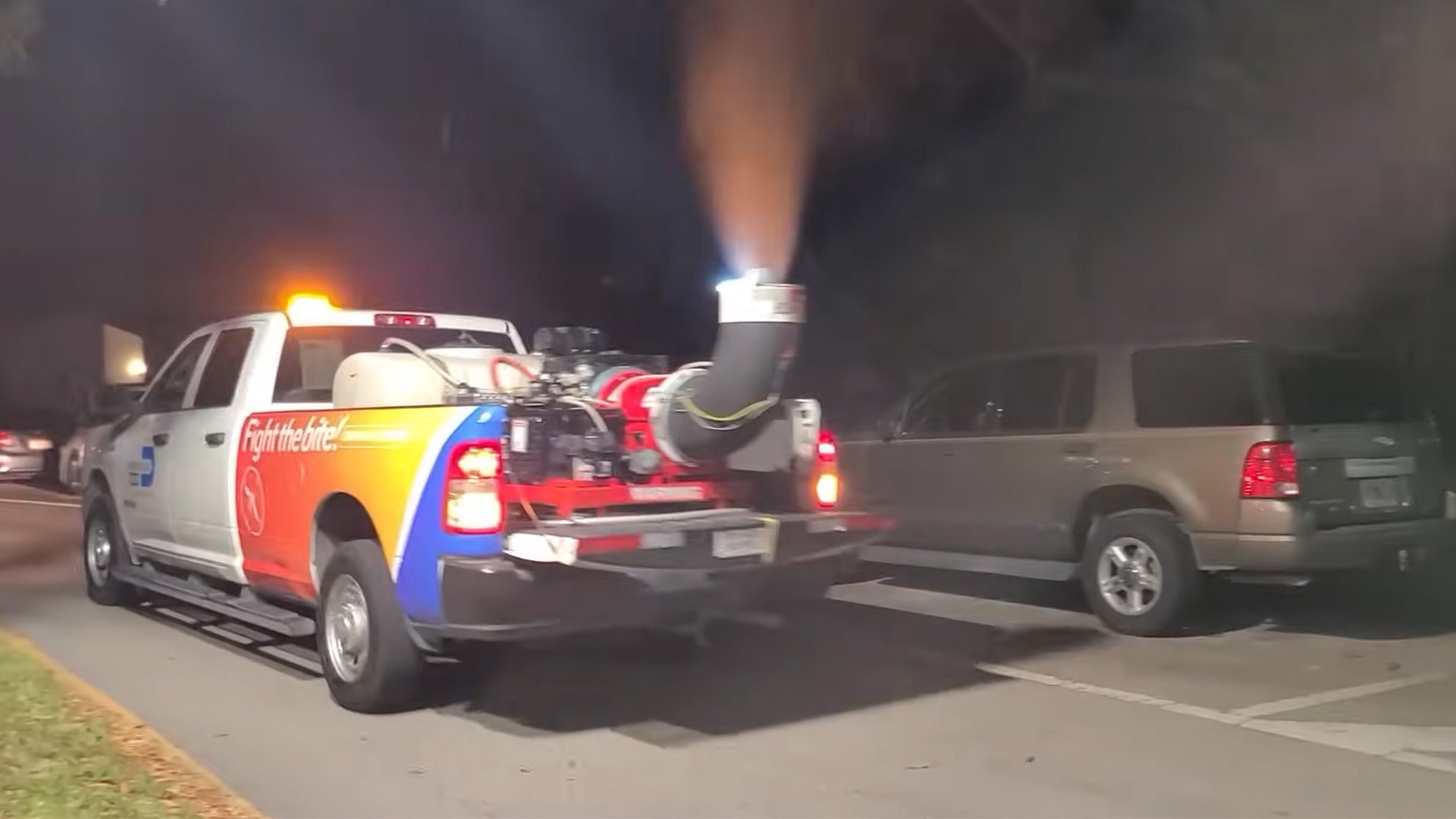
At their core, mosquito fogging trucks are marvels of functional simplicity. Most municipalities utilize standard-duty pickup trucks—often Ford F-series or Chevrolet Silverado platforms—outfitted with aftermarket, truck-mounted Ultra-Low Volume (ULV) sprayers. These sprayers are designed to atomize a liquid insecticide into a fine mist, creating a fog that hangs in the air, effectively targeting adult mosquitoes as they fly through the plume.
The primary objective is the control of adult mosquito populations, particularly in areas where these insects serve as vectors for diseases such as West Nile Virus, Eastern Equine Encephalitis (EEE), and Zika. Unlike traditional pesticide applications that coat surfaces, ULV fogging is designed to be airborne, minimizing the amount of chemical needed while maximizing contact with the insect.
These operations are not random. They are governed by strict environmental regulations and calibrated to ensure that the impact on non-target species, such as local bee populations or pets, is kept to an absolute minimum.
A Century of Vigilance: The Chronology of Control
The history of mechanized mosquito control in the United States is a testament to the evolution of public health policy. Long before the modern, automated systems were mounted on standard pickups, municipalities were experimenting with various methods to keep the insect population at bay.
Early Initiatives (1930s–1950s)
The roots of organized, vehicle-based mosquito control date back to the early 20th century. Miami-Dade County, Florida, is widely recognized as a pioneer in this space, having initiated formal, truck-based spraying operations as early as 1935. At the time, the technology was rudimentary—often involving manual pumps or pressurized tanks mounted on flatbed trucks—but the goal remained the same: mitigating the swarms that made life in the humid, swampy coastal climate nearly unbearable.
The Era of Professionalization (1960s–1990s)
As understanding of vector-borne diseases improved, so too did the technology. By the late 1950s, organizations like the Bristol County Mosquito Control Project in Massachusetts (established in 1959) began to employ more systematic approaches. This period saw the transition from general, area-wide spraying to data-driven, localized interventions. Equipment became more standardized, moving toward the ULV technology that is the industry standard today.
The Modern Standard (2000s–Present)
Today, mosquito control is a highly digitized, data-heavy industry. Modern fleets utilize GPS tracking to ensure that every street is accounted for, and weather-linked automation ensures that sprayers shut off if conditions become unfavorable. These trucks are now part of a sophisticated public health infrastructure that integrates real-time weather data, entomological monitoring, and resident-reported feedback.
Data-Driven Deployment: The Science of the Spray
One might assume that these trucks drive through neighborhoods on a pre-set loop, but the reality is far more scientific. Municipalities operate on a "threshold-based" system, meaning they do not spray simply because a calendar says it is time.
Mosquito Trapping and Surveillance
Public health officials maintain vast networks of traps throughout their jurisdictions. These traps use light, carbon dioxide, and other attractants to collect samples of the local mosquito population. Entomologists then analyze these samples to determine the density of the population and, crucially, whether the mosquitoes are carrying pathogens. If the data indicates that a specific species of mosquito is present in high numbers—or that a virus has been detected in a local sample—the decision to deploy the fogging trucks is made.
The Role of Citizen Reporting
Public input serves as a vital secondary data stream. Cities like Miami-Dade utilize 311 systems to allow residents to report high concentrations of mosquitoes. This crowdsourced data helps officials identify "hot spots" that may not have been captured by the trap network.
Environmental Constraints
The operation of these trucks is heavily influenced by meteorological conditions. As noted by agencies in Escambia County, Florida, and beyond:
- Wind Speed: Spraying is generally ineffective and irresponsible if winds are too light (less than 2 mph) or too heavy (exceeding 10 mph). High winds disperse the fog too quickly, while low winds may prevent it from reaching the necessary areas.
- Temperature: If the temperature drops below 60 degrees Fahrenheit, mosquito activity naturally decreases, and spraying is often suspended to conserve resources and minimize unnecessary chemical usage.
Official Responses and Safety Protocols
The use of pesticides in public spaces naturally raises questions regarding safety. However, the chemicals used in ULV fogging are specifically chosen for their low mammalian toxicity and short environmental half-life.
The "Nontoxic" Distinction
According to health officials, the insecticide is designed to break down rapidly when exposed to sunlight. When applied at the specified concentrations, the mist is generally considered safe for humans and pets. However, the standard advice from municipal health departments is to remain indoors during active spraying operations as a precautionary measure.
Protecting the Pollinators
A common concern is the impact on non-target insects, particularly honeybees. To mitigate this, many jurisdictions have implemented "No-Spray" registries. Residents who keep bees or maintain organic gardens can register their property with the county, ensuring that the truck drivers skip those specific addresses during their nightly runs.
Implications: The Future of Vector Control
The necessity for these specialized trucks is not expected to diminish. With shifting climate patterns, many regions are seeing an expansion of mosquito habitats, bringing with them a higher risk of diseases that were previously thought to be geographically contained.
The Shift Toward Sustainability
The future of the mosquito fogging fleet lies in efficiency. We are seeing a move toward electric vehicle platforms for these applications, which would reduce the noise pollution caused by trucks idling or moving slowly through quiet neighborhoods at 3:00 a.m. Furthermore, AI-integrated sprayers that can adjust chemical output based on real-time wind speed and humidity sensors are becoming the new industry benchmark.
Beyond the Fog
While the trucks remain a vital part of the arsenal, the broader strategy is shifting toward "Integrated Pest Management" (IPM). This includes treating standing water to kill larvae before they become flying adults, thereby reducing the reliance on adulticide fogging trucks.
Conclusion
The mosquito fogging truck is an unsung hero of the American landscape. While it lacks the glitz of a high-performance machine, its function—protecting communities from the diseases and discomforts of an insect-heavy environment—is undeniably essential. These trucks, their drivers, and the scientists behind the data represent a silent, nocturnal defense system, ensuring that the simple act of stepping outside on a summer evening remains a safe and enjoyable experience for millions.
As technology progresses, these vehicles will continue to evolve, becoming quieter, more precise, and more environmentally conscious, proving that even the most "un-cool" trucks serve a purpose that is, in every sense of the word, vital.
