





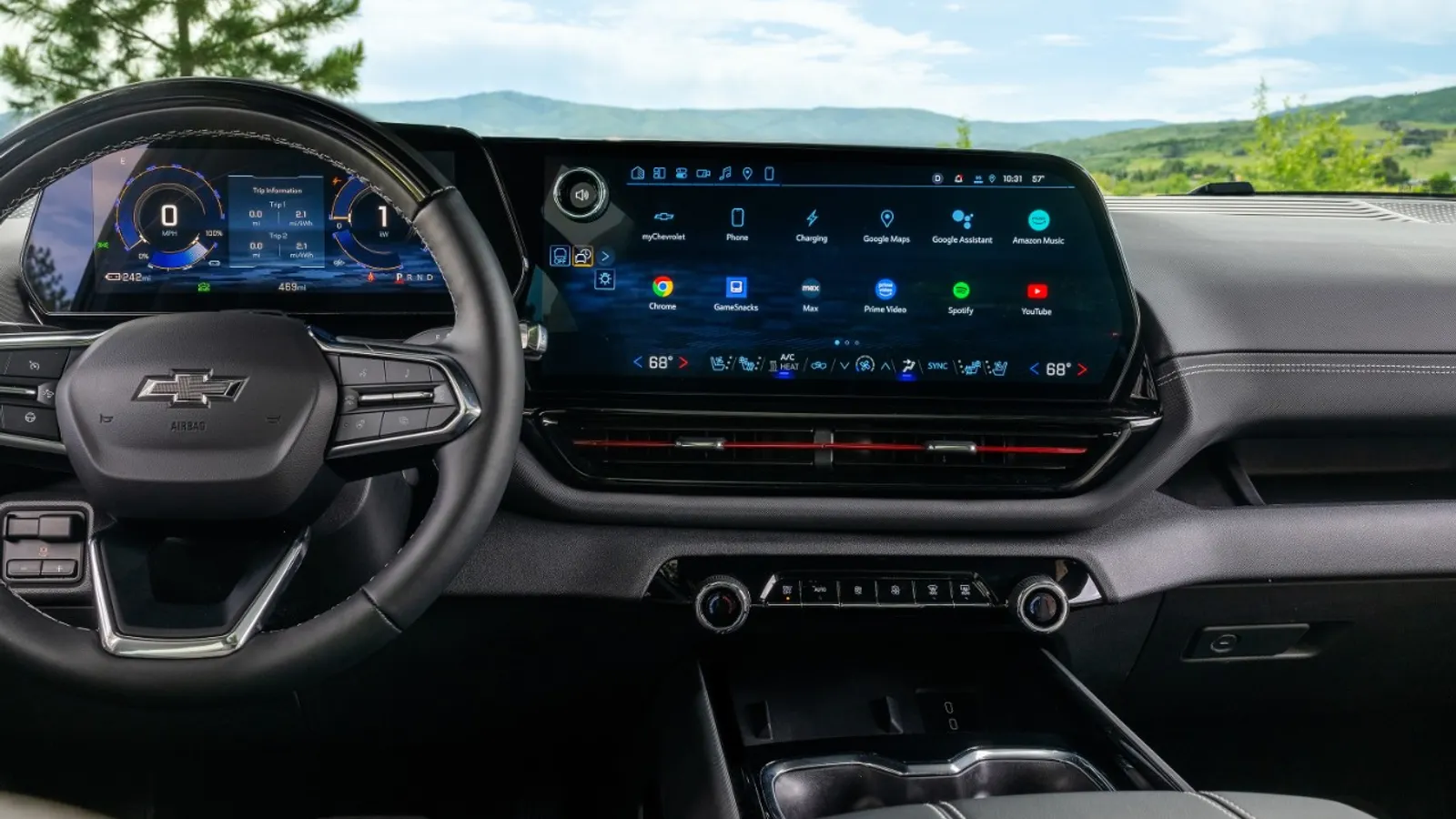
In a strategic pivot that underscores the evolving nature of the automotive industry, Detroit’s "Big Two"—Ford Motor Company and General Motors—have entered into critical long-term supply agreements with semiconductor giant Micron Technology. As the automotive sector transitions from traditional mechanical engineering to complex, software-defined ecosystems, the competition for advanced memory and storage capacity has reached a fever pitch. By securing these supply chains, Ford and GM are not merely buying parts; they are insulating their future production lines against the volatile, AI-driven demand that threatens to leave less-prepared manufacturers behind.
The Main Facts: A New Automotive Reality
The core of this development is the shift toward "Software-Defined Vehicles" (SDVs). Modern automobiles are increasingly resembling data centers on wheels, requiring massive amounts of high-speed memory to power autonomous driving features, advanced infotainment systems, and real-time over-the-air (OTA) updates.
Ford and GM have identified that their reliance on third-party hardware could become a systemic risk. Consequently, these new partnerships with Micron aim to guarantee access to critical memory technologies. For Ford, this is part of a broader "Product Creation and Industrialization" strategy, while for GM, it serves as the backbone for a "next-generation computing architecture" slated for 2028. Both automakers are moving away from fragmented, commodity-based procurement toward deep, vertical integration with key silicon suppliers to ensure performance, long-term reliability, and supply chain stability.
Chronology: A Trajectory of Technological Integration
The path to these agreements was paved by years of accelerating digital investment and a sobering realization of supply chain vulnerabilities during the recent global chip shortage.
- 2023: As the automotive industry recovers from pandemic-era semiconductor shortages, both Ford and GM begin signaling a move toward in-house software development. Ford outlines its ambition to have OTA capabilities in 90% of its fleet by 2030.
- Early 2024: Industry analysts begin warning that the "memory crunch" is real. With the rapid expansion of generative AI and data centers, memory suppliers begin prioritizing high-margin, high-volume tech clients, leaving the automotive sector in a precarious position.
- Late 2024: GM announces a massive $4 billion investment to bolster U.S. manufacturing, signaling a shift toward domestic production of critical vehicle components to mitigate geopolitical risk.
- Early 2025: Ford officially launches its "Production Creation and Industrialization" unit, explicitly designed to bridge the gap between software development and vehicle manufacturing.
- Mid-2025: Micron and the automakers formalize supply agreements that include provisions for domestic production in the United States, including Micron’s modernization efforts in Manassas, Virginia.
- The Future (2028): GM plans to launch its next-generation, AI-integrated computing platform, which promises a 35x improvement in AI performance, setting a new benchmark for the industry.
Supporting Data: The Cost of Competition
The urgency behind these deals is grounded in hard economic data. The demand for memory chips is currently being cannibalized by the AI revolution.
According to Andrei Quinn-Barabanov, supply chain industry practice lead at Moody’s Analytics, the automotive sector has struggled with its "bargaining power" in the semiconductor market. Because AI applications—such as those powering large language models and server farms—are absorbing massive volumes of memory, automakers are frequently relegated to the back of the queue.
- Performance Metrics: GM’s upcoming platform aims for a 35x jump in AI processing capabilities compared to current systems. This leap requires not just more memory, but faster, more stable memory that can handle the integration of propulsion, steering, braking, and infotainment on a single, unified network.
- Investment Figures: Ford is committing $2 billion to its Louisville, Kentucky plant to support the next generation of electric vehicle (EV) production. Simultaneously, Micron is backing these agreements with its own $2 billion investment to modernize its Virginia-based manufacturing hub, aligning its production footprint with its customers’ domestic strategies.
- Production Shifts: GM’s strategic decision to move the production of the Buick Envision from China to the United States by 2028 is emblematic of the "near-shoring" trend that is defining the current era of automotive manufacturing.
Official Responses: Aligning Strategy and Vision
The leadership of these organizations has been vocal about the necessity of these partnerships in ensuring long-term resilience.
Mary Barra, Chair and CEO of General Motors:
"Our expanded collaboration with Micron strengthens our access to critical memory technologies while enabling deeper integration across our vehicle platforms, supporting both performance and long-term reliability." Barra’s statement reflects the strategic imperative to treat silicon as a foundational component of vehicle safety and performance, rather than an auxiliary electronic part.
Jim Farley, President and CEO of Ford:
"Producing the high-volume vehicles of the future in the U.S. will require a resilient supply chain. We applaud Micron’s commitment to manufacturing in America, expanding its domestic production and investing in a skilled workforce." Farley’s focus highlights the political and economic importance of "reshoring" the supply chain, creating a virtuous cycle where the hardware inside the vehicle is produced within the same economy where the vehicle is sold.
Sanjay Mehrotra, President and CEO of Micron:
Mehrotra has emphasized that these agreements are not just about volume but about "supply reliability." By partnering directly with Ford and GM, Micron can better forecast its own production needs, effectively insulating the automakers from the spot-market volatility that has plagued the industry for years.
Implications: A Fundamental Shift in the Auto Industry
The implications of these agreements extend far beyond the balance sheets of the companies involved. They signal a transformation in how automobiles are conceived, built, and maintained.
1. The Death of the "Black Box" Procurement
Historically, automakers purchased pre-packaged electronic control units (ECUs) from Tier-1 suppliers. These were often "black boxes"—sealed systems that the automaker understood little about. By securing direct supply agreements for memory and pushing for integrated computing architectures, Ford and GM are taking back control of their software stack. This allows for better diagnostic capabilities, faster feature deployment, and, crucially, the ability to iterate on software without needing to redesign the entire physical vehicle.
2. Geopolitical and Supply Chain Resilience
The shift toward domestic production in Virginia (Micron) and expanded assembly investments in states like Kentucky and Michigan (Ford/GM) is a direct response to the fragility of global supply chains. As trade tensions fluctuate and shipping costs remain unpredictable, the ability to manufacture and source critical components within the United States provides a significant competitive moat. It reduces lead times, cuts logistical costs, and shields these companies from the volatility of international tariffs.
3. The AI Arms Race on Wheels
The "35x improvement" in AI performance cited by GM is not merely a marketing metric; it is a necessity for the future of autonomous and semi-autonomous driving. Vehicles of the future must process petabytes of sensor data in milliseconds. If a vehicle’s memory architecture cannot keep pace with its AI model, the vehicle becomes obsolete before it even hits the showroom floor. By securing long-term access to high-end memory, Ford and GM are ensuring their platforms can support the software updates of the 2030s and beyond.
4. The Margin Pressure
Perhaps the most significant implication for investors is the protection of profit margins. As Quinn-Barabanov noted, automakers at the end of the supply queue are often forced to pay premium prices for components, which eats directly into the profit margins of their vehicle lines. By locking in long-term supply agreements, Ford and GM are effectively hedging their future input costs, providing a level of predictability that is essential for the capital-intensive transition to electric and software-defined fleets.
Conclusion
The partnership between Ford, GM, and Micron is a masterclass in modern industrial strategy. It recognizes that in an era where vehicles are defined by lines of code rather than horsepower alone, the supply chain for silicon is just as vital as the supply chain for steel or lithium. By integrating their supply chains, investing in domestic manufacturing, and aggressively pursuing technological sovereignty, these legacy automakers are positioning themselves to survive—and lead—in a future where the line between a car and a supercomputer continues to blur. The road ahead is increasingly digital, and for Detroit, the future is being forged in the silicon wafer.
