





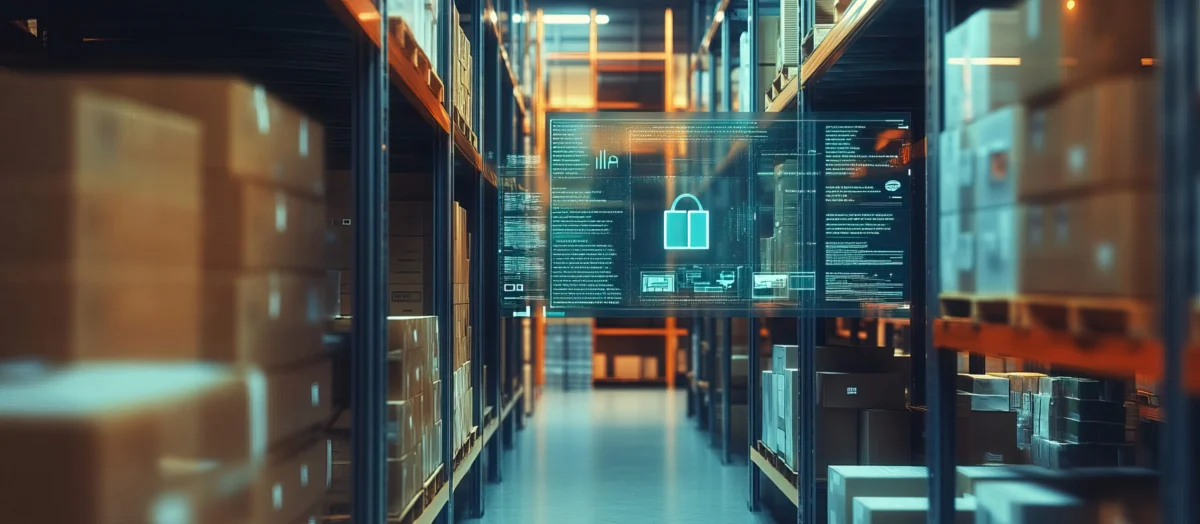
The global warehousing and distribution industry is currently navigating a period of unprecedented transformation. As the dust settles on the post-pandemic economic landscape, warehouse operators find themselves at a critical juncture where physical security, cybersecurity, labor instability, and real estate market fluctuations are no longer isolated variables, but interconnected components of a complex, high-stakes operational ecosystem.
For industry leaders, the mandate is clear: the era of reactive management is over. In its place, the industry is pivoting toward "strategic resilience"—a holistic approach that leverages artificial intelligence (AI), advanced robotics, and proactive security protocols to maintain operational continuity in an increasingly unpredictable world.
Main Facts: The New Reality of Warehouse Operations
The modern warehouse is no longer just a static storage facility; it is a high-tech data hub that acts as the backbone of global commerce. However, this evolution has introduced new vulnerabilities.
- Security Convergence: Physical security and cybersecurity are merging. Traditional surveillance is being replaced by AI-enabled, proactive monitoring systems that do more than record—they interpret data to predict threats.
- The Cyber Threat Landscape: Criminal enterprises are now targeting the supply chain with sophisticated, non-IT-centric attacks, including the exploitation of legitimate motor carrier (MC) identities to commit cargo theft.
- Compounding Disruptions: Supply chain disruptions have shifted from linear, isolated events to "compounded" challenges, where weather, geopolitical strife, and labor shortages occur simultaneously, demanding a multi-layered response.
- Automation Rebound: After a turbulent 2025 characterized by economic caution, the automation market is seeing a renewed influx of capital as firms seek to reduce labor dependency and improve throughput efficiency.
- Real Estate Stabilization: The Canadian industrial real estate sector is moving away from the extreme volatility of the pandemic years, trending toward a more balanced, albeit cautious, equilibrium.
Chronology: A Trajectory of Transformation
The last two years have served as a stress test for the logistics sector.
- 2024 (The Foundation of Concern): Industry focus began shifting toward "visibility gaps," as firms realized that disjointed security systems and siloed data prevented them from seeing the full picture of their operations.
- 2025 (The Year of Volatility): The warehouse automation market faced significant headwinds. Economic uncertainty and high raw material costs forced many vendors to restructure, though major players like Amazon and Tesco continued to invest, keeping the sector afloat.
- Q1 2026 (The Inflection Point): Recent data from CBRE suggests a stabilization in industrial real estate. While national net absorption remains strong, the market has begun to cool, signaling a transition toward more localized, demand-driven growth.
- Mid-2026 and Beyond: Analysts project a period of "balanced growth." With interest rates beginning to ease in the U.S. and Europe, capital spending is expected to accelerate, particularly in mid-sized logistics hubs.
Supporting Data: By the Numbers
The complexity of the current landscape is best illustrated through the metrics now defining industry performance:
- Real Estate Performance: In Canada, national net absorption reached 4.2 million sq. ft. in Q1 2026, nearly doubling the three-year average. However, growth is hyper-concentrated in the Toronto and Waterloo regions.
- Rental Market Shifts: National net asking rates for industrial space have declined by 3.7% year-over-year to $14.91 per sq. ft., reflecting a cooling period that provides more leverage for tenants.
- Availability Rates: The Canadian industrial availability rate has held steady at 5.5%, a key indicator of a market reaching an inflection point between supply and demand.
- Investment Drivers: Automation investments in 2025 were largely bolstered by the release of "pent-up capital" in the second half of the year as economic uncertainty began to wane.
Official Responses: Voices from the Front Lines
Industry experts emphasize that the path forward requires a shift in mindset as much as a shift in technology.
The Security Perspective
Adam Lowenstein, product director with i-PRO Americas, notes that the primary struggle for modern warehouses is "visibility."
"The bigger issue is visibility. Large logistics environments need a clear, real-time understanding of what is happening across loading bays, yards, and entry points without relying on someone to watch screens all day."
Zebedeo Pena of Genetec adds that the focus has shifted from live monitoring to post-event reconstruction.
"For many operators, the priority is not watching everything live; it’s being able to quickly investigate issues, understand where a process broke down, and keep operations moving."
The Cybersecurity Imperative
Becky Ross, VP of IT at DHL Supply Chain, stresses that cyber threats have evolved beyond simple phishing.
"These threat actors are so sophisticated. They have resources, there are large numbers of them, and they’re coming at us from every angle. We need to make sure we have the right practices in place to help protect against that."
Jennifer Miller, also of DHL, highlights the human and partner-based nature of these threats.
"These bad actors will infiltrate one of our partners’ email systems, and they’ll wait. They’ll watch until they get the information they want, and then they’ll physically attack and steal. Our protocols have to be spot on every single time."
Strategic Resilience and Automation
Luther Webb, VP of data science at Trew, warns against linear thinking in a world of compounding risks.
"In the present day, uncertainties have become more frequent, less predictable, and more complex. These problems are going to start stacking up on top of each other."
Webb argues that the answer lies in reducing labor dependency through autonomous robotics and robust, flexible supply chain playbooks.
Implications: The Road Ahead
The implications for warehouse operators are profound. The "security-first" culture mentioned by Jennifer Miller is not merely a slogan; it is a necessary operational framework. To survive, organizations must integrate their security, IT, and operational silos into a unified intelligence platform.
1. From Passive Monitoring to Active Defense
The shift from passive CCTV to AI-powered, sensor-rich environments allows for the detection of "potential hazards" before they escalate. By using LiDAR and video analytics, managers can now prevent accidents, monitor truck flows, and even identify unauthorized loitering automatically.
2. The Cultural Shift in Cybersecurity
Cybersecurity is no longer the sole domain of the IT department. Because bad actors are now exploiting partner relationships and identity theft, every employee—from the warehouse floor to the logistics coordinator—must be trained to view security as an integral part of their job function. This "culture-first" strategy is the only way to scale protection in a decentralized network.
3. Adapting to Compounding Risks
The traditional playbook for disruption—which assumed that a storm or a strike would be an isolated event—is obsolete. Future resilience requires "built-in recovery capacity." This means designing automated systems (like ASRS) that allow for continued operation even if a specific aisle or zone goes down. Strategic SKU distribution and flexible automation are no longer luxuries; they are survival mechanisms.
4. A Balanced Future
As the industrial real estate market transitions away from the frenzied demand of the pandemic, tenants are finding themselves in a more favorable position. However, this window of stabilization should be used to invest in long-term infrastructure. The companies that thrive in 2027 and beyond will be those that used the 2026 stabilization period to modernize their facilities and fortify their digital defenses.
Conclusion
The warehouse industry is entering a phase of "calculated evolution." While the challenges—ranging from organized cargo theft to global geopolitical volatility—are immense, the tools available to combat them have never been more potent. By embracing a strategy of proactive visibility, investing in labor-reducing automation, and fostering a company-wide culture of security, operators can turn today’s disruptions into tomorrow’s competitive advantages. As Luther Webb aptly put it, the customer’s core demand remains constant: they want their goods "quicker, sooner, and cheaper." Achieving this, despite the mounting complexity, is the ultimate measure of modern warehouse success.
