





By Max Garland
Published July 30, 2026
In a significant pivot toward long-term operational efficiency, United Parcel Service (UPS) has signaled a definitive shift in its domestic logistics strategy. As of the second quarter of 2026, the global delivery giant is aggressively expanding its reliance on automated infrastructure, aiming to decouple volume growth from rising labor costs. This transition, which has seen the carrier shutter dozens of facilities and implement massive workforce reductions, marks the culmination of a multi-year effort to optimize its U.S. network for higher-margin shipments.
The Core Strategy: Engineering a Leaner Network
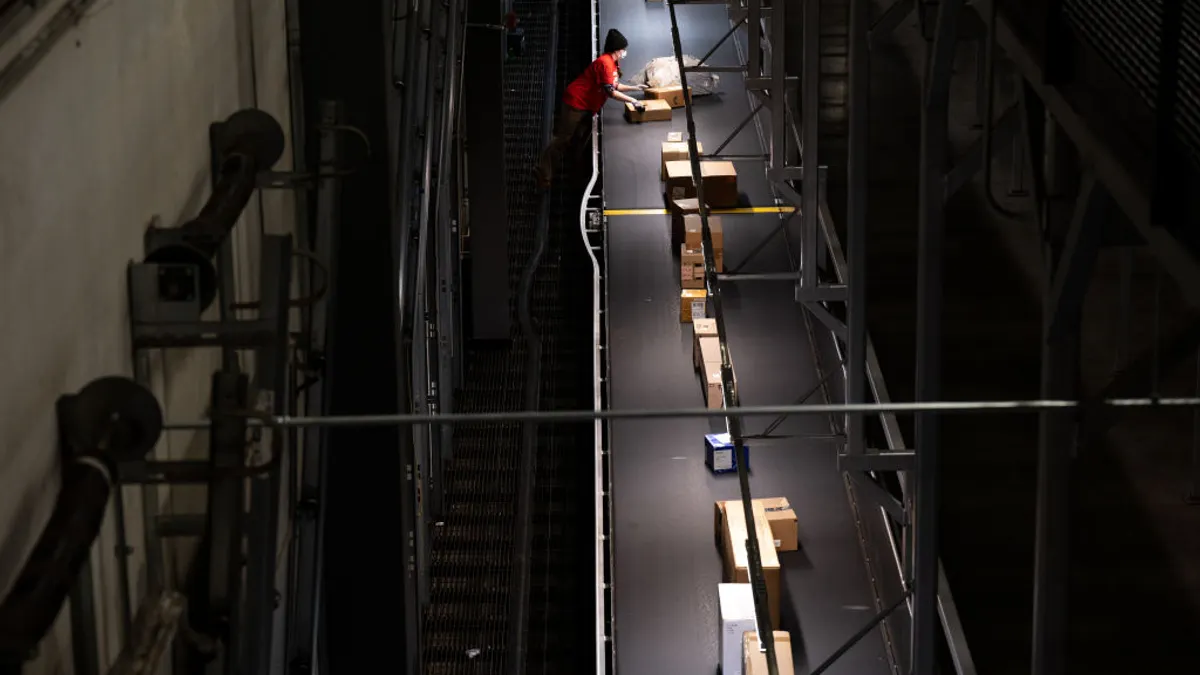
The overarching narrative at UPS headquarters has shifted from volume-chasing to margin-optimization. By integrating advanced robotics, automated trailer unloading systems, and AI-driven sorting mechanisms, UPS is actively transforming its "Network of the Future."
The primary objective is twofold: reduce the cost-per-package handling and gain the agility necessary to fluctuate capacity in real-time. Unlike legacy, labor-intensive hubs that rely heavily on manual sorting—a process prone to human error and high payroll volatility—the modern, automated UPS hubs are designed to maintain throughput with significantly smaller crews.
Chronology: From Volume Reduction to Technological Integration
To understand the current state of UPS, one must look back at the strategic decisions made in early 2025.
- Q1 2025: UPS officially launched its initiative to reduce reliance on "lower quality" volume, specifically targeting the high-density, lower-margin contracts held by e-commerce giants like Amazon.
- Late 2025: As Amazon volume began to taper, UPS concurrently initiated a massive network footprint reduction. The company began systematically closing underperforming facilities that lacked the technological infrastructure to support automated sorting.
- January 2026: CEO Carol Tomé announced that the company would integrate 24 new automated buildings into its network throughout 2026, building upon an existing roster of 127 automated facilities.
- Q2 2026: UPS reports that a majority of its U.S. volume is now flowing through these high-tech hubs. The company confirmed that the Amazon volume reduction project is now substantially complete, having successfully shed approximately 2 million packages in average daily volume.
Supporting Data: The Scale of the Transformation
The scale of the transformation at UPS is historic in its magnitude, characterized by both technological capital expenditure and human capital displacement.
Operational Footprint
The "Network of the Future" is not just about adding technology; it is about subtraction. According to CFO Brian Dykes, the company’s current restructuring strategy has led to:
- Facility Closures: The company is on track to close nearly 150 facilities across the United States.
- Labor Efficiency: Through the integration of automation, UPS has eliminated 50 million operating hours over a two-year period.
- Workforce Impact: This transition has resulted in the elimination of approximately 78,000 operational positions associated with the reduced volume and facility consolidation.
These figures underscore a brutal but deliberate strategy: by shedding high-volume, low-margin business, UPS has created the "breathing room" necessary to reconfigure its remaining hubs into high-throughput, low-touch environments.
Official Responses and Executive Perspective
During the recent Q2 2026 earnings call, leadership remained steadfast in their commitment to the new model, framing the layoffs and facility closures as a necessary evolution for long-term shareholder value.
CEO Carol Tomé addressed the state of the network directly: "We now have a leaner, more automated, more agile network that will deliver operating leverage as volume grows." Tomé emphasized that the removal of the Amazon volume—once considered a cornerstone of the company’s growth—was essential to the company’s health. She characterized that specific volume as "lower quality," noting that the current, reconfigured network is far better suited for the more lucrative, complex, and specialized shipping services that represent the future of the logistics market.

EVP and CFO Brian Dykes echoed these sentiments, highlighting the financial agility provided by the new hubs. "Automated hubs allow us to adjust capacity more flexibly than we ever could with our conventional facilities," Dykes noted. "When we see shifts in market demand, we aren’t just moving people; we are modulating entire automated workflows. This is the definition of operating leverage."
Implications: The Future of Logistics and Labor
The ripple effects of the UPS strategy extend far beyond the balance sheets of a single carrier. This transition serves as a bellwether for the logistics industry at large.
1. The Death of Manual Sorting
The era of massive warehouses populated by thousands of manual sorters is rapidly drawing to a close. UPS’s deployment of automated trailer unloaders and vehicles capable of navigating irregularly shaped shipments represents a shift toward "lights-out" logistics. While this increases speed and accuracy, it effectively raises the barrier to entry for smaller logistics competitors who cannot afford the multi-billion dollar capital expenditure required to automate at scale.
2. A Shift in Labor Dynamics
The loss of 78,000 positions is a staggering figure, highlighting the tension between corporate efficiency and labor stability. For the logistics workforce, the mandate is clear: the future of work in the warehouse involves oversight of automated systems rather than manual labor. This necessitates a massive reskilling effort that remains largely unaddressed by the current industry pace.
3. Market Pricing and Service Quality
With the "Amazon volume" gone, the broader market may see a shift in pricing. UPS is moving toward a strategy of specialized service, targeting healthcare, small-to-medium businesses, and premium shipping tiers. Consumers and shippers should expect fewer "mass-market" price incentives and more sophisticated, value-added service tiers.

4. Competitive Advantage
By shedding high-volume, low-margin packages, UPS is betting that its automated infrastructure will allow it to capture the most profitable segments of the market. If the company can maintain high reliability while operating a smaller, more automated fleet, it will achieve a level of margin expansion that traditional, human-reliant competitors will find impossible to match.
Conclusion
The transformation of UPS is a high-stakes gamble on the future of global supply chains. By embracing automation, the company is attempting to break the historical correlation between volume and headcount. While the social and human cost of 78,000 eliminated positions remains a point of significant contention, from a purely operational standpoint, UPS has successfully navigated a transition that few legacy firms ever attempt.
As the "Network of the Future" reaches full operational maturity toward the end of 2026, the industry will be watching closely to see if this leaner, technology-first approach can indeed deliver the consistent operating leverage that management has promised. For now, UPS stands at the precipice of a new logistics paradigm—one where the speed of the machine finally outpaces the scale of the human hand.
