





In the modern age of policing, the thin blue line is increasingly reinforced by a digital perimeter. Across the United States, law enforcement agencies are deploying thousands of AI-powered Automatic License Plate Readers (ALPRs), most notably those manufactured by Flock Safety. These systems promise to act as a force multiplier, allowing officers to scan thousands of plates per minute and instantly flag vehicles associated with criminal activity.
But what happens when the technology designed to catch criminals catches an innocent person instead?
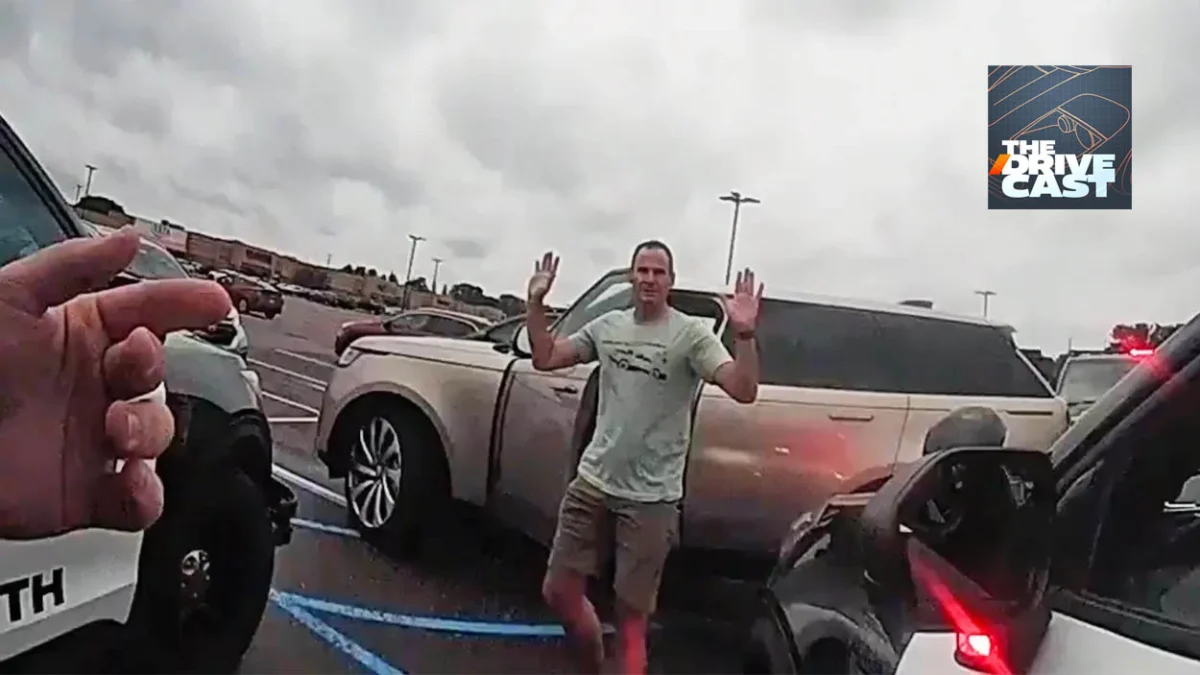
For Joel Feder, Director of Content and Product at The Drive, this question shifted from a hypothetical research topic to a harrowing, real-world experience. While driving a $155,000 Range Rover press vehicle on a Sunday afternoon, Feder found himself surrounded by four squad cars, lights flashing, and officers with their hands on their holsters. The charge: suspicion of grand theft auto. The culprit: a cascade of systemic failures involving human error, archaic federal databases, and the unchecked speed of AI surveillance.
The Anatomy of an Ambush: A Chronology
The incident took place in a suburban parking lot in Plymouth, Minnesota, while Feder and his wife were running routine errands. The situation escalated in seconds.
- The Initial Flag: Unbeknownst to Feder, the Flock camera network had been tracking the vehicle for days. Because the manufacturer’s plates—which were perfectly legal—had been misidentified in a federal database, the car was flagged as stolen.
- The Confrontation: As Feder attempted to back out of a parking space, law enforcement vehicles swarmed his position, blocking his path. Officers ordered him out of the vehicle and performed a standard felony stop procedure, including pat-downs and separation from his wife.
- The Confusion: Feder, an automotive journalist intimately familiar with the complexities of manufacturer plates, attempted to explain the situation. The responding officers were initially skeptical, as the digital alert indicated the vehicle was linked to a serious crime.
- The Resolution: After an hour of verifying registrations and calling authorities in California, it was determined that the vehicle was not stolen, nor were the plates. The entire ordeal was the result of a clerical error that had propagated through the National Crime Information Center (NCIC) database.
The "Bad Data" Loophole
The core of the issue lies in how these surveillance systems interact with federal databases. The NCIC, managed by the FBI, serves as the central hub for law enforcement information. In this instance, a lost license plate from a media photoshoot in Los Angeles had been reported as stolen. However, when the data was entered into the system, the plate number was recorded incorrectly—omitting a critical middle digit—and the plate was entered as a "partial" match.
Flock Safety’s AI is designed to prioritize speed and volume, scanning approximately 20 billion plates a month. According to the company, if a police department requests an alert for a specific string of characters, the system is programmed to flag any vehicle that matches that string. Because the system was told to look for a specific, albeit incorrect, partial plate, it successfully "found" Feder’s car.
The software performed exactly as it was programmed, but it lacked the nuance to distinguish between a partial, potentially erroneous hit and a confirmed, direct match. This creates a "bad data in, bad data out" scenario where human error at the point of data entry is amplified by high-speed algorithmic enforcement.
Official Responses and Corporate Accountability
Following the viral spread of the bodycam footage, the response from stakeholders highlighted the tension between technological efficiency and human oversight.
Flock Safety’s Position
Josh Thomas, Chief Communications Officer at Flock Safety, reached out to Feder to address the incident. Thomas expressed regret, acknowledging that the outcome was "a bad one" and emphasizing that the company is working to improve how the system presents information to officers. He noted that Flock is in discussions with the FBI and the NCIC to determine how to better flag partial matches or provide context to officers so they can verify data before initiating a high-risk stop.
The Plymouth Police Department
Plymouth Police Chief Eric Fadden defended his officers’ conduct, noting that they followed established protocols for a high-risk felony stop. From the department’s perspective, an alert from a centralized database for a stolen vehicle necessitates a cautious approach, as officers must assume the subject may be armed and dangerous. Chief Fadden maintained that the officers acted courteously and professionally, and that the incident was a byproduct of a system that allows for incomplete or inaccurate information to trigger aggressive police action.
The Broader Implications for Privacy and Law
The incident has ignited a national debate regarding the "surveillance state" and the lack of uniform regulation surrounding ALPR technology.
A Patchwork of Regulations
There is currently no federal standard governing how long ALPR data can be stored, who can access it, or how it should be audited. Some states allow data retention for 30 days, while others allow it for up to 100 days. This creates a regulatory vacuum where data is treated as a commodity that can be traded or queried across state lines without standardized protections.
The Outsourcing of Policing
Critics argue that law enforcement is increasingly outsourcing its investigative work to private, for-profit entities. When police rely on a private company’s proprietary algorithm to establish "probable cause," the lack of transparency becomes a civil liberties issue. If a system is opaque, how can a citizen contest an erroneous flag? As Feder noted, he was not a "customer" who opted into this surveillance; he was a resident living in a community where a private company’s software decided he was a suspect.
The Need for Human-in-the-Loop Safeguards
The primary technical failure in this case was the system’s inability to differentiate between a partial match and a full, validated match. Experts suggest that integrating a "human-in-the-loop" requirement—where an officer must visually confirm that the physical license plate matches the full string in the database before initiating a stop—could mitigate these errors.
Furthermore, the systems should be programmed to flag the discrepancy when a plate contains characters that were not part of the search query. If the system had simply flagged the plate as "partially matching" rather than triggering an automatic "stolen" alert, the entire encounter could have been avoided.
Conclusion: A Call for Transparency
The incident involving Joel Feder serves as a cautionary tale for the integration of AI into public infrastructure. While ALPRs undoubtedly assist in solving crimes, the speed at which they operate often outpaces the accuracy of the underlying data.
As cities continue to sign contracts with surveillance providers, the demand for clear, federal legislation has never been higher. Without mandatory audit trails, strict data retention limits, and robust technical guardrails against partial-match errors, the "digital dragnet" risks eroding the trust between the public and the police, turning every driver into a potential suspect based on a single, unverified keystroke.
