





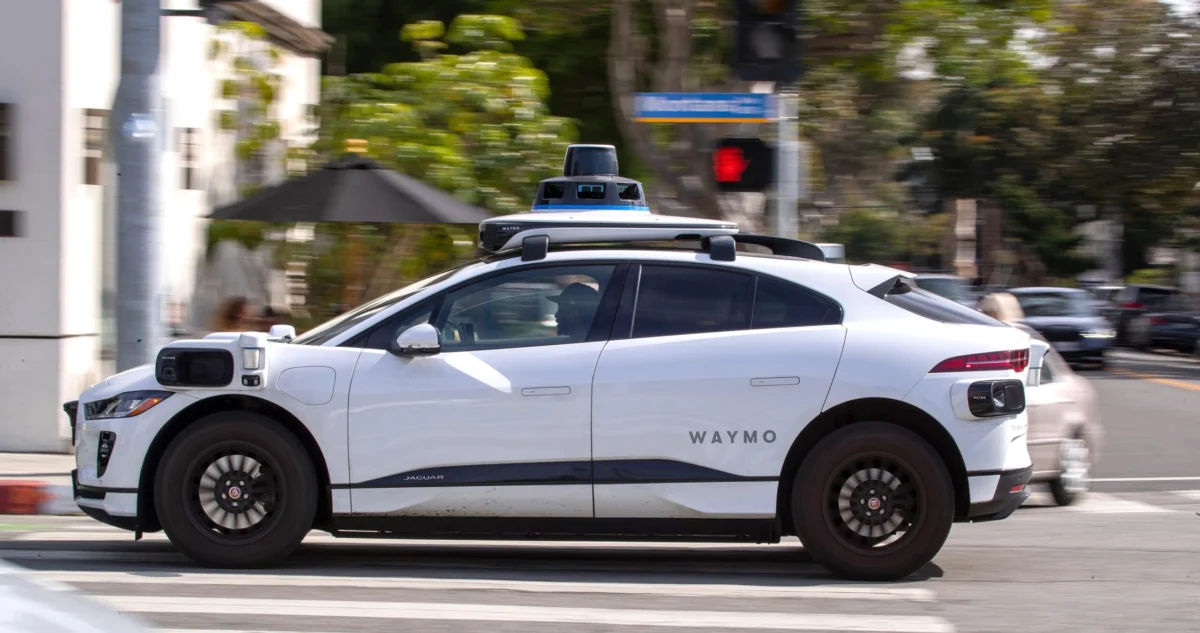
The rapid scaling of autonomous vehicle (AV) networks over the last several years has been heralded as a major milestone for artificial intelligence and urban mobility. However, behind the sleek marketing campaigns and the driverless vehicles navigating metropolitan streets lies a hidden, human cost.
A comprehensive investigation into federal safety logs reveals that the human operators tasked with monitoring these experimental systems are paying a physical price. Test drivers for Alphabet-owned Waymo and Amazon-owned Zoox sustained more than two dozen documented injuries across 2024 and 2025. These injuries, ranging from severe whiplash and joint sprains to bone fractures and spinal trauma, were primarily triggered by sudden, violent maneuvers executed by the autonomous driving software—most notably, unprompted hard braking.
As these companies race to eliminate the human driver entirely, the data highlights a persistent technical hurdle: autonomous systems frequently overreact to perceived hazards, resulting in violent stops that the human body is unprepared to absorb.
1. Main Facts: The Reality Inside the Cabin
For years, the public debate surrounding autonomous vehicle safety has focused almost exclusively on external risks—specifically, how robotaxis interact with pedestrians, cyclists, and conventional vehicles. But inside the cabin, safety drivers (often third-party contractors) serve as the final line of defense, ready to take manual control when the software errs.
An analysis of data submitted to the Occupational Safety and Health Administration (OSHA) reveals that the very software designed to prevent collisions is frequently injuring the people hired to monitor it.
Key Findings of the OSHA Data Review:
- Two Dozen+ Injuries: Between 2024 and 2025, Waymo (via its operating partner Transdev) and Zoox logged at least 24 injuries directly caused by autonomous software anomalies.
- The "Ghost Braking" Epidemic: The vast majority of these injuries stemmed from sudden, extreme deceleration events, often referred to as "hard braking" or "ghost braking," where the vehicle stops abruptly without any physical obstacle in its path.
- Severe Physical Toll: The injuries recorded were not minor inconveniences; they included cracked bones, severe wrist sprains from whipping steering wheels, neck whiplash, and spinal/pelvic displacement, sidelining some workers for months.
- Underreported Metrics: Due to OSHA reporting thresholds, the actual number of injuries is likely much higher. Only facilities with 100 or more employees in designated "high-hazard" sectors (such as taxi, limousine, or transit services) are required to submit these detailed annual logs. Newer testing hubs or smaller operations are excluded from the public dataset.
2. Chronology: The Escalation of Injuries Amid Fleet Expansion
The timeline of safety driver injuries directly correlates with the aggressive expansion of AV testing and commercial deployment. As the companies logged more miles in complex urban environments, the frequency and severity of driver injuries escalated.
[2024] ----------------------> [2025] ----------------------> [2026]
Waymo/Transdev: 5 injuries     Waymo/Transdev: 11 injuries    Zoox begins commercial
Zoox: Early injuries logged    Zoox: Severe "nogo" stops      passenger rides;
                               Zoox issues braking recall     reports hard-braking
                                                              crashes to NHTSA
2024: The Early Warning Signs
In 2024, as Waymo and Zoox expanded their testing footprints in California and Arizona, the physical toll on safety drivers began to register in federal databases. Transdev, the mobility operator that employs and manages Waymo’s test drivers, reported five driver injuries across its depots in San Francisco, Los Angeles, and Phoenix.
While one of these incidents was classified as a hard-braking event, the other four involved erratic, unpredictable vehicle dynamics. In one notable 2024 incident, a Waymo vehicle attempting to park itself suddenly reversed and violently whipped its steering wheel. The safety driver’s hand was caught in the wheel, bending his wrist until he heard an audible crack. The injury required more than two months of recovery away from work.
2025: Aggressive Scaling and Spiking Injury Rates
By 2025, Waymo’s commercial and testing operations scaled dramatically. The company’s fleet grew from roughly 1,500 vehicles in May 2025 to more than 3,500. This increase in mileage brought a corresponding surge in driver injuries.
In 2025, Transdev reported 11 injuries across the same three metropolitan markets—more than doubling the previous year’s total. Crucially, the nature of these injuries shifted: nearly all of them were the result of sudden, unprovoked hard-braking events.
Concurrently, Zoox was experiencing its own internal crisis with what contractors refer to as "brake jabs." Despite issuing a voluntary recall in March 2025 to address unexpected braking behaviors following a federal investigation, Zoox continued to record serious test driver injuries throughout the remainder of the year.

2026: Commercial Transition and Ongoing Risks
By mid-2026, Zoox began transitioning to commercial passenger operations, launching paid rides in its custom, steering-wheel-free robotaxis in Las Vegas, while maintaining free testing in San Francisco and expanding to markets like Atlanta, Austin, and Seattle.
However, current Zoox contractors confirmed that as recently as July 2026, modified Toyota Highlander test vehicles were still experiencing severe, unexpected braking events, indicating that the underlying software issues remained unresolved despite years of calibration.
3. Supporting Data: Inside the Injury Reports
A granular look at the OSHA logs reveals the specific mechanics of these software failures and the resulting trauma experienced by the test drivers.
Waymo (Transdev) Injury Cases (2024–2025)
The Transdev logs show that when a Waymo vehicle executes an "exaggerated braking event," the forces exerted on the human body are significant.
| Date | Location | Incident Description | Consequences |
|---|---|---|---|
| Late 2024 | Phoenix, AZ | Autonomous vehicle suddenly backed up while parking, whipping the steering wheel. | Driver suffered a cracked wrist; over 60 days lost. |
| August 2025 | Los Angeles, CA | Vehicle executed a violent hard-stop when children were playing near (but not in) the pathway. | Driver suffered severe musculoskeletal strain; 175 days lost. |
| September 2025 | Phoenix, AZ | Vehicle made an "exaggerated braking event" without any obstruction present. | Driver suffered severe whiplash/strain; 157 days lost. |
Zoox: "Brake Jabs" and "Nogos"
For Zoox contractors, the technical terminology of software failures is directly linked to physical discomfort. According to current and former contractors, two primary phenomena cause injuries:
- The "Brake Jab": A sudden, sharp application of the brakes, often occurring when the vehicle’s sensor suite falsely identifies road debris, shadows, or harmless objects as critical hazards.
- The "Nogo": An internal system shutdown where the vehicle’s computer detects a critical software error and instantly triggers an emergency stop.
"You could be going 45 miles per hour and the car will enact a nogo," one contractor explained. "Suddenly you’re being whipped forward in the middle of the street, in traffic, and you need to be able to take over manually in a split second."
Zoox Test Vehicle Sensor Input ---> [False Positive / Debris Detected]
                                            |
                                            v
                                 [System Triggers "Nogo"]
                                            |
                                            v
                                [Abrupt 45mph to 0mph Stop]
                                            |
                                            v
                                [Safety Driver Whiplash/Injury]
These dynamics are clearly reflected in Zoox’s 2025 OSHA submissions:
- January 5, 2025 (San Francisco): A Zoox vehicle operating autonomously slammed on its brakes. The "harsh stop" injured the driver’s shoulder and upper arm, requiring 16 days of restricted duty.
- Late January 2025 (San Francisco): An unexpected stop caused a safety driver to suffer neck trauma and a swollen shoulder, resulting in eight days of restricted work.
- May 2025 (Las Vegas): A driver reported extreme back pain after a violent "vehicle maneuver," describing pain so severe that it hurt to take deep breaths. The driver was sidelined for 46 days.
- June 3, 2025 (San Francisco): A backseat driver-instructor was injured when the software braked harshly. The instructor suffered sharp rib pain, shoulder tightness, and spinal/pelvic displacement, requiring medical intervention.
4. Official Responses: Defense and Deflection
When confronted with the OSHA data and testimonies from former and current employees, the companies involved offered defensive statements, emphasizing overall safety records while declining to address specific driver injuries.
Waymo’s Position
Waymo declined to answer detailed questions regarding the 16 injuries logged by Transdev. In a statement, the company focused on its broader testing mileage:
"The safety of our riders, road users, and team is of paramount importance. As part of the process of responsibly deploying fully autonomous vehicles, we have driven tens of millions of miles with human operators behind the wheel. This is part of our ongoing validation process and learnings from these trips are integrated into the service."
Transdev, the contractor responsible for employing the drivers and submitting the OSHA logs, declined to comment entirely.

Zoox’s Position
Zoox also declined to comment on specific injury entries or the ongoing complaints from its test drivers regarding "brake jabs." The company stated that it complies with all federal reporting guidelines and takes workplace injuries seriously, but argued that the data must be viewed in context:
"Hard-braking incidents are sometimes unavoidable, and the injuries reported represent an incredibly small percentage of the millions of miles our test fleet has traveled."
Regarding the March 2025 recall of 258 autonomous vehicles—which was initiated to resolve a National Highway Traffic Safety Administration (NHTSA) investigation into unexpected braking—Zoox asserted that the recall addressed a highly specific software behavior. The company maintained that any subsequent hard-braking incidents or injuries in 2025 and 2026 were unrelated to that specific software patch.
5. Implications: The Regulatory and Human Blindspots
The injuries sustained by AV test drivers point to broader structural, regulatory, and technical challenges facing the autonomous vehicle industry as it transitions to a driverless future.
The Shift to Custom Hardware and the Loss of Data
The transition from modified consumer vehicles (like Waymo’s Jaguar I-Pace or Zoox’s Toyota Highlander) to custom, steering-wheel-free robotaxis introduces a significant regulatory blindspot.
Modified Test Fleet (Highlanders/I-Paces)      Custom Robotaxis (No Steering Wheels)
- Monitored by safety drivers                 - Unoccupied or carrying public passengers
- Subject to OSHA workplace reporting         - Exempt from OSHA reporting for passenger injuries
- High visibility of software anomalies       - Incidents rely on voluntary or NHTSA reporting
When safety drivers are removed from the cabin, any injuries caused by sudden braking are suffered by fare-paying passengers, not employees. Because passengers are not employees, their injuries are not reported to OSHA. This shields companies from public workplace safety disclosure requirements, making it much harder for independent researchers to track the frequency of "ghost braking" events.
The Limits of Federal Oversight
While NHTSA tracks physical collisions—such as two recent incidents where Zoox’s custom robotaxis braked hard for perceived debris and were subsequently rear-ended—the agency does not systematically track non-collision passenger injuries caused by violent maneuvers.
If a robotaxi stops violently enough to cause whiplash or a spinal injury to a passenger but does not collide with another vehicle, the incident may go completely unreported to federal transportation safety databases.
The Burden on Contract Labor
The use of third-party staffing firms like Transdev creates a layer of insulation for AV developers. By outsourcing the employment of safety drivers, AV companies can distance themselves from the direct liabilities of workplace injuries. This structure leaves contract safety drivers in a precarious position: they bear the physical risks of validating highly experimental software, often with limited long-term job security or direct recourse against the technology companies whose software caused their injuries.
As long as autonomous driving systems rely on aggressive emergency braking algorithms to navigate the unpredictable nature of human environments, the safety drivers inside these vehicles remain vulnerable to the physical consequences of the industry’s rapid march toward automation.
