





The landscape of global technology entrepreneurship is undergoing a fundamental structural shift. As the initial frenzy of the artificial intelligence boom matures into a demanding era of operational execution, founders are facing an entirely new set of rules for scaling, capitalization, and market entry.
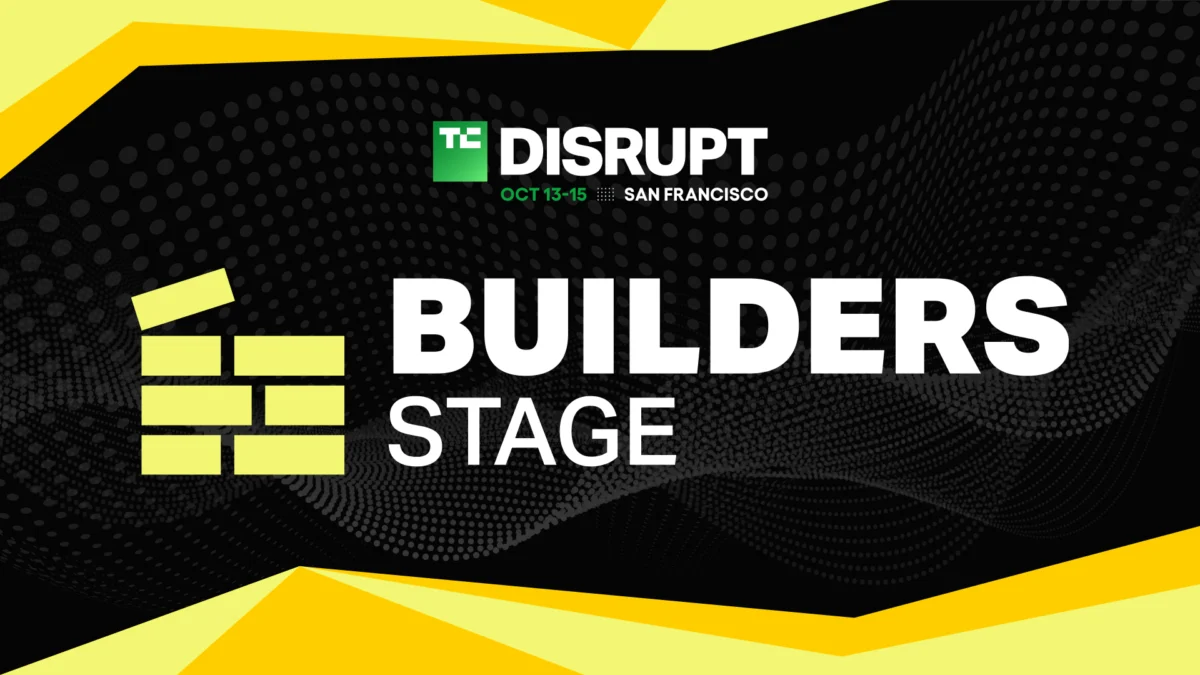
Against this backdrop, TechCrunch Disrupt 2026 has announced the return of its highly anticipated Builders Stage. Scheduled to take place at the Moscone Center in San Francisco from October 13–15, 2026, the Builders Stage is designed as a highly practical, no-nonsense forum. It will convene more than 10,000 founders, venture capitalists, startup operators, and technology leaders to dissect the mechanics of modern company building.
Through a curated series of interactive panels, fireside chats, and real-world case studies, the Builders Stage aims to move past high-level tech evangelism. Instead, it focuses on the operational, financial, and psychological realities of taking a startup from its earliest stages to global scale.
1. Main Facts: Event Overview and Core Objectives
TechCrunch Disrupt remains one of the world’s most influential launchpads for early-stage technology. In 2026, the event’s dedicated Builders Stage will serve as one of six industry-focused tracks. Its primary objective is to equip founders with actionable strategies to navigate a highly competitive, capital-constrained, and AI-integrated market.
Key Event Parameters
- Dates: October 13–15, 2026
- Location: Moscone Center, San Francisco, California
- Expected Attendance: Over 10,000 global tech participants
- Core Themes: Capital allocation, rapid go-to-market (GTM) execution, defensive AI architecture, human capital optimization, and founder resilience.
- Featured Speakers: Industry pioneers and institutional investors, including Grant Lee (CEO of Gamma), Leah Solivan (General Partner at Precedent.vc), Robby Stein (VP of Product at Google), Maria Angelidou-Smith (CPO of Reddit), and Jas Khaira (Global Head of Blackstone N1).
2. Chronology: The Evolution of Startup Building (2023–2026)
To understand the relevance of the 2026 Builders Stage agenda, it is necessary to trace the macroeconomic and technological shifts of the past three years.
[2023-2024: The AI Hype Cycle] ──> [2025: The Capital Correction] ──> [2026-2027: The Efficiency Era]
   - Foundation models emerge          - Focus shifts to unit economics     - GTM cycles compress to 90 days
   - High-valuation seed rounds         - Rise of the "wrapper" dilemma      - Multi-product "Second Acts" required
   - Talent wars peak                   - AI-human hybrid teams form         - Series A metrics tighten drastically
2023–2024: The Hype Cycle and Foundation Model Explosion
Following the commercialization of generative AI, venture capital rushed into foundation models and applications. Early-stage valuations soared, and founders prioritized rapid feature deployment over structural defensibility and unit economics.
2025: The Capital Correction and the "Wrapper" Dilemma
As foundation model companies began releasing native tools that directly competed with application-layer startups, the industry faced a reckoning. Investors demanded path-to-profitability metrics, and the term "AI wrapper" became a significant liability for fundraising startups.
2026–2027: The Era of Capital Efficiency and Operational Rigor
Entering late 2026, the benchmark for venture viability has risen. Founders are now expected to demonstrate rapid revenue generation—often targeting $10 million in Annual Recurring Revenue (ARR) far faster than in previous cycles—while navigating complex multi-model software architectures and highly competitive talent pools. The 2026 Builders Stage agenda directly reflects this timeline of maturity.

3. Supporting Data: Thematic Breakdown of the Builders Stage Agenda
The 2026 agenda is structured across four core operational pillars: AI Defensibility, Modern Fundraising Dynamics, Hyper-Scale Operations, and Human Capital & Culture.
Pillar A: Defensive Engineering and the AI Paradigm Shift
The rapid evolution of frontier models has made product defensibility a moving target. Startups must build architectures that can withstand platform risk from major AI providers.
- "What Happens When OpenAI Ships Your Roadmap"
- Speakers: Michel Tricot (CEO, Airbyte), Rob Toews (Partner, Radical Ventures), Linda Tong (CEO, Webflow).
- Focus: Examining where defensibility lies when foundation models absorb application features, and how startups can pivot when competing directly with tech giants.
- "The Real Tokenmaxxing: How the Best AI Companies Navigate a Multi-Model World"
- Speakers: Mo Jomaa (Partner, Capital G), Zuzanna Stamirowska (CEO, Pathway).
- Focus: Technical and operational strategies for orchestrating workloads across diverse LLM providers to balance cost, reliability, and lock-in risk.
- "How to Win When You’re Not Building AI"
- Speakers: Shan Shan (Investment Manager, Baillie Gifford), Yuri Sagalov (Managing Director, General Catalyst).
- Focus: A contrarian look at how non-AI companies can capture market share by focusing on capital efficiency, customer retention, and solid business fundamentals.
- "Rebuilding Consumer Products for the AI Era"
- Speakers: Maria Angelidou-Smith (CPO, Reddit), alongside product leaders from Square and Uber.
- Focus: Redesigning user interfaces and discovery mechanics for AI-native consumer expectations without over-automating the user experience.
Pillar B: Fundraising, Capitalization, and Exits in 2026/2027
The funding landscape has bifurcated. While pre-seed capital is accessible for compelling narratives, late-stage milestones are highly demanding.
       PRE-SEED STAGE                         SERIES A STAGE (2027)
┌──────────────────────────────┐       ┌──────────────────────────────┐
│  • Story & Conviction        │  ───> │  • Highly Demanding Metrics  │
│  • Founder-Market Fit        │       │  • Proven Retrievable Growth │
│  • Zero-Product Credibility  │       │  • Rigid Unit Economics      │
└──────────────────────────────┘ └──────────────────────────────┘- "Winning Pre-Seed Without a Product"
- Speakers: Puneet Agarwal (Managing Partner, True Ventures), Austin Clements (Managing Partner, Slauson and Co), Sandhya Venkatachalam (Founder, Axiom Partners).
- Focus: Pitching story, personal conviction, and founder-market fit before writing code or generating revenue.
- "The Series A in 2027"
- Speakers: Jahanvi Sardana (Partner, Index Ventures), Shailendra Singh (Managing Director, Peak XV), Janelle Teng Wade (Partner, Bessemer Venture Partners).
- Focus: A look at what "fundable" will mean in the upcoming cycles, detailing the updated metrics, capital efficiency ratios, and traction proof points required by VCs.
- "Building the Next Generation of AI Giants"
- Speaker: Jas Khaira (Global Head, Blackstone N1).
- Focus: Capital intensive scaling strategies, examining how growth-stage AI startups should structure debt, equity, and strategic backing.
- "M&A Is Now an Early-Stage Strategy"
- Speakers: Karl Alomar (Managing Partner, M13), Lindsey Mignano (Founder, Mignano Law Group).
- Focus: Why modern founders are planning for potential acquisitions from day one, using strategic partnerships to engineer early, high-value exits.
Pillar C: Go-To-Market (GTM) and Operational Scaling
The time required to achieve meaningful scale has compressed, forcing companies to adopt aggressive, product-led, and highly automated distribution strategies.
| Session Title | Core Speakers | Key Operational Takeaways |
|---|---|---|
| The 90-Day GTM: Why $0–$10M ARR is the New Baseline | Ryan Meadows (CRO, Lovable), Tomasz Tunguz (Theory Ventures), Ben Broca (Polsia) | Deleveraging long enterprise sales cycles; utilizing AI-enabled execution to compress customer acquisition timelines. |
| From MVP to Billions of Users | Robby Stein (VP of Product, Google) | Transitioning product decision-making from high-risk early intuition to disciplined, scale-safe systems. |
| The Zero-to-1K Playbook | Grant Lee (CEO, Gamma), Leah Solivan (Precedent.vc), Elia Wallen (CEO, Engine) | Low-budget, founder-led distribution, product-led growth (PLG), and building early community momentum. |
| So You’ve Got a Hit Product. How Does Your Company Do It Again? | Filip Kaliszan (CEO, Verkada), Aaron Jacobson (Partner, NEA), Maddi Holman (GP, Daring Ventures) | Building a repeatable multi-product engine to secure a company’s "Second Act" before the core product’s growth plateaus. |
| How to Create Viral Growth and Capitalize on It | Zach Yadegari (Founder, Cal AI) | Converting temporary viral momentum and social distribution into long-term customer retention. |
Pillar D: Human Capital, Organizational Design, and Founder Psychology
As technology becomes highly automated, managing talent and human psychology has emerged as a key operational bottleneck.
- "Hiring When AI Is a Co-Founder"
- Speakers: Josh Reeves (CEO, Gusto), and invited guests.
- Focus: Managing hybrid teams where AI agents handle core operations, and identifying what tasks must remain human-owned to preserve corporate culture.
- "Competing for AI Talent: Pay, Equity, and Retention"
- Speakers: Matt Birnbaum (Founder, Wylder.co), Ioana Hreninciuc (Runware), Atli Thorkelsson (VP of Talent, Redpoint Ventures).
- Focus: Navigating secondary stock sales, compensation structures, and retention strategies in a highly competitive market for technical talent.
- "Yes, It’s Hard to Be a Founder: An Honest Conversation"
- Speakers: Nell Daly (Managing Partner, Revenge Capital), David H. Rosmarin (Associate Professor, Harvard Medical School), Jack Withinshaw (Co-founder, Airspeeder).
- Focus: Addressing the psychological toll of high-growth leadership, focusing on burnout, decision fatigue, and maintaining mental performance under sustained pressure.
4. Official Responses and Industry Perspectives
The design of the 2026 Builders Stage agenda reflects a broader consensus among venture capitalists and seasoned operators: the playbook for tech entrepreneurship has been rewritten.
"The era of 'growth at all costs' is not just on pause—it is permanently over. The founders who survive and build enduring value in 2026 and 2027 are those who treat capital efficiency as a core product feature, not an afterthought."
— Venture Capital Consensus, Disrupt 2026
Prominent venture partners note that the traditional sequence of startup milestones has shifted. According to pre-event commentary from index and growth stage investors, Series A rounds are no longer milestone-based but are instead highly metric-driven.
Furthermore, product leaders from companies like Google and Reddit emphasize that building in the AI era requires a deep understanding of user psychology. Automation must serve to enhance, rather than replace, genuine human connection and community utility.

5. Implications: What This Means for the Global Tech Ecosystem
The thematic structure of TechCrunch Disrupt 2026’s Builders Stage points to several major shifts that will shape the tech landscape in the coming years.
The Compression of the Go-to-Market Timeline
The expectation that startups can spend years finding product-market fit before showing significant revenue is gone. With AI-assisted development tools lowering the cost of software creation, the market is crowded. Startups must execute highly targeted, hyper-efficient GTM playbooks within their first 90 days to capture market share and investor interest.
The Rise of the Hybrid Workforce
The organizational chart of the modern startup is changing. With AI agents taking over routine engineering, customer support, and data tasks, early-stage companies can remain lean for much longer. This shift requires founders to develop a new style of leadership—one that coordinates both human talent and automated systems.
Deeper Defensive Moats
As large language models continue to improve, simple application layers are easily replicated. Startups must build defensibility through proprietary data pipelines, deeply integrated workflows, strong multi-product ecosystems, and direct community ownership.
A Pragmatic Funding Landscape
While venture capital is available, the standards for investment are exceptionally high. Founders must build businesses with strong unit economics, reliable customer retention, and clear paths to profitability or strategic M&A.
By focusing on these core themes, the TechCrunch Disrupt 2026 Builders Stage offers a timely, practical guide for founders navigating the realities of scaling a business today. For those ready to build, scale, and lead in this fast-evolving landscape, the Moscone Center will be the place to find the blueprint.
