




The modern automobile has long ceased to be a purely mechanical marvel. Where once the relationship between driver and machine was defined by throttle cables, linkages, and vacuum lines, it is now mediated by millions of lines of code. While this digital transition has ushered in an era of unprecedented safety features, creature comforts, and fuel efficiency, it has also introduced a new, chilling vulnerability: the software-induced mechanical failure.
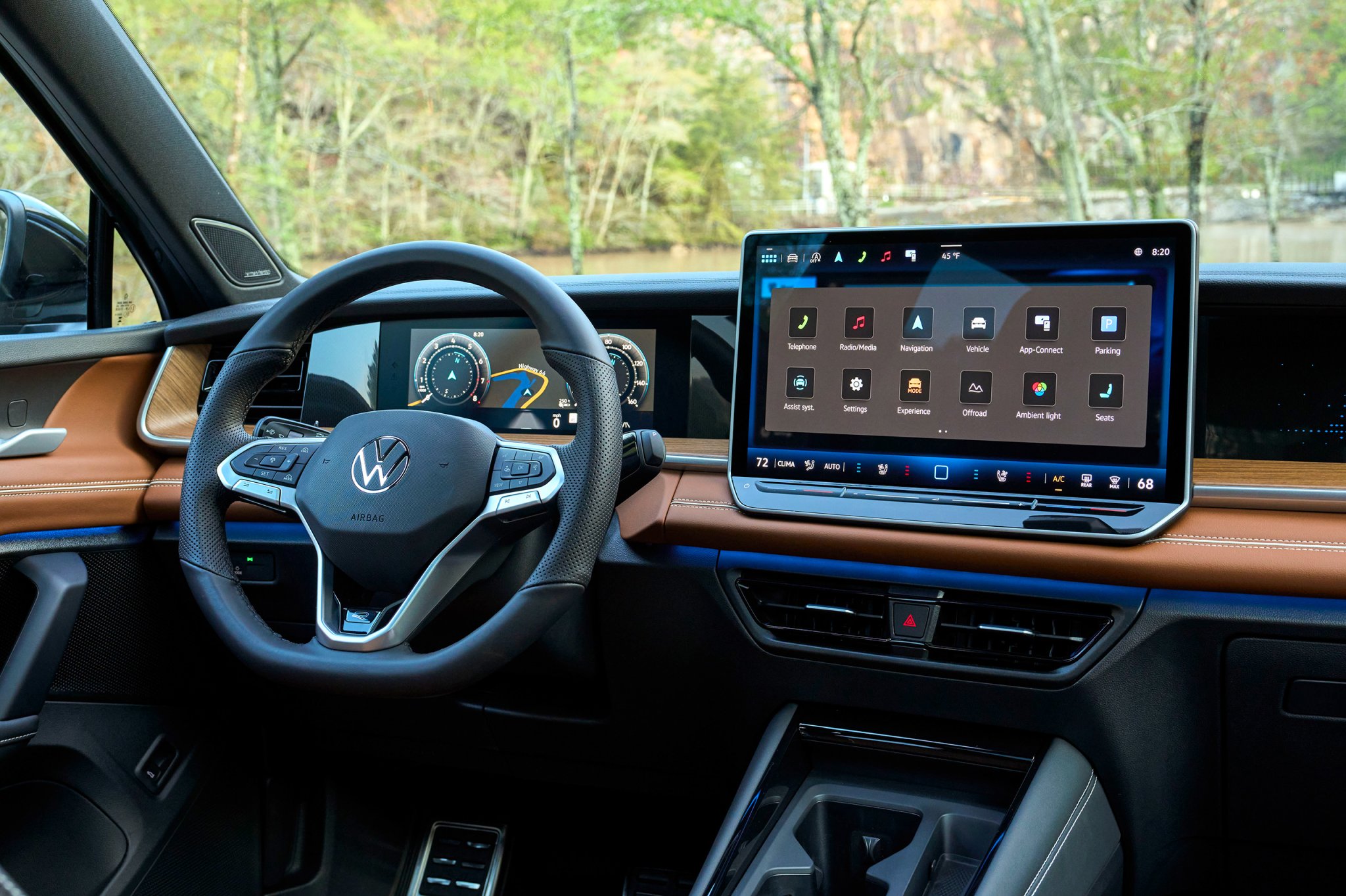
Volkswagen, a titan of the automotive industry, is currently grappling with this reality as it initiates a massive recall for its redesigned 2025–2026 Tiguan compact SUV. Nearly 50,000 vehicles are being brought back to dealerships to address a critical flaw in the Body Control Module (BCM)—a failure that effectively turns the vehicle into a “bricked” piece of hardware while in motion.
The Core Issue: When the Brain Fails the Body
The Body Control Module is the nervous system of a modern car. Historically, its duties were limited to the "creature comforts"—controlling power windows, interior lighting, door locks, and climate settings. However, in the architecture of the latest Tiguan, the BCM’s responsibilities have expanded significantly, tethering it to essential vehicle functions.
The problem, as outlined in recent documentation filed with the National Highway Traffic Safety Administration (NHTSA), stems from an unexpected software reset. When this reset occurs, the vehicle does not merely experience a minor glitch; it experiences a total loss of critical systems. According to the official report, the software fault results in an immediate loss of motive power, the sudden extinction of all exterior lighting, the failure of the rearview camera system, and the disabling of various unspecified "controls."
For a vehicle traveling at highway speeds, the sudden loss of motive power—effectively stalling the engine—combined with the simultaneous loss of lighting, creates an immediate and high-stakes safety hazard.
Chronology of a Software Crisis
The path to this recall highlights the difficulties inherent in identifying software-based mechanical failures. Unlike a faulty brake pad or a misaligned steering rack, a software glitch is often ephemeral, leaving behind little evidence.
- Initial Discovery: The issue was first brought to light during internal testing by Volkswagen. Engineers observed a test vehicle’s BCM performing an unauthorized, unexpected reset.
- Global Investigation: Following the internal discovery, Volkswagen initiated an investigation to determine if the issue was localized to specific software builds or environmental conditions. Their data confirmed that a "small number" of these resets had occurred in vehicles operating in international markets.
- The U.S. Assessment: Volkswagen of America conducted a thorough review of its domestic fleet. While the manufacturer stated it was not aware of any reported incidents involving U.S.-market Tiguans, the potential for such a failure was deemed high enough to warrant immediate action.
- The Recall Declaration: Given the severity of the potential outcomes—including stalls and loss of visibility—Volkswagen filed the recall paperwork (Recall 26V587) with the NHTSA.
- The Present: Affected vehicles, specifically those built between March and August 2025, are now being funneled back to authorized dealerships for mandatory firmware updates.
Supporting Data: The Scale of the Problem
The recall affects approximately 48,000 units of the 2026 Volkswagen Tiguan. Because the flaw is embedded deep within the BCM firmware, the fix is not something that can be pushed out via an Over-the-Air (OTA) update. This is a crucial distinction in the modern automotive landscape. While many manufacturers are pivoting toward OTA updates to minimize the inconvenience to owners, Volkswagen has determined that the BCM’s role is so vital to the vehicle’s primary operation that the update must be performed manually by a trained technician under controlled conditions.
The diagnostic challenge here is particularly daunting: the BCM does not always generate a specific diagnostic trouble code (DTC) when it resets. This "ghost in the machine" phenomenon makes it incredibly difficult for mechanics to identify the issue unless the event happens while the vehicle is actively being scanned or if the driver reports a specific sequence of symptoms.
Official Responses and Manufacturer Accountability
Volkswagen of America has maintained a stance of proactive transparency, though the nature of the fault has left many owners uneasy. In its communication with the NHTSA, the automaker emphasized that the software reset occurs without warning.
Volkswagen representatives have noted that the fix involves a recalibration of the BCM software to prevent the memory-handling errors that lead to the reset. Dealers have been instructed to perform this software update free of charge. Owners are being advised to keep an eye on official correspondence from the manufacturer, as the complexity of the fix means that dealership service departments must manage appointments carefully to ensure that the flash process is completed successfully without creating further issues in the vehicle’s electrical architecture.
Implications: The Death of the "Simple" Car
The Tiguan recall serves as a microcosm of a broader, more uncomfortable trend in the automotive industry. We are witnessing the total integration of software into mechanical systems, and the result is a blurring of lines between a computer and a car.
The Comparison to Legacy Failures
Industry analysts have been quick to compare this to the General Motors ignition switch scandal of the mid-2010s, which affected over 800,000 vehicles. While the comparison is apt in terms of the outcome—sudden engine stalls while in motion—the root cause represents a fundamental shift in technology. The GM issue was a physical failure: an ignition switch that could be bumped into the "off" position by the weight of a keychain. It was a mechanical problem that required a mechanical solution.

The Volkswagen Tiguan issue, conversely, is an abstract, digital failure. It is the result of code behaving unpredictably. This highlights the "complexity trap" that modern automakers find themselves in. As consumers demand more connectivity, more automated safety, and more personalized user interfaces, manufacturers are forced to consolidate control units. By centralizing these functions into modules like the BCM, they improve efficiency and reduce weight, but they also create a "single point of failure" for the entire vehicle.
The Software-Defined Future
This incident begs the question: are we over-engineering our vehicles? When a standard, internal-combustion SUV—not a complex hybrid or a high-voltage EV—can be rendered dead in the water by a software bug, it suggests that the industry may have moved too fast.
Furthermore, this recall raises concerns about the longevity of modern cars. If a 2026 vehicle is susceptible to "software rot" or fatal glitches in its first year of operation, what does the ownership experience look like at year ten? As support for these proprietary software versions wanes, or as the hardware becomes obsolete, the vehicle may become impossible to maintain.
Conclusion: A Wake-Up Call for the Industry
The Volkswagen Tiguan recall is a sobering reminder that innovation without robust, redundant, and isolated architecture can lead to significant safety risks. While the recall itself is a standard procedure, the underlying cause—a body control module that governs the ignition and power systems—is a symptom of a design philosophy that prioritizes total integration over mechanical safety silos.
For now, the roughly 50,000 owners of the affected Tiguan models must rely on the dealer network to patch their vehicles. However, the larger question remains: as we march toward a future of fully autonomous and software-defined vehicles, how will manufacturers ensure that the "ghosts" in the code are permanently exorcised? For the modern driver, the promise of a smarter, more connected vehicle is increasingly accompanied by the realization that their car is only as reliable as its last software update.
Volkswagen’s prompt move to recall these vehicles is a necessary step in safety, but it is also a lesson in the fragility of modern engineering. As we move forward, the industry must decide whether the benefits of deep software integration are worth the risk of losing control of the very machines we depend on every day.
