





Introduction
In a landmark regulatory shift that redraws the competitive landscape for autonomous freight, the California Department of Motor Vehicles (DMV) has officially cleared the path for self-driving heavy-duty trucks to operate on the state’s public roads. Silicon Valley-based autonomous trucking pioneers Aurora Innovation and Kodiak AI have become the first companies to secure the newly established testing permits under California’s revised regulatory framework.
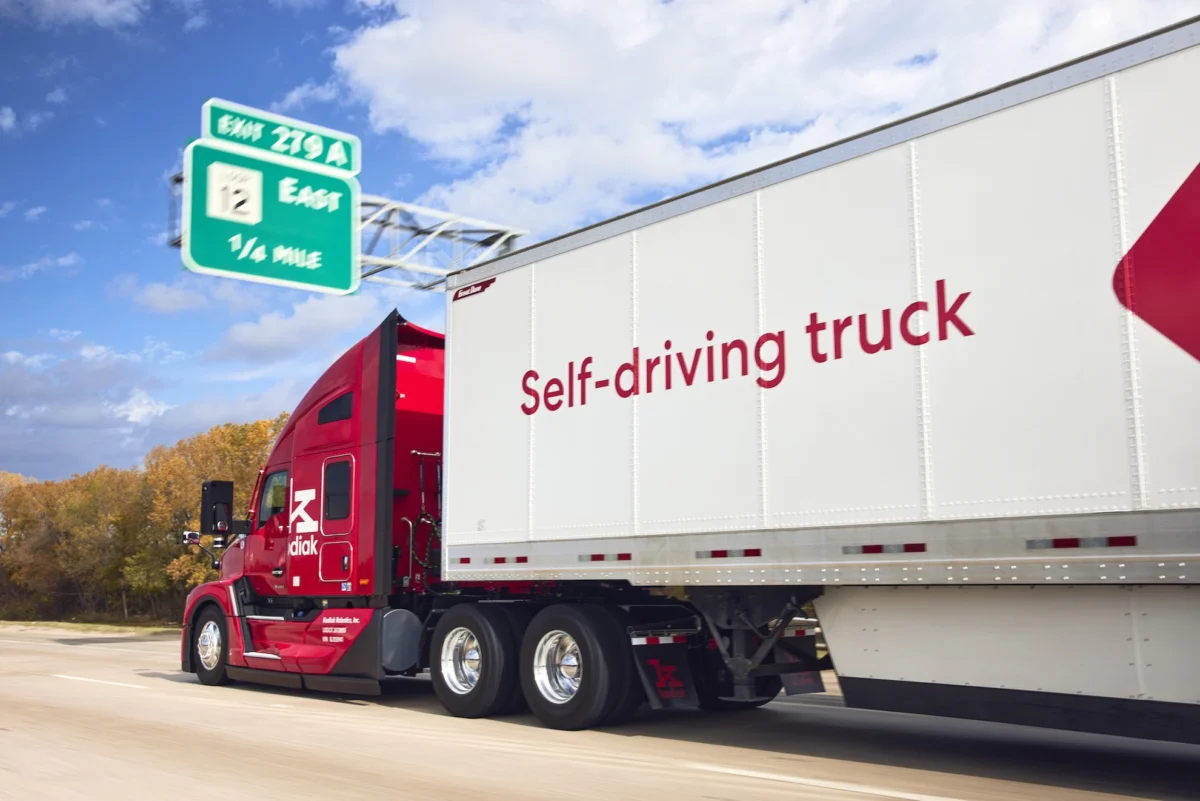
The regulatory milestone marks the end of a long-standing state ban on testing autonomous vehicles weighing over 10,000 pounds. While both companies have spent years refining their technologies on the expansive highway networks of Texas and the Southwest, the DMV’s decision allows them to bring their flagship technology back to their home state. Kodiak AI has already capitalized on the regulatory approval, deploying a select fleet of test trucks on public roads surrounding its Mountain View headquarters.
However, the rollout has reignited a fierce socio-economic and legal battle. Representatives of organized labor, led by the Teamsters Union, have launched a high-profile legal challenge against the DMV, accusing the regulatory body of bypassing safety protocols and failing to evaluate the economic impact of automation on the state’s workforce. This conflict highlights the deep division between technological progress and labor preservation in the modern logistics sector.
Main Facts: The New Regulatory Framework and Early Deployments
The permits issued to Aurora and Kodiak represent a major policy shift by the California DMV. For years, California maintained a strict bifurcation in its autonomous vehicle policy: while light-duty passenger vehicles and robotaxis were permitted to test and eventually charge fares on public roads, heavy-duty commercial trucks (Class 8 vehicles) remained strictly prohibited from driverless or driver-assisted testing.
On April 28, the DMV officially enacted updated rules that dismantled this prohibition, establishing a structured path for the testing and eventual commercial deployment of heavy-duty autonomous vehicles.
+-----------------------------------------------------------------------------+
|                      CALIFORNIA DMV PERMIT CONDITIONS                       |
+-----------------------------------------------------------------------------+
|  1. HUMAN SAFETY OPERATOR                                                   |
|     A qualified safety driver must remain behind the wheel at all times.     |
|                                                                             |
|  2. SPEED LIMIT RESTRICTIONS                                                |
|     Operations are prohibited on roads with speed limits of 25 mph or less, |
|     except when on a "direct route" between destinations.                   |
|                                                                             |
|  3. COMPLIANCE CRITERIA                                                     |
|     Strict verification of vehicle registration, insurance liability,       |
|     safety driver training, and system safety performance.                  |
+-----------------------------------------------------------------------------+
To secure these permits, Aurora and Kodiak had to meet rigorous administrative and operational criteria. According to the DMV, both operators submitted comprehensive safety portfolios detailing their sensor architectures, collision-avoidance protocols, and system redundancies. Additionally, the companies had to verify commercial liability insurance, vehicle registration compliance, and the specialized training qualifications of their test drivers.
While the permits represent a major regulatory victory, they come with strict operational limitations:
- Human Safety Operator Required: Fully driverless operations remain prohibited on California’s public highways under these specific testing permits; a qualified human safety driver must occupy the cabin, ready to take manual control of the vehicle instantly.
- Speed Restrictions: The autonomous systems are barred from operating on streets with posted speed limits of 25 miles per hour or less. An exception is made only when the truck is traversing a "direct route" to navigate between highways, depot facilities, or freight terminals.
Kodiak AI has moved quickly to utilize its new permit. The company confirmed it has deployed a small fleet of autonomous test trucks on public roads in the Silicon Valley area, primarily focusing on corridors surrounding its Mountain View office. These initial runs aim to calibrate the system’s perception software to California’s distinct highway infrastructure, lane markings, and traffic patterns. Aurora is expected to follow with its own localized testing program as it prepares its hardware and software suite for California’s freight corridors.
Chronology: The Journey to California’s Highways
The path to California’s regulatory shift is marked by years of parallel technological development, shifting regional policies, and corporate migrations.
+-------------------------------------------------------------------------+
|                      CHRONOLOGY OF KEY MILESTONES                       |
+-------------------------------------------------------------------------+
|                                                                         |
|  [2019] ------------------------------------------------------------+   |
|  Kodiak AI begins commercial deliveries in Texas with human safety      |   |
|  drivers on board.                                                      |   |
|                                                                         |
|  [January 2025] ----------------------------------------------------+   |
|  Kodiak launches fully driverless commercial operations in West Texas'  |   |
|  Permian Basin for Atlas Energy.                                        |   |
|                                                                         |
|  [April 28, 2025/2026 Period] --------------------------------------+   |
|  California DMV officially lifts the ban on testing autonomous          |   |
|  vehicles weighing over 10,000 pounds.                                  |   |
|                                                                         |
|  [May 2025] --------------------------------------------------------+   |
|  Aurora launches its commercial self-driving truck service in Texas,    |   |
|  debuting on the Dallas-to-Houston corridor.                            |   |
|                                                                         |
|  [February 2026] ---------------------------------------------------+   |
|  Aurora expands its Texas operations, adding long-haul routes           |   |
|  connecting Fort Worth, El Paso, Phoenix, and Laredo.                   |   |
|                                                                         |
|  [Spring/Summer 2026] ----------------------------------------------+   |
|  - California DMV issues heavy-duty testing permits to Aurora & Kodiak. |   |
|  - Kodiak begins public road testing in Mountain View.                  |   |
|  - Teamsters California files a lawsuit against the DMV in Alameda      |   |
|    County Superior Court.                                               |   |
+-------------------------------------------------------------------------+
The Texas Proving Grounds
Because of California’s long-standing ban on heavy autonomous vehicles, both Aurora and Kodiak—despite being headquartered in California—were forced to establish their primary testing and commercial operations in Texas. The Lone Star State’s highly supportive regulatory environment, flat topography, and booming freight corridors made it the ideal testing ground for autonomous trucking.
- 2019: Kodiak AI initiates commercial freight deliveries using its autonomous platform. Although an onboard safety driver remains present during highway operations, the company begins collecting millions of miles of real-world driving data.
- January 2025: Kodiak achieves a major technical milestone by launching fully driverless commercial operations (removing the onboard human safety operator entirely) in an off-road environment. Partnering with Atlas Energy, Kodiak deploys its trucks to haul materials across the remote, private road networks of the Permian Basin in West Texas.
- May 2025: Aurora launches its commercial self-driving truck service, the "Aurora Driver," in Texas. The commercial service debuts on the high-traffic corridor between Dallas and Houston, hauling freight for commercial partners.
- February 2026: Aurora rapidly scales its commercial footprint in the Southwest. The company expands its route network to include long-haul lanes connecting Fort Worth to El Paso, El Paso to Phoenix, Fort Worth to Phoenix, and Laredo to Dallas. This expansion demonstrates the system’s ability to navigate diverse weather conditions, mountainous terrain, and complex border-adjacent logistics hubs.
The California Pivot
With their technology proven in the Southwest, both companies continued to lobby for access to their home state of California—the nation’s largest gateway for containerized imports. The policy breakthrough occurred on April 28, when the California DMV approved its updated regulatory framework, opening the door for the testing permits granted to Aurora and Kodiak.
Supporting Data: The Technical and Economic Landscape
The push for autonomous trucking is driven by a combination of logistics economics, supply chain demands, and safety statistics.
The Class 8 Challenge
Operating a Class 8 commercial vehicle—which can weigh up to 80,000 pounds when fully loaded—presents vastly different technical challenges than operating a passenger robotaxi.
- Stopping Distance: A fully loaded tractor-trailer traveling at 65 miles per hour requires up to two football fields of distance to come to a complete stop—roughly double the stopping distance of a standard passenger vehicle.
- Sensor Range: To compensate for this momentum, autonomous trucking systems require long-range sensing capabilities. Both the Aurora Driver and the Kodiak Driver utilize custom sensor suites combining high-resolution LiDAR, radar, and cameras capable of detecting and classifying road hazards more than 300 meters (nearly 1,000 feet) ahead.
+-----------------------------------------------------------------------------+
|                     SENSOR SUITE COMPARISON & PERFORMANCE                   |
+-----------------------------------------------------------------------------+
|                                                                             |
|  [Sensor Type]      [Effective Range]    [Primary Function]                 |
|  LiDAR              Up to 300+ meters    Precise 3D spatial mapping         |
|  Radar              Up to 300+ meters    Velocity tracking in poor weather  |
|  HD Cameras         Up to 400+ meters    Object classification & lane det.  |
|                                                                             |
|  * Stopping distance of fully loaded Class 8 truck (65 mph): ~200 meters    |
|  * Required perception buffer: >300 meters to ensure safe stopping margin.   |
+-----------------------------------------------------------------------------+
The Economic Stakes of California Freight
California is home to the Port of Los Angeles and the Port of Long Beach, which collectively handle roughly 40% of all waterborne imports into the United States. The movement of these goods relies heavily on short-haul drayage and long-haul trucking.
According to the American Trucking Associations (ATA), the trucking industry faces a nationwide driver shortage, alongside strict federal Hours of Service (HOS) regulations that limit human drivers to 11 hours of driving per day. Autonomous trucks, by contrast, can theoretically operate up to 20 hours a day, limited only by fuel capacity and maintenance needs. This operational model promises to reduce transit times between West Coast ports and inland distribution hubs by up to 50%.
Official Responses: Labor Backlash and Regulatory Defense
The DMV’s regulatory shift has sparked sharp criticism from labor organizations and public safety advocates, leading to an active legal battle.
The Teamsters’ Legal Challenge
Almost immediately after the DMV issued the testing permits, Teamsters California filed a lawsuit against the agency in the Superior Court of California for Alameda County. The lawsuit alleges that the DMV failed to meet its statutory duties under state law.
+-----------------------------------------------------------------------------+
|                       TEAMSTERS LAWSUIT KEY ARGUMENTS                       |
+-----------------------------------------------------------------------------+
|                                                                             |
|  1. LACK OF ECONOMIC IMPACT STUDIES                                         |
|     The union claims the DMV bypassed statutory requirements to analyze     |
|     job displacement and economic harm to the state's commercial drivers.   |
|                                                                             |
|  2. PUBLIC SAFETY RISKS                                                     |
|     The complaint alleges the DMV failed to thoroughly assess the risks     |
|     80,000-pound autonomous vehicles pose to everyday motorists.            |
|                                                                             |
|  3. RECIRCUMVENTION OF LEGISLATIVE OVERSIGHT                               |
|     Labor advocates argue that major policy changes regarding heavy-duty    |
|     automation should go through the state legislature rather than an       |
|     unelected regulatory body.                                              |
+-----------------------------------------------------------------------------+
The Teamsters argue that introducing autonomous heavy-duty trucks threatens the livelihoods of tens of thousands of professional truck drivers across California. In public statements, union leadership has characterized the DMV’s decision as an undemocratic concession to tech companies at the expense of working-class jobs and highway safety.
The DMV and Developer Perspectives
In response to safety concerns, the California DMV has defended its regulatory process, emphasizing that its primary focus remains public safety. The agency states that its phased permitting process—starting with mandatory safety drivers—ensures that autonomous systems are thoroughly vetted under human supervision before any driverless operations are considered on public freeways.
Spokespersons for both Aurora and Kodiak have reiterated their commitment to collaborative development. The companies argue that autonomous trucks are designed to supplement, rather than immediately replace, the existing workforce by addressing the driver shortage and taking over long-haul, highway-only routes. Under this hub-to-hub model, human drivers would focus on local drayage, urban deliveries, and first-and-last-mile logistics, which require complex navigation and human oversight.
Implications: The Geopolitics of Freight and the Future of Labor
The opening of California’s highways to autonomous truck testing has major implications for the logistics industry, labor policy, and the future of supply chains.
Bridging the Interstate Freight Corridor
Until now, the lack of regulatory alignment between California and the Southwest created a major bottleneck for autonomous freight networks. Companies could theoretically run autonomous loads from Houston to the California-Arizona border, but were forced to swap trailers to a human-driven tractor to enter California.
By establishing a regulatory pathway in California, the DMV has laid the groundwork for a continuous, autonomous freight corridor spanning from the Pacific coast to the Gulf of Mexico. This connection could significantly lower operating costs, reduce emissions through optimized driving algorithms, and improve transit times across the entire southern United States.
+-----------------------------------------------------------------------------+
|                 FUTURE AUTONOMOUS SOUTHERN FREIGHT CORRIDOR                 |
+-----------------------------------------------------------------------------+
|                                                                             |
|  [Port of LA/LB] ========> [Phoenix Hub] ========> [El Paso] ========> [Dallas]
|   (California)              (Arizona)               (Texas)            (Texas)
|                                                                             |
|  * Previous Bottleneck: Trailers had to be manually swapped at CA border.   |
|  * Future Outlook: Continuous autonomous operations from coast to coast.    |
+-----------------------------------------------------------------------------+
The Safety and Labor Precedent
The legal battle in Alameda County Superior Court will be closely watched by labor unions, technology developers, and state regulators across the country. If the Teamsters’ lawsuit succeeds in halting or delaying the testing permits, it could set a precedent for other states facing pressure from organized labor to restrict autonomous commercial operations.
Conversely, if the DMV’s regulatory framework survives the legal challenge, it will likely serve as a blueprint for other states looking to balance technological innovation with public safety oversight.
Ultimately, the transition to autonomous trucking will not happen overnight. With Kodiak aiming to remove human safety drivers from its commercial highway operations by the end of the year, and Aurora continuing to expand its hub-to-hub commercial network, the industry is moving steadily toward a driverless future. However, as these heavy-duty vehicles begin navigating California’s public highways, their success will be measured not just by miles driven without incident, but by how well the industry navigates the complex social, legal, and economic landscape they are reshaping.
