





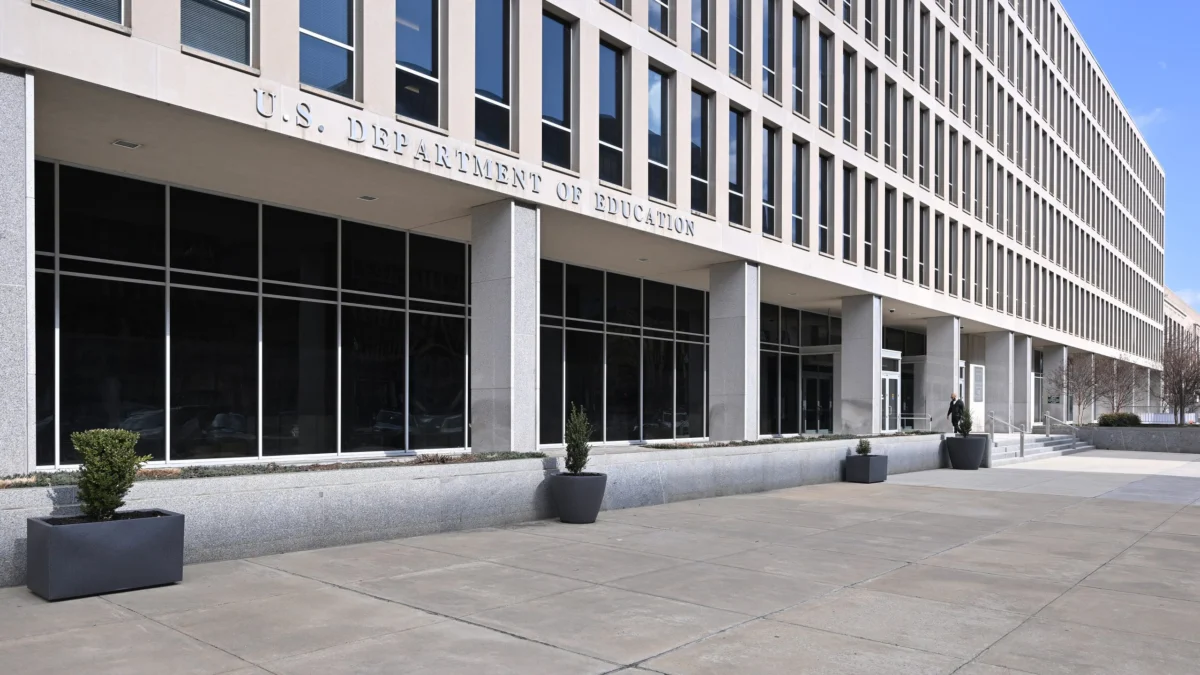
In a significant judicial rebuke to the Trump administration’s efforts to dismantle diversity-focused educational initiatives, a U.S. federal judge has vacated a Department of Education (DOE) directive that effectively canceled over $600 million in federal grants. The ruling, issued on Thursday by U.S. District Court Judge Angel Kelley, strikes down a policy that had targeted teacher training programs deemed by the administration to be centers of "divisive" Diversity, Equity, and Inclusion (DEI) practices.
The ruling marks a major victory for a coalition of states that challenged the administration’s authority, arguing that the sudden termination of these funds was not only legally flawed but disastrous for the nation’s already strained educator pipeline.
The Court’s Ruling: A Matter of Arbitrary Governance
In her scathing memorandum, Judge Kelley issued a permanent injunction against the DOE’s directive, titled "Eliminating Discrimination and Fraud in Department Grant Awards." She concluded that the administration’s methodology failed to meet the standards required by the Administrative Procedure Act (APA), labeling the government’s actions as "arbitrary and capricious."
At the heart of the judge’s concern was the Department of Education’s inability to provide a clear, legally sound definition of what constituted "DEI" or "discriminatory" activity. The directive had been used to cancel 104 out of 109 grants under the Teacher Quality Partnership (TQP) and the Supporting Effective Educator Development (SEED) programs.
Judge Kelley highlighted the absurdity of the Department’s broad-brush approach, noting:
"It is difficult to see how topics can be ‘anti-racist’ yet simultaneously fall within the Directive’s category of ‘discriminatory’ activities. The record likewise shows that the Directive swept in topics as broad and amorphous as ‘Family and Community in the Classroom’ and ‘social-emotional learning.’ These topics do not, on their face, have any apparent connection to discrimination."
By vacating the directive, the court has effectively invalidated the legal basis the DOE used to justify the mass cancellation of funds, signaling that the executive branch cannot unilaterally redefine and defund federal programs without following established regulatory processes.
Chronology of the Conflict: From Executive Order to Judicial Injunction
The legal battle began in early 2025, sparked by a pair of executive orders aimed at shifting the philosophical landscape of American K-12 education.
The Administration’s Mandate
On January 21, 2025, President Trump issued Executive Order No. 14173, "Ending Illegal Discrimination and Restoring Merit-Based Opportunity." This order instructed the Director of the Office of Management and Budget to excise all references to DEI principles from federal operations and move to terminate grants that supported such frameworks.
This was quickly followed on January 29 by Executive Order No. 14190, "Ending Radical Indoctrination in K-12 Schooling." This order gave the Secretary of Education a 90-day window to develop a comprehensive plan to purge federal funding from programs perceived to be promoting "illegal and discriminatory treatment and indoctrination."
The Legal Resistance
The implementation of these orders led then-acting DOE Secretary Denise Carter to issue the directive that prompted the litigation. Recognizing the catastrophic impact on regional teacher training initiatives, a coalition of eight states, spearheaded by New York Attorney General Letitia James, filed suit on March 6, 2025.
The chronology of the subsequent judicial intervention moved rapidly:
- March 10, 2025: U.S. Judge Myong J. Joun granted a Temporary Restraining Order (TRO), preventing the DOE from terminating the TQP and SEED grants for plaintiffs.
- March 13, 2025: The Trump administration appealed the TRO, seeking an emergency stay to halt the reinstatement of funding. Judge Joun denied this request.
- March 21, 2025: The U.S. Court of Appeals for the First Circuit upheld the lower court’s decision, denying the administration’s motion to stay the TRO.
- September 2026: Judge Angel Kelley finalized the matter with a permanent injunction, vacating the directive entirely.
Supporting Data: The Human and Economic Cost
The DOE’s directive did not occur in a vacuum; it targeted programs that form the backbone of teacher recruitment in many of the country’s most vulnerable districts. Judge Kelley’s ruling leaned heavily on the evidence presented regarding the health of the American teaching profession.
Data cited by the court paints a grim picture of the status quo:
- Declining Pipeline: The number of individuals completing traditional teacher preparation programs has plummeted by 35% over the last decade.
- High Attrition: Nearly 300,000 teachers exit the profession annually, creating a constant cycle of vacancy that school districts struggle to fill.
The impact was felt immediately in states like Maryland and Massachusetts. For instance, Frostburg State University had been relying on a five-year, $3.2 million TQP grant to fund its "Rural Educators for Appalachian Children" program—a critical pipeline for a region suffering from severe teacher shortages. Similarly, the University of Massachusetts Amherst had secured $2.3 million in 2023 to train paraeducators—often community members already embedded in the school culture—to become licensed early childhood educators. By cutting these grants, the administration threatened to shutter the very programs designed to address these specific regional deficits.
Official Responses and Political Rhetoric
The discourse surrounding this case has been highly polarized, reflecting the broader "culture war" currently being fought over the American classroom.
New York Attorney General Letitia James, who led the coalition of states, framed the issue as one of fundamental fairness and educational viability. Following the earlier successful TRO, she stated via social media, "Kids in rural and underserved communities deserve access to qualified teachers and a quality education." For the plaintiffs, the DOE’s actions were viewed as a political maneuver that sacrificed the educational stability of children to satisfy an ideological agenda.
Conversely, the Trump administration has maintained that these programs were conduits for "radical indoctrination." The administration’s legal counsel argued that the executive branch possesses the inherent authority to redirect funds away from projects that conflict with the administration’s interpretation of constitutional meritocracy. However, the federal courts have consistently signaled that such administrative pivots must be substantiated by evidence and adhere to the rigorous requirements of the APA, rather than being driven by broad, ill-defined labels of "indoctrination."
Implications: A Precedent for Federal Oversight
The vacating of the DOE directive has profound implications for the relationship between the executive branch and federal grant-making agencies.
Constraints on Executive Power
By ruling that the directive was "arbitrary and capricious," the court has reinforced the limits of presidential authority over established federal programs. While presidents have wide latitude in setting policy goals, they cannot simply bypass the regulatory process—which requires public comment, evidence-based reasoning, and adherence to existing statutory frameworks—to dismantle programs that have been authorized by Congress.
The Future of DEI in Education
The ruling does not necessarily end the debate over DEI, but it does change the venue. It suggests that if the federal government wishes to defund or restructure these programs, it must do so through transparent, rule-making processes that allow for legal and public scrutiny. The decision effectively prevents the Department of Education from using vague terminology to weaponize grant funding against specific pedagogical approaches.
Impact on School Districts
For school districts, this ruling provides a reprieve from the administrative chaos that characterized the first half of 2025. With the threat of sudden funding loss removed, universities and school districts can return to the primary task of recruiting and retaining educators. However, the legal uncertainty of the past year has left many institutions wary, and the broader debate over the role of social-emotional learning and inclusive training in schools is likely to continue in both the court of law and the court of public opinion.
As the dust settles, the judiciary has sent a clear message: the machinery of federal grant-making cannot be turned on and off based on shifting political winds. Whether this ruling will lead to a more stable environment for teacher preparation or prompt the administration to seek more formal, legislative avenues to dismantle these programs remains the next chapter in this ongoing national debate.
