




Autonomous vehicle pioneer Waymo has formally submitted its responses to the National Highway Traffic Safety Administration (NHTSA) as part of an active federal investigation into a January collision in Santa Monica, California, where one of the company’s self-driving robotaxis struck a nine-year-old child.
The submission of these documents represents a critical juncture in the federal government’s escalating scrutiny of autonomous driving systems. While the newly published responses are heavily redacted to protect proprietary trade secrets, they confirm that the federal safety regulator is actively pushing for deeper transparency regarding how autonomous vehicles (AVs) navigate highly unpredictable environments, such as active school zones.
Main Facts: The Santa Monica Incident and the Federal Inquiry
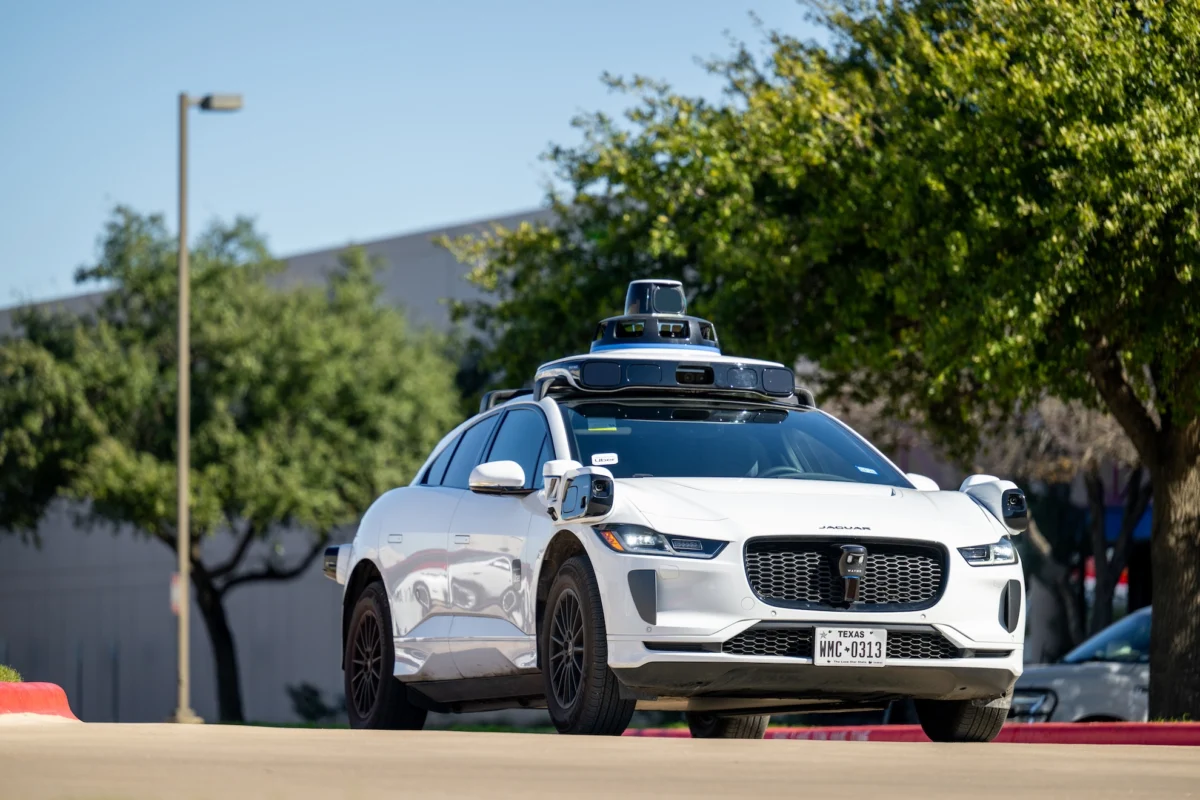
The investigation stems from a low-speed collision that occurred on the afternoon of January 23, 2024, in Santa Monica, California. A Waymo robotaxi—built on the all-electric Jaguar I-Pace platform—was operating in autonomous mode near a local school when it struck a nine-year-old girl who had stepped into the roadway.
Following inquiries from the media, NHTSA’s Office of Defects Investigation (ODI) posted an initial batch of response documents from Waymo to its public repository. The federal agency has indicated that it is currently reviewing additional materials submitted by the Alphabet-owned company and will publish further updates to the public investigation file once its internal review is complete.
+-------------------------------------------------------------------------+
|                      KEY INVESTIGATION DETAILS                          |
+-------------------------------------------------------------------------+
| Incident Date:      January 23, 2024                                    |
| Location:           Santa Monica, California                            |
| Vehicle Type:       Waymo Jaguar I-Pace (Level 4 Autonomous)            |
| Victim:             9-year-old pedestrian                               |
| Initial Speed:      17 mph                                              |
| Impact Speed:       6 mph                                               |
| Primary Regulator:  NHTSA (Office of Defects Investigation)             |
| Parallel Agency:    NTSB (National Transportation Safety Board)         |
+-------------------------------------------------------------------------+
A significant portion of the newly released documentation is heavily redacted under claims of "confidential business information" (CBI). Despite these redactions, the correspondence reveals a highly structured dialogue between federal regulators and Waymo’s safety leadership. NHTSA’s questions target the core operational logic of Waymo’s autonomous software, specifically focusing on:
- How the vehicle’s sensor suite detects school zones and vulnerable road users (VRUs).
- How the system determines and adjusts speed limits when operating near schools.
- The historical record of any consumer or municipal complaints regarding Waymo vehicle behavior near educational institutions.
- In-depth software documentation, including perception, path planning, and emergency braking protocols.
Chronology: From the Collision to the Regulatory Stand-Off
The timeline of the investigation shows a highly deliberate, multi-month exchange between Waymo and federal safety authorities, highlighting the complexity of auditing autonomous driving code.
2024
├── Jan 23: Waymo robotaxi collides with a 9-year-old child in Santa Monica.
├── Jan 30: NHTSA publicly announces a formal investigation into the crash.
├── Mar 23: NHTSA ODI issues a formal information request with 12 detailed questions.
├── Mar 27: NTSB releases its preliminary investigative report detailing vehicle telemetry.
├── May 01: Waymo Safety Director Matthew Schwall requests an extension and clarification.
├── May 08: Original deadline for Waymo's complete response to NHTSA.
├── Jul 08: Waymo submits a second letter containing partial answers.
└── Late Jul: Waymo confirms completion of all submissions; NHTSA publishes redacted files.
The Collision and Immediate Aftermath
On January 23, 2024, the Waymo Jaguar I-Pace was driving through a residential and school-adjacent corridor in Santa Monica. As a nine-year-old pedestrian entered the street, the vehicle initiated hard braking but was unable to come to a complete stop before making contact.
One week later, NHTSA announced it was launching a formal investigation into the incident to determine if a systemic defect existed within Waymo’s automated driving system (ADS).
The Regulatory Information Requests
On March 23, 2024, NHTSA’s ODI sent a detailed information request to Waymo. The letter contained 12 primary questions—many containing complex sub-parts—demanding technical specifications, sensor logs, and software design documents. Waymo’s initial deadline to respond was set for May 8, 2024.
On May 1, 2024, Matthew Schwall, Waymo’s Senior Director of Safety, sent a letter to NHTSA requesting a formal extension. Schwall argued that the scope of the request was exceptionally broad and required clarification to prevent an "extraordinary production and review burden" on both the company and the agency.
Extensions and Final Submissions
NHTSA ultimately granted Waymo additional time to address 10 of the 12 questions. On July 8, 2024, Waymo sent a second letter containing partial responses and clarifying data.
By late July, Waymo confirmed to journalists that it had fully completed its submissions to the regulator. The public release of these documents occurred shortly thereafter, albeit with extensive redactions protecting Waymo’s proprietary software architecture.
Supporting Data: Telemetry, Impact Dynamics, and Safety Metrics
According to a preliminary report released by the National Transportation Safety Board (NTSB) in late March, the physical dynamics of the crash indicate that while the vehicle’s automated systems detected the pedestrian and reacted, they were unable to prevent the collision entirely.
Vehicle Telemetry and Braking Profile
The NTSB report established the following telemetry timeline:
- Cruising Speed: Prior to detecting the pedestrian, the Jaguar I-Pace was traveling at 17 miles per hour, which was within the local speed limit for the area.
- Avoidance Maneuver: Upon detecting the child stepping into the roadway, the vehicle’s autonomous software initiated emergency braking.
- Impact Speed: The vehicle successfully scrubbed off a significant portion of its kinetic energy, reducing its speed to 6 miles per hour at the moment of impact.
- Point of Contact: The child was struck near the front-right headlight assembly of the vehicle.
       WAYMO VEHICLE SPEED PROFILE (SANTA MONICA CRASH)
  Speed (mph)
    20 +-------------------
       |
    15 |                       [Emergency Braking Initiated]
       |
    10 |
       |
     5 |                         --------* [Impact at 6 mph]
       |                                  |
     0 +----------------------------------+-----------------
       0.0                               Time (Seconds)
Injury Assessment and Medical Outcome
The nine-year-old pedestrian fell to the pavement upon impact. According to the NTSB’s preliminary findings, she was able to stand up, walk to the curb, and report her injuries, which were classified as minor.
Crucially, emergency medical services evaluated the child at the scene, and it was determined that she did not require emergency medical transport to a hospital.
While the NTSB’s preliminary report provided these foundational telemetry points, the agency’s final, comprehensive report is not expected for approximately 12 months from the crash date. The NTSB focuses purely on safety recommendations and accident reconstruction, whereas NHTSA retains the regulatory authority to mandate recalls or civil penalties.
Official Responses: Redactions and the Safety Debate
The public release of Waymo’s correspondence with NHTSA has reignited the debate surrounding corporate transparency in the autonomous vehicle sector.
Waymo’s Legal Defense and CBI Claims
The responses published on NHTSA’s portal are heavily marked with redactions, citing the protection of Confidential Business Information (CBI). Under federal guidelines, AV operators are permitted to withhold specific technical details—such as proprietary machine-learning algorithms, sensor fusion layouts, and source code—to prevent competitors from gaining an unfair market advantage.
However, consumer advocacy groups argue that excessive redactions prevent independent safety researchers from evaluating whether the vehicle’s perception system suffered from a fundamental software flaw.
In the May 1 extension request letter, Matthew Schwall framed the company’s cautious approach as a cooperative effort to streamline the investigation:
"Our mutual goal is for Waymo to provide relevant information that facilitates ODI’s investigation, while avoiding extraordinary production and review burdens for Waymo and NHTSA ODI that would otherwise not benefit the agency’s investigation."
Waymo has consistently maintained that its Rider Safety Guide and operational software are designed to meet and exceed human safety benchmarks. The company points to the vehicle’s rapid deceleration from 17 mph to 6 mph as evidence that its collision avoidance systems performed as intended under challenging, sudden-entry conditions.
Implications: The Hardest "Edge Cases" in Autonomous Driving
The federal probe into the Santa Monica crash highlights a broader technological and regulatory challenge facing the entire autonomous vehicle industry: vulnerable road users (VRUs) in complex environments.
The School Zone Challenge
School zones represent one of the most difficult operational domains for machine-learning models. These areas feature a high density of non-standard variables, including:
- Erratic Pedestrian Behavior: Children frequently exhibit unpredictable movements, such as darting out from between parked cars, which can bypass standard pedestrian path-prediction models.
- Variable Signage: School zones often feature flashing beacons, temporary crossing-guard signs, and highly variable speed limits that apply only during specific hours of the day.
- Complex Human Gestures: Autonomous vehicles must interpret the hand signals of crossing guards, parent volunteers, and police officers, which may contradict standard traffic lights or road markings.
+-----------------------------------------------------------------------+
|                    THE SCHOOL ZONE EDGE-CASE TRIAD                    |
+-----------------------------------------------------------------------+
|                                                                       |
|   [ Erratic Pedestrians ] ---> Darting from behind occlusions         |
|                                                                       |
|   [ Variable Signage ]    ---> Flashing beacons & temporary limits    |
|                                                                       |
|   [ Human Gestures ]      ---> Hand signals from crossing guards      |
|                                                                       |
+-----------------------------------------------------------------------+
Heightened Regulatory Scrutiny
This investigation occurs during a period of unprecedented federal oversight of Level 4 autonomous systems. Following high-profile safety incidents involving other major operators—most notably General Motors’ Cruise division, which had its California operating license temporarily suspended after an accident involving a pedestrian in San Francisco—NHTSA has adopted a far more proactive enforcement posture.
The outcome of the Waymo inquiry could set critical regulatory precedents. If NHTSA determines that Waymo’s software did not adequately account for school-zone speed profiles or pedestrian proximity, it could mandate software updates across Waymo’s entire active fleet. Such a move would impact operations not only in Los Angeles but also in Phoenix, San Francisco, and Austin.
For an industry striving to prove that robotaxis are fundamentally safer than human drivers, the resolution of this investigation will serve as a benchmark for how federal regulators hold autonomous systems accountable when interacting with the most vulnerable members of public roadways.
