



By Phil Neuffer
Published September 22, 2026
In an era defined by volatile commodity costs, shifting consumer demand, and the increasing complexity of global logistics, restaurant operators are finding that the secret ingredient to profitability is no longer just on the menu—it is hidden in the supply chain. P.F. Chang’s, the iconic Asian-inspired dining brand, has announced the extension of its long-term partnership with ArrowStream, a premier provider of supply chain software for the food service industry.
This renewal, formalized in a mid-September press release, marks a continued commitment by the restaurant operator to utilize advanced digital tools to manage inventory, oversee complex supply contracts, and maintain rigorous control over spending. By doubling down on this technology-driven approach, P.F. Chang’s aims to fortify its operational resilience against the unpredictable headwinds that have historically disrupted the restaurant sector.
The Core Pillars of the Partnership
The collaboration between P.F. Chang’s and ArrowStream, which first began in 2019, has evolved from a tactical necessity into a strategic pillar of the restaurant’s operational model. At the heart of this renewed agreement are three primary software solutions designed to bring order to the often-chaotic world of food distribution: contract management, inventory visibility, and automated price auditing.
Centralized Contract Management
Managing a sprawling network of suppliers and distributors requires extreme administrative discipline. Through ArrowStream’s contract management suite, P.F. Chang’s is able to centralize all purchasing agreements into a single digital source of truth. This centralization ensures that the brand can enforce spending discipline across its entire distribution network, preventing "maverick spend" and ensuring that the terms negotiated at the corporate level are honored at the point of delivery.
Real-Time Inventory Visibility
Perhaps the most critical aspect of the partnership is the ability to monitor distributor stock levels in real-time. By leveraging ArrowStream’s inventory management platform, P.F. Chang’s can proactively identify potential shortages before they impact the guest experience. In a business where a missing ingredient can lead to menu unavailability or degraded service, this visibility is a vital hedge against the risks of stockouts and supply chain bottlenecks.
Automated Price Auditing
In the high-volume environment of restaurant supply, manual invoicing and pricing verification are prone to human error and missed overcharges. P.F. Chang’s utilizes ArrowStream’s automated audit tools to reconcile invoices against contract prices. This automation not only saves significant man-hours but also serves as a direct profit-protection mechanism, allowing the brand to reclaim funds that might otherwise be lost to billing discrepancies.
A Chronology of Collaboration
The evolution of the P.F. Chang’s-ArrowStream relationship mirrors the broader industry’s transition from manual, spreadsheet-based management to high-tech digital orchestration.
- 2019: The Foundation. P.F. Chang’s enters into its initial agreement with ArrowStream, seeking to modernize its fragmented supply chain reporting.
- 2020–2022: Navigating the Disruption. Amidst the unprecedented supply chain shocks caused by the COVID-19 pandemic, the tools proved essential for tracking ingredient availability and managing cost spikes. The partnership shifted from a "nice-to-have" utility to a core operational safeguard.
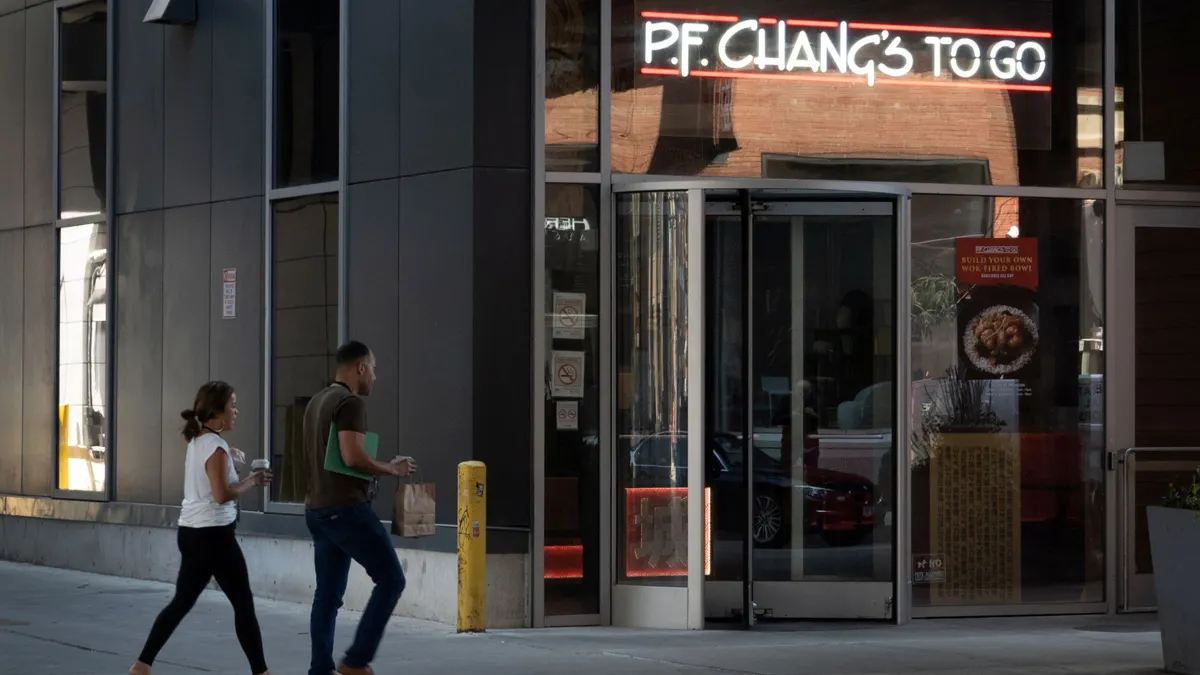
- 2023–2025: Optimization and Scale. The brand focused on refining its data inputs and utilizing the platform to drive efficiency in its "P.F. Chang’s To Go" expansion, which required a more agile approach to inventory distribution.
- 2026: The Renewal. With a proven track record of cost savings and operational stability, the two companies sign a multi-year extension, signaling a long-term commitment to deep-tech integration within the restaurant’s procurement strategy.
The Strategic Imperative: Why Data Matters
The decision to renew the contract is grounded in the necessity of data-backed decision-making. As Taylor Frendahl, senior director of supply chain at P.F. Chang’s, noted in the official press release: "Having total transparency into our contracts, pricing audits, and inventory pipeline allows our team to make proactive, data-backed decisions that safeguard our margins and keep our restaurants running smoothly. Extending this partnership was a natural choice as we continue raising the bar on supply chain performance."
Frendahl’s sentiment highlights a fundamental shift in the hospitality industry: the role of the supply chain executive has evolved into that of a data strategist. By leveraging cloud-based platforms, companies can move away from reactive crisis management toward predictive forecasting. This transition is essential for maintaining margins in a landscape where food costs remain historically elevated.

Industry Implications: The Tech-Forward Restaurant
P.F. Chang’s is not an outlier in its pursuit of technological solutions; it is part of a broader trend of "supply chain digitization" sweeping through the restaurant sector.
The Rise of AI and Predictive Analytics
Other major players are testing the limits of what software can achieve. Panda Express, for example, has been aggressive in its integration of software to forecast ingredient demand and manage supplier spending. Roland Ornelas, Chief Supply Chain Officer at Panda Restaurant Group, has been vocal about the potential for artificial intelligence to bridge the gap between disparate data sets. According to Ornelas, the future lies in "seeing how supply chain data, marketing data and operational data can all come together" to create a holistic view of the business.
Lessons from Market Pilots
However, the path to digital maturity is not without its pitfalls. The industry has witnessed notable failures, serving as a cautionary tale for those rushing to automate. Starbucks, for instance, recently garnered attention for piloting a 24-hour inventory replenishment model after abandoning an AI-driven inventory tool that proved unreliable in practice. The Starbucks experience serves as a reminder that even the most sophisticated technology is only as good as the accuracy of its data and its alignment with actual operational realities.
For P.F. Chang’s, the success of the ArrowStream partnership is likely attributed to its focus on foundational processes—contract compliance, invoice reconciliation, and basic stock visibility—rather than purely theoretical AI models. By securing these fundamentals, the brand has created a stable platform upon which it can build more complex analytical layers in the future.
Future Outlook: Navigating the Next Five Years
As we look toward the remainder of the decade, the P.F. Chang’s-ArrowStream partnership offers a template for how restaurant chains can insulate themselves from external market volatility. The implications for the sector are clear:

- Margin Protection is Paramount: As inflationary pressures persist, the ability to audit pricing and prevent contract slippage will be the difference between growth and contraction.
- Visibility as a Competitive Advantage: In an era of "just-in-time" inventory, the brand that knows exactly where its product is—and when it will arrive—wins the loyalty of the customer.
- The Human-Machine Hybrid: The most successful supply chains will be those that use software to automate the "drudge work" (auditing and reconciliation), freeing up human talent to focus on strategic supplier relationships and long-term menu planning.
The renewal of this partnership is a clear signal that P.F. Chang’s views its supply chain not as a cost center, but as a strategic asset. By maintaining deep visibility and operational discipline, the company is positioning itself to navigate the complexities of the 2026 market and beyond, ensuring that whether a customer is dining in or grabbing a meal "To Go," the consistency and quality of the P.F. Chang’s experience remain uncompromised.
As the industry continues to grapple with the "new normal" of supply chain instability, the P.F. Chang’s approach serves as a testament to the power of consistent, technology-enabled oversight. In the high-stakes game of global food service, the companies that thrive will be those that master the digital pipeline as effectively as they master their culinary craft.
