



Main Facts: A Decisive Milestone in the Electric Vehicle Era
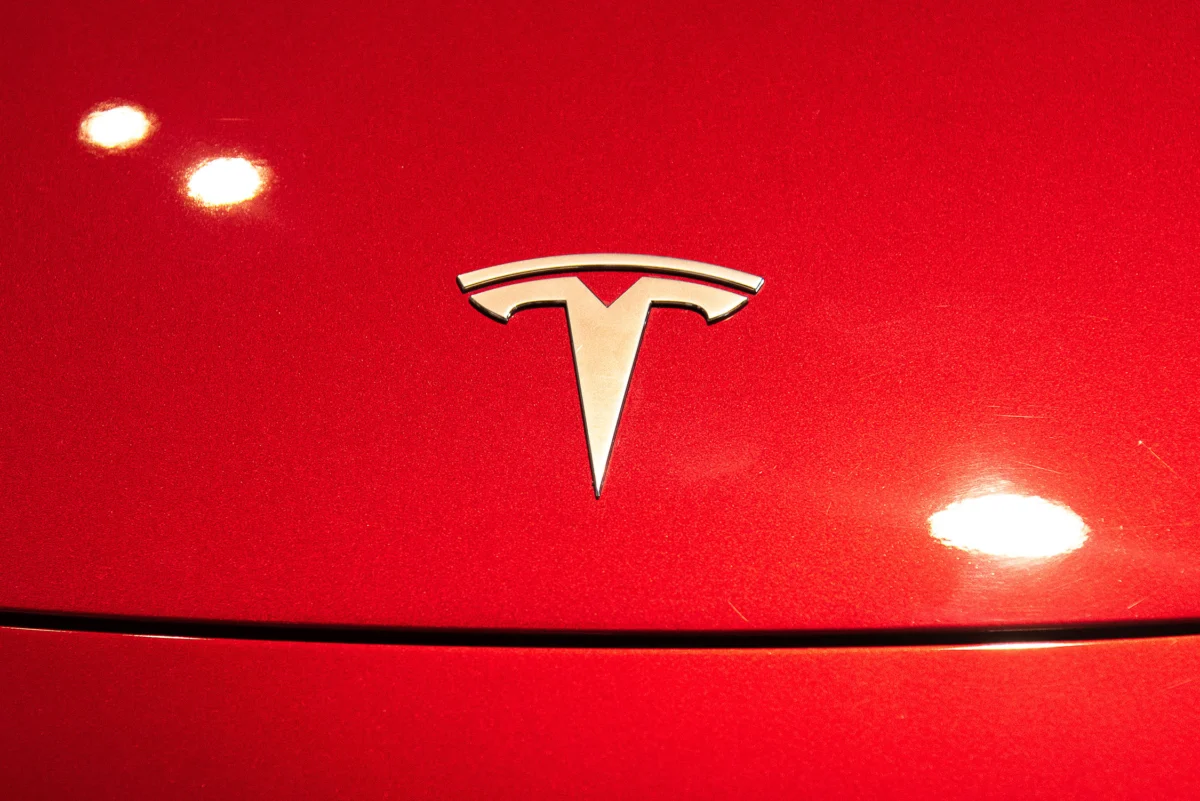
Tesla has officially manufactured its 10 millionth electric vehicle, marking a historic milestone for the company and the broader automotive industry. The achievement was quietly announced by the Austin, Texas-based automaker via a social media post early Thursday morning. This milestone highlights a remarkable period of industrial scaling, coming just six years after Tesla celebrated the production of its one millionth vehicle in March 2020.
Tesla Cumulative Production Milestones:
┌───────────────────────────┬──────────────┐
│ Milestone                 │ Date Achieved│
├───────────────────────────┼──────────────┤
│ 1st Vehicle (Roadster)    │ 2008         │
│ 1,000,000th Vehicle       │ March 2020   │
│ 10,000,000th Vehicle      │ Late 2026*   │
└───────────────────────────┴──────────────┘
*Based on recent quarterly disclosures and reporting timeline.
While the 10 millionth vehicle represents a triumph of manufacturing engineering, it also serves as a critical benchmark for the company’s executive leadership. Crossing this threshold puts Tesla exactly halfway toward reaching one of the four core "product goals" tied to CEO Elon Musk’s highly publicized $1 trillion compensation package, which was re-approved by shareholders last year. Under the terms of this performance-based pay structure, Musk must meet four highly ambitious product and financial operational goals by 2035 to unlock the full value of the compensation plan.
Despite the celebration, the milestone arrives during a challenging period for the pioneer of modern electric vehicles (EVs). Tesla is currently navigating a cooling global EV market, rising operational costs, and a significant strategic pivot toward artificial intelligence and autonomous robotics.
Chronology: The Decadelong Ascent to 10 Million Vehicles
Tesla’s journey to 10 million vehicles is a story of extreme industrial scaling, moving from a niche Silicon Valley startup to a global manufacturing powerhouse.
The Early Years and Niche Production (2008–2012)
Tesla’s automotive journey began in earnest in 2008 with the hand-built Tesla Roadster, a low-volume sports car based on a Lotus Elise chassis. Over four years, Tesla produced fewer than 2,500 Roadsters. The company’s true manufacturing era commenced in 2012 with the introduction of the Model S luxury sedan, built at the newly acquired Fremont Assembly plant in California—a former GM-Toyota joint venture facility.
The Model X and the "Production Hell" of the Model 3 (2015–2018)
The introduction of the Model X SUV in 2015 expanded Tesla’s lineup, but it was the 2017 launch of the mass-market Model 3 that nearly pushed the company to the brink of bankruptcy. Musk famously referred to the 2017–2018 period as "production hell," as the company struggled to automate assembly lines and scale battery pack production at Gigafactory Nevada. By late 2018, however, production stabilized, and the Model 3 became the best-selling electric car in the world.
The One Millionth Vehicle and Global Expansion (2020)
In March 2020, Tesla manufactured its one millionth vehicle—a red Model Y crossover—at its Fremont factory. This milestone coincided with the opening of Gigafactory Shanghai in China, Tesla’s first vehicle plant outside the United States. The Shanghai facility proved to be a turning point, allowing Tesla to bypass import tariffs and tap into the world’s largest electric vehicle market with unprecedented speed and efficiency.
Tesla Global Manufacturing Network:
• Fremont Factory (California, USA) — Original high-volume plant
• Gigafactory Nevada (USA) — Battery and powertrain production
• Gigafactory Shanghai (China) — High-volume export and regional hub
• Gigafactory Berlin-Brandenburg (Germany) — European production hub
• Gigafactory Texas (Austin, USA) — Corporate HQ and Cybertruck/Model Y production
Scaling to 10 Million (2020–Present)
Between 2020 and today, Tesla added two more vehicle assembly plants: Gigafactory Berlin-Brandenburg in Germany and Gigafactory Texas in Austin. Led by the massive global demand for the Model Y—which became the best-selling vehicle of any propulsion type globally—Tesla’s annual production run-rate surged from roughly 500,000 vehicles in 2020 to nearly 1.8 million vehicles. This rapid scaling compressed the timeline for manufacturing the next 9 million vehicles into just six years.
Supporting Data: The Anatomy of Musk’s Compensation Targets
While 10 million cumulative vehicles is an industry-defining figure, a closer look at the data reveals the steep hill Tesla must still climb to satisfy the board-mandated goals of Elon Musk’s compensation package and maintain its market premium.
The Four Product Goals (Target Date: 2035)
To fully vest the performance stock options under his pay package, Musk must guide Tesla to meet all of the following milestones by 2035:
- Cumulative Production: Build 20 million vehicles.
- FSD Subscriptions: Reach 10 million active, paying subscribers for the Full Self-Driving (FSD) software suite.
- Humanoid Robotics: Deliver 1 million "Optimus" bots.
- Autonomous Transit: Put 1 million dedicated robotaxis on public roads.
Progress Toward 2035 Compensation Milestones:
┌───────────────────────────┬─────────────────────┬─────────────────────┐
│ Metric                    │ Current Status      │ 2035 Target         │
├───────────────────────────┼─────────────────────┼─────────────────────┤
│ Cumulative Vehicles Built  │ 10 Million          │ 20 Million          │
│ Active FSD Subscribers    │ ~1.5 Million*       │ 10 Million          │
│ Humanoid Bots Delivered   │ Prototype Stage     │ 1 Million           │
│ Robotaxis on the Road     │ Prototype Stage     │ 1 Million           │
└───────────────────────────┴─────────────────────┴─────────────────────┘
*Includes promotional free trials; paid subscription baseline may be lower.
The Production and Sales Trajectory
While Tesla is halfway to the 20 million cumulative production target, its growth curve has flattened. Despite years of exponential growth driven by the Model 3 and Model Y, Tesla has yet to surpass 2 million deliveries in a single calendar year.
If Tesla’s annual sales remain plateaued at or near the current run-rate of approximately 1.8 million vehicles per year, it will take the company until at least the early 2030s to hit the cumulative 20 million mark. This stands in stark contrast to Musk’s earlier, more aggressive forecast that Tesla would produce 20 million vehicles annually by 2030—a projection the CEO quietly abandoned as global EV demand began to soften.
Financial Health and EBITDA Compression
The financial metrics required by the compensation package present an even steeper challenge. Musk must grow Tesla’s adjusted Earnings Before Interest, Taxes, Depreciation, and Amortization (EBITDA) to $400 billion by 2035.
Currently, Tesla’s adjusted EBITDA hovers around $3.27 billion and has shown signs of contraction. This downward pressure on profitability is driven by three primary factors:
- Aggressive Price Cuts: To maintain volume leadership, Tesla has repeatedly discounted its aging vehicle lineup globally.
- Regulatory Credit Decline: As traditional automakers scale their own EV offerings, the highly lucrative market for regulatory credits is slowly evaporating.
- Capital-Intensive R&D: Tesla has dramatically increased capital expenditure on artificial intelligence clusters, Dojo supercomputers, and robotics development.
Market Dynamics: Domestic Slump vs. Global Diversification
In its home market, Tesla is experiencing headwinds. In the second quarter, Tesla’s U.S. sales declined by 13% year-over-year. To compensate for this domestic slowdown, the company has had to aggressively court buyers in newer, less-saturated international markets, including Japan, Australia, and Lithuania.
The Competitive Landscape: Tesla vs. BYD
In the global electrification race, Tesla’s primary challenger is China’s BYD. BYD recently announced it had built and sold its 17 millionth "New Energy Vehicle" (NEV). However, a key distinction remains: approximately half of BYD’s cumulative sales consist of plug-in hybrid electric vehicles (PHEVs), whereas Tesla’s 10 million vehicles are entirely battery-electric vehicles (BEVs).
Official Responses and Corporate Commentary
Tesla’s official announcement of the 10 millionth vehicle was characteristically lean, delivered directly to consumers and investors via the company’s official social media channel on X (formerly Twitter). The company expressed gratitude to its global workforce and customer base, stating:
"Thank you to all of our owners and team members around the world who helped us reach 10 million vehicles built!"
Elon Musk amplified the post, congratulating the manufacturing teams across Tesla’s global gigafactories.
However, the corporate narrative surrounding Tesla’s future has shifted dramatically over the past 18 months. During earnings calls and product demonstrations, Musk and other high-ranking executives have increasingly de-emphasized pure automotive volume in favor of autonomy and AI.
When questioned by institutional investors about the abandonment of the 20-million-annual-vehicle target by 2030, Musk has consistently pivoted to the long-term value of autonomous driving. "The value of Tesla is overwhelmingly autonomy," Musk stated during a recent quarterly update. "If you solve autonomy, the scale of the company is unlike anything we’ve ever seen before."
Tesla’s Board of Directors has remained firm in its support of the performance targets laid out in Musk’s compensation package. In proxy statements, the board has argued that the targets—while seemingly impossible to many traditional analysts—are designed to incentivize the kind of "first-principles thinking" and extreme engineering required to transform Tesla from a car company into an AI and robotics powerhouse.
Implications: The Pivot from Automaker to AI Powerhouse
The attainment of the 10 millionth vehicle, combined with the structural challenges of reaching the next 10 million, carries profound implications for Tesla, its investors, and the broader automotive landscape.
Strategic Shifts in Tesla's Business Model:
┌──────────────────────────────────────┬──────────────────────────────────────┐
│ Traditional Focus (2012–2023)        │ Emerging Focus (2024–2035)           │
├──────────────────────────────────────┼──────────────────────────────────────┤
│ High-volume consumer EV manufacturing│ Autonomous ride-hailing networks     │
│ Battery chemistry & cell scaling     │ AI compute clusters & Dojo hardware  │
│ Global retail & Supercharger expansion│ Humanoid robotics (Optimus)          │
│ Automotive gross margins             │ FSD software licensing & SaaS models │
└──────────────────────────────────────┴──────────────────────────────────────┘
The Transition to an AI and Robotics Valuation
Tesla’s current stock market valuation dwarfs that of all other global automakers combined. This premium is not supported by its current automotive margins, which have been compressed by price wars. Instead, Wall Street is valuing Tesla as a technology platform.
To justify this valuation and unlock the remaining milestones of Musk’s pay package, Tesla must successfully execute a high-risk transition from a pure-play automaker to an AI powerhouse. The capital previously allocated to developing a cheaper, $25,000 next-generation consumer vehicle has largely been redirected toward the development of the "Cybercab" (a dedicated robotaxi) and the Optimus humanoid robot.
The Autonomous Driving Hurdle
Tesla’s path to 10 million active FSD subscribers remains highly uncertain. While the company recently reported just under 1.5 million FSD users, this figure includes promotional free trials. Translating temporary trial users into permanent, high-margin monthly subscribers is a significant hurdle, particularly as regulatory scrutiny of Tesla’s Autopilot and FSD systems intensifies in both North America and Europe. Furthermore, the commercial deployment of a robotaxi fleet faces a complex patchwork of state and federal regulatory frameworks that could delay widespread monetization for years.
The Changing Competitive Moat
For years, Tesla’s primary competitive advantage was its superior manufacturing scale and battery supply chain. However, as the global EV market matures, this moat is shifting.
- In the United States: Major legacy automakers like General Motors and Ford have scaled back their immediate EV targets, choosing instead to focus on highly profitable internal combustion and hybrid vehicles. Startups like Rivian and Lucid Motors continue to struggle with high capital burn rates and have yet to achieve the economies of scale necessary for profitability. This leaves Tesla with a temporary competitive vacuum in the premium domestic EV space.
- Globally: The competitive threat from Chinese manufacturers—most notably BYD, Geely, and Xiaomi—remains acute. These companies benefit from highly integrated local supply chains and lower labor costs, allowing them to produce advanced EVs at price points Tesla has struggled to match without sacrificing its margins.
Conclusion: The Road to 20 Million
Manufacturing 10 million pure electric vehicles is an undeniable milestone that cements Tesla’s place in industrial history. Yet, as the company enters its next phase of growth, the metrics of success are changing. The road to the next 10 million vehicles, and the realization of Elon Musk’s $1 trillion operational targets, will not be won simply by building more factories. Instead, it will depend on whether Tesla can successfully commercialize the unproven technologies of autonomous ride-hailing and humanoid robotics in an increasingly competitive global market.
