



Across the United States, a seismic shift in public finance is underway. Driven by a volatile mix of soaring home valuations, persistent inflation, and a populist push for tax reform, state legislatures and citizen-led initiatives are increasingly moving to curb or entirely eliminate local property taxes. While proponents argue these measures provide essential relief to homeowners squeezed by rising costs, municipal leaders are sounding a desperate alarm. They warn that the erosion of this primary revenue stream threatens to paralyze essential services, stymie local economic growth, and force a chaotic restructuring of how American cities function.
The Landscape of the Movement
The current fiscal landscape is defined by a tension between taxpayer relief and government solvency. From Florida to Oklahoma, and Tennessee to North Carolina, the November ballot will feature a slate of measures designed to constrain local taxing authority.
In Florida, voters are preparing to decide on a constitutional amendment that would substantially increase homestead exemptions, effectively shielding a larger portion of property value from taxation. In Oklahoma, a citizen initiative aiming to eliminate homestead property taxes entirely is currently awaiting a state Supreme Court decision to determine its eligibility for the ballot. Meanwhile, North Carolina and Tennessee are pursuing measures to limit legislative power regarding property tax increases or to prohibit state-level property taxes altogether.
This wave of reform is not an isolated phenomenon. According to the National Association of Counties (NACo), between 2020 and 2025, 34 states enacted legislative actions that slashed local property tax revenues by a combined $12 billion annually. For local governments, which rely on property taxes for roughly 70% of their tax revenue, these cuts represent an existential threat to their fiscal stability.
Chronology of a Fiscal Conflict
The roots of the current crisis can be traced back to the post-pandemic housing boom. Between 2020 and 2024, the average sales price of a U.S. home climbed from approximately $371,100 to over $525,100. Because property values rose roughly 27% faster than the rate of inflation, local jurisdictions that did not proactively lower their millage rates saw a windfall in tax revenue.
This rapid appreciation sparked an immediate political backlash. In May 2026, Iowa Governor Kim Reynolds signed legislation capping local government revenue growth at 2% annually, a direct response to a 10% surge in property tax collections over the preceding two years.
This legislative trajectory has set the stage for the upcoming November elections, where property tax policy has transformed from a routine administrative concern into a high-stakes partisan battleground. The trend is moving rapidly toward “revenue-neutral” or “revenue-restricted” models, effectively decoupling city funding from property market performance.
Supporting Data: The Backbone of Local Finance
The Tax Foundation, in a comprehensive 2025 analysis, identified property taxes as the “primary tool for financing local governments.” Unlike sales or income taxes, which fluctuate with economic cycles, property taxes have historically provided a predictable, stable foundation for municipal budgeting.
However, the rapid escalation of home prices has created a "bracket creep" effect in real estate. As the Tax Foundation noted, in jurisdictions where governments failed to adjust their tax rates downward as valuations skyrocketed, homeowners faced staggering year-over-year tax hikes. This structural imbalance provided the fuel for the current political fire.
Yet, the data also highlights the danger of abrupt reform. Municipalities that lose the ability to capture property wealth are finding their credit ratings, their ability to fund public safety, and their capacity to maintain basic infrastructure severely compromised. The $12 billion in lost revenue cited by NACo is not merely a line-item adjustment; it is the equivalent of defunding entire departments across thousands of counties nationwide.
Official Responses: Voices from the Frontlines
For mayors and city commissioners, the rhetoric of "tax relief" often masks the grim reality of "service reduction."
Lauderhill, Florida: The Burden of Public Safety
In Lauderhill, Florida, Commissioner Melissa Dunn is bracing for a potential loss of $8 to $10 million in revenue beginning in fiscal year 2028 if the state’s proposed constitutional amendment passes. For a city of 75,000, this is not a rounding error—it is a significant portion of the general fund.
"The question voters are going to have to answer is what services are they going to cut, or what fees are we going to have to raise?" Dunn said. She noted that with $41.1 million already earmarked for public safety—including $35 million for police—the city has little room to maneuver. "We are seeing a convergence of factors: potential revenue losses alongside rising needs for social services, including Medicaid and SNAP support for our most vulnerable residents."
Moore, Oklahoma: The Infrastructure Stagnation
In Moore, Oklahoma, Mayor Mark Hamm faces a different, yet equally daunting, challenge. Because Oklahoma is the only state where property taxes are restricted to voter-approved initiatives, cities like Moore depend on these funds for capital improvements.
"People think cities are rolling in the dough, but if we do away with property taxes, the money has to come from somewhere," Hamm explained. For Moore, property tax is the engine that builds parks and repairs roads. "If we want to rebuild a road that costs $5 million, we have to ask voters for property tax funding. If that source disappears, our ability to perform basic capital maintenance effectively dies."
Altoona, Iowa: The Economic Growth Paradox
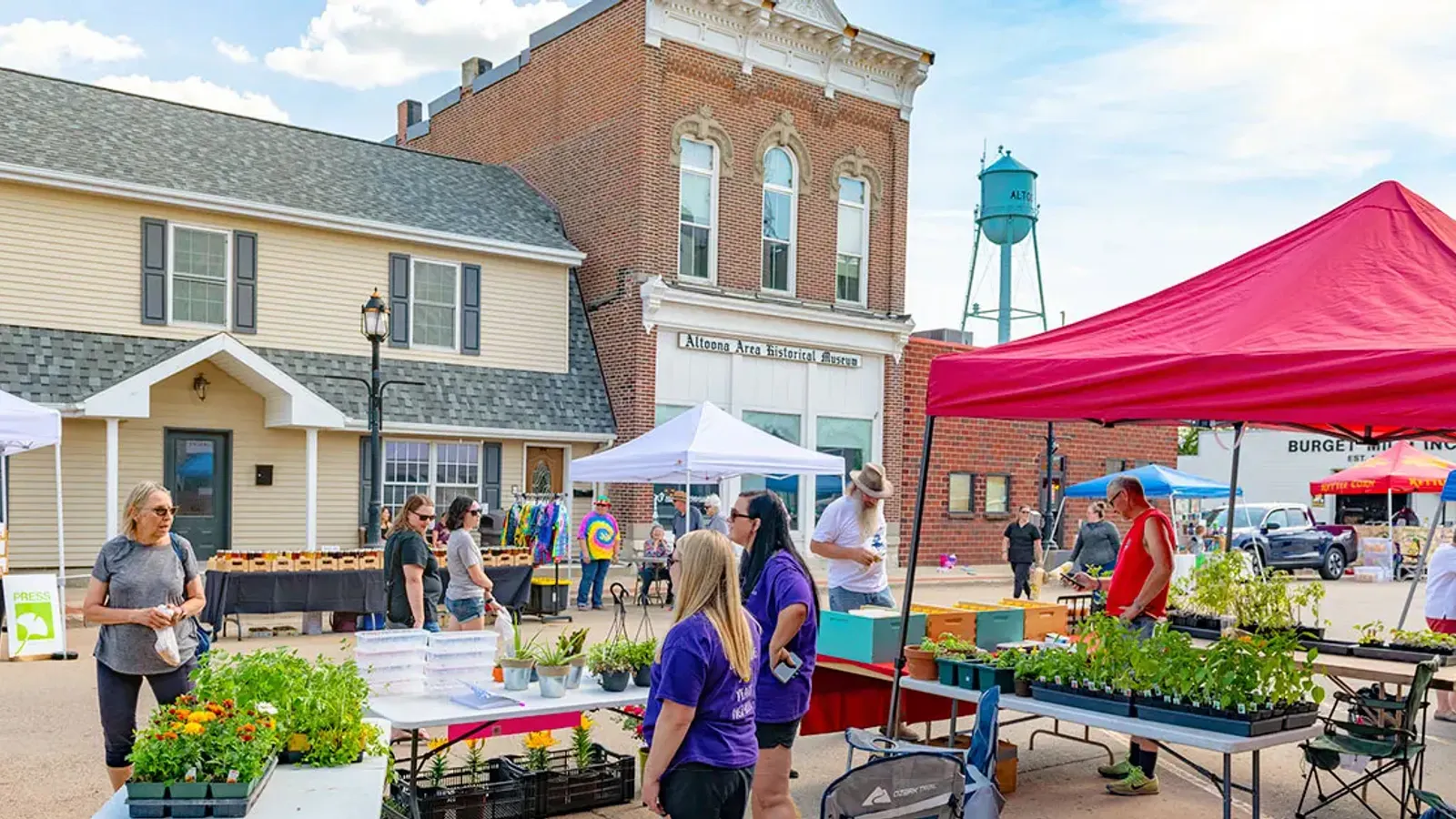
Perhaps the most vocal critic of the new fiscal constraints is Mayor Dean O’Connor of Altoona, Iowa. O’Connor argues that the state’s 2% revenue growth cap is self-defeating.
"The state is telling us that if we grow at 6, 8, or 10%, we only get to keep 2%," O’Connor said. "Why would I offer incentives to bring a business to town if the revenue isn’t allowed to support the infrastructure that business requires? It sends a message to site selectors that we are closed for business."
Altoona’s dilemma is compounded by long-term planning. The city entered into 20-year tax abatements with major tech firms like Meta, banking on the eventual influx of property tax revenue to offset development costs. The state’s new law, in O’Connor’s view, undermines the city’s ability to honor those long-term fiscal strategies.
Implications: A Future of Austerity?
As November approaches, the implications of these tax measures extend far beyond the ballot box. If the current trend toward restricting property tax revenue continues, the landscape of local governance in America will likely undergo three fundamental shifts:
- The Privatization of Public Services: As municipal budgets shrink, cities will be forced to outsource public services to private contractors or implement "pay-to-play" models for parks, recreation, and sanitation. This will inherently increase the cost of living for residents who previously accessed these services through general taxation.
- The Stagnation of Infrastructure: Without the ability to issue reliable general obligation bonds backed by property taxes, cities will struggle to fund large-scale infrastructure projects. This could lead to a multi-generational decay in public roads, bridges, and utilities.
- Regional Inequality: Wealthier cities may be able to offset tax losses through high-end commercial development or existing reserve funds, while smaller or lower-income municipalities—like Lauderhill—may face a "death spiral" of service cuts, declining home values, and further revenue loss.
Ultimately, the debate over property taxes represents a deeper disagreement about the role of local government. Proponents of tax elimination argue that the market, not the government, should dictate the distribution of wealth. Opponents, like O’Connor, Hamm, and Dunn, argue that local government is the bedrock of community stability.
As cities look toward the 2028 fiscal year, they are not just preparing for budget cuts; they are preparing for a new, uncertain era of municipal austerity. Whether voters will prioritize immediate tax relief over the long-term health of their local infrastructure remains the central question of the 2026 election cycle. The outcome will set the course for American cities for decades to come.
