





In the annals of agricultural machinery, few stories are as compelling as the ones that never quite found their audience. Today, the world of farming is increasingly dominated by GPS-guided precision, autonomous swarm robotics, and AI-driven crop monitoring. Yet, forty years ago, one manufacturer was already planting the seeds of this high-tech future.
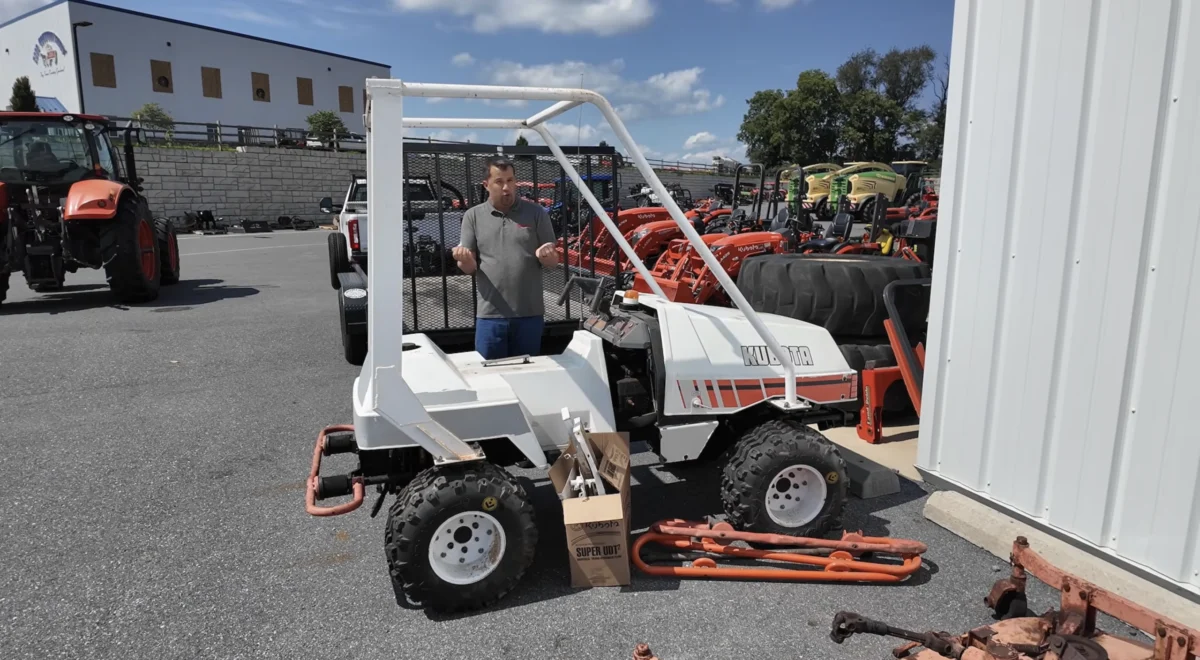
The machine in question is the Kubota PX-2100, a tractor that looked as if it had been plucked from a 1980s science fiction production. While the modern consumer might view a remote-controlled tractor as a niche convenience, the PX-2100 was a revolutionary, if misunderstood, attempt by Kubota to push the boundaries of mechanical engineering. It remains a fascinating "what-if" in the history of industrial automation.
Main Facts: A Glimpse into the 1980s Future
The Kubota PX-2100 was a compact tractor that defied the conventional design language of its era. Beyond its striking, futuristic aesthetic, the machine was defined by its "fly-by-wire" control system. Unlike the standard mechanical linkages found in every other tractor on the market in the 1980s, the PX-2100 utilized electronic signals to relay commands from the operator to the machine’s critical systems.
At the heart of its innovation was the remote-control capability. Using a handheld transmitter, an operator could maneuver the tractor from a distance of up to 100 meters. This was not merely a gimmick; it was intended to allow farmers and municipal workers to navigate hazardous, steep, or tight terrain where placing a human in the cab posed a genuine safety risk.
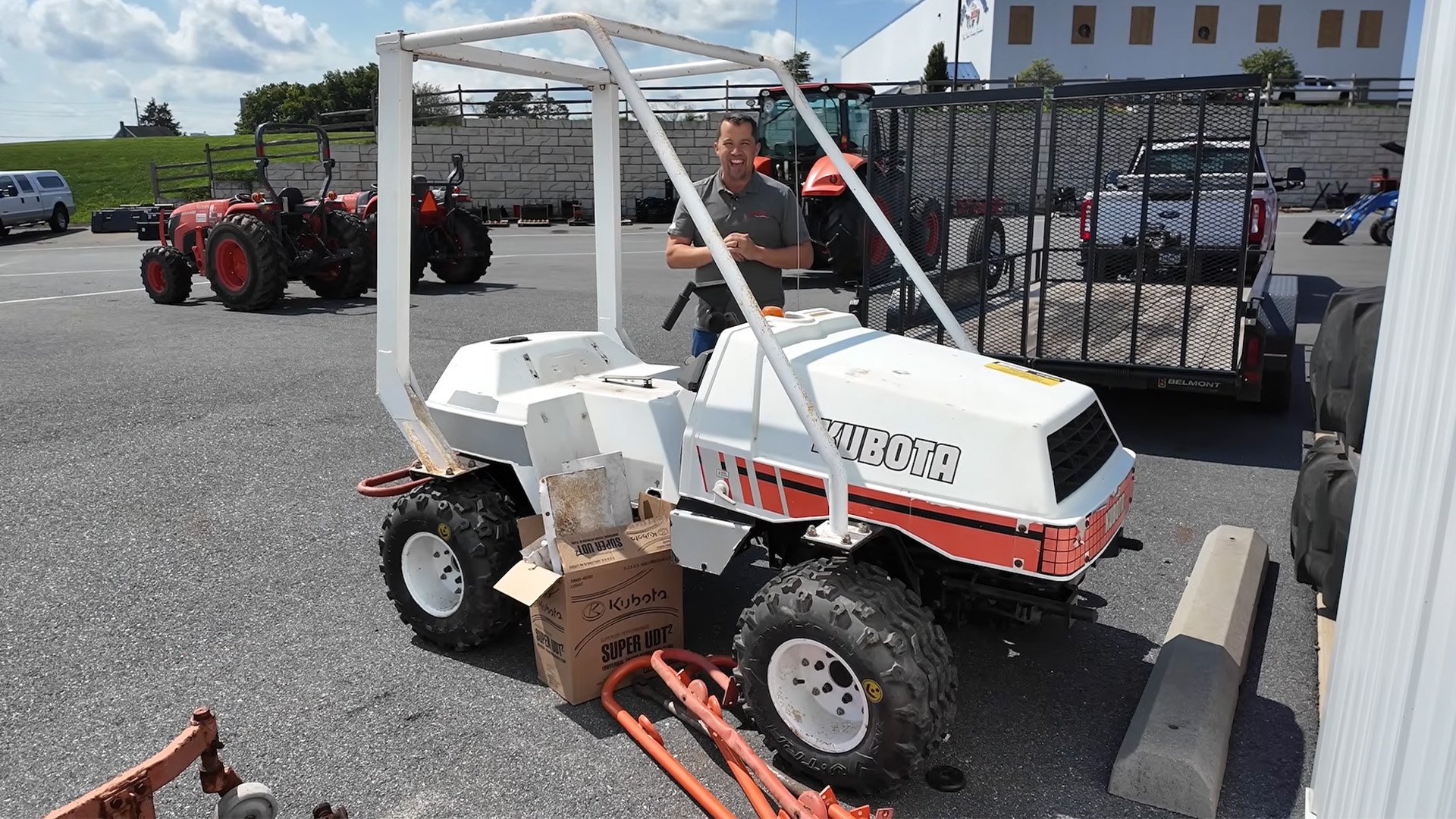
To achieve this level of agility, Kubota equipped the PX-2100 with four-wheel steering and a "crab-walk" capability. This allowed the tractor to maneuver sideways or navigate tight corners with a precision that was unheard of for a machine of its size. When paired with a hydrostatic transmission—a technology that was still gaining a foothold in the compact tractor segment—the PX-2100 represented a bold leap forward in usability and mechanical sophistication.
A Chronology of the PX-2100
The history of the PX-2100 is as elusive as the machine is rare. During the 1980s, Kubota was still establishing itself as a significant player in the North American market, moving beyond the image of a small-equipment manufacturer to a powerhouse of innovation.
- Mid-1980s: Development and release of the PX-2100. It was positioned as a high-end, specialized tool for government and municipal maintenance.
- Late 1980s: Market reception remains muted. High manufacturing costs and the intimidating complexity of the electronics led to limited production runs. The machine essentially disappeared from the public eye as it was relegated to niche use cases or private collections.
- 2022: A rare glimpse into the past occurred when B&T MacFarlane Equipment showcased a fully restored PX-2100 (Serial Number 00001) on social media, proving that these machines had not all been consigned to the scrapyard.
- 2026: Agricultural historian and enthusiast Neil Messick, of the renowned Messick’s Farm Equipment, highlights the rarity of the PX-2100 in a feature video, sparking renewed interest in the model’s restoration and preservation.
Supporting Data: Costs and Specifications
To understand why the PX-2100 was a commercial outlier, one must look at the financial and technical data of the time.
The Financial Barrier
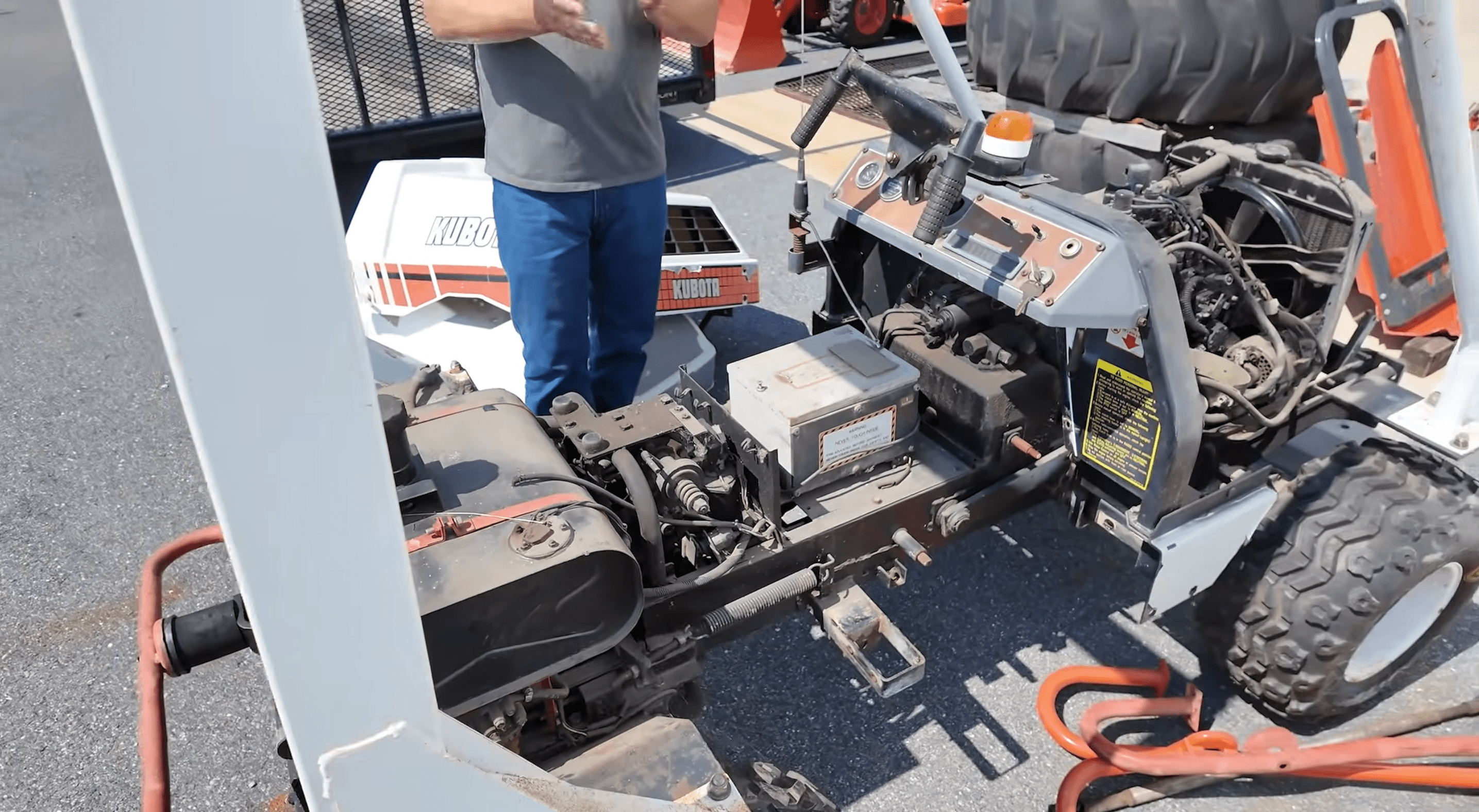
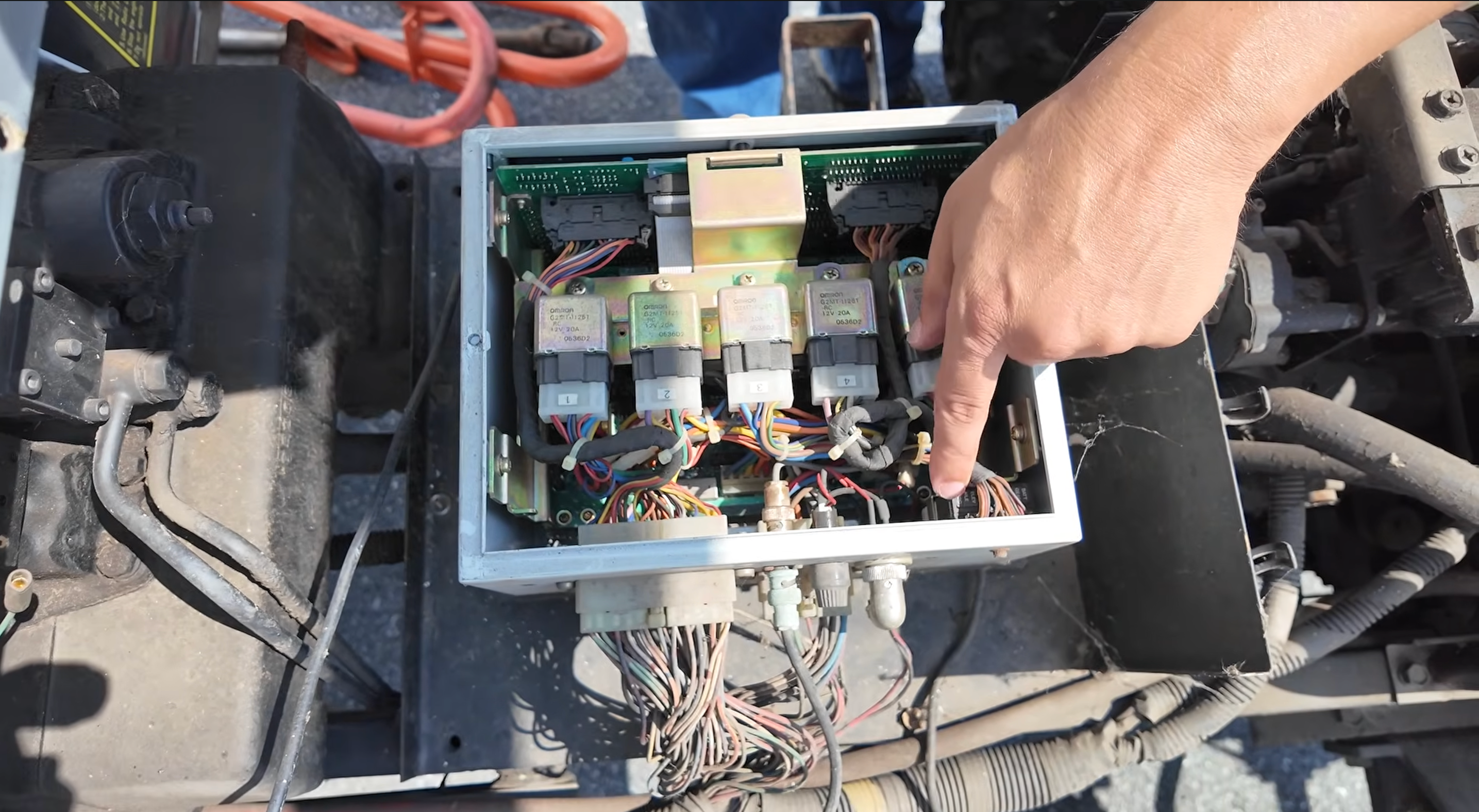
The PX-2100 carried an initial price tag of approximately $22,000 in the mid-1980s. When adjusted for inflation, that equates to nearly $75,000 today. For a 20-horsepower machine, this was an eye-watering investment. Farmers of the era were notoriously practical; they were accustomed to machines that could be repaired with a wrench, a hammer, and a basic understanding of internal combustion. The PX-2100, with its complex electronic control box—a labyrinth of wiring hidden beneath the seat—was perceived not as a time-saver, but as a maintenance nightmare.
Technical Specifications
- Engine: A robust, albeit standard, 20-horsepower, three-cylinder diesel engine.
- Transmission: Hydrostatic drive, allowing for smooth acceleration and direction changes without the need for traditional gear shifting.
- Steering: Fully electronic, four-wheel steering with crab-walk mode.
- Interface: A steering yoke replaced the traditional steering wheel, underscoring the "space-age" design philosophy.
- Operation: Remote control range of 100 meters via radio frequency.
Official Responses and Industry Reception
The industry’s reaction to the PX-2100 was a mixture of fascination and skepticism. Municipalities, the primary target demographic for the tractor, were intrigued by the potential for mowing steep embankments and roadside ditches remotely. However, the lack of widespread dealer support for such advanced electronics meant that if the system failed, the tractor effectively became a stationary object.
Neil Messick, in his professional assessment of the machine, highlights the cultural divide between the technology and the user base. "This tractor came to life when Kubota was still new to the U.S. market," Messick notes. His ongoing efforts to restore a PX-2100 represent an attempt to bridge the gap between 20th-century history and modern agricultural curiosity. He has actively reached out to the enthusiast community, hoping to source original documentation and spare parts to bring these rare units back to life.
The Implications: Why It Matters Today
The PX-2100 is more than a vintage oddity; it is a case study in "premature innovation." In the 1980s, the infrastructure for supporting electronic, remote-operated equipment simply did not exist at the local dealer level. Today, however, we live in an era where firmware updates, sensor calibrations, and remote diagnostics are standard parts of the agricultural experience.
The Evolution of Autonomy
The PX-2100 effectively predicted the rise of the autonomous tractor. While current market leaders focus on GPS-based autonomy for large-scale field work, the PX-2100 was designed for the specific, tactile problems of the municipal operator. It prioritized safety and maneuverability in confined spaces—a challenge that modern robotic companies are still solving today.
The Lesson of Repairability
The fear expressed by 1980s farmers regarding the "headache" of the PX-2100’s wiring is a sentiment that has only grown stronger in the modern "Right to Repair" movement. As modern tractors become increasingly digitized, the complexity that doomed the PX-2100 has become the industry standard. The PX-2100 serves as a reminder that technological advancement must be balanced with the ability to maintain and repair the machines that feed the world.
Conclusion: A Legacy Resurrected
The Kubota PX-2100 may not have revolutionized farming in the 1980s, but it remains a vital chapter in the story of agricultural technology. It was a bold, expensive, and brilliantly complex attempt to remove the operator from the cab long before the rest of the world was ready to follow.
Today, as enthusiasts like Neil Messick work to restore these machines, we are reminded that innovation is rarely a straight line. Sometimes, the most important inventions are the ones that arrive a few decades too early. The PX-2100 stands as a testament to Kubota’s early ambition—a reminder that the future of farming was being written in the heart of the 1980s, one remote-controlled turn at a time.
If you have information regarding the history of the PX-2100 or, better yet, possess a service manual or components for one, the preservation community is eager to hear from you. After all, machines this unique deserve to be remembered, if not for their commercial success, then for their audacious vision of the future.
