





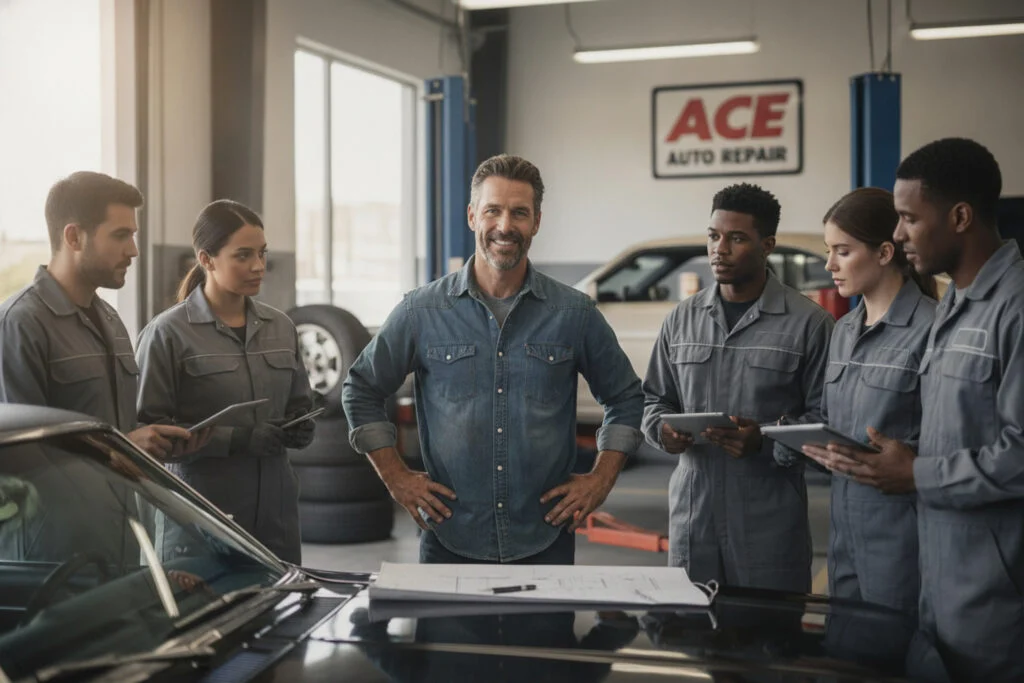
The independent auto repair industry stands at a critical crossroads. While the demand for skilled vehicle maintenance remains robust, a pervasive leadership crisis is silently undermining the long-term viability of thousands of shops across North America. According to industry experts, the primary obstacle isn’t a lack of tools, technology, or customers; it is a fundamental identity crisis among shop owners who remain tethered to the workbench when they should be at the helm of the business.
At the recent AIA Canada National Conference, Murray Voth, president of RPM Training, delivered a sobering assessment of the sector: many independent repair shops are hitting a "growth ceiling" created not by market conditions, but by the owners themselves. For these entrepreneurs, the transition from being the "best technician in the shop" to being a "strategic business leader" is a psychological hurdle that many never successfully clear.
The Core Conflict: Identity and Emotional Tethering
The fundamental issue, as identified by Voth, is the emotional and operational attachment owners maintain toward the day-to-day repair process. Many shop owners launched their businesses because they were exceptionally gifted mechanics. However, this technical prowess often becomes a double-edged sword.
"You can’t leverage a shop if you think you’re the best technician," Voth told delegates. When an owner views the business through the lens of a mechanic rather than an operator, every decision becomes tainted by the desire to stay "in the weeds." This leads to a common, albeit fatal, management error: the refusal to delegate.
The Myth of the Indispensable Mechanic
Many owners harbor the belief that they are the only ones capable of solving complex diagnostic problems or handling high-stakes customer interactions. By hoarding these responsibilities, they effectively stifle the professional growth of their staff. When an owner insists on being the "hero" who fixes every difficult car, they inadvertently signal to their team that they do not trust the technicians they have hired to do the job.
This creates a culture of dependency where the shop’s success is limited by the owner’s physical capacity to turn a wrench. It also creates a bottleneck: if the owner is busy under the hood, they are not reviewing financial reports, optimizing workflow, or planning for future expansion.
Chronology of a Management Crisis
The trajectory of a failing shop often follows a predictable pattern, moving from technical success to operational stagnation.
- The Startup Phase: The technician-turned-owner works 80-hour weeks. Their technical skill brings in customers, and the business grows rapidly.
- The "Busy" Plateau: As the shop grows, the owner reaches a limit. They are fully booked with repairs but have no time for administrative tasks. Profit margins begin to stagnate because the owner is too busy fixing cars to focus on pricing, marketing, or overhead management.
- The Leadership Vacuum: The shop reaches a size where staff management becomes necessary. The owner, uncomfortable with the "soft skills" of leadership, avoids staff meetings and performance reviews.
- The Attrition Phase: Skilled technicians, sensing a lack of direction, clear vision, or professional development, leave for more structured, better-managed shops.
- The Operational Crisis: The shop begins to lose its reputation for quality and speed. The owner, exhausted and overwhelmed, blames the "labor shortage" rather than their own inability to lead.
Supporting Data: The Anxiety of Leadership
The discomfort that shop owners feel in management roles is not merely anecdotal; it is a widespread professional phenomenon. Voth noted that between 80% and 90% of the shop owners he encounters experience genuine anxiety at the prospect of conducting a formal staff meeting.
The Cost of Poor Onboarding
This fear of leadership often manifests in a "sink or swim" approach to staff development. Rather than implementing a structured onboarding program, many shops rely on "learning by osmosis"—expecting new hires to simply observe and replicate the owner’s habits. This lack of formal process leads to:
- Inconsistent quality: Different technicians repair vehicles in different ways.
- Safety risks: Without clear, documented protocols, shortcuts become the norm.
- High turnover: Talented technicians want to work in an environment where they have a roadmap for advancement. When that roadmap is missing, the best talent leaves.
The Financial Toll of Emotional Decisions
Emotional attachment to the business also translates into poor financial stewardship. Owners who are too close to their customers often lack the professional distance to enforce standard policies. When a client asks for a discount, an "owner-mechanic" might grant it out of a misplaced sense of personal obligation or fear of conflict.
"They fall for the begging for a discount," Voth explained. A professional business owner understands that a shop has a defined value proposition. "You have to be able to say, ‘This is what we do,’" rather than negotiating away the profit margins necessary to keep the business solvent.
Official Responses and Industry Insight
The sentiments shared by Voth at the AIA Canada conference reflect a growing consensus among industry consultants. The modern auto repair shop is no longer just a garage; it is a high-tech facility requiring advanced diagnostic software, complex customer relationship management (CRM) systems, and sophisticated human resources strategies.
Industry observers argue that the role of the owner must shift entirely toward "working on the business" rather than "working in the business." This includes:
- Strategic Planning: Setting annual goals for revenue, customer satisfaction, and equipment investment.
- Performance Management: Creating a culture of accountability where staff meetings are not just tolerated, but leveraged to build team morale and improve shop efficiency.
- Professional Development: Mentoring staff so that the shop is not reliant on the owner’s technical skills to survive.
Implications: The Path to Long-Term Stability
The implications of failing to bridge this leadership gap are severe. In an era where vehicle technology is changing rapidly—with the rise of electric vehicles (EVs) and Advanced Driver Assistance Systems (ADAS)—a shop that is managed by an owner who is "too busy fixing cars" to stay current with industry trends will eventually become obsolete.
Creating a Successful Culture
The most successful shops in the country share a common trait: they provide a sense of stability. "People want to work in a place that’s successful," Voth noted. "There’s a clear directive there. People feel safe working there."
When an owner steps into the role of a leader, they provide the "clear directive" that employees crave. A shop with a strong leadership structure attracts better technicians, retains them longer, and justifies higher labor rates because the operation is professionalized.
The "Owner-First" Mindset
The shift requires a radical change in self-perception. Even in smaller shops where the owner must still perform some mechanical work, they must start their day as an owner. This means addressing administrative priorities before picking up a wrench. It means setting boundaries with customers, standardizing the shop’s service processes, and treating the business as an asset that should be able to run—and even profit—without the owner’s constant presence under a vehicle.
Conclusion
The "technician’s trap" is a silent killer of independent businesses. It turns talented craftsmen into overworked, anxious, and underpaid managers. However, as Murray Voth and other industry leaders suggest, the path out of this trap is clear: formalize, delegate, and lead.
By separating their personal identity from their role as a business operator, shop owners can move from being the most valuable technician on the floor to being the architect of a sustainable, profitable, and scalable enterprise. The transition is not easy, and it requires overcoming deep-seated professional habits, but for the independent shop owner, it is the only way to ensure the business survives—and thrives—in a competitive and evolving automotive landscape.
