




By Dan Zukowski | August 19, 2026
In a significant push to modernize urban infrastructure and curtail the rising tide of roadway fatalities, the Utah Department of Transportation (UDOT) has announced a major technological expansion. The agency has officially awarded a multi-million-dollar contract to traffic management leader Econolite to deploy advanced lidar-based sensor technology across 160 intersections statewide.
This initiative, which utilizes the high-resolution digital lidar sensors produced by Ouster, represents a shift from traditional, rigid traffic signal timing toward a dynamic, intelligence-driven approach. By creating an "eyes-on-the-street" network, Utah is positioning itself at the forefront of the Smart Cities movement, aiming to prioritize the lives of the most vulnerable road users: pedestrians, cyclists, and those utilizing personal mobility devices.
The Core Objective: Protecting Vulnerable Road Users
For years, traffic signals have operated largely on pre-programmed loops—fixed durations that fail to account for the chaotic, unpredictable nature of human movement. A child crossing slowly, a wheelchair user navigating an intersection, or a group of cyclists arriving at a light all face risks when signals do not adapt to their presence.
UDOT’s commitment to safety is data-driven. In 2024 alone, the state recorded 883 crashes involving pedestrians. A sobering analysis of a six-year period by the department revealed that 20% of all pedestrian-involved collisions resulted in either fatal or serious, life-altering injuries. Furthermore, 2024 saw nearly 600 bicyclists involved in roadway collisions, alongside 150 incidents involving people on skates, scooters, or in wheelchairs.
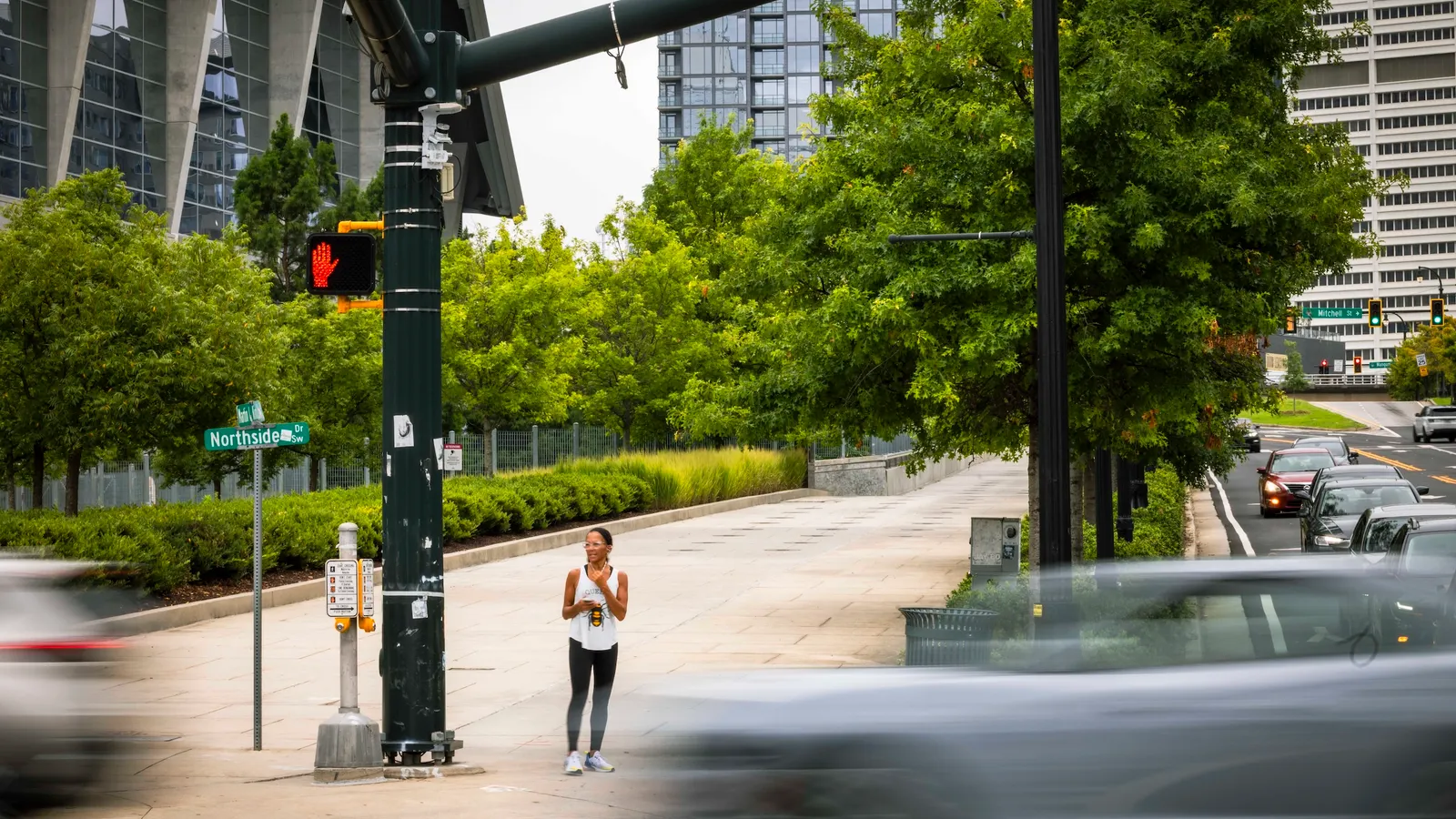
"Lidar can generate real-time detection, classification, and tracking of pedestrians and cyclists," explains Asad Lesani, Vice President of Global Intelligent Transportation Systems (ITS) Solutions at Ouster. By utilizing Ouster’s color lidar sensors—which provide a 360-degree field of view and can detect objects up to 500 feet away—the system acts as a digital guardian, enabling traffic signals to respond to the reality on the ground rather than a static clock.
Chronology of Innovation: From Pilot to State-Wide Strategy
The road to this state-wide deployment has been paved with incremental successes and careful evaluation.
- 2024 (The Baseline): Following a year of high incident rates, UDOT began evaluating the efficacy of smart sensor technology to mitigate the risks associated with urban congestion and signal timing.
- 2025 (The Foundation): UDOT and Econolite established an initial agreement covering over 100 intersections. This trial period allowed engineers to fine-tune the integration of Ouster’s sensors with Econolite’s existing hardware, which includes traffic control cabinets, signal controllers, and proprietary software.
- August 2026 (The Expansion): Building on the success of the 2025 pilot, the multi-million-dollar expansion was finalized, targeting an additional 160 intersections. This phase aims to address the most high-traffic and high-risk corridors across the state.
- Q4 2026 (Implementation): According to Lesani, the supply and installation phase is scheduled to begin in the fourth quarter of 2026, marking the start of a massive infrastructure upgrade that will be felt by commuters and pedestrians alike.
Supporting Data and Technological Implications
The technological backbone of this project—Lidar (Light Detection and Ranging)—functions by bouncing laser light off objects to create a highly accurate, three-dimensional point cloud of the environment. Unlike traditional cameras, which can struggle with low light, glare, or privacy concerns, lidar offers a precise, privacy-preserving way to track movement.
Dynamic Signal Timing
One of the most profound benefits of this technology is the ability to personalize intersection timing. Currently, many intersections operate on a "fixed-duration" model. If a pedestrian is still in the crosswalk when the signal changes, they are placed in danger. Conversely, if a crosswalk is empty, vehicles may be forced to wait unnecessarily.
With the new Ouster-Econolite system:

- Extended Clearance: If the sensor detects a pedestrian still in the middle of the street, the system can hold the red light for cross-traffic, ensuring the person clears the intersection safely.
- Optimization: If a pedestrian reaches the sidewalk early, the system can instantly switch the signal back to green for vehicles, reducing idling and congestion.
- No-Turn-on-Red Safety: The sensors can detect approaching pedestrians and automatically suppress "right turn on red" permissions, eliminating one of the most common causes of vehicle-pedestrian collisions.
UDOT manages over 1,300 traffic signals, ranging from freeway interchanges to busy arterial roads. This project represents the first major wave of a larger effort to eventually bring this intelligence to every intersection under state jurisdiction.
Case Studies: Lessons from Chattanooga and Atlanta
Utah’s strategy is not happening in a vacuum. Ouster’s technology has been refined through installations in over 700 communities globally. Two major projects stand out as proof-of-concept for the Utah initiative:
The Chattanooga "Smart Corridor"
In Chattanooga, Tennessee, a partnership between the city and the University of Tennessee at Chattanooga’s Center for Urban Informatics and Progress turned a 1.25-mile stretch of road into a living laboratory. By equipping 12 signalized intersections with lidar and artificial intelligence, the city was able to analyze traffic patterns in real-time. The "Smart Corridor" proved that combining lidar with AI not only improves safety but also drastically reduces carbon emissions by optimizing traffic flow and reducing "stop-and-go" congestion.
Atlanta’s World Cup Preparation
In Georgia, the Department of Transportation (GDOT) sought to prepare for the massive influx of visitors during the 2026 World Cup matches. The city installed at least 30 lidar-enabled intersections near the Mercedes-Benz Stadium. The goal was simple: manage the massive pedestrian surges safely while keeping vehicle traffic flowing smoothly. This high-pressure environment demonstrated that the technology is robust enough to handle the most complex urban traffic scenarios.
Official Responses and Future Outlook
The partnership between UDOT, Econolite, and Ouster is viewed by industry experts as a bellwether for the future of civil engineering.

"We are moving toward a world where infrastructure is no longer static," says Lesani. "By giving our roads the ability to ‘see,’ we are taking a massive step toward the goal of Vision Zero—a world where no loss of life on our roads is acceptable."
For Utah, the implications are profound. As the state continues to grow, the ability to manage traffic safely without widening every road or adding endless lanes becomes a matter of economic and public health. By investing in digital infrastructure, UDOT is betting that the intelligence of the network is just as important as the concrete and steel of the roadway.
As of August 2026, the stakeholders are finalizing the logistics for the Q4 rollout. While the 160 new intersections are a starting point, the success of this project could set a national standard. Other states are watching closely; if Utah can prove that lidar-based management reduces fatality rates significantly while simultaneously improving traffic efficiency, the pressure will mount for every state DOT to follow suit.
The shift toward intelligent, lidar-equipped cities marks the beginning of the end for the "one-size-fits-all" traffic light. As technology matures, the streets of Utah—and eventually the nation—are set to become safer, smarter, and more responsive to the people who walk, bike, and drive upon them.
