



The National Highway Traffic Safety Administration (NHTSA) has escalated its investigation into General Motors over a critical safety issue: the sudden loss of braking assistance in its vehicles. What began as an inquiry into a single luxury electric vehicle model has ballooned into a massive federal probe.
The investigation now covers more than 1 million vehicles, spanning advanced electric vehicles (EVs), collaborative projects with foreign automakers, and traditional internal combustion engine (ICE) pickup trucks and SUVs.
At the center of the controversy is GM’s proprietary "eBoost" brake-by-wire system. This electronic braking system has been linked to hundreds of reported incidents, over 20 crashes or fires, and at least six injuries.
The federal regulator’s Office of Defects Investigation (ODI) recently upgraded the probe to an "engineering analysis"—the highest level of investigation NHTSA conducts. This administrative escalation is the final step before the agency can mandate a safety recall.
Chronology of the Investigation
The regulatory timeline highlights a growing gap between what GM believed to be a isolated hardware glitch and what federal investigators now view as a systemic, multi-faceted safety hazard.
[April 2024]
NHTSA opens Preliminary Evaluation after reports of "Brake System Failure"
in 2023 Cadillac Lyriq models.
      │
      ▼
[Mid-2024]
GM conducts internal investigations, attributing the issue to
structural "spindle fractures" within the eBoost brake-by-wire system.
      │
      ▼
[Late 2024]
NHTSA continues to receive consumer complaints detailing a different failure mode:
sudden loss of braking power while the vehicle is actively in motion.
      │
      ▼
[December 2024]
NHTSA upgrades the probe to an "Engineering Analysis," expanding the scope
to over 1 million vehicles across EV and ICE platforms.
The Initial Inquiry (April 2024)
The federal investigation officially began in April 2024. NHTSA opened a preliminary evaluation after receiving multiple complaints from owners of the 2023 Cadillac Lyriq—GM’s flagship luxury electric crossover.
In these early stages, the complaints followed a distinct pattern. Drivers reported that upon starting their vehicles or immediately after coming to a complete stop, a warning message would illuminate on the dashboard: "Brake System Failure." In many of these cases, drivers found the brake pedal extremely stiff or difficult to depress, requiring significantly more physical effort to halt the vehicle.
GM’s Internal Diagnosis
In response to the preliminary evaluation, GM launched its own internal investigations. According to documents released by ODI, the automaker concluded that the issue was mechanical. GM traced the "Brake System Failure" warning to physical fractures occurring in the spindle of the eBoost brake-by-wire system.
GM maintained that while this component failure was undesirable, the vehicle’s electronic systems could detect the failure on startup or at a stop, warning the driver before the vehicle reached highway speeds.
The Turn to Active Failures (Late 2024)
Despite GM’s explanation, the federal government continued to receive consumer complaints that did not fit the automaker’s diagnosis. Throughout the summer and autumn of 2024, owners reported experiencing an immediate and total loss of brake assist while their vehicles were already in motion and slowing down.
These "active" failures occurred without warning, bypassing the startup safety checks GM had highlighted. Realizing that the failure mode was broader and more dangerous than GM’s initial assessment suggested, the ODI decided to upgrade the probe on Monday, December 9, 2024.
Understanding the Technology: What is "eBoost"?
To understand why this issue is so widespread, it is necessary to examine the shift in how modern cars slow down.
For over a century, passenger vehicles relied on mechanical and hydraulic links to stop. When a driver pressed the brake pedal, it physically pushed fluid through lines to clamp brake pads against spinning rotors. Vacuum boosters, powered by the engine, provided the "assist" that made the pedal easy to press.
The Shift to Brake-by-Wire
GM’s eBoost system, introduced in 2019, replaces this traditional mechanical link with an electronic "brake-by-wire" system.
[Brake Pedal pressed by driver]
             │
             ▼
[Electronic Sensors read pressure/travel]
             │
             ▼
[Onboard Computer processes data]
             │
             ▼
[eBoost Electro-Hydraulic Actuator applies stopping force]
When a driver steps on the pedal in an eBoost-equipped car, sensors measure the depth and speed of the pedal press. A computer processes this data and instructs an electro-hydraulic actuator to apply the appropriate braking force to the wheels.
Automakers favor brake-by-wire systems for several key reasons:
- EV Integration: In electric vehicles, stopping requires a delicate balance between friction braking (pads and rotors) and regenerative braking (using the electric motor to slow the vehicle and harvest energy). Brake-by-wire allows computers to blend these two forces seamlessly.
- Weight and Space Savings: Eliminating heavy vacuum boosters and master cylinders reduces vehicle weight and frees up engine bay space.
- Customization: Engineers can program different "pedal feels" for different driving modes. A "Sport" mode can feature a stiff, responsive pedal, while a "Touring" mode can offer a softer, more gradual stop.
However, the eBoost system’s reliance on electronic sensors, microprocessors, and actuators introduces new points of failure. If the software glitches or an actuator component fails, the direct communication between the driver’s foot and the brakes can be disrupted.
Real-World Impact: Driver Accounts and Supporting Data
The real-world consequences of eBoost failures are documented in NHTSA’s public database. The agency has recorded hundreds of individual incidents, over 20 crashes or fires, and at least six injuries linked to the braking system.
Case Study 1: The 2025 Cadillac Lyriq Storefront Crash
In one incident reported to federal regulators, the driver of a 2025 Cadillac Lyriq experienced a total loss of braking power while pulling into a parking space in front of a retail store.
According to the driver’s statement to NHTSA, the brakes went completely stiff as they attempted to slow down. Unable to stop, the heavy electric SUV rolled over the concrete curb, smashed through the glass storefront, and came to a stop "mid-way in the store, amidst the furniture and store structure."
Case Study 2: The 2024 Chevrolet Blazer EV Curb-Strike
In another report, the driver of a 2024 Chevrolet Blazer EV described traveling toward a busy intersection when the brakes failed to respond.
Faced with the prospect of entering cross-traffic without stopping power, the driver was forced to "deliberately steer the vehicle into a concrete curb" to use the physical barrier to slow the vehicle down, avoiding what they described as a potential "catastrophic intersection collision."
These incidents demonstrate the danger of sudden brake-assist loss, particularly in heavy electric vehicles. The Cadillac Lyriq and Chevrolet Blazer EV weigh between 5,000 and 6,000 pounds. Without electronic brake assistance, stopping these heavy vehicles requires immense physical leg strength, significantly increasing stopping distances and the risk of a collision.
Affected Vehicles: A Broad Footprint
The scope of this safety investigation is exceptionally wide. Because GM utilizes a shared parts bin and standardized platforms across its brands, the eBoost system is installed in a diverse lineup of vehicles.
| Vehicle Type | Brand & Model | Model Years Affected | Notes |
|---|---|---|---|
| Electric Vehicles (EVs) | Cadillac Lyriq | 2023–2025 | The original target of the NHTSA probe. |
| Chevrolet Blazer EV | 2024–2025 | Uses GM’s Ultium platform. | |
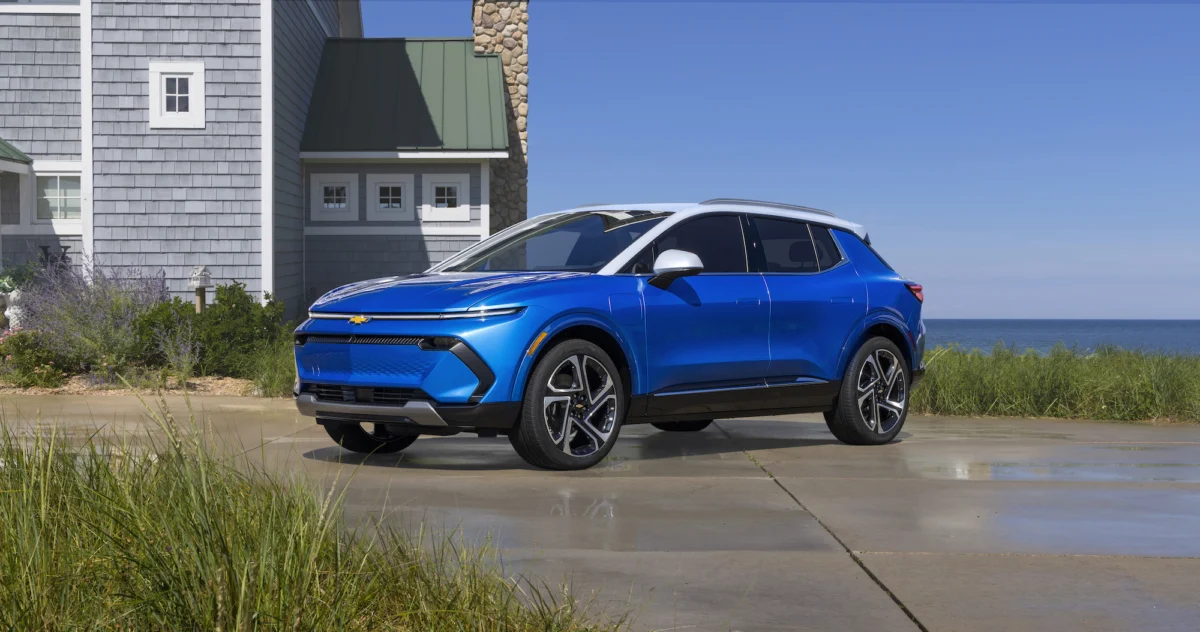
| Chevrolet Equinox EV | 2024–2025 | GM’s mass-market electric crossover. | |
| Partnership EVs | Honda Prologue | 2024–2025 | Built by GM for Honda using Ultium tech. |
| Acura ZDX | 2024–2025 | Premium EV built on GM’s platform. | |
| Internal Combustion (ICE) | Chevrolet Colorado | 2023–2024 | Popular midsize pickup truck. |
| GMC Canyon | 2023–2024 | Premium midsize pickup sibling to Colorado. | |
| Buick Enclave | 2024–2025 | Three-row family crossover. | |
| Buick Envision | 2024–2025 | Compact premium crossover. | |
| Autonomous Vehicles | Cruise Origin | N/A | Purpose-built robotaxi; program canceled in 2024. |
The Honda and Acura Connection
The investigation also affects vehicles built in partnership with Honda. Under a joint venture, GM manufactured the Honda Prologue and the Acura ZDX on its proprietary Ultium EV platform. These models use GM’s electrical architecture and the eBoost system, drawing Honda into the federal safety probe.
Official Responses and Corporate Positioning
The tension between GM’s internal safety assessments and the findings of federal regulators is a key focus of the upgraded investigation.
                  ┌──────────────────────────┐
                  │   NHTSA / ODI Findings   │
                  └─────────────┬────────────┘
                                │
             Assesses that eBoost failures occur
             unexpectedly while vehicles are in motion,
             creating severe crash risks.
                                │
                                ▼
         ┌──────────────────────────────────────────────┐
         │  Are current warning systems sufficient to   │
         │  prevent accidents on public roadways?       │
         └──────────────────────┬───────────────────────┘
                                │
             Asserts that startup warning lights are
             adequate, and active failures do not pose
             an "unreasonable safety risk."
                                │
                                ▼
                  ┌──────────────────────────┐
                  │       GM Statement       │
                  └──────────────────────────┘
General Motors’ Stance
In a public statement, General Motors defended its safety record and the integrity of its vehicles:
"The safety of our customers is the highest priority for the entire GM team. We take these reports seriously and have conducted a thorough investigation, determining the alleged condition does not present an unreasonable risk to motor vehicle safety. We will continue to cooperate with NHTSA as its investigation proceeds."
GM’s position relies on the argument that the eBoost system’s backup safety measures are sufficient. The automaker contends that even if the electronic assist fails, a mechanical backup remains, allowing the driver to stop the vehicle by pressing the pedal harder.
However, safety regulators argue that a sudden change in the physical effort required to brake—without warning and at speed—can cause driver panic and delay braking times enough to cause a crash.
NHTSA’s Escalation
By upgrading the investigation to an engineering analysis, NHTSA’s Office of Defects Investigation has signaled that it is not satisfied with GM’s explanation.
During this phase, investigators will perform independent testing, review internal GM engineering documents, examine the eBoost software code, and analyze the physical metallurgy of the failed spindles.
If the ODI concludes that the eBoost system is defective and poses an unreasonable safety risk, it will formally request that GM issue a recall. If GM refuses, the agency has the authority to sue the automaker to force a recall.
Implications for the Automotive Industry
The GM eBoost investigation highlights several broader challenges facing the modern automotive industry during its transition to electric, software-defined vehicles.
The Vulnerability of Shared Platforms
To cut costs and speed up production, automakers increasingly rely on shared vehicle architectures. GM’s Ultium platform is a prime example, serving as the foundation for everything from mass-market crossovers to luxury SUVs and commercial delivery vans.
However, this strategy introduces systemic risks. When a single core component like the eBoost actuator has a defect, that vulnerability is automatically distributed across dozens of models and multiple brands. A single component failure can quickly lead to a million-vehicle safety crisis.
The Safety-Critical Nature of Drive-by-Wire
As automakers move toward steer-by-wire, brake-by-wire, and shift-by-wire systems, they eliminate the mechanical backups that historically kept drivers safe during an electronics failure.
While brake-by-wire systems still maintain a high-pressure hydraulic backup path, the sudden loss of power assistance makes the vehicle much harder to stop. The eBoost probe raises important questions about whether current regulations and safety testing standards are sufficient for vehicles that rely heavily on complex software and electronic actuators for primary safety functions.
Financial and Reputational Risks for GM
For General Motors, the financial and reputational stakes are high. Over the past few years, the automaker has faced software glitches that led to a temporary stop-sale of the Chevrolet Blazer EV, as well as the cancellation of its steering-wheel-less Cruise Origin robotaxi.
A mandatory recall of more than 1 million vehicles to repair or replace eBoost hardware would be highly expensive, requiring significant dealer labor and replacement parts. It could also damage consumer trust in GM’s new generation of electric vehicles at a time when EV adoption rates are critical to the company’s long-term strategy.
