




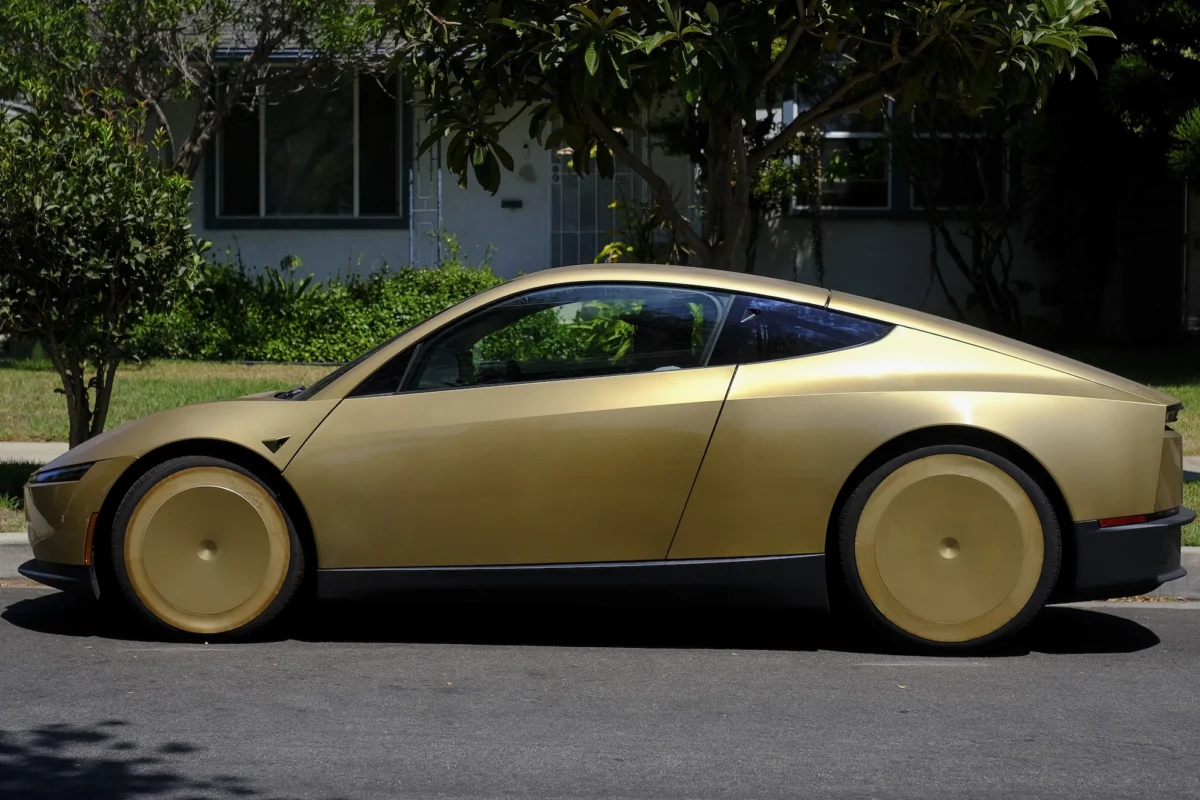
AUSTIN, Texas — The United States’ premier automotive safety regulator has launched a formal investigation into Tesla’s controversial decision to deploy its new, fully autonomous "Cybercab" on public roads without traditional manual controls, such as a steering wheel or pedals.
The National Highway Traffic Safety Administration (NHTSA) announced the opening of the probe (designated as investigation AQ26002) on the morning of September 4, 2026. The regulatory action comes a mere hours after Tesla rolled out its first fleet of Cybercabs onto the public streets of Austin, Texas, home to the electric vehicle maker’s global headquarters.
The federal safety inquiry sets up a high-stakes confrontation between Tesla Chief Executive Elon Musk—who has long championed a regulatory-light approach to autonomous vehicle (AV) deployment—and federal safety officials tasked with enforcing motor vehicle standards. At the heart of the dispute is Tesla’s reliance on "self-certification" to bypass traditional design requirements, a move that critics argue exploits a gray area in federal automotive safety law.
Main Facts of the NHTSA Investigation
The NHTSA’s investigation centers on the design and deployment of the Tesla Cybercab, a purpose-built robotaxi designed entirely around autonomous operation. Unlike conventional autonomous test vehicles, which retain physical steering wheels and brake pedals to allow human safety drivers to intervene, the Cybercab features a cabin devoid of any manual driving interfaces.
Under current Federal Motor Vehicle Safety Standards (FMVSS), all mass-market passenger vehicles operating on public roads must be equipped with physical braking and steering controls. However, Tesla has bypassed the standard administrative process of applying for a federal regulatory exemption. Instead, the company informed NHTSA that it had "self-certified" the Cybercab as fully compliant with all existing federal safety standards.
According to NHTSA’s public filing, the agency’s Office of Defects Investigation (ODI) opened the probe to:
- Evaluate the technical and safety data upon which Tesla relied to self-certify the Cybercab.
- Assess the validity of Tesla’s determinations regarding which federal motor vehicle standards apply to a vehicle designed without manual controls.
- Determine whether the deployment of the vehicle poses an unreasonable risk to public safety under current federal guidelines.
The probe will examine whether Tesla’s interpretation of existing laws is legally and technically sound, or if the company has deployed non-compliant, potentially hazardous vehicles on public infrastructure.
Chronology of Tesla’s Autonomous Push and Regulatory Shifts
The conflict between Tesla and federal regulators has been building for years, characterized by shifting political landscapes, aggressive technological promises, and evolving regulatory frameworks.
+-----------------------------------------------------------------+
|                            TIMELINE                             |
+-----------------------------------------------------------------+
| • Late 2016: Tesla promises Full Self-Driving capabilities      |
| • June 2026: Trump Admin proposes axing brake pedal mandate     |
| • Sept 3, 2026: Tesla deploys first Cybercabs in Austin, TX     |
| • Sept 4, 2026: NHTSA formally opens investigation AQ26002      |
+-----------------------------------------------------------------+
The Long Road to the Cybercab
For over a decade, Elon Musk has promised that Tesla vehicles would achieve full, unsupervised autonomy. In 2019, Musk famously predicted that Tesla would have "one million robotaxis on the road" by the following year. While that timeline slipped repeatedly, Tesla continued to iterate on its "Full Self-Driving" (FSD) software, deploying beta versions to hundreds of thousands of customer vehicles.
The Regulatory Pivot of June 2026
The regulatory landscape shifted dramatically in June 2026. The Trump administration’s Department of Transportation (DOT) proposed a major overhaul of the FMVSS, specifically aiming to eliminate the requirement that autonomous vehicles must feature physical brake pedals and steering wheels. The proposal was widely viewed as a major victory for Tesla, potentially clearing a frictionless legal pathway for the commercialization of the Cybercab.
However, the proposed rule changes had not yet been finalized or codified into law by the late summer of 2026.
Deployment and Immediate Regulatory Backlash
On the evening of September 3, 2026, Tesla officially launched its Cybercab fleet on public roads in Austin, bypassing the finalization of the federal rule changes. Leveraging Texas’ highly permissive state-level autonomous vehicle laws, Tesla began operating the vehicles without safety drivers.
By the morning of September 4, 2026, at 5:01 AM PDT, NHTSA formally announced the opening of investigation AQ26002, bringing Tesla’s rapid deployment to an abrupt regulatory crossroads.
Supporting Data and Technical Context
To understand the friction between Tesla and the NHTSA, it is necessary to examine the technical standards governing American automobiles and how Tesla’s "self-certification" approach differs from its competitors.
The Self-Certification Framework vs. Federal Exemptions
In the United States, automotive safety is governed by a self-certification model. Unlike European markets, where vehicles must receive "type approval" from government agencies before sale, U.S. law allows manufacturers to certify on their own authority that their vehicles comply with all applicable FMVSS.
| Regulatory Path | Requirements | Competitors Using Path | Tesla’s Approach |
|---|---|---|---|
| Standard FMVSS | Must include physical steering wheel, mirrors, and brake pedals. | Traditional OEMs | Applied to Models S, 3, X, Y. |
| NHTSA Exemption | Up to 2,500 vehicles/year; requires rigorous proof of equivalent safety. | Nuro, Cruise, Zoox | Bypassed; Tesla did not petition for this exemption. |
| Self-Certification (AV) | Manufacturer certifies compliance with existing standards. | None (for pedal-less vehicles) | Used for Cybercab; claims manual control rules are inapplicable. |
Historically, companies seeking to deploy custom-built autonomous vehicles without steering wheels or pedals—such as General Motors’ Cruise (with the Origin) or Amazon’s Zoox—have petitioned the NHTSA for official exemptions from specific FMVSS rules. These petitions often languish in regulatory review for years, heavily restricting the scale of deployment.
Tesla chose to bypass the exemption petition process entirely. The company argued to regulators that because the Cybercab is designed to be fully autonomous, the specific standards mandating physical, human-operated controls (such as FMVSS No. 135 for braking systems and FMVSS No. 203/204 for steering column impact protection) are fundamentally inapplicable to the vehicle’s architecture.
Technical Challenges of Vision-Only Autonomy
The investigation also arrives amidst ongoing scrutiny of Tesla’s technical approach to autonomous driving. Unlike its competitors, who rely on a redundant sensor suite of LiDAR, radar, and cameras, Tesla’s Cybercab operates exclusively on "Tesla Vision"—a system relying solely on optical cameras and neural networks.
Safety advocates have frequently questioned whether a camera-only system can achieve the necessary reliability to operate safely without physical backup controls, particularly in adverse weather conditions or complex urban environments.
Official Responses and Stakeholder Perspectives
The opening of the NHTSA investigation has drawn sharp reactions from federal agencies, legal experts, and safety advocacy groups.
The Regulator’s Mandate
In its official filing, the NHTSA made clear that its primary objective is to verify the integrity of Tesla’s engineering assumptions:
"NHTSA is opening this investigation to examine the process and technical data on which Tesla relied when certifying the Cybercab and related issues. The investigation will consider the extent to which the company’s certification depended on determinations that certain federal motor standards are inapplicable to the Cybercab."
Industry and Safety Advocate Reactions
Safety advocates have lauded the NHTSA’s swift action, arguing that allowing Tesla to unilaterally redefine safety standards sets a dangerous precedent.
"Self-certification is not a blank check for tech companies to write their own rules," said a representative from the Center for Auto Safety. "If Tesla is allowed to decide which safety standards apply to its vehicles without independent oversight, it undermines the entire federal regulatory framework that has protected American motorists for decades."
Tesla and Elon Musk have not yet issued a formal public response to the specific filing of AQ26002, though Musk has previously criticized federal regulatory agencies for slowing down American innovation. Tesla has historically maintained that its autonomous technologies are statistically safer than human drivers.
Strategic and Market Implications
The outcome of NHTSA’s investigation will have profound consequences for Tesla’s business model, its valuation, and the broader autonomous vehicle industry.
Tesla’s Valuation and the Robotaxi Pivot
Tesla’s premium stock market valuation is heavily dependent on its transition from a traditional hardware manufacturer to a high-margin software and autonomous transport network provider. The Cybercab is the cornerstone of this transition.
If the NHTSA determines that Tesla’s self-certification is invalid, the agency could force Tesla to halt Cybercab operations on public roads. Such a ruling would:
- Delay Commercialization: Force Tesla to wait for the lengthy formal rule-making process to conclude or compel them to apply for standard regulatory exemptions.
- Increase Capital Expenditure: Potentially force a redesign of the Cybercab to include temporary manual controls or physical safety overrides.
- Damage Investor Confidence: Undermine the narrative that Tesla can rapidly scale a global robotaxi network ahead of legacy competitors.
Implications for the Broader AV Sector
The investigation also signals that despite the Trump administration’s deregulatory push, career safety regulators at the NHTSA remain committed to rigorous oversight of autonomous vehicle technologies.
For competitors like Alphabet’s Waymo, which has steadily expanded its commercial robotaxi service using conventional vehicles retrofitted with autonomous systems, the regulatory friction facing Tesla may reinforce the wisdom of their more cautious, compliant approach. Conversely, a victory for Tesla in this regulatory battle could pave the way for rapid, widespread deployment of custom autonomous vehicle designs across the entire automotive sector.
