




Introduction
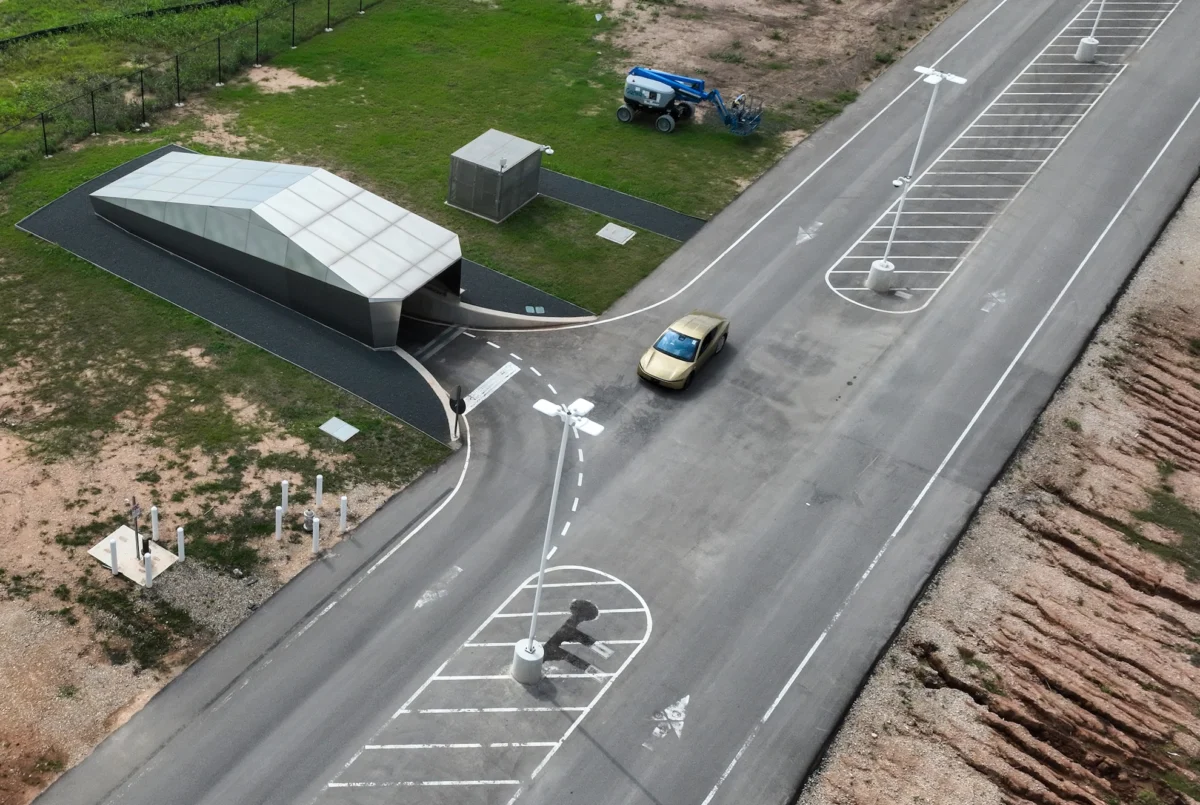
Austin, Texas, stands at the center of what may be the most critical transition in the history of Tesla Inc. The electric vehicle pioneer is launching its highly anticipated "Cybercab"—a compact, gold-toned, two-seater vehicle designed entirely without steering wheels or pedals. Relying exclusively on an array of external cameras and advanced artificial intelligence to navigate, the Cybercab represents CEO Elon Musk’s ultimate bid to transition Tesla from a high-volume automaker into a dominant force in robotics and autonomous transportation.
The launch represents an existential inflection point for the company. For years, Tesla’s premium market valuation has been propped up by the promise of revolutionary self-driving technology. As the Cybercab rolls out onto public streets, the company faces the monumental task of proving its vision-only, low-cost autonomous driving model can outperform established, sensor-heavy competitors in real-world urban environments.
Main Facts
The Vehicle Design and Operational Model
The Cybercab is a radical departure from traditional automotive design. It is a purpose-built autonomous vehicle (AV) featuring:
- Two-Seat Configuration: Optimized for the vast majority of urban ride-hailing trips, which typically carry only one or two passengers.
- No Manual Controls: The cabin is completely devoid of a steering wheel, accelerator, or brake pedals, signaling full reliance on Level 4/5 autonomy.
- Aesthetic Distinction: A striking, metallic gold exterior finish designed to make the fleet highly visible and instantly recognizable.
- Vision-Only Navigation: Unlike competitors who utilize expensive LiDAR (Light Detection and Ranging) and radar systems, the Cybercab relies solely on Tesla’s "Full Self-Driving" (FSD) camera-based neural network.
The Scale of the Austin Deployment
While Tesla has kept the exact operational parameters of the launch confidential, state regulatory filings indicate a substantial physical preparation. According to the Texas Department of Motor Vehicles’ automated vehicle tracker, Tesla has registered 420 autonomous vehicles in the state. Observers have also documented dozens of Cybercabs staged at strategic points across Austin and other major metropolitan areas in the United States, signaling that this launch is intended to be a highly visible, wide-scale public demonstration rather than a limited closed-course trial.
Chronology of Tesla’s Autonomous Drive
The journey to the Cybercab has been marked by a decade of bold pronouncements, shifting hardware architectures, and dramatic corporate restructurings.
[2016] ─────────────────── [April 2024] ────────────── [June 2025] ────────────── [Present Day]
Musk promises              Mass layoffs;              Model Y Robotaxi           Commercial launch
autonomy via simple        Tesla pivots               pilot begins in            of the gold
software updates.          "balls to the wall"        Austin with safety         Cybercab fleet.
                           for autonomy.              drivers.
1. The Era of Over-Promising (2016–2023)
In 2016, Elon Musk famously asserted that every vehicle rolling off Tesla’s assembly lines possessed the necessary hardware to achieve full, unassisted autonomy, requiring only subsequent software iterations to unlock. This claim proved premature. Over the next several years, Tesla repeatedly updated its onboard computer suites, eventually forcing Musk to admit that millions of older vehicles would require hardware retrofits to run advanced autonomous software.
Throughout this period, Tesla marketed its "Full Self-Driving (Supervised)" software to consumer vehicles. While highly capable as a Level 2 driver-assistance system, the software continuously required active human oversight, leaving legal liability squarely on the driver.
2. The Strategic Pivot (April 2024)
Faced with maturing EV markets and intensifying competition from Chinese automakers, Musk executed a dramatic strategic shift. In April 2024, he ordered sweeping layoffs across Tesla’s global workforce to streamline operations. He declared that the company was going "balls to the wall for autonomy," abandoning plans for a highly anticipated, cheap manual electric vehicle in favor of a dedicated robotaxi platform. Musk dismissed conventional automotive development at the time, writing that "everything else is like variations on a horse carriage."
3. The Public Reveal and Prototype Testing (Late 2024–January 2025)
Tesla officially unveiled the Cybercab prototype at a Hollywood movie lot in late 2024. By January 2025, pre-production models were showcased globally, including a high-profile exhibition at the AutoSalon in Brussels, Belgium. These exhibitions served to build consumer anticipation and reassure nervous investors of the vehicle’s physical viability.

4. The Pilot Programs (June 2025–Mid-2026)
In June 2025, Tesla initiated its first public Robotaxi pilot program in Austin, utilizing specially modified Model Y SUVs. These vehicles operated with a safety driver in the front seat. The program subsequently expanded to select cities in Florida and other parts of Texas. However, by July 2026, corporate reports revealed that the pilot was struggling to scale, with the total volume of paid autonomous miles driven actually regressing.
Supporting Data and Technological Comparisons
To understand the economic and operational stakes of the Cybercab, it must be compared directly with its primary market rival, Alphabet’s Waymo.
| Metric | Tesla Cybercab | Alphabet Waymo (Ojai Platform) |
|---|---|---|
| Primary Sensor Suite | Optical Cameras & AI Neural Networks | LiDAR, Radar, & Cameras |
| Geofencing Requirement | Low (Targeted for generalized autonomy) | High (Requires highly detailed 3D mapping) |
| Estimated Production Cost | Low (Minimalist battery, no expensive sensors) | High (Expensive sensor integration per vehicle) |
| Active Fleet Size (Est.) | ~420 registered in Texas (initial rollout) | ~4,000 active vehicles nationally |
| Cabin Controls | Completely removed (No steering wheel/pedals) | Standard controls intact (for safety/regulation) |
The Economic Thesis
Tesla’s competitive advantage relies entirely on manufacturing economics. The Cybercab is designed to be lighter, smaller, and equipped with a lower-capacity battery pack than any previous Tesla model. By minimizing raw materials and completely omitting expensive LiDAR sensors—which can add thousands of dollars to the cost of each vehicle—Tesla aims to produce autonomous cabs at a fraction of the capital expenditure required by Waymo or Cruise. If Tesla can successfully operate these vehicles, the low cost per mile could allow them to scale rapidly and undercut traditional ride-hailing services on price.
Safety and Operational Incidents
The path to the Cybercab has not been without friction. During the Model Y-based robotaxi trials in Austin, Tesla reported dozens of minor incidents to state regulators. The majority of these events involved:
- Low-speed collisions with stationary objects (such as curbs or traffic cones).
- Occasions where remote teleoperators had to intervene to guide "stuck" vehicles.
- System disengagements in complex construction zones.
While none of these incidents resulted in serious injuries, they highlight the ongoing challenges of navigating unpredictable urban environments without secondary sensor redundancy.
Official Responses and Rhetorical Shifts
The launch of the Cybercab has been accompanied by a distinct change in tone from Tesla’s executive leadership.
From Caution to "The Storm"
In the months leading up to the launch, Tesla executives maintained a highly conservative public relations stance. They emphasized safety, regulatory compliance, and a gradual, phased rollout designed to build public trust.
However, as the launch date neared, this cautious messaging was replaced by high-octane hype. Ashok Elluswamy, Tesla’s Head of AI, declared on the social media platform X that the "streets won’t be the same anymore." When online commentators suggested that Tesla was preparing to "flood Austin" with autonomous vehicles, Elon Musk confirmed the assertion with a simple, "Yes." Musk followed up by posting an AI-generated image depicting a massive dust storm of gold Cybercabs descending upon Austin, captioned: "A Storm of Cybercabs."
Regulatory Oversight
The Texas Department of Motor Vehicles (TxDMV) has maintained a permissive stance toward autonomous vehicle testing, which has made Texas an attractive launchpad for Tesla. However, regulators have emphasized that as Tesla transitions from safety-driver-assisted pilots to fully driverless commercial operations, the company will face heightened scrutiny regarding accident reporting, traffic obstruction, and passenger safety protocols.

Implications: The Ultimate Fork in the Road
The deployment of the Cybercab represents what Elon Musk frequently refers to as a "fork in the road"—a definitive moment of truth for the company’s future.
                         ┌───> SUCCESS: Realizes AI/Robotics valuation;
                         │              disrupts urban transit.
[Tesla's Cybercab Launch]┤
                         │
                         └───> FAILURE: Exposed as a traditional automaker;
                                       severe market valuation correction.
1. The Valuation Conundrum
Wall Street currently values Tesla not as a traditional automotive manufacturer, but as a high-growth technology and AI enterprise. Traditional automakers typically trade at price-to-earnings (P/E) multiples in the single or low double digits. Tesla, conversely, commands a premium multiple based on the expectation that its autonomous network will generate high-margin software revenues.
If the Cybercab successfully establishes a reliable, driverless ride-hailing network, Tesla will validate this premium valuation, fundamentally disrupting the global taxi, ride-sharing, and logistics industries. If the technology falters, investors may re-evaluate Tesla as simply a highly efficient car manufacturer, potentially triggering a severe market correction.
2. The Geofencing Paradox
For years, Elon Musk criticized competitors like Waymo for relying on "geofencing"—the practice of limiting autonomous vehicles to highly mapped, pre-defined geographic boundaries. Musk argued that "if you need a geofenced area, you don’t have real self-driving."
Yet, to date, Tesla’s robotaxi trials have operated within strict geofenced sectors of Austin and Miami. If the Cybercab remains bound to specific zones due to safety limitations or mapping requirements, it will undermine Tesla’s core claim of having developed a generalized, universally applicable AI driver.
3. High-Visibility Vulnerability
Operating a small, low-profile test fleet of standard Model Y SUVs allowed Tesla to fly somewhat under the radar. The Cybercab, with its futuristic, bright gold design, will have no such luxury. Every mistake, traffic block, or minor collision involving a Cybercab will be instantly recognizable to the public, media, and regulators.
The physical reality of scaling a fleet of vehicles with no manual controls means that if the AI software encounters an unresolvable "edge case," passengers cannot take the wheel. The vehicle must either resolve the issue autonomously or rely on remote teleoperation. This high-visibility environment leaves Tesla with zero margin for error. The coming months on the streets of Austin will determine whether the Cybercab is the catalyst for a transportation revolution, or a stark reminder of the immense difficulty of achieving true autonomous driving.
